
REVIEW · MONTEPULCIANO PASTA CLASSES
Tuscan Cooking Class -Traditional Pasta Menu
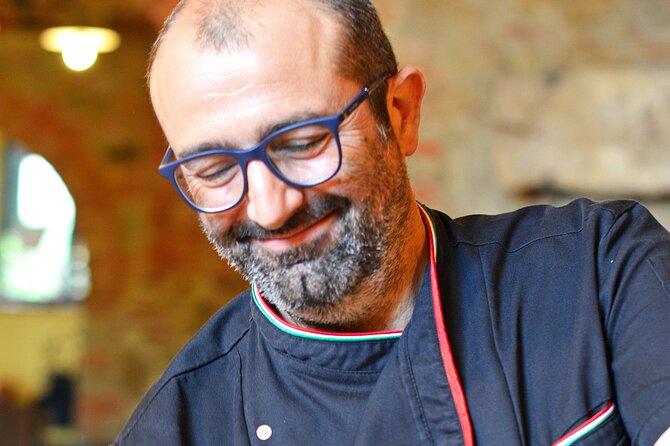
The best part of this Montepulciano cooking class is that you do not simply watch a chef toss pasta into a bowl. You work through the food by hand, from Tuscan bruschette to two fresh pastas and a family-style tiramisu, then eat the results at a long table with local wine. Giacomo, a chef and trained sommelier, leads the lesson, with Cristiana helping create the friendly family atmosphere.
I like the strong focus on technique and ingredients, not just recipes. I also like the thoughtful wine pairings: three local wines are served with the savory courses, giving you a practical lesson in matching food and wine. The main consideration is the price, $212.85 per person, and the fact that transportation is not included.
Key points to know before booking
- A four-course Tuscan meal made by hand: Prepare bruschette, pici, pappardelle with Cinta Senese pork ragù, and family-recipe tiramisu.
- A very small class: The maximum is eight people, so you should receive more direct help than in a large demonstration class.
- Giacomo teaches both cooking and wine: His sommelier training adds food-pairing advice to the pasta lesson.
- A farmhouse setting near Montepulciano: The class takes place at Farmhouse Le Caggiole, with dessert served on the terrace.
- Plan for a standing morning: Wear comfortable clothes and shoes, and remove rings, large bracelets, and artificial nails.
- Book ahead and arrange your own ride: The class begins at 9:30 a.m., has no shuttle service, and is often reserved well in advance.
What makes the Le Caggiole class different
Many Italian cooking lessons are built around a single dish. This one gives you a small menu that feels like a proper Tuscan meal. You learn the shape and handling of two pastas, the balance of a traditional appetizer, and the basic structure of tiramisu. The result is less a quick kitchen demonstration and more a morning of practical cooking.
The setting is Farmhouse Le Caggiole, at Traversa di Montepulciano, 12. That matters because the class has a relaxed, country-house feel rather than the rushed rhythm of a commercial kitchen. You are there for about four hours, and the social side is part of the plan. You cook alongside the other people in the group, share the work, and later sit down together for lunch.
Giacomo brings two useful skills to the table. As a chef, he can explain how the dishes are prepared. As a sommelier, he can show you why one wine works better with a particular course than another. That makes the class useful even if you are more interested in Italian food than in formal wine study.
Cristiana is also part of the warm family setting described in the class. The atmosphere is intended to be familiar and easygoing, with room for questions, laughter, and conversation. You should expect instruction, but not a stiff culinary-school lesson.
Other Italy classes worth putting on the shortlist
- Florence: Pasta Cooking Class with Unlimited Wine
★ 4.9 · 10,285 reviews - 3 in 1 Cooking Class near Navona: Fettuccine, Ravioli & Tiramisu
★ 5.0 · 7,376 reviews - Florence Pizza or Pasta Class with Gelato Making at a Tuscan Farm
★ 5.0 · 6,801 reviews
The 9:30 a.m. start and farmhouse arrival
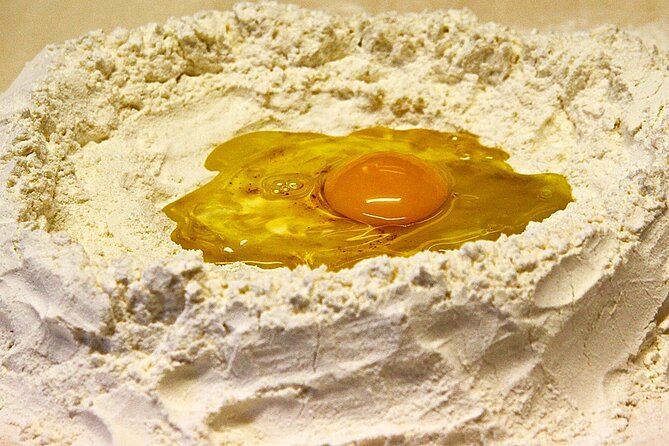
The morning begins at 9:30 a.m. at the farmhouse. You need to make your own way there because transfers and shuttle service are not offered. If you are staying in Montepulciano, check your route and timing carefully before the morning of the class. The start time is fixed, and arriving late could cut into the hands-on portion.
A good breakfast is recommended. That may seem odd for a cooking class, but it is sensible advice. You will be standing, preparing food, tasting ingredients, and waiting for the final meal. Since lunch comes at the end of the lesson, a proper breakfast will help you enjoy the morning without becoming distracted by hunger.
The group is capped at eight people. That is one of the strongest practical features of the class. A small group gives you a better chance to handle the dough yourself, ask questions, and get help with technique. If you are traveling alone, contact the provider before booking so you can be placed with an already scheduled small group.
During the preparations, you remain on your feet. Wear comfortable clothing and shoes that can handle a working kitchen. For hygiene reasons, rings, large bracelets, and artificial nails are not allowed during the cooking portion. These rules are easy to follow, but you should know them before arriving.
Making traditional Tuscan pasta by hand
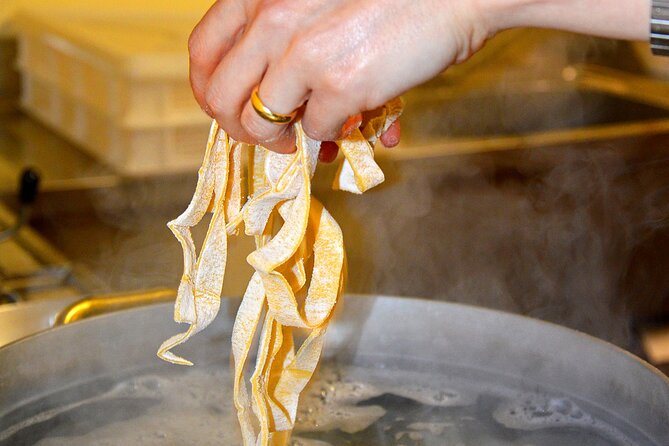
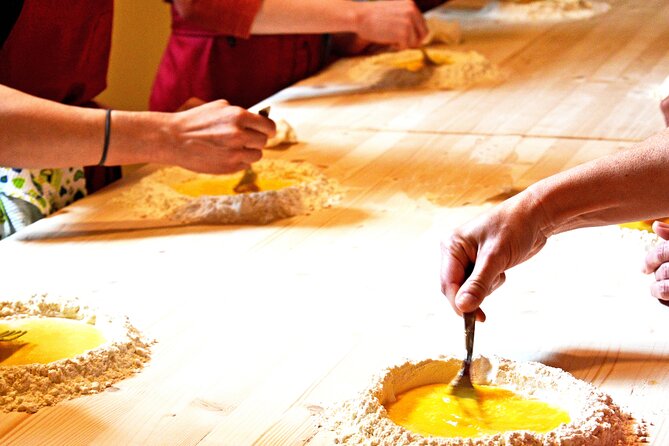
The heart of the lesson is the fresh pasta. You prepare two traditional shapes: pici and pappardelle. This gives you a useful contrast between a rustic, thick pasta and broad ribbons suited to a hearty meat sauce.
Pici is closely linked with southern Tuscany and the Montepulciano area. Its appeal is its simplicity. Rather than relying on an elaborate shape, the pasta depends on handwork, texture, and a sauce that clings well. The class pairs it with a traditional sauce, allowing you to see how a few basic elements can make a satisfying first pasta course.
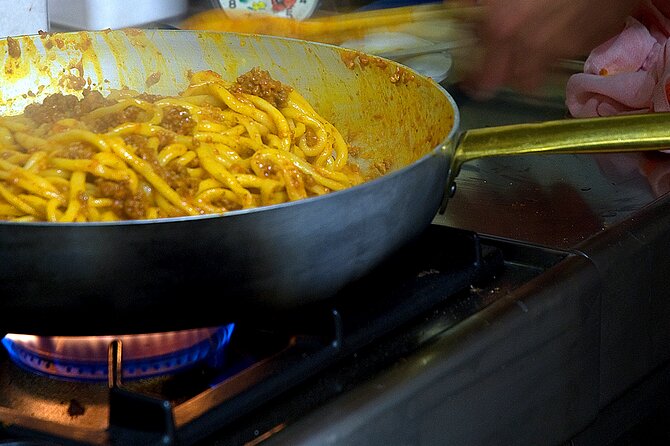
Pappardelle offers a different lesson. These wide ribbons are paired with Tuscan meat ragù made with Cinta Senese pork. Cinta Senese is a local Tuscan breed, and its inclusion gives the dish a clear regional identity. You are not just making generic pasta with meat sauce. You are learning how a local ingredient fits into the cooking of the area.
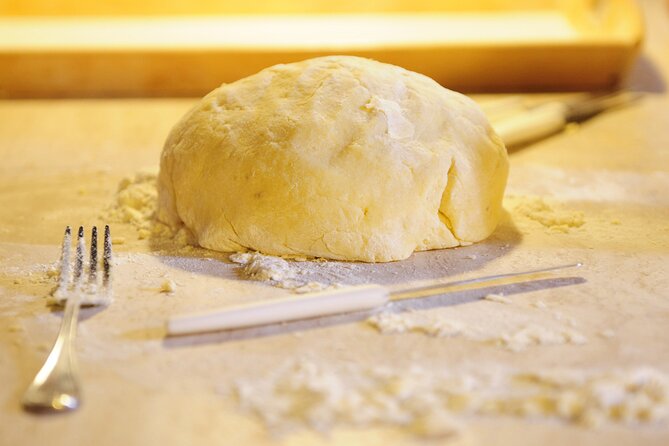
The useful thing here is the emphasis on method. You work with the dough rather than simply receiving a finished portion. That means you can pay attention to how the pasta feels, how it is shaped, and how the sauce suits its width and texture. Several class participants particularly valued learning techniques they could use at home, including the habit of choosing fresh ingredients first and building a dish around them.
That is a better lesson than memorizing a rigid recipe. Pasta dough can respond differently depending on the ingredients and conditions, so understanding the process gives you more freedom in your own kitchen. You should leave with a clearer sense of what you are trying to achieve, even if your first homemade pappardelle is not perfectly even.
Bruschette, local ingredients, and the first course
The meal begins with traditional bruschette and a typical Tuscan appetizer. This is a simple course, but it sets up an important theme of Tuscan cooking: good ingredients need careful handling more than elaborate decoration.
The class also aims to teach you how to choose ingredients for your dishes. That advice is easy to overlook, yet it may be one of the most useful parts of the morning. When the food is simple, the quality and balance of the ingredients matter. You learn to think about the dish before reaching for a recipe.
The appetizer also gives you something to taste early in the session. You are not waiting four hours for the first bite of food. Instead, the meal builds from a small opening course toward the two pasta dishes and dessert.
Same town, a different thing to roll out:
- Florence: Pasta & Tiramisu Cooking Class with Unlimited Wine
★ 4.9 · 6,708 reviews - Florence: Pasta Cooking Class with Unlimited Wine
★ 5.0 · 6,413 reviews - Rome: Pasta & Tiramisu Class with Fine Wine by the Vatican
★ 4.9 · 4,852 reviews - Rome: Pasta Making Class with Wine, Limoncello, and Dessert
★ 4.9 · 3,177 reviews
Three wines and a practical pairing lesson
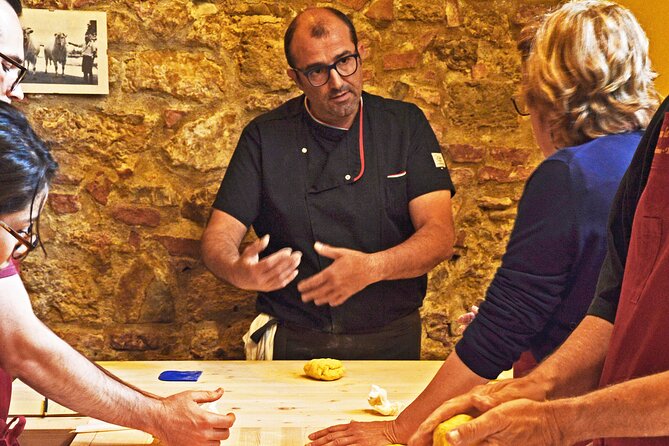
The wine portion is more than a refill at the table. Three selected local wines are served with the meal, with each savory course paired to a specific bottle. Giacomo uses the food to explain the basic principles of pairing, including how to choose a wine that supports a dish rather than overpowering it.
You do not need a background in wine to benefit. The class focuses on the basics, so you can apply the ideas at home. You may learn why a fresh wine suits one preparation, while a fuller wine works better with a rich pork ragù. The useful takeaway is not a list of labels. It is a way to think about acidity, weight, sauce, and seasoning.
This pairing element helps justify part of the price. A standard pasta class might teach you to make noodles and stop there. Here, the food is placed in a wider Italian meal, and you learn how wine fits into that meal.
Alcohol is included, so the class is intended for adults who want to taste wine with lunch. If you do not drink, the food instruction remains the main event, but the wine portion is still a notable part of the format.
Sitting down to the four-course lunch
At the end of the preparation, you sit at a large table and eat the meal you helped create. The menu is:
- Traditional Tuscan bruschette and appetizer
- Pici with a traditional sauce
- Pappardelle with Tuscan meat ragù and Cinta Senese pork
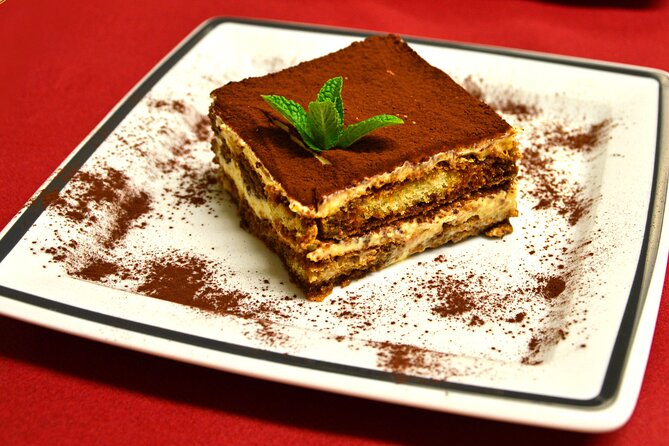
- Tiramisu made from the family recipe
This meal is the payoff, but it is also part of the teaching. You can taste how the pasta shapes work with their sauces and notice the difference between the two preparations. The food is not simply served as a reward. It gives you a chance to think about texture, balance, and the choices made during the lesson.
There is also some professional input from Giacomo in the finished dishes. You are doing the practical work, but the chef helps bring the meal together. That means the final lunch should be more polished than what a group of beginners might produce without guidance.
The tiramisu is served separately from the wine pairings. You finish dessert on the terrace, where you can relax and enjoy the views. This changes the pace of the morning. After standing in the kitchen and concentrating on pasta, sitting outside with dessert gives the day a calm final chapter.
How much the $212.85 price delivers
At $212.85 per person, this is not a budget meal or a quick pasta workshop. The value depends on how much you want from the experience. You are paying for about four hours of instruction, a small group, all ingredients, kitchen tools, aprons, the food you prepare, and three local wine tastings.
The price makes more sense for you if you value direct participation and a full meal. You are not buying a single plate of pasta. You are receiving a cooking lesson, a social morning, a four-course lunch, and an introduction to wine pairing in one booking.
The small group also matters. With a maximum of eight people, the class has a better chance of remaining personal. If the group is full, you may still share tasks, but the format is designed to give you hands-on time rather than place you at the back of a crowded room.
The main weakness is the missing transportation. You must arrange your own way to the farmhouse and back to the meeting point. That may be easy for you if you have a car or are already staying nearby, but it is a real cost and planning issue if you are relying on public transportation or taxis.
What to know about booking and food restrictions
The class is often booked about 61 days ahead, so I would not leave it until the last part of a Montepulciano visit. Confirmation is provided at booking, and the provider asks you to send a WhatsApp message with your name, booking date, and email address after confirmation.
Food allergies and intolerances must be reported before completing the booking. The provider may be able to change a dish, but menu changes requested after booking cannot be considered. This is especially important in a class built around pasta, dairy, meat, and tiramisu.
The activity is offered in English. A pencil and notebook can be provided on request, which is useful if you want to write down methods and ingredient advice. Video and other recordings are not allowed during preparation, so plan to focus on the lesson and take notes instead.
Free cancellation is available if you cancel at least 24 hours before the start time. Cancellations made later are not refunded, and changes within that period are not accepted. The class also requires a minimum number of people, so if the provider cancels for that reason, you will be offered another date or experience, or a full refund.
Who will enjoy this class most
I would choose this class if you want to understand how Tuscan pasta is made, not simply eat it. It suits home cooks, couples, families with adult children, and anyone who enjoys a shared meal as much as a formal sightseeing stop.
It is also a good fit if you want a small social activity during a stay in southern Tuscany. The class has a friendly group element, but the hands-on work gives the morning more purpose than a simple lunch.
You should think twice if you dislike standing for several hours, do not want to drink wine, or need a fully arranged transfer. The class is not designed as a passive demonstration, and the no-recording rule may frustrate anyone hoping to film each step.
Should you book the Tuscan Cooking Class?
Book it if you want a practical food experience with a clear regional identity. The strongest reasons are the small group, the chance to make both pici and pappardelle, the use of Cinta Senese pork, and Giacomo’s combined cooking and wine instruction.
The class is especially worthwhile for people who want to bring home a better sense of how to cook, rather than just a recipe card. You will learn to pay attention to ingredients, pasta texture, sauces, and pairings. If you can manage the $212.85 price and arrange your own transport to Farmhouse Le Caggiole, this is a thoughtful use of a morning in Montepulciano.
FAQ
Where does the cooking class begin?
The class begins at Farmhouse Le Caggiole, at Traversa di Montepulciano, 12, 53045 Montepulciano SI, Italy.
What time does the class start?
The start time is 9:30 a.m.
How long does the cooking class last?
The experience lasts approximately four hours.
How many people can join the class?
The maximum group size is eight people.
Is transportation included?
No. Transfer and shuttle service are not offered, so you must arrange your own transportation to and from the meeting point.
What food will I prepare?
You will prepare a traditional Tuscan appetizer with bruschette, pici with a traditional sauce, pappardelle with Tuscan meat ragù made with Cinta Senese pork, and tiramisu from a family recipe.
Are wine tastings included?
Yes. Three selected local wines are included, with food pairings for the savory courses.
What should I wear and bring?
Wear comfortable clothes and shoes because you will stand during the preparation. Rings, large bracelets, and artificial nails are not allowed for hygiene reasons. A pencil and notebook can be provided on request, and video or other recordings are not allowed during preparation.
Recently added in Italy
- Verona: Tortellini Cooking Class and Lunch with Mamma Ivana★ 5.0 · 20 reviews
- Vicenza: Pasta & Tiramisu Cooking Class at a Local’s Home★ 5.0 · 5 reviews
- Verona: Pasta Cooking Class with Wine Tasting★ 5.0 · 4 reviews
- Verona: Pasta & Tiramisu Cooking Class at a Local’s Home★ 5.0 · 16 reviews
- Verona: Prosecco and Pasta Making Class at a Local’s Home★ 5.0 · 10 reviews
- Volterra: Fresh Pasta Cooking Class at a Tuscan Farmhouse★ 5.0 · 33 reviews
- Venice: Share Your Pasta Love in a Local’s Home★ 4.8 · 20 reviews
- Verona: My Granny’s secrets making gnocchi★ 5.0 · 7 reviews
Montepulciano Pasta Classes, compared.
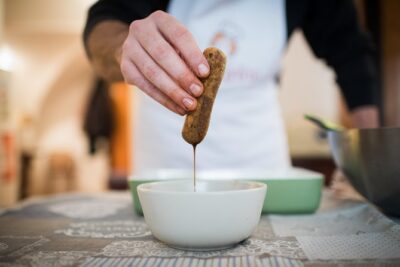
Cesarine: Small group Pasta and Tiramisu class in Montepulciano
Read our review →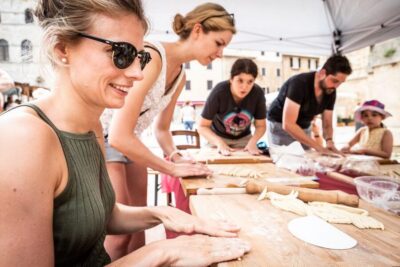
Montepulciano: Pasta-Making Class with Tasting and Wine
Read our review →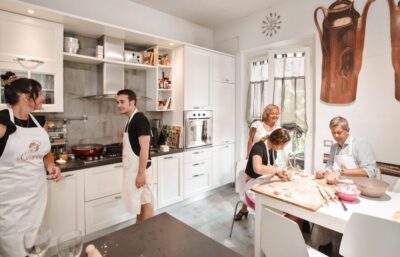
Montepulciano: Pasta and Tiramisu Class at a Local’s Home
Read our review →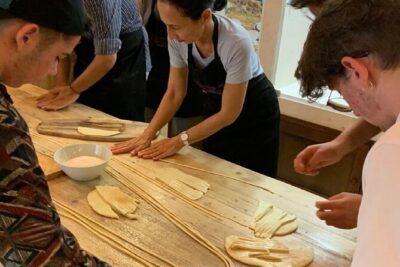
Private Pasta & Tiramisu in an Intimate Montepulciano Home
Read our review →
Cesarine: Fresh Pasta Class at Local’s Home in Montepulciano
Read our review →
Montepulciano: Tuscan Cooking Class Traditional Pasta Menu
Read our review →Browse the lists this class appears in