
REVIEW · FRESH PASTA WORKSHOPS
Montepulciano: Pasta-Making Class with Tasting and Wine
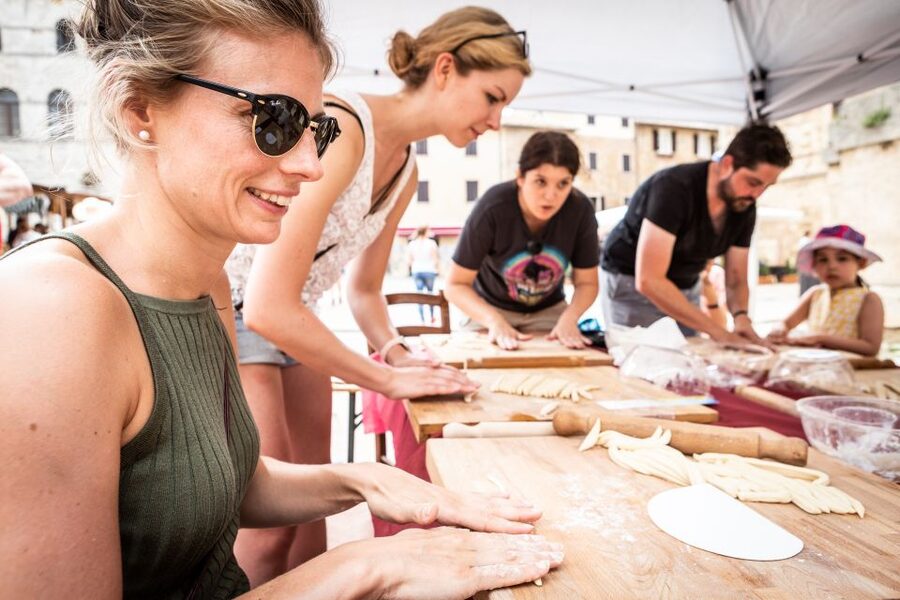
The best part of this Montepulciano experience is the simple, hands-on lesson in pici, Siena’s thick, hand-rolled pasta. You mix and shape the dough yourself, then sit down to eat it with a glass of wine. It is a practical taste of Tuscany, not just a cooking demonstration.
I like the small groups of up to 10 and the personal setting at a farmhouse. I also like that you learn more than one dish: pici, tagliatelle, sauces such as aglione and cacio e pepe, and sometimes ravioli or bruschetta. The main thing to consider is transportation, since the farmhouse meeting point is given only after booking and no transfer service is included.
Key points at a glance
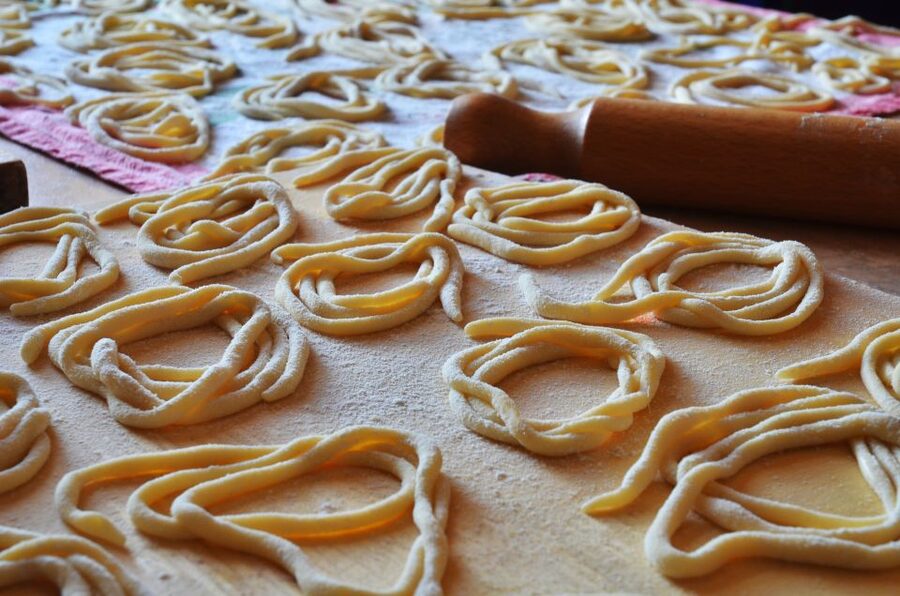
- Pici is the star: Roll the dough by hand using the local technique called appiciare.
- You eat what you make: The class ends with lunch or dinner, fresh pasta, and a properly paired glass of wine.
- The setting is personal: Classes take place at a Tuscan farmhouse, sometimes with outdoor dining and striking views.
- The menu can be broader than advertised: Depending on the host, you may also prepare tagliatelle, ravioli, bruschetta, and two or more sauces.
- Local hosts make the difference: Past sessions have been led by cooks and families including Simonetta, Susanna, Irene, Daniela, and Daniel.
- Bring your own transport plan: The farmhouse location is confirmed after booking, and transportation is not included.
Rolling pici in a Montepulciano farmhouse
Pici looks a little like oversized spaghetti, but the texture and making method are different. The dough is rolled into long, thick strands by rubbing it between both hands. In the local dialect, this action is called appiciare, and it is the small skill you will carry home from the class.
This is an excellent pasta for beginners. The recipe began as a peasant dish, with few ingredients and no need for a pasta machine. You do not need years of kitchen practice to take part. The work is physical but straightforward, and the uneven strands are part of the charm. Pici is meant to look handmade.
The class also gives you a useful feel for fresh pasta dough. You learn how the dough comes together, how to shape it, and how to pair it with a sauce. That makes this more useful than a meal where you simply watch someone else cook.
More Fresh Pasta Workshops in Italy:
- Rome: Pasta Making Class with Wine, Limoncello, and Dessert
★ 4.9 · 3,177 reviews - Pastamania – Florence Pasta Making Class
★ 5.0 · 3,050 reviews - Enjoy Spritz and Pasta Making in Piazza Navona
★ 5.0 · 1,681 reviews
What your three hours look like
The exact order can vary with the host, but expect the class to move through three clear stages: preparation, cooking, and eating.
First, your instructor introduces the pasta and shows you how to work the dough. The focus is pici, though some sessions include other fresh pasta such as tagliatelle and ravioli. You may also prepare sauces, including meat ragout, garlicky aglione, and cacio e pepe.
The sauces are worth paying attention to. Aglione is associated with Tuscany and uses garlic as its main flavor. Cacio e pepe is built from cheese and pepper, so the technique matters as much as the ingredients. These are recipes you can reproduce at home without needing specialist equipment.
Some classes also include bruschetta before the pasta. One session involved making three kinds, including bruschetta topped with strawberries picked on the property. That kind of menu can turn the class into a fuller Tuscan meal rather than a single-dish lesson, though the precise selection depends on the farmhouse and host.
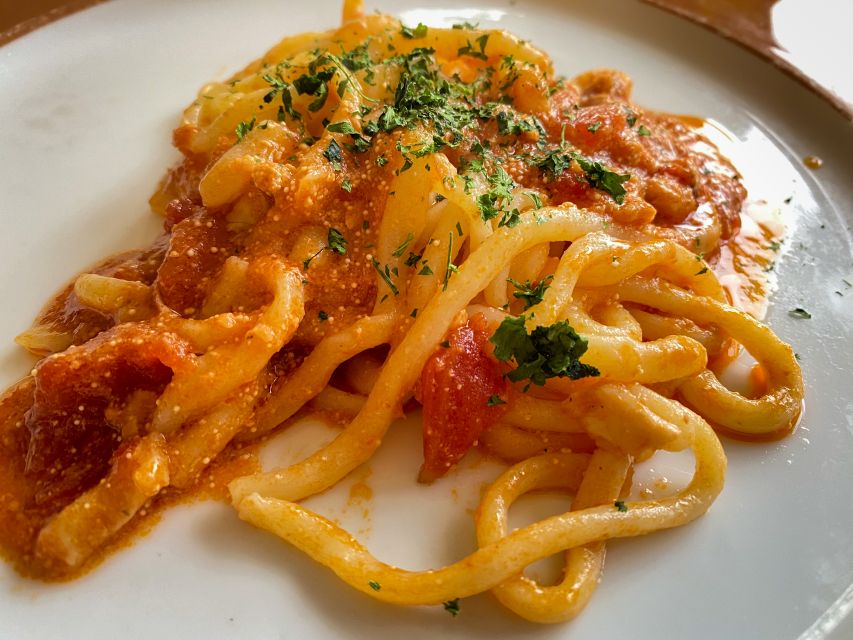
Once the pasta is ready, it is cooked and served as lunch or dinner. You sit down with the food you helped prepare and a glass of wine. This final stage is not an afterthought. It gives you a chance to taste the difference between the pasta shapes and sauces while the cooking steps are still fresh in your mind.
Plan on about three hours from start to finish. That is long enough to learn, eat, and talk without turning the activity into an all-day commitment.
The farmhouse setting is part of the experience
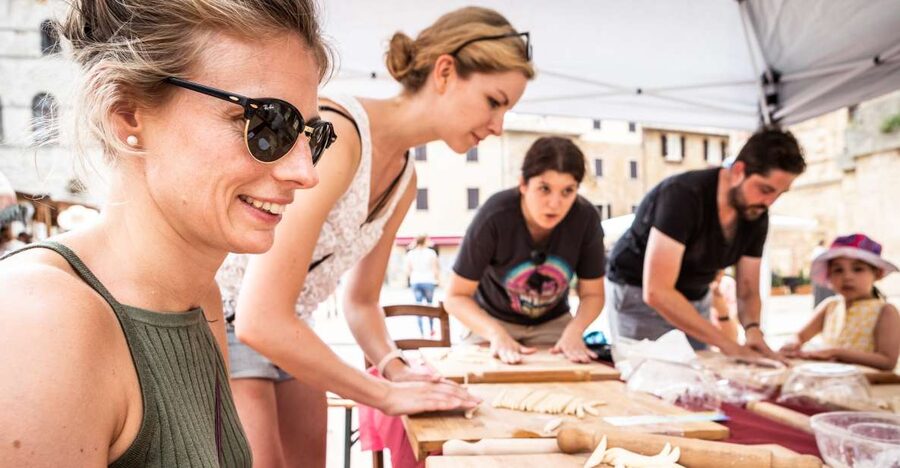
The location is not a restaurant in central Montepulciano. The class takes place at a farmhouse, with the precise meeting point communicated after booking. That makes the setting feel more local and personal, but it also means you need to pay attention to the follow-up information and plan your route carefully.
Past sessions have taken place in beautiful private homes and farm properties away from the busiest streets. Outdoor dining on a patio, views across the Tuscan hills, and home-grown ingredients have all been part of the experience for some groups. One farmhouse even had two friendly boxers on the property. These details cannot be guaranteed, but they help explain why the setting matters so much.
I would not book this as a quick activity between train connections or museum visits. You need time to reach the farmhouse, take part in the class, and return afterward. Since transport is not included, a rental car or another reliable way to reach the meeting point is important. Do not assume that the farmhouse is within easy walking distance of Montepulciano’s historic center.
The reward for making the extra effort is a more relaxed meal in a real Tuscan home or farm setting. You get space to talk with the hosts, see how the food is prepared, and enjoy the countryside rather than eating in a busy town restaurant.
The hosts bring the class to life
The instructor’s personality matters in a small cooking class, and this experience benefits from its family-style format. Hosts have included Simonetta and her assistant Susanna, as well as cooks and family members named Irene, Daniela, and Daniel. The exact team depends on the date and farmhouse.
English and Italian are available. That is useful for a cooking lesson, where clear instructions make the difference between a fun task and a frustrating one. The classes are limited to 10 people, and some sessions have been much smaller, with only four participants.
The smaller format gives you room to work at the counter and ask questions. It also makes the meal feel more like an invitation into a household than a performance for a large tour group. Hosts have been described as warm, sociable, and generous with their time. One host apologized for her English even though it was strong enough to make the lesson easy to follow.
You should still expect some variation. A class led by one host may feel different from a class led by another. The menu, outdoor seating, farm animals, and exact number of dishes are not fixed in the information provided. Book this for the combination of pasta, meal, wine, and local contact, not for a guaranteed list of every extra.
More Pasta Classes with Wine in Italy:
- Florence: Pasta Cooking Class with Unlimited Wine
★ 4.9 · 10,285 reviews - Florence: Pasta & Tiramisu Cooking Class with Unlimited Wine
★ 4.9 · 6,708 reviews - Florence: Pasta Cooking Class with Unlimited Wine
★ 5.0 · 6,413 reviews - Rome: Pasta & Tiramisu Class with Fine Wine by the Vatican
★ 4.9 · 4,852 reviews
What you can learn beyond pici
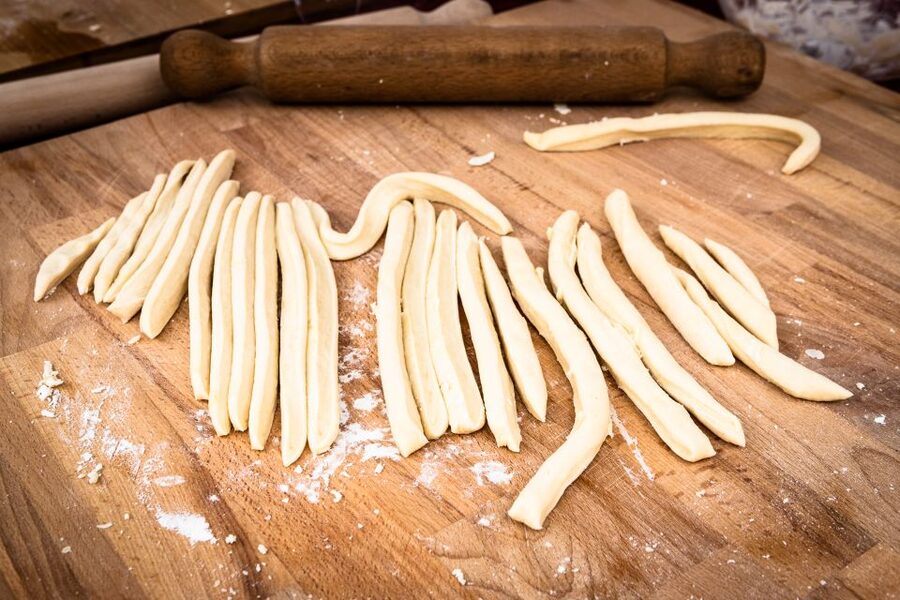
Pici is the signature lesson, but the broader value is learning how Tuscan cooks use a small number of good ingredients. Tagliatelle gives you a thinner, more familiar pasta shape. Ravioli, when included, adds a little more preparation and filling work.
The sauces also show three different directions for fresh pasta:
- Aglione: A garlic and tomato style that works especially well with pici.
- Cacio e pepe: Cheese and pepper, with a simple ingredient list and a technique worth copying carefully.
- Meat ragout: A fuller sauce for those who prefer a hearty pasta course.
Bruschetta can add another lesson in Tuscan produce. When the ingredients come from the farm, you get a direct connection between the property and the meal. That does not mean every class includes farm picking or home-grown vegetables, but the cooking often centers on fresh, uncomplicated ingredients.
The recipes are approachable enough to repeat at home. That is one of the strongest reasons to choose this class over a more elaborate cooking course. You are not just collecting a nice meal. You are learning dishes that do not require a professional kitchen.
Take notes if you want to recreate the food. Ask how much flour was used, how the dough should feel, and how the host knows when the sauce is ready. The hand motions and texture cues are often more valuable than a printed recipe.
Eating the meal you made
The meal is included in the price, along with fresh pasta and wine. You are not handed a separate restaurant menu or asked to choose from a long list. Instead, the food follows the work you have just done.
That makes the final meal especially satisfying. You have rolled the pici, helped prepare the sauce, and watched the pasta cook. Even a simple dish of noodles, tomato, garlic, cheese, or ragout feels more memorable when you understand each step.
The wine is an important part of the Tuscan rhythm, but it is not presented as a formal tasting. This is a pasta class with a glass of wine, not a dedicated winery tour. If you want detailed instruction about local vintages, this is not the right activity. If you want a relaxed pairing with your handmade lunch or dinner, it fits well.
The meal can also be social. Small groups often share a table, and the hosts participate in the conversation. That makes this a good choice for people who want contact with local residents rather than a strictly instructional class.
Is the $141.61 price good value?
At $141.61 per person, this is not the cheapest way to eat pasta in Tuscany. You can find a less expensive restaurant meal, and a simple pasta workshop in a city kitchen may cost less.
The price makes more sense when you count the full package: about three hours of instruction, a farmhouse setting, the meal you prepare, wine, small-group attention, and an apron to take home. You are paying for an activity and dinner together, not just for a plate of pasta.
Value depends heavily on what you want from your day. If you mainly want to see Montepulciano and have a quick lunch, this is too time-consuming and costly. If you want a personal food experience, practical recipes, and a meal in a local home or farm setting, the cost is easier to justify.
The apron is a small but useful souvenir. It is less forgettable than another bottle of olive oil or a generic kitchen magnet, and it marks the activity as something you can continue at home.
Who should book this class?
I would recommend it most strongly to couples, families, and small groups who enjoy eating and doing rather than simply sightseeing. It suits curious cooks, including beginners, because pici is simple to shape and the recipes are manageable.
It is also a good fit if you want a slower afternoon or evening in the countryside. The class gives you a reason to leave the center of Montepulciano and spend time with a local host. People who enjoy conversation and family-style hospitality will get more from it than people who prefer a polished, formal cooking school.
Families should note that the activity involves hands-on food preparation and a shared meal, but no specific child age requirement is provided. For anyone with dietary restrictions, ask for details before booking, since the available information does not specify substitutions or allergy procedures.
This is less suitable if you need a fixed menu, a guaranteed instructor, or a central meeting point. The farmhouse is confirmed after booking, and the menu can vary by host.
Practical details before you reserve
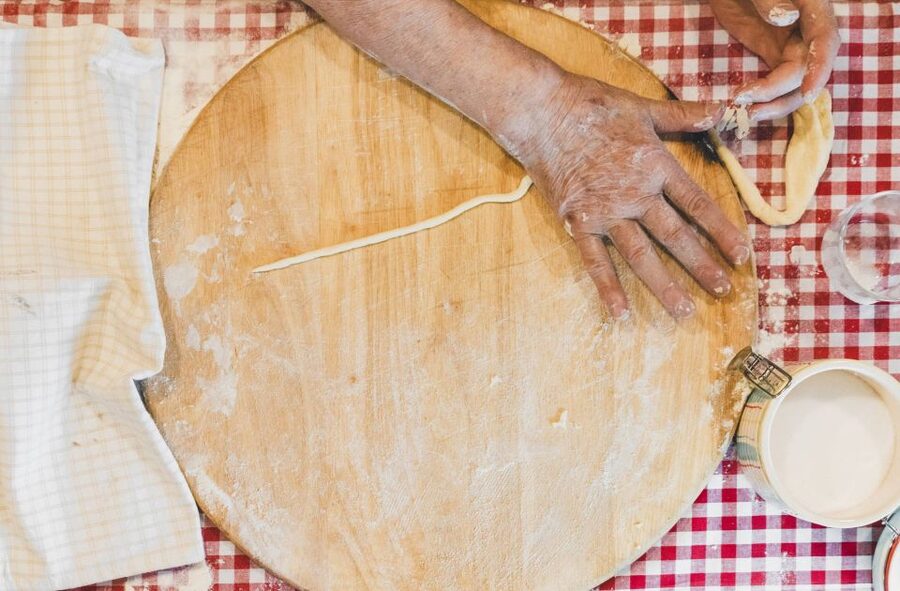
The class lasts three hours, with starting times available on the selected date. Italian and English are offered, and the group is limited to 10 participants.
You receive the farmhouse address after booking. Since transportation is not included, sort out how you will get there before the day of the class. The activity ends back at the meeting point, so you should also plan your return route.
Free cancellation is available up to 24 hours before the start time for a full refund. You can also reserve now and pay later, which is useful if your Tuscany schedule is still shifting.
The experience has an overall rating of 4.7 from 39 reviews, but the most important pattern is not the number itself. The strongest praise focuses on the hosts, the beauty of the farmhouses, the quality of the food, and the relaxed feeling of being welcomed into a private home. Those are the features to value when making your choice.
Should you book the Montepulciano pasta class?
Book it if you want to learn a genuinely local pasta shape, eat a fresh meal, and spend time with an English-speaking Tuscan host in a small group. The pici lesson is easy to follow, and the chance to make tagliatelle, ravioli, sauces, or bruschetta adds useful variety.
Skip it if you want a central Montepulciano activity with no transport planning, or if your main interest is wine production rather than cooking. The farmhouse location is part of the appeal, but it also requires care.
For most food-focused visitors, this is a strong value at the right pace. You leave with a full meal, an apron, recipes you can repeat, and a better understanding of why pici belongs so closely to the Siena area.
FAQ
How long does the Montepulciano pasta-making class last?
The activity lasts three hours. Starting times depend on availability for your chosen date.
What pasta will I learn to make?
The main dish is pici, a thick, hand-rolled pasta from the Province of Siena. Depending on the class, you may also prepare tagliatelle and ravioli.
What sauces might be included?
Possible sauces include meat ragout, aglione sauce, and cacio e pepe. The exact selection may vary.
Is lunch or dinner included?
Yes. The class includes a meal featuring the fresh pasta you prepare, along with a glass of wine.
Where does the class take place?
The class takes place at a farmhouse. The exact farmhouse and meeting point are communicated after booking.
Is transportation included?
No. Transportation to and from the farmhouse is not included.
More Food and Drink Tours in Italy
- Bologna Food & Market Tour with 6 Tastings, Pasta, Wines & More
★ 5.0 · 1,328 reviews - Pasta Making & Wine Tasting with Dinner in Frascati from Rome
★ 5.0 · 1,326 reviews - Rome: Pasta Making with Wine Tasting and Dinner in Frascati
★ 4.9 · 979 reviews - Super Fun Pasta & Gelato Class by Vatican with Wine + Oil Tasting
★ 5.0 · 726 reviews
Recently added in Italy
- Verona: Tortellini Cooking Class and Lunch with Mamma Ivana★ 5.0 · 20 reviews
- Vicenza: Pasta & Tiramisu Cooking Class at a Local’s Home★ 5.0 · 5 reviews
- Verona: Pasta Cooking Class with Wine Tasting★ 5.0 · 4 reviews
- Verona: Pasta & Tiramisu Cooking Class at a Local’s Home★ 5.0 · 16 reviews
- Verona: Prosecco and Pasta Making Class at a Local’s Home★ 5.0 · 10 reviews
- Volterra: Fresh Pasta Cooking Class at a Tuscan Farmhouse★ 5.0 · 33 reviews
- Venice: Share Your Pasta Love in a Local’s Home★ 4.8 · 20 reviews
- Verona: My Granny’s secrets making gnocchi★ 5.0 · 7 reviews
Fresh Pasta Workshops, compared.
Pasta Making Class with Wine, Limoncello, and Dessert
Read our review →

Enjoy Spritz and Pasta Making in Piazza Navona
Read our review →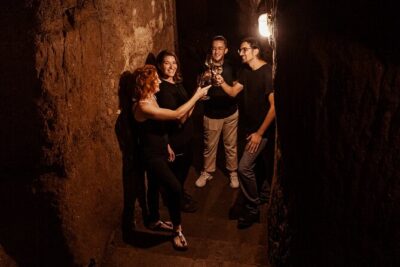
Pasta Making & Wine Tasting with Dinner in Frascati from Rome
Read our review →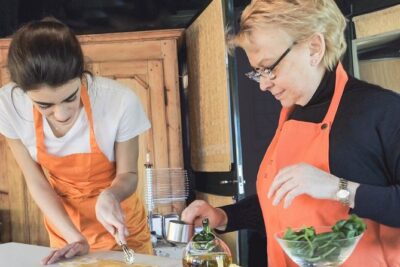
The Secrets to Learn Fresh Pasta and Tiramisù in a Glam Home
Read our review →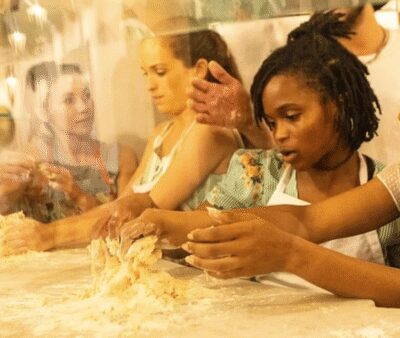
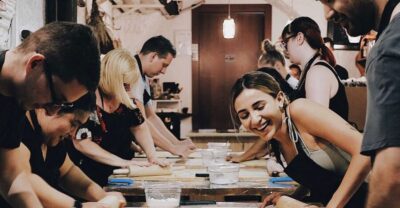
Pasta Making with Wine Tasting and Dinner in Frascati
Read our review →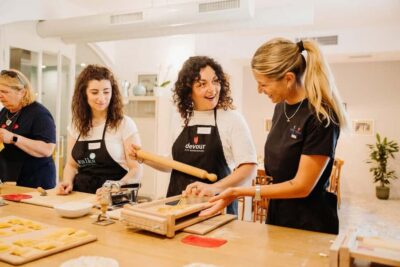
Browse the lists this class appears in