
REVIEW · FRESH PASTA WORKSHOPS
Bologna: Pasta-Making Class at a Local’s Home
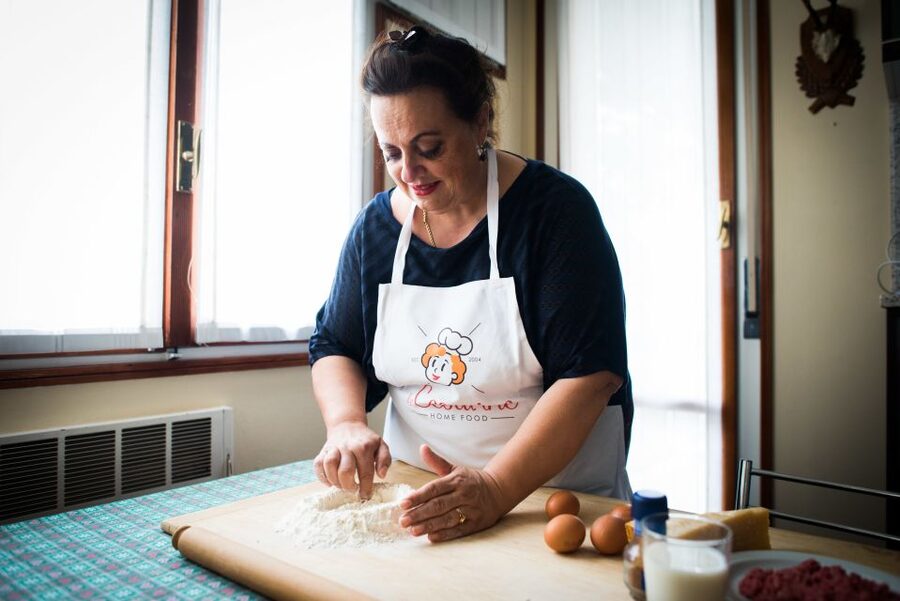
Bologna’s best food lesson may happen far from a restaurant kitchen. In this private home cooking class, you make three regional pasta dishes with a local Cesarina, then sit down at the same table to eat your work with wine. It is a hands-on meal, not a demonstration where you watch someone else do all the work.
I like the personal setting and the useful format: your own workstation, utensils, ingredients, and close guidance from the host. I also like the family connection. Hosts such as Roberta, Martina, Oriana, Alessia, and Alessandra bring their own style, recipes, music, and stories to the evening.
The main consideration is that the exact host and address are assigned after booking, so you cannot choose a particular home or count on a certain view. The class also takes three hours, which is a fair amount of time to set aside during a short Bologna visit.
Key points to know before booking
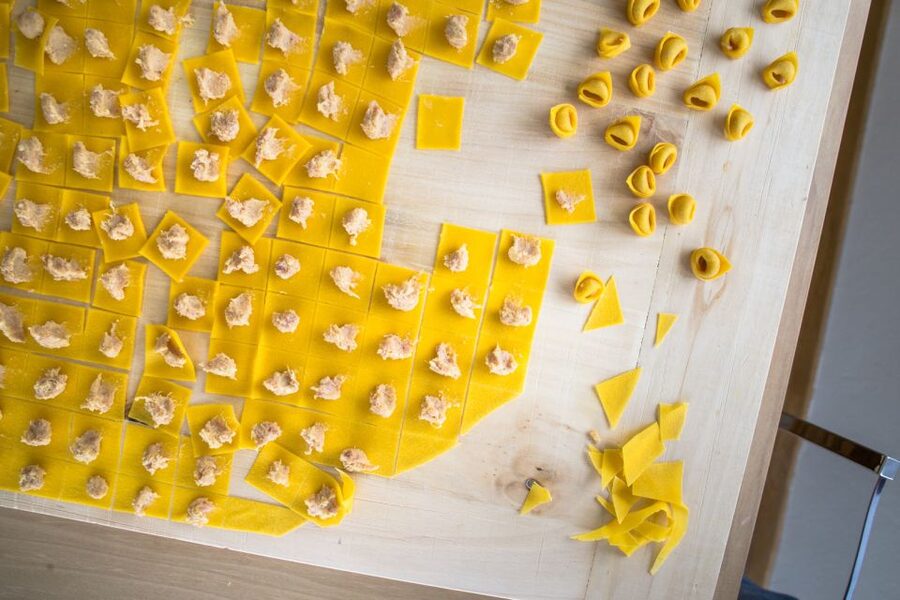
- Three pasta recipes: Learn three authentic regional dishes and eat everything you prepare.
- A real home setting: The class takes place in a local family’s home, with the exact address sent after booking.
- Hands-on instruction: Each participant receives a workstation, utensils, and ingredients.
- Wine with the meal: Water, local red and white wines, coffee, and the prepared pasta are included.
- Flexible scheduling: Classes usually begin at 10:00 AM or 5:00 PM, with other timing possible if arranged ahead.
- Dietary requests welcome: Vegetarian, vegan, and gluten-free needs can be accommodated on request.
Why a Bologna home is the right kitchen
Bologna is one of Italy’s great food cities, but a restaurant meal only shows you the finished plate. This class gives you the steps behind it. You handle the ingredients, learn how the dough should feel, and see how a home cook turns simple materials into a proper local meal.
That setting matters. In a restaurant, you are served a regional dish. Here, you learn the habits that make the dish work. The host can correct your technique, explain what to watch for, and answer questions as you go. You are not simply copying a chef at a distance.
The Cesarine hosts are certified home cooks, and each brings a different personality. Roberta is described as patient and generous with hands-on guidance. Martina combines the lesson with a warm welcome in her home. Oriana brings plenty of conversation and, in one case, a balcony view over Bologna. Alessandra mixes food instruction with local background and even an 80s playlist.
You will not know in advance which host you receive, so this is best viewed as a chance to meet a local family rather than a way to book one specific personality. That uncertainty is part of the home-based format, but it also means the class can feel less scripted.
More Fresh Pasta Workshops in Bologna
- Bologna: Traditional Bolognese Pasta Making with Meal
★ 4.8 · 97 reviews - Traditional bolognese pasta making with a meal
★ 4.5 · 69 reviews - Learn and taste the real bolognese ragù and pasta making
★ 4.8 · 32 reviews
The first hour: choosing recipes and learning the basics
The class usually starts with a welcome from your host and an explanation of the dishes you will prepare. You may be offered options, so you can have some say in the menu rather than making a fixed set of recipes without discussion.
The core promise is three authentic regional pasta recipes. The exact dishes can vary, but the focus is on local preparations drawn from family cookbooks and regional tradition. You should expect the host to explain not just what goes into each recipe, but why the pasta is made that way and what small details affect the final result.
This is the point where the class earns its price. A recipe card alone cannot tell you when dough feels right or how much pressure to use. A home cook standing beside you can. The instruction is practical, and you can put it to use later in your own kitchen.
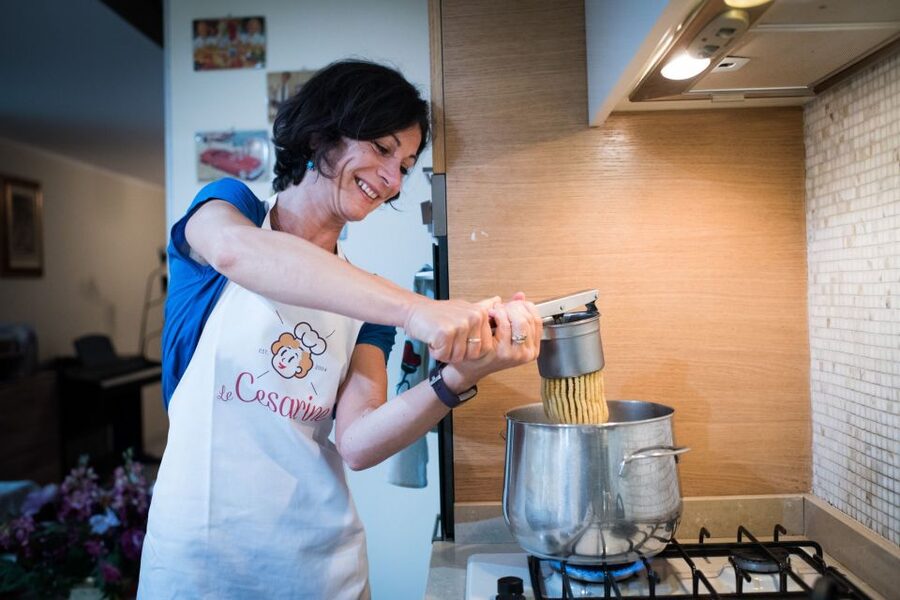
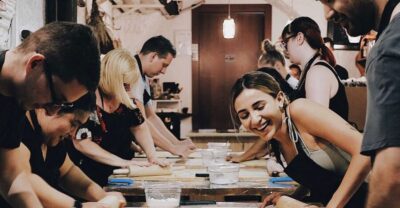
Every participant gets a personal station with utensils and ingredients. That arrangement is useful for couples, families, or friends who want to work side by side without crowding around one shared table. It also means you do more than watch. You mix, shape, prepare, and make mistakes under supervision.
If you have limited cooking experience, you should not be put off by the word class. The hosts are there to guide you, and the format is designed around participation. If you already cook often, you can focus on regional technique and the details that differ from your usual method.
The hands-on pasta work
The middle part of the class is where the experience becomes memorable. Pasta making is tactile. You can see and feel the difference between a dough that needs more work and one that is ready. The Cesarina can show you the small adjustments that are hard to learn from a printed recipe.
The class covers three pasta preparations, so you get more variety than a single-dish workshop. That also makes the three-hour length easier to understand. You are not spending an afternoon making one shape over and over. You are learning several local recipes, preparing them, and then sitting down to eat them.
Hosts are encouraged to share family methods, which gives the lesson a personal angle. The food is not presented as a museum piece or a rigid performance. It comes from the way the host cooks at home, with family recipes and practical tricks passed along through the kitchen.
You should expect plenty of supervision, but not a formal culinary-school lecture. The tone is social and relaxed. One host is described as especially entertaining, and another class included music in the background. That suits the experience: you are learning, but you are also spending an evening in someone’s home.
For this reason, the class works best if you enjoy conversation and do not need every minute planned around a strict schedule. It is less suitable if you want a fast, silent lesson or a polished restaurant-style demonstration.
Sitting down to eat what you made
Once the pasta is ready, the lesson changes into a shared meal. You taste the three dishes you prepared, along with water, local red and white wines, and coffee. The meal is not an extra charge or a small sample. It is the natural finish to the work you have just done.
I like this structure because it gives the class a clear payoff. You do not leave with dough in your hands and no chance to taste the finished result. You sit at the table and see how the separate steps come together on the plate.
The meal also keeps the experience social. You can continue talking with the host, ask about Bologna and regional food, and enjoy the evening at a human pace. One class included sparkling wine, while another featured especially memorable Parmesan and taralli alongside the pasta. Those details vary by host, but they show how much of the experience comes from the household itself.
The food is the focus, but the table conversation is nearly as important. You get a look at how a local family presents a meal, not just how a restaurant serves one. For many people, that personal exchange will be more valuable than learning a single additional pasta shape.
Same town, a different thing to roll out:
- Bologna Food & Market Tour with 6 Tastings, Pasta, Wines & More
★ 5.0 · 1,328 reviews - Bologna: Pasta Cooking Class, Ragu, Spritz, Wine & Gelato
★ 4.9 · 775 reviews - Bologna Local Pasta Cooking Class, Ragu, Spritz, Wine & Gelato
★ 5.0 · 527 reviews - Pastamama, Home Cooking Classes at Grace’s Home
★ 5.0 · 521 reviews
Morning class or evening meal
The standard start times are around 10:00 AM and 5:00 PM. A morning class can fit neatly into a day of sightseeing, leaving your afternoon open. It also makes sense if you prefer to eat the meal earlier or want an activity before the city gets busy.
The 5:00 PM option feels more like a social dinner. You finish near the usual evening meal period and can treat the class as your main night out. If you are choosing the evening, remember that the class itself lasts three hours. It is not a quick pre-dinner stop.
The supplier may be able to adjust the timing for your plans if you contact them in advance. Do not assume that a custom time is automatic. Ask before booking or as soon as your plans are clear.
The meeting point is a private home, and the full address is provided only after booking. That protects the host’s privacy, but it means you cannot judge the exact neighborhood or walking distance in advance. Build a little flexibility into your plans until you receive the instructions.
The activity ends back at the same meeting point. No transportation is included or described, so you should plan your own way to and from the home.
What the $112.15 price buys you
At $112.15 per person, this is not the cheapest way to eat pasta in Bologna. You can find a less expensive restaurant meal, and you may find a shorter cooking demonstration at a lower rate. The useful comparison is not simply food against food.
Your price covers three hours of instruction, three pasta dishes, ingredients, equipment, wine, water, coffee, and the private home setting. It also buys direct attention in a private group rather than a large public class. If you care about learning skills you can repeat at home, that makes the cost easier to justify.
The class is also a meal and an activity in one. Instead of paying separately for an evening meal and another organized experience, you spend the time cooking and then eating the result. That can be good value during a short stay, especially if you enjoy food more than ticking off another sightseeing stop.
The value depends on your priorities. If you mainly want a full plate with no effort, spend the money at a restaurant. If you want instruction, conversation, and a meal in a local home, the price is more reasonable.
Dietary needs and group style
Dietary requirements can be handled on request, including vegetarian, vegan, and gluten-free needs. You should mention your requirements before the class so the host has time to plan the recipes and ingredients.
That flexibility is important in a pasta class, since wheat and eggs may feature heavily in traditional preparations. The information confirms that alternatives can be arranged, but it does not promise that every recipe will be identical to the standard menu. Ask what you will be making if a particular ingredient is a serious concern.
The group is private, which gives you more control over the pace and atmosphere. You can ask questions without worrying about slowing down a large class, and the host can give attention to each person at the workstation.
Private does not mean you select the host or receive a completely custom menu. The Cesarina is assigned, and the recipes remain part of the regional cooking format. Still, the private setup is a major advantage for families, couples, and small groups who want a more relaxed evening.
Who will enjoy this most
I would choose this class if you want food to be part of your understanding of Bologna, not just something placed in front of you. It suits first-time pasta makers, confident home cooks, couples, families, and anyone who likes a social meal with a practical result.
It is especially good for people who value personal contact. The hosts do more than explain measurements. They welcome you into their homes, share family methods, and create space for conversation. The best moments may come between the official steps, such as hearing about local food while a pot heats or discussing Bologna from a balcony.
Children may enjoy the hands-on work, but the supplied details do not specify a minimum age or child policy. If you are booking with children, ask the supplier first.
You should think twice if you dislike unknown meeting locations, need a tightly fixed schedule, or prefer a formal professional kitchen. You also may not get the exact host described by someone else. The experience changes with the Cesarina, the home, and the recipes selected.
Booking tips for a smoother class
Contact the supplier ahead of time with dietary requests, preferred timing, and any questions about the menu. The usual start times are 10:00 AM and 5:00 PM, but flexibility may be possible.
Wait for the confirmed address before planning your route. Since the home is private, the location is not published in advance. Give yourself enough time to reach the meeting point without rushing into the cooking lesson.
Keep the rest of your schedule light. Three hours includes instruction, food preparation, and the meal, and the social side can make the class feel longer in a good way. I would avoid booking a timed museum entry or train immediately afterward.
Cancellation is flexible up to 24 hours before the activity for a full refund. You can also reserve now and pay later, which helps if your Bologna plans are still moving around.
Should you book this Bologna pasta class?
Book it if you want to learn three regional pasta recipes, eat a full meal, and meet a local host in a private home. The strongest reasons are the hands-on work, the small private setting, and the chance to turn a famous Bologna food tradition into a skill you can repeat at home.
The main tradeoff is uncertainty. You do not choose the exact address or host, and the class takes a full three hours. At $112.15, it is a considered purchase rather than a casual meal.
For a food-focused visit, I think the format makes sense. You leave with more than a restaurant receipt: you have practiced the recipes, shared a table with a local family, and gained a clearer feel for how Bologna’s pasta tradition works.
FAQ
Where does the pasta-making class take place?
The class takes place in a local family’s home in Bologna, in the Emilia-Romagna region. The exact address is sent after you book to protect the host’s privacy.
How long does the experience last?
The activity lasts three hours, including the cooking lesson and the meal.
What time does the class usually begin?
Classes usually begin at 10:00 AM or 5:00 PM. The timing may be flexible if you contact the supplier in advance.
How many pasta dishes will I make?
You will learn and prepare three authentic regional pasta recipes, then taste all three dishes.
What is included in the price?
The price includes the cooking class, ingredients and utensils for the lesson, tasting of the three pasta dishes, water, local red and white wines, and coffee.
Is the class taught in English?
Yes. The Cesarine hosts can teach in Italian or English.
Can dietary requirements be accommodated?
Yes. Vegetarian, vegan, gluten-free, and other dietary requirements can be accommodated on request. Tell the supplier in advance.
Is the group private?
Yes. This is a private group experience, so the class is arranged for your own booking party rather than a large shared group.
Recently added in Bologna
- Colorful Pasta Workshop in Bologna with meal★ 5.0 · 2 reviews
- Tortelloni and Tagliatelle Cooking Class in Bologna + Wine★ 3.0 · 2 reviews
- 3 hour Lasagna Bolognese cooking class★ 5.0 · 6 reviews
- Cesarine: Small group Tortellini Class at Local’s Home in Bologna★ 5.0 · 18 reviews
- Pasta and Tiramisu Masterclass with organic wines★ 3.5 · 3 reviews
- Lasagna Masterclass: Learn, Cook & Taste Authentic Bolognese★ 5.0 · 4 reviews
- Pasta Making Class: Tagliatelle & Bolognese Sauce★ 5.0 · 15 reviews
- Home Cooking: Pasta Making with Natural Colors in a Tiny Group★ 5.0 · 6 reviews
Fresh Pasta Workshops, compared.
Pasta Making Class with Wine, Limoncello, and Dessert
Read our review →

Enjoy Spritz and Pasta Making in Piazza Navona
Read our review →
Pasta Making & Wine Tasting with Dinner in Frascati from Rome
Read our review →
The Secrets to Learn Fresh Pasta and Tiramisù in a Glam Home
Read our review →
Pasta Making with Wine Tasting and Dinner in Frascati
Read our review →
Browse the lists this class appears in