
REVIEW · GELATO MAKING CLASSES
Bologna: Pasta Cooking Class, Ragu, Spritz, Wine & Gelato
Bologna’s best cooking lesson is less about following a recipe and more about learning the city’s daily food culture. You roll egg pasta with your hands, sip a local Casoni Spritz, then eat tagliatelle al ragù with Parmigiano Reggiano in the same room where you made it.
I like two things here. First, the class uses a rolling pin rather than a machine, so you learn the old-fashioned method and can repeat it at home. Second, the welcome aperitivo, regional wines, coffee, amaro, and gelato make the $79 price feel generous. The main catch is that the ragù is prepared in advance, so you make the pasta but not the sauce.
Key points at a glance
- Hand-rolled tagliatelle: Mix flour and fresh eggs, roll the dough by hand, cut it into ribbons, and cook your own pasta.
- A full Bolognese meal: Piadina, mortadella, Pignoletto, ragù, Parmigiano Reggiano, Sangiovese, coffee, amaro, and gelato are included.
- A local spritz lesson: Make and drink Casoni Spritz, a herb-infused Emilia-Romagna cocktail with a local story.
- Friendly English instruction: Hosts such as Luca, Stella, Martina, Valentina, Roberta, Beatrice, Steffi, and Claudia have led sessions, depending on the date.
- Useful take-home value: You can take leftovers home and request PDF recipes by email.
- Important limits: The class is not suitable for vegans, vegetarians, or people with gluten intolerance, and the venue has a large flight of stairs.
Starting with piadina, mortadella, and Pignoletto
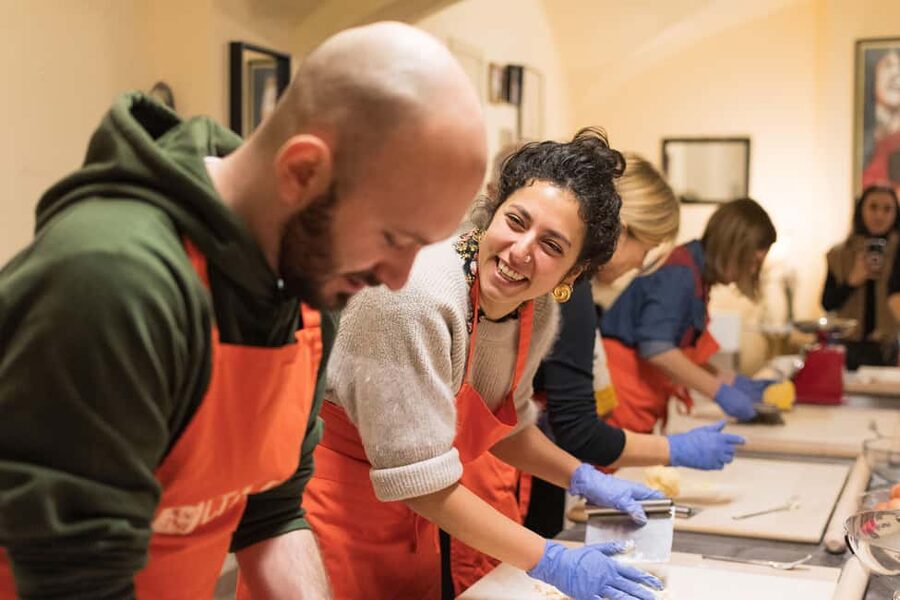
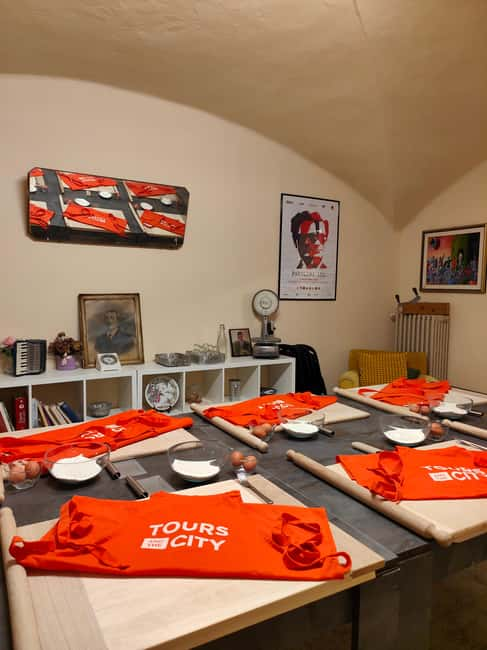
The class begins in a traditional kitchen in central Bologna. Your hosts meet you outside at the exact booking time, wearing orange aprons, and escort you inside. That simple system matters in an unfamiliar city, since you do not need to guess which doorway belongs to the class.
Before the flour appears, you get a Bolognese aperitivo: piadina, mortadella, and a glass of Pignoletto sparkling wine. Piadina is a soft, thin flatbread from Emilia-Romagna, and it works nicely with the region’s famous mortadella. This is not filler food before the real activity. It gives you a first taste of the area and gets conversation moving around the table.
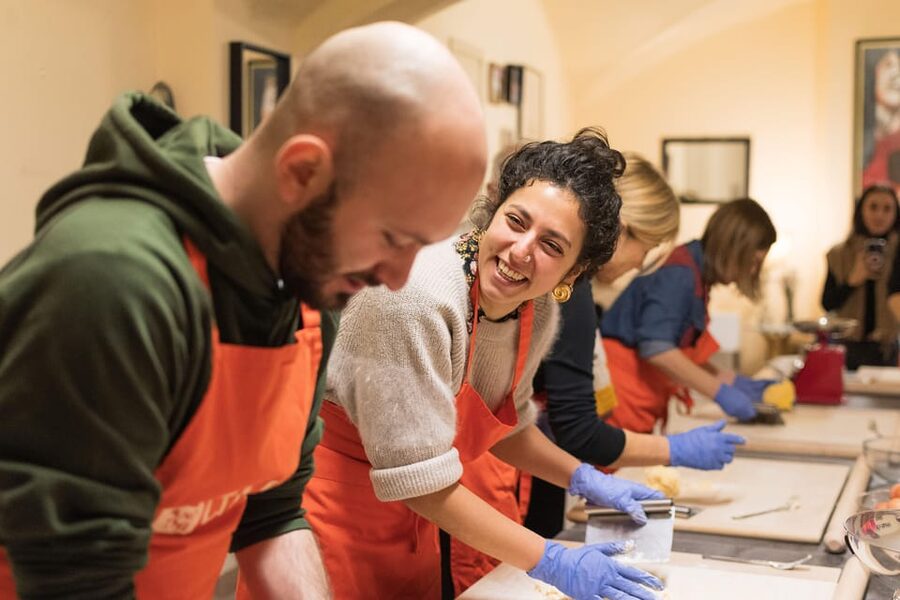
I like this opening because it avoids the stiff classroom feeling. You meet the people beside you over food rather than a formal introduction. Several sessions have included simple games during pauses, which helps solo visitors and mixed-age groups start talking without awkwardness.
The staff are a major part of the appeal. Names vary by session, but the teaching team has included Luca, Stella, Martina, Valentina, Roberta, Beatrice, Steffi, Claudia, Lucilla, and others. The most useful quality is patience. You can expect clear demonstrations, corrections when the dough needs attention, and bits of local food knowledge along the way.
More Pasta Classes with Wine in Bologna
- Bologna Food & Market Tour with 6 Tastings, Pasta, Wines & More
★ 5.0 · 1,328 reviews - Bologna Local Pasta Cooking Class, Ragu, Spritz, Wine & Gelato
★ 5.0 · 527 reviews - Bologna: Pasta and Tiramisu Small Group Cooking Class with Wine
★ 5.0 · 409 reviews
Making pasta the old-fashioned way
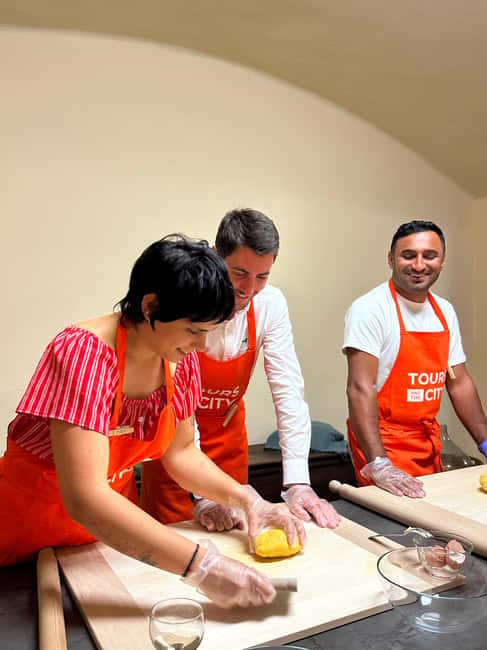
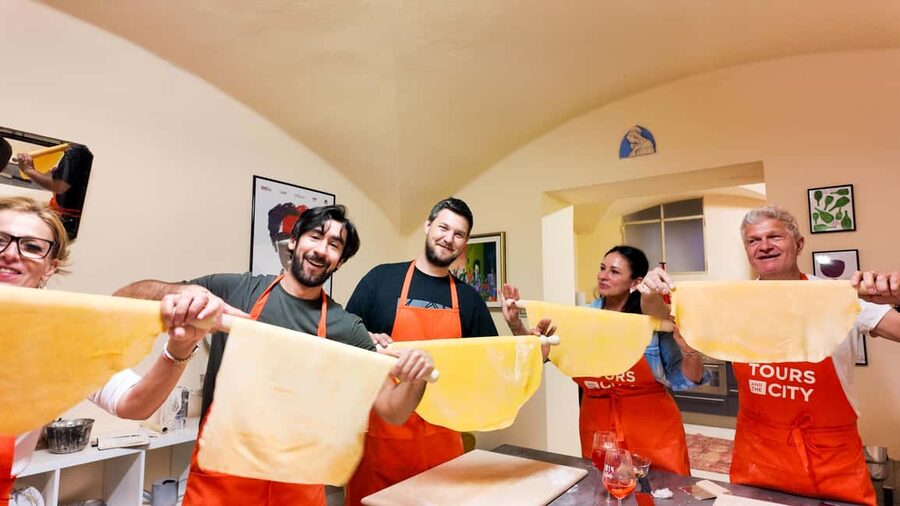
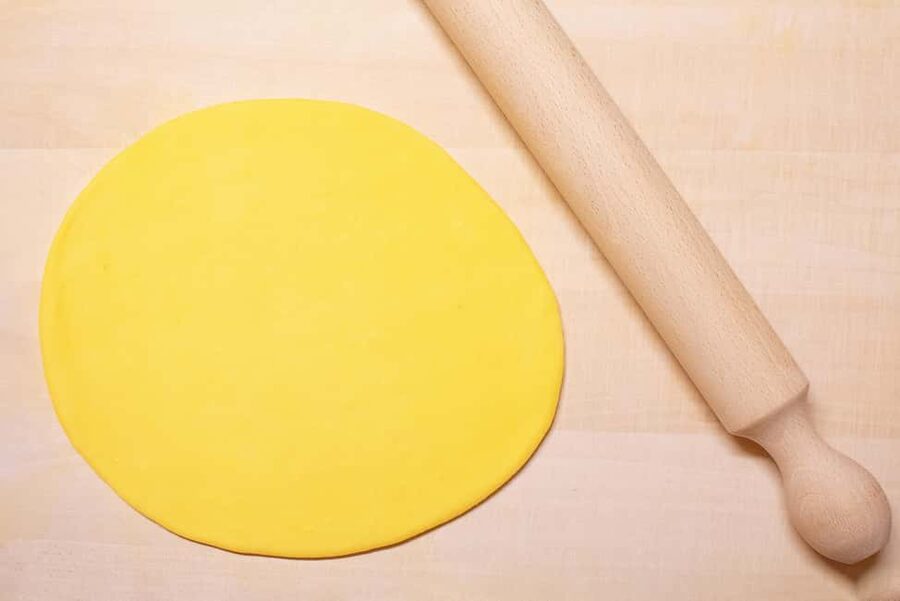
The main lesson is tagliatelle, Bologna’s classic egg pasta. You start with local flour and free-range eggs from the province of Bologna. There are no pasta machines here. Instead, you mix the dough, work it with your hands, and roll it thin with a rolling pin.
That choice makes the class more useful than a quick demonstration. A machine can produce even sheets with little effort, but hand-rolling shows you how the dough feels when it is too dry, too sticky, or ready to cut. You leave with a skill you can try in your own kitchen, even if your first batch at home looks more rustic than the one in Bologna.
The instructors demonstrate each stage before you try it. You shape the dough into a sheet, cut it into tagliatelle, and prepare it for cooking. The pace is designed for first-timers, so you do not need previous cooking experience.
Do not worry if your strips are uneven. Fresh pasta is forgiving, and the point is to understand the method rather than produce restaurant-perfect ribbons. The teaching team helps troubleshoot problems as they arise, and that hands-on support is especially useful when several people are working at different speeds.
There is also a practical pause while the dough rests. Rather than leave you standing around, the hosts use the time for conversation, games, and drinks. This keeps the three-hour session social without making it feel rushed.
The Casoni Spritz is part of the lesson
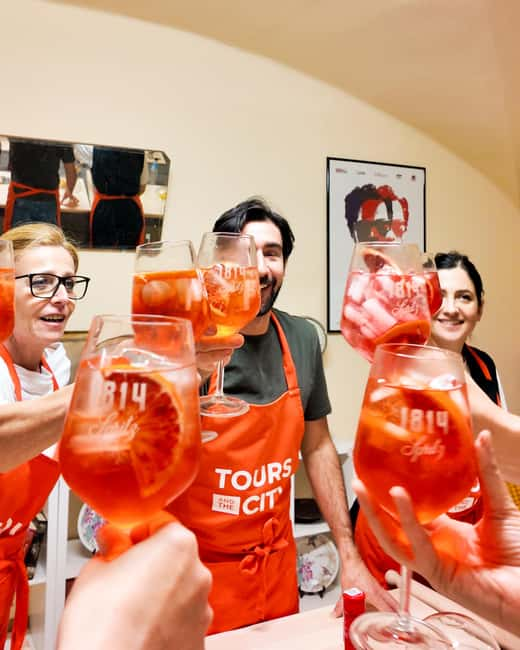
At some point during the pasta work, you make a Casoni Spritz. It is not simply a standard Aperol Spritz added to the menu. Casoni is a local Emilia-Romagna spirit, and this version uses herbs and traditional recipes.
You prepare your own drink and sip it during the class. That makes the cocktail part of the activity rather than just another included beverage. The hosts also explain its background and preparation, so you get a small lesson in regional drinking culture alongside the pasta work.
The timing works well. A spritz gives you something refreshing while the dough rests, and it keeps the mood relaxed without turning the class into a drinking event. If you prefer not to drink alcohol, unlimited water and soft drinks are included, though the listed tasting menu centers on wine and spirits.
Tagliatelle al ragù, served with local wine
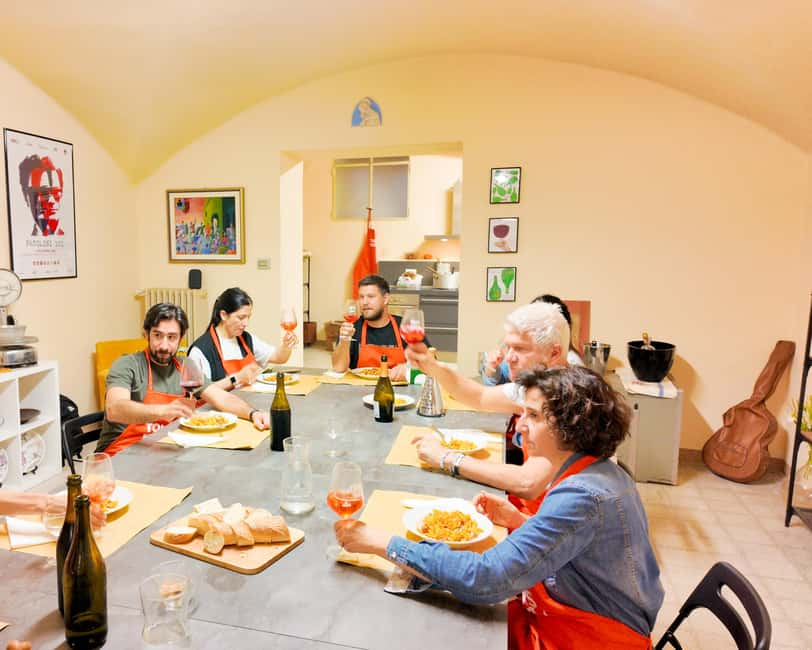
Once your tagliatelle is ready, the pasta is cooked and served with house-made ragù. The sauce is prepared ahead of time each week, following a family tradition. You do not make it yourself, and that is the clearest limitation of the class.
Still, the arrangement makes practical sense. Ragù needs long cooking time, which does not fit neatly into a three-hour pasta lesson. Preparing it in advance means you can focus on the pasta and still eat a properly developed sauce rather than a hurried version.
The dish is finished with 24-month-aged Parmigiano Reggiano from a local dairy. You also get glasses of Sangiovese, the region’s familiar red wine. Together, the fresh pasta, slow-cooked sauce, aged cheese, and red wine give you a focused taste of Bolognese cooking rather than a broad menu of unrelated samples.
I would treat this as a generous meal, not a light snack. You have already eaten piadina and mortadella, and the evening continues with coffee, amaro, and gelato. If you have an early dinner reservation afterward, allow for the possibility that you will not want it.
Leftover pasta can be taken away. That small detail adds real value, especially if you are staying in an apartment or have a way to store food. The recipes can also be sent as PDFs by email upon request, which gives you a better chance of recreating the class at home.
More Gelato Making Classes in Bologna:
- Bologna: Original Lasagna & Gelato Class at a Cooking School
★ 4.9 · 59 reviews - Bologna Original Lasagna and Gelato Class with Aperitif
★ 5.0 · 18 reviews - Florence Pizza or Pasta Class with Gelato Making at a Tuscan Farm
★ 5.0 · 6,801 reviews - Florence: Pizza or Pasta Class with Gelato at a Tuscan Farm
★ 4.9 · 1,181 reviews
Coffee, Montenegro, and gelato with balsamic vinegar
The final course has several distinctly Italian touches. You finish with local Moka coffee, a bitter digestif, and gelato with balsamic vinegar.
The gelato is the surprise ending. Balsamic vinegar may sound odd on ice cream, but Emilia-Romagna is known for its balsamic tradition, so the pairing connects dessert to the region rather than adding a generic sweet course. The exact dessert is described as a local mystery tradition, so you should expect a little element of surprise rather than a fixed restaurant-style dessert menu.
Montenegro is the named digestif in the description. It is an amaro from Bologna, and it gives you another local drink to try after the meal. If strong or bitter drinks are not your preference, you can simply take the coffee and gelato and skip the digestif.
This closing sequence is one reason the class feels like a complete evening. You do not just make food and leave after eating it. You share the final drink and dessert at the table, with time to finish conversations and compare the pasta you made.
Why the $79 price can be good value
At $79 per person, this is not the cheapest way to eat pasta in Bologna. You can find a plate of tagliatelle al ragù for much less. The comparison changes when you count the amount included here: aperitivo, Pignoletto, the spritz workshop, the pasta lesson, ragù, Parmigiano Reggiano, Sangiovese, coffee, amaro, gelato, water, soft drinks, and possible leftovers.
You are paying for instruction and social time as much as for food. The class lasts three hours, which gives the hosts enough room to explain the dough, let you work at your own pace, and serve the meal without turning the whole thing into a rushed photo stop.
The local sourcing also adds meaning. Flour and eggs come from nearby producers, Parmigiano comes from a local dairy, coffee comes from a Modena roastery, and the spirits are from Emilia-Romagna. That does not make every ingredient completely local, but it shows a clear effort to keep the food tied to the region.
I would call the price fair for someone who wants both a meal and a practical activity. If you only want to eat traditional pasta, go to a trattoria. If you want to understand how the pasta is made and take the method home, the calculation is much better.
Who will enjoy this Bologna class most
This is a strong choice for first-time pasta makers. The rolling-pin method may look intimidating at first, but the teaching is aimed at beginners, and the instructors are used to helping people with different levels of confidence.
It also works well for families. One booking specifically included children, and the class format gives younger participants something physical to do rather than requiring them to sit through a long food lecture. Comfortable clothing and shoes are the sensible choice, since you will be standing and working with dough.
Solo visitors can fit in easily. The aperitivo and group activities create natural chances to talk, and the English instruction removes much of the worry about following the demonstrations. Couples and friends will find plenty to do together, but you do not need to arrive with a large party.
You should skip it if you are vegan, vegetarian, or gluten intolerant. The meal centers on eggs, wheat pasta, mortadella, cheese, and meat ragù. You must report dietary requirements in advance, and serious food allergies may mean the hosts cannot accommodate you.
The venue also has a large flight of stairs. If you use a wheelchair or crutches, this experience is not recommended. That is worth checking before you pay, since the access issue cannot be solved by simply arriving early.
Timing, meeting point, and what to bring
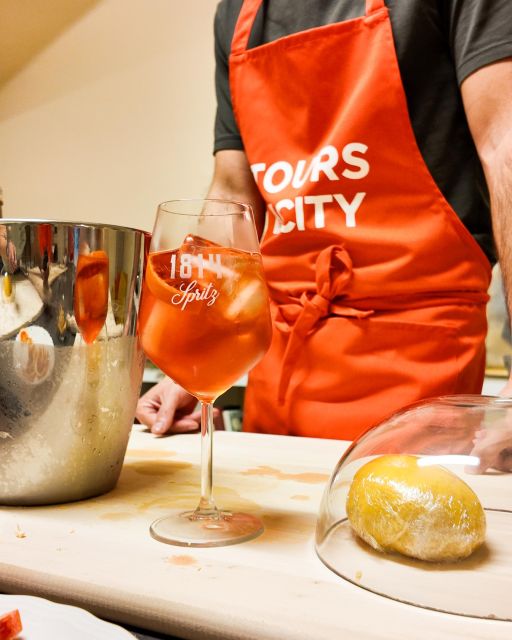
The class lasts three hours, with starting times depending on availability. Plan to arrive a few minutes early even though the hosts meet you at the exact booking time. Look for an orange apron outside the building, then follow the team inside.
Wear comfortable shoes and clothes. You do not need special equipment, as the ingredients and workshop materials are supplied. Avoid dressing for a formal dinner. Flour, dough, and active work are part of the evening.
The instruction is in English. Host names and pairings change, so do not book around a particular teacher unless the operator confirms who will lead your date. The teaching team has included people such as Valentina, Stella, Steffi, Beatrice, Roberta, Luca, and Martina, and the strongest pattern across the sessions is clear, friendly guidance rather than a lecture-heavy format.
Free cancellation is available up to 24 hours before the start time, and you can reserve now and pay later. Those terms are useful if your Bologna schedule is still moving, but check the final booking details for your chosen date.
What makes this feel local
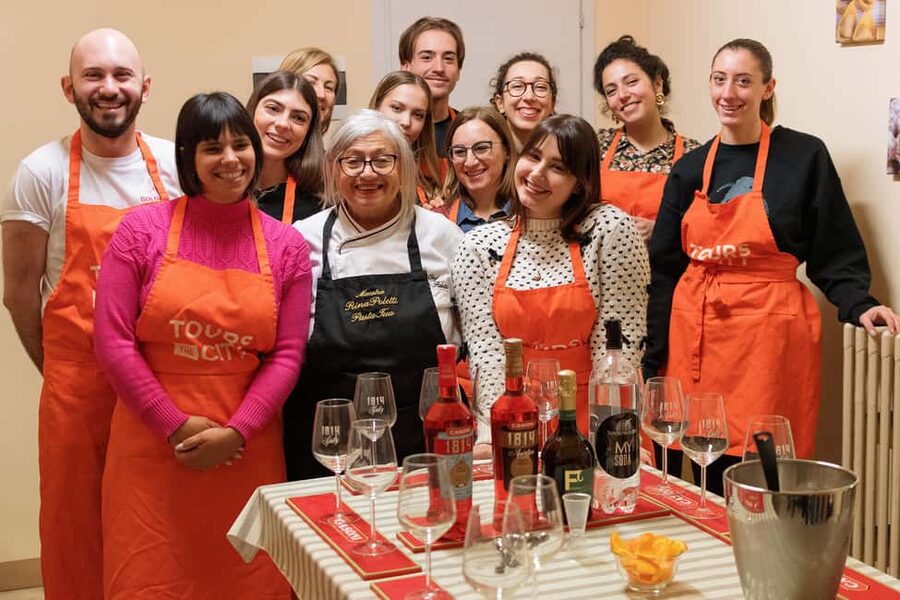
The setting and menu do more than provide Italian decoration. Piadina and mortadella introduce the region before you touch the dough. Pignoletto brings in the local sparkling wine tradition. Casoni adds a regional cocktail rather than a familiar international brand. Sangiovese, Parmigiano Reggiano, Moka coffee, Montenegro, and balsamic gelato carry that local thread through the final course.
The experience also has a community-minded detail. Extra pasta is donated to a nearby church, so unused food does not simply go to waste. You do not need to make that the reason for booking, but it is a welcome sign that the cooking activity connects with the surrounding community.
The social tone matters too. I like that the hosts use food, drink, and simple games to help strangers talk. You get practical instruction without losing the easy pace of an Italian meal.
Should you book it?
Book this class if you want a hands-on introduction to Bolognese food, especially if you have never made fresh pasta. The combination of rolling-pin tagliatelle, Casoni Spritz, regional wine, ragù, coffee, and gelato gives you a lot for three hours and $79.
Do not book it if you are seeking a full sauce-making workshop, a vegan menu, or step-free access. The ragù is made before class, and the stairs are a real limitation.
For most visitors, I would choose this as an afternoon or early evening activity, then leave room afterward for a walk through Bologna rather than another large meal. You will leave with a full stomach, a few local flavors in your memory, and a pasta method you can actually use at home.
FAQ
How long does the pasta cooking class last?
The experience lasts three hours. Starting times vary by date, so check availability when booking.
Is the class taught in English?
Yes. The instructor and teaching team provide the workshop in English.
Do I make the ragù myself?
No. The ragù is prepared in advance, because the class focuses on making the fresh tagliatelle. You eat the pasta with the house-made sauce.
What food and drinks are included?
The package includes piadina, mortadella, Pignoletto sparkling wine, a Casoni Spritz, tagliatelle with ragù, Parmigiano Reggiano, Sangiovese, water, soft drinks, Moka coffee, a bitter digestif, and gelato with balsamic vinegar.
Is the class suitable for vegetarians, vegans, or people with gluten intolerance?
No. The activity is not suitable for vegans, vegetarians, or people with gluten intolerance. You should report dietary requirements in advance, and serious allergies may not be possible to accommodate.
Can I take pasta home, and will I receive the recipes?
You can take away leftovers. Recipes are available by request and are sent by email in PDF format.
Recently added in Bologna
- Colorful Pasta Workshop in Bologna with meal★ 5.0 · 2 reviews
- Tortelloni and Tagliatelle Cooking Class in Bologna + Wine★ 3.0 · 2 reviews
- 3 hour Lasagna Bolognese cooking class★ 5.0 · 6 reviews
- Cesarine: Small group Tortellini Class at Local’s Home in Bologna★ 5.0 · 18 reviews
- Pasta and Tiramisu Masterclass with organic wines★ 3.5 · 3 reviews
- Lasagna Masterclass: Learn, Cook & Taste Authentic Bolognese★ 5.0 · 4 reviews
- Pasta Making Class: Tagliatelle & Bolognese Sauce★ 5.0 · 15 reviews
- Home Cooking: Pasta Making with Natural Colors in a Tiny Group★ 5.0 · 6 reviews
Gelato Making Classes, compared.
Florence Pizza or Pasta Class with Gelato Making at a Tuscan Farm
Read our review →
Pizza or Pasta Class with Gelato at a Tuscan Farm
Read our review →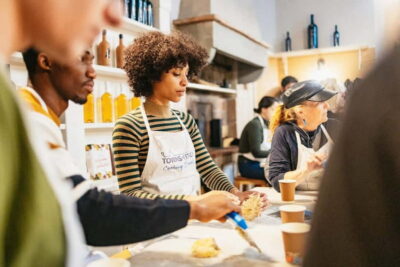
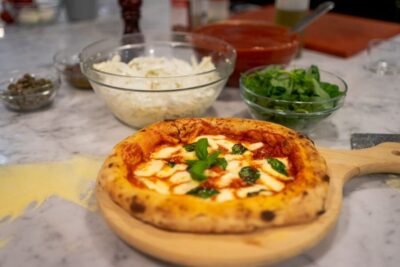
Pizza or Pasta and Gelato-Making Class with Wine
Read our review →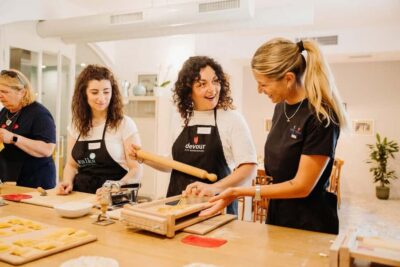
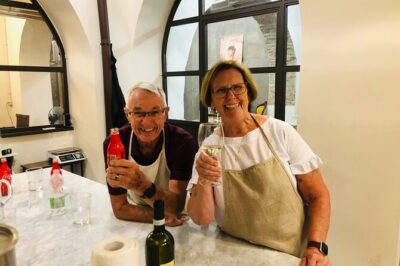
Super Fun Pasta & Gelato Class by Vatican with Wine + Oil Tasting
Read our review →
Premium Pasta and Gelato Cooking Class in Florence
Read our review →
Milan Culinary Experience: Pasta & Gelato or Tiramisù Class
Read our review →Browse the lists this class appears in