
REVIEW · FRESH PASTA WORKSHOPS
Bologna: Express Pasta-Making Class with Tasting
Bologna’s pasta tradition is best learned with your hands, not from a demonstration across a restaurant kitchen. In this 90-minute class, Alessia teaches you to roll fresh dough with a pin and shape local favorites, including tortellini, tagliatelle, and farfalle, before you sit down to eat them.
I like the small group of no more than 10 and the warm, home-style setting, complete with wine, salame, mortadella, and two friendly kittens named Pol and Ruby. I also like that you make several types of pasta instead of spending the whole class on one dish. The main thing to consider is timing: the listed length is 1.5 hours, but the meal and relaxed pace may push the experience well past that.
Key points at a glance
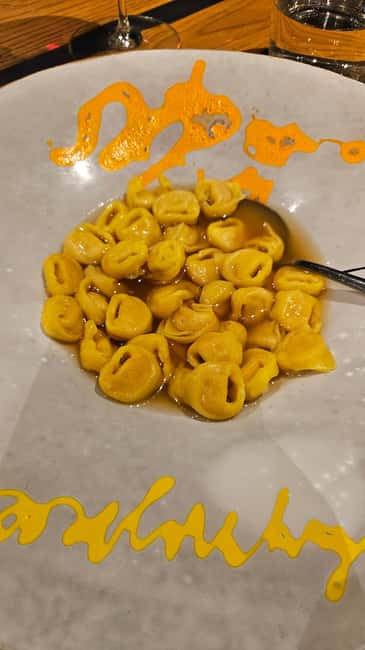
- Three pasta dishes to eat: Tortellini in broth, tagliatelle with ragù, and farfalle with tomato and basil sauce.
- Traditional hand work: You roll the dough with a rolling pin rather than relying on a machine.
- A local host named Alessia: Instruction is offered in English, Italian, and French.
- A home-style table: The class includes an appetizer and wine before or alongside the pasta tasting.
- Small and hands-on: The group is limited to 10, so you should have room to practice.
- Plan extra time: Some sessions have lasted much longer than the advertised 90 minutes once lunch and conversation are included.
Why Bologna is the right place to learn pasta
Bologna is the capital of Emilia-Romagna, the part of Italy famous for stuffed pasta, egg pasta, and ragù. The local cooking style is not about complicated equipment. It depends on a few ingredients, careful dough work, and the feel of the pasta under your fingers.
That makes this class useful even if you rarely cook at home. You are not simply watching someone fold tortellini. You are learning how the dough behaves, how thin to roll it, and how different shapes match different sauces.
I particularly like the range of pasta included. Tortellini are small and stuffed, while tagliatelle are long ribbons designed to hold ragù. Farfalle, with their pinched centers and wider edges, work with a lighter tomato and basil sauce. You get a quick lesson in how shape and sauce belong together.
The class also includes tortelloni, balanzoni, and lasagne as part of the pasta-making instruction. The exact focus is on the core tasting of tortellini, tagliatelle, and farfalle, but learning several shapes gives you a better sense of the Bolognese pasta family.
More Fresh Pasta Workshops in Bologna
- Bologna: Traditional Bolognese Pasta Making with Meal
★ 4.8 · 97 reviews - Traditional bolognese pasta making with a meal
★ 4.5 · 69 reviews - Learn and taste the real bolognese ragù and pasta making
★ 4.8 · 32 reviews
Meeting Alessia at the gray gate
The meeting point is Via Sabotino 27. The instructions tell you to go in front of a gray gate intended for cars, so pay attention to that detail rather than looking only for a large cooking-school sign.
This is a practical point worth taking seriously. A residential or home-based class can be less obvious than a shopfront, and a gray gate is easier to miss if you arrive distracted. Give yourself enough time to locate the entrance before the start.
Alessia teaches in French, Italian, and English. The small group means the class should feel more like sitting around a kitchen table than attending a large food demonstration. Pol and Ruby, the host’s adorable kittens, may also be part of the setting. If you are allergic to cats, that is a detail to keep in mind before booking.
The class is wheelchair accessible. Children under six are not permitted, but older children can take part. A family with children aged nine to twelve found the activity engaging, which suggests that the hands-on work can suit school-age kids who enjoy making things with their hands.
Rolling dough the old-fashioned way
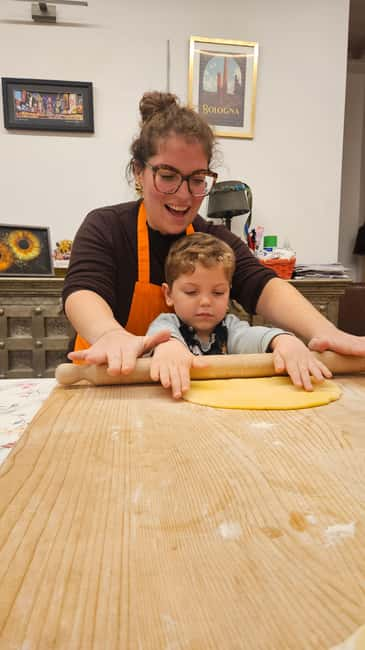
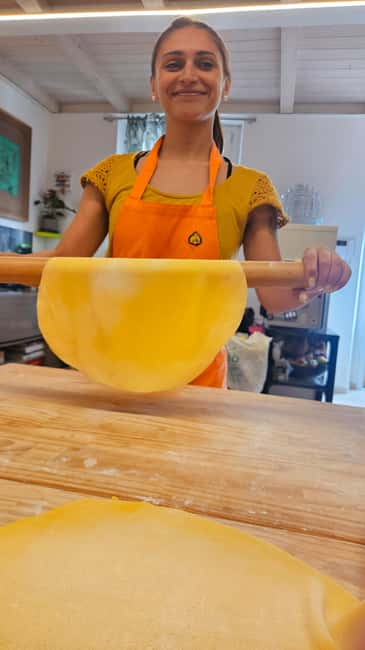
The central skill here is rolling pasta with a rolling pin. That matters because it gives you direct control over the dough instead of asking you to press a button and wait for a machine.
At first, the process may look simple. You flatten the dough, turn it, and keep rolling. The challenge is making it thin and even without tearing it. Alessia demonstrates the steps and corrects you as needed. One useful part of this kind of lesson is that mistakes show quickly. If the dough is too thick or a fold is uneven, you can see and fix it immediately.
You will also learn to customize the color of your pasta. The activity includes pasta color customization, adding a playful element beyond the standard yellow egg dough. The supplied details do not specify which colors or ingredients are used, so you should treat this as a creative option rather than expect a particular design.
You receive the needed materials, an apron, and a rolling pin. Comfortable clothes are the only item you need to bring. Since flour and dough work can be messy, I would avoid wearing anything you are particularly careful about.
Tortellini in broth, the first taste of Bologna
Tortellini are one of Bologna’s signature foods. These small stuffed pieces take more patience than flat noodles because you need to add filling, fold the dough, and seal each parcel without trapping too much air.
In this class, you make tortellini and eat them in broth. That pairing is important. Broth keeps the delicate pasta at the center of the dish, rather than covering it with a thick sauce. It also shows how Bolognese cooking often values balance and restraint.
Do not expect every piece to look identical. That is part of the point of a hand-making class. Your first tortellino may be a little large, a little crooked, or sealed more firmly on one side than the other. Alessia’s guidance helps you learn the motion, and the finished bowl gives you an immediate reward for the effort.
If you are comparing this class with a lesson that teaches only pasta shapes, the chance to eat the tortellini in broth is a real advantage. You learn not only how to form the pasta, but also how it is served in the region.
Same town, a different thing to roll out:
- Bologna Food & Market Tour with 6 Tastings, Pasta, Wines & More
★ 5.0 · 1,328 reviews - Bologna: Pasta Cooking Class, Ragu, Spritz, Wine & Gelato
★ 4.9 · 775 reviews - Bologna Local Pasta Cooking Class, Ragu, Spritz, Wine & Gelato
★ 5.0 · 527 reviews - Pastamama, Home Cooking Classes at Grace’s Home
★ 5.0 · 521 reviews
Tagliatelle with ragù
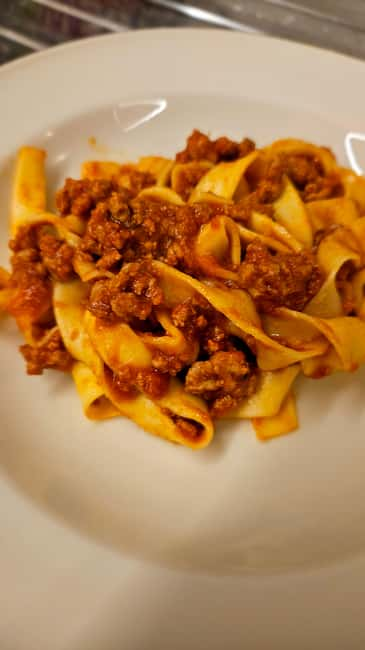
Tagliatelle are long, narrow ribbons made from rolled pasta sheets. Cutting them evenly takes a little care, especially when you are working by hand and aiming for a traditional result.
The class serves your tagliatelle with ragù. In Bologna, ragù is typically associated with a slow-cooked meat sauce rather than the simple tomato sauce many people outside Italy call Bolognese. The supplied experience details do not provide the exact recipe or cooking time for the ragù, so you should think of this part as a tasting of the pasta and sauce pairing, not a full lesson in long-simmered sauce.
This course is especially helpful for understanding texture. Fresh tagliatelle have a different feel from dried supermarket pasta, and the rough surface of hand-rolled noodles can hold sauce well. The meal lets you judge the result yourself.
I also like that the pasta you make is not merely packed up for later. You eat it during the experience. That gives the lesson a clear finish and lets you connect the work at the table with the food on your plate.
Farfalle with tomato and basil sauce
Farfalle are the bow-tie-shaped pasta pieces formed by pinching the center of a strip. They are visually simple but require a neat pinch so the pasta keeps its shape during cooking.
Here, you eat the farfalle with tomato and basil sauce. Compared with tortellini in broth and tagliatelle with ragù, this is the lightest and most straightforward pairing of the three. It lets the shape do more of the work.
Making several pasta forms in one session keeps the class moving. You are not repeating the same fold for 90 minutes. Instead, you shift from stuffed pasta to ribbons to a small shaped pasta, which gives you a useful introduction to the range of local techniques.
The tradeoff is that a short class cannot provide a long, detailed lesson on every shape. If you want to master tortellini or learn the full process of making ragù, you will need more time. This is an express introduction, not a professional cooking course.
The appetizer, wine, and family-table mood
The experience includes an appetizer and wine. Salame and mortadella may be served while the pasta is being prepared or before the meal, giving you something local to taste while the dough rests or the cooking continues.
This small food spread changes the feel of the class. You are not rushing from one task to the next. You can sit, talk, and enjoy the social side of Bologna’s food culture. Coffee and tea are also included in the activity details, along with food tasting and a meal.
The atmosphere is intended to feel relaxed and personal. That is good news if you want conversation and a sense of home cooking. It is less ideal if you want a tightly timed lesson with no pauses.
One important practical note is that the listed duration and the likely total time are not always the same. The official length is 1.5 hours, but the class can run longer once the tasting, wine, and meal are added. One account described a session lasting more than three hours, while another specifically advised allowing extra time because the host values enjoyment over a strict timetable.
I would not schedule a train, museum entry, or formal dinner immediately afterward. Treat the 90 minutes as the planned teaching time, not a guaranteed door-to-door finish.
Is $62 a good price?
At $62 per person, this is not the cheapest way to eat pasta in Bologna. A plate of tagliatelle in a restaurant will cost less than the class fee.
But the comparison is not quite fair. Your price includes instruction, the materials, an apron, a rolling pin, pasta color customization, an appetizer, wine, and the meal made during the class. You also get direct practice with several traditional pasta shapes, which is the part you can carry home.
The value is strongest if you enjoy participatory food experiences. You are paying for time with a local cook, the chance to ask questions, and a meal that follows your own work. It is also a useful choice for couples and families, since the activity gives everyone a job at the table.
The value is weaker if you only want a quick lunch or if you already make fresh pasta confidently. In that case, a restaurant meal may be simpler. You should also account for the possibility that the class runs long. Extra time is pleasant when you have an open afternoon, but less convenient on a tightly planned sightseeing day.
Who will enjoy this class most?
I would recommend it to anyone who wants more than a tasting menu. You get to handle the dough, shape the pasta, and see how local cooking works from the inside.
It suits:
- Couples looking for a shared activity rather than another restaurant meal.
- Families with children aged six and older.
- First-time cooks who want clear, practical instruction.
- Pasta fans who want to learn several Bolognese shapes.
- Visitors with a free afternoon and flexible plans.
- People who enjoy informal meals and conversation.
You may want to skip it if you dislike cats, cannot eat pasta or the included foods, or need the activity to finish at an exact time. The supplied information does not list dietary substitutions, so ask before booking if you have allergies or strict food requirements.
A few practical points before you book
Wear comfortable clothes. You will be rolling dough and shaping pasta, so clothes that allow easy movement are more useful than anything formal.
Smoking is not allowed indoors. The class is wheelchair accessible, and the group is limited to 10 people. Instruction is available in English, Italian, and French.
You can cancel up to 24 hours in advance for a full refund. A reserve-now, pay-later option is available, which can help if your Bologna plans are still shifting.
The meeting instructions are unusually specific: go to the gray gate for cars at Via Sabotino 27. Save that information before leaving your hotel, and do not assume you will find a prominent commercial sign.
Should you book this Bologna pasta class?
Book it if you want to learn by doing, eat several classic pasta dishes, and enjoy a relaxed table with a local host. Alessia’s teaching style is warm and direct, and the small group gives the class a personal feel. The combination of tortellini in broth, tagliatelle with ragù, and farfalle with tomato and basil sauce gives you a better taste of Bologna than a single restaurant plate.
The main caution is the clock. The advertised class lasts 90 minutes, but the meal and conversation can extend the visit considerably. Leave your schedule open, arrive ready to use a rolling pin, and you should find the $62 price fair for both the lesson and the food.
FAQ
How long does the pasta class last?
The advertised duration is 1.5 hours. The full experience can run longer when the meal, wine, and conversation are included.
Where does the class meet?
The meeting point is Via Sabotino 27 in Bologna. You should go in front of the gray gate for cars.
Which pasta types will I make?
The class teaches typical Bolognese pasta, including tortellini, tortelloni, tagliatelle, balanzoni, farfalle, and lasagne. The tasting focuses on tortellini, tagliatelle, and farfalle.
Will I eat the pasta I make?
Yes. You eat the pasta made during the class, paired with sauces suited to each type.
What sauces are served?
Tortellini are served in broth, tagliatelle with ragù, and farfalle with tomato and basil sauce.
Is wine included?
Yes. Wine and an appetizer are included. Coffee and tea are also listed among the available refreshments.
What languages does Alessia speak?
Instruction is available in French, Italian, and English.
How many people can join the class?
The experience is a small-group class limited to 10 participants.
Is the class suitable for young children?
Children under six are not permitted. Children older than six can join, and the hands-on format can suit school-age children.
Is the class wheelchair accessible?
Yes, the activity is listed as wheelchair accessible.
What should I bring?
Bring comfortable clothes. The class provides the necessary materials, an apron, and a rolling pin.
Can I cancel my booking?
You can cancel up to 24 hours in advance for a full refund. A reserve-now, pay-later option is also available.
More Food and Drink Tours in Bologna
- Bologna: Food Tour with Pasta Tasting & Local Specialties
★ 4.8 · 312 reviews - Bologna: 3 Pastas, Tiramisu and Unlimited Wine Tasting
★ 4.6 · 186 reviews - Pasta Making & Wine Tasting with Dinner in Frascati from Rome
★ 5.0 · 1,326 reviews - Rome: Pasta Making with Wine Tasting and Dinner in Frascati
★ 4.9 · 979 reviews
Recently added in Bologna
- Colorful Pasta Workshop in Bologna with meal★ 5.0 · 2 reviews
- 3 hour Lasagna Bolognese cooking class★ 5.0 · 6 reviews
- Cesarine: Small group Tortellini Class at Local’s Home in Bologna★ 5.0 · 18 reviews
- Tortelloni and Tagliatelle Cooking Class in Bologna + Wine★ 3.0 · 2 reviews
- Pasta and Tiramisu Masterclass with organic wines★ 3.5 · 3 reviews
- Lasagna Masterclass: Learn, Cook & Taste Authentic Bolognese★ 5.0 · 4 reviews
- Pasta Making Class: Tagliatelle & Bolognese Sauce★ 5.0 · 15 reviews
- Home Cooking: Pasta Making with Natural Colors in a Tiny Group★ 5.0 · 6 reviews
Fresh Pasta Workshops, compared.
Pasta Making Class with Wine, Limoncello, and Dessert
Read our review →

Enjoy Spritz and Pasta Making in Piazza Navona
Read our review →
Pasta Making & Wine Tasting with Dinner in Frascati from Rome
Read our review →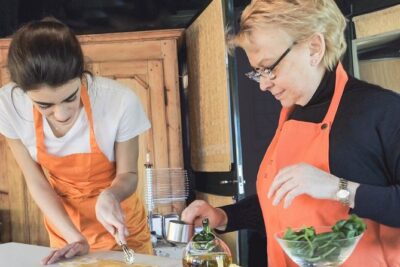
The Secrets to Learn Fresh Pasta and Tiramisù in a Glam Home
Read our review →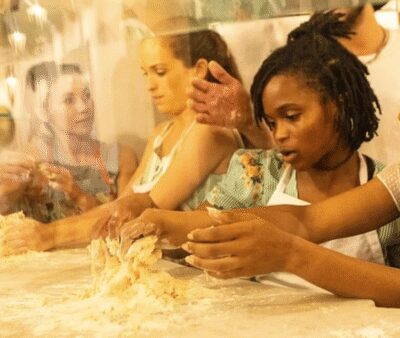
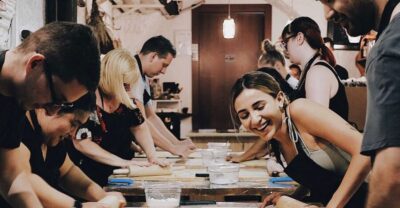
Pasta Making with Wine Tasting and Dinner in Frascati
Read our review →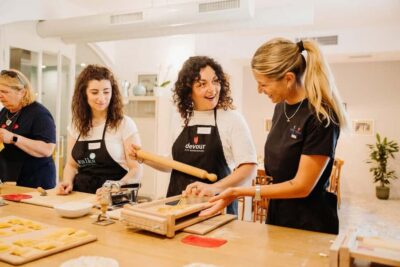
Browse the lists this class appears in