
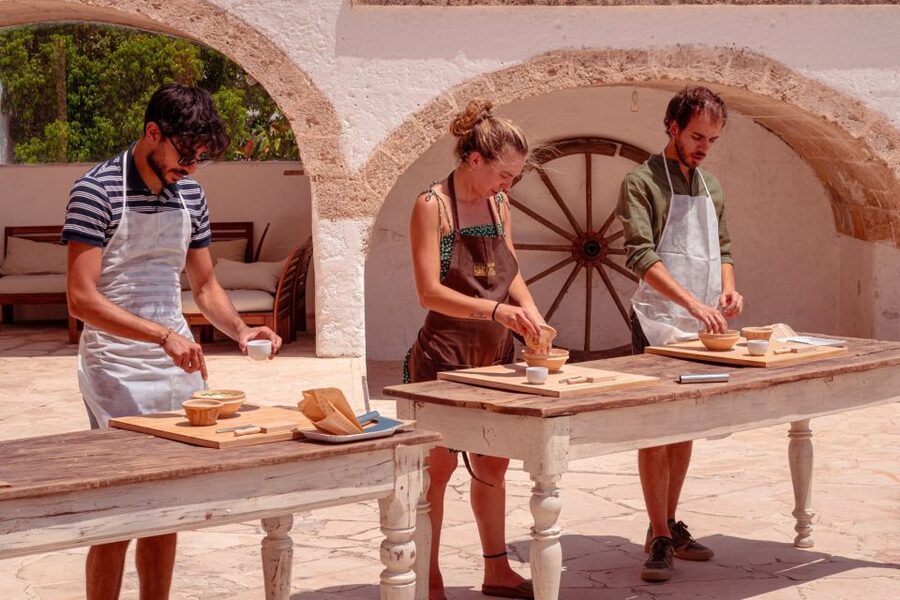
REVIEW · FRESH PASTA WORKSHOPS
Monopoli: Parco Rurale Guided Tour with Pasta-Making Lab
The most memorable part of this Monopoli outing is the shift from old stonework to fresh pasta. You walk through Masseria Spina’s rural park, passing a necropolis, church, citrus grove, fortified tower, and underground olive press, then sit down to shape the pasta that gives Apulian cooking its character.
I like the mix of hands-on cooking and local history, and I like the small group limit of 10. The setting is especially appealing: the red Masseria Spina Grande and its old farm buildings give the tour a strong sense of place. One thing to know before booking is that the pasta is not cooked and served as part of the activity, so this is a pasta-making class, not a full meal.
- Three types of Apulian pasta: Learn to shape several traditional forms from scratch with supplied ingredients.
- A working historical setting: Walk through Masseria Spina’s rupestrian settlement, necropolis, churches, and farm buildings.
- Underground olive press: See one of the park’s most unusual reminders of old rural production.
- Red Masseria Spina Grande: Admire the main farmhouse and its distinctive red exterior.
- Small-group format: The group is limited to 10 people, with live guidance in English or Italian.
- Two experiences for $71: The price covers the park entry, walking tour, ingredients, and guided pasta lab.
Why this Monopoli tour works so well
Apulia is often reduced to beaches, whitewashed towns, and plates of pasta. This experience gives you a more useful picture of the region. At Masseria Spina, food is tied to the land, the farm buildings, religious sites, and old methods of production.
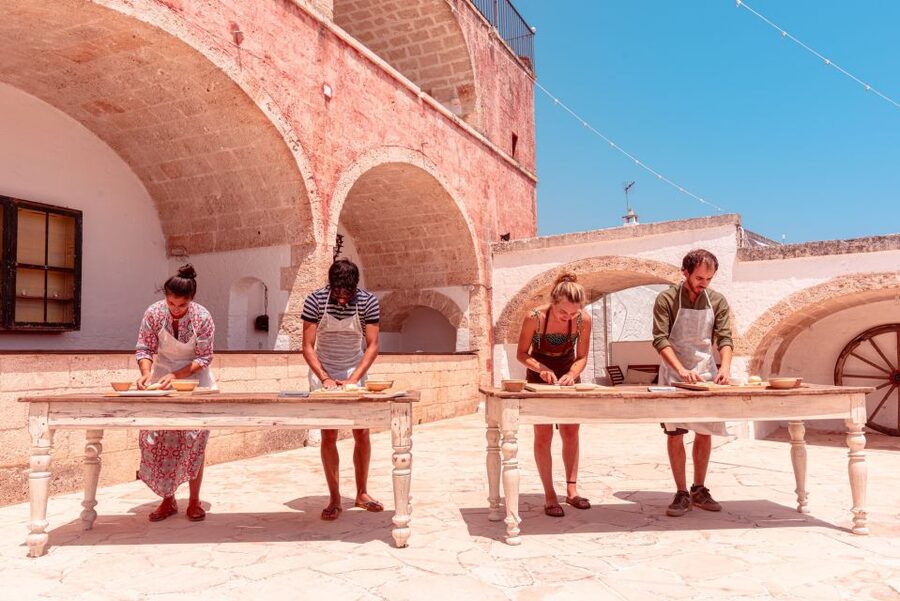
You are not simply watching someone roll dough. First, you walk through the Parco Rurale and learn how the fortified farmhouse complex worked. Then you use your hands to make typical Apulian pasta shapes. That order matters. The cooking lesson feels more connected to the place when you have just seen the olive press, citrus grove, and old farm structures.
The total time is 2.5 hours, long enough to make the visit feel substantial without taking over your day in Monopoli. At $71 per person, it is not a bargain-basement activity, but the fee covers both admission and instruction. For travelers who want a guided cultural stop rather than a quick photo visit, the combination offers fair value.
Starting at Masseria Spina in the Parco Rurale
You meet your guide at Masseria Spina Resort, at the Parco Rurale historical tour, tasting, and experiences location. There is no hotel pickup or drop-off, so you need to arrange your own way to the meeting point.
That detail is easy to overlook when planning a day around Monopoli. Build in enough time to reach the resort, and check the available start time before you book. The meeting point is clear, but this is not a door-to-door excursion.
The group is capped at 10 people. I consider that a real advantage for the pasta portion. A smaller class makes it easier to watch the demonstration, ask questions, and get help with dough that refuses to behave. Pasta-making is simple in theory, but hand pressure and shaping technique take a little practice.
The guide leads the activity in Italian or English. One earlier guide named Elaina was praised for explaining the history clearly and answering questions. Guide assignments can change, so treat her name as a useful detail from a past visit, not a guarantee for your date.
More Fresh Pasta Workshops in Italy:
- Rome: Pasta Making Class with Wine, Limoncello, and Dessert
★ 4.9 · 3,177 reviews - Pastamania – Florence Pasta Making Class
★ 5.0 · 3,050 reviews - Enjoy Spritz and Pasta Making in Piazza Navona
★ 5.0 · 1,681 reviews
Walking through the rupestrian settlement
The tour begins with the historical side of Masseria Spina. You walk through a rupestrian settlement, a type of site shaped into or around natural rock. The route also includes a necropolis and the Minor Church, giving you several clues about how people lived, worked, worshiped, and buried their dead in the area.
This part of the visit is not a long museum lecture. You move through the site with a guide, which helps connect separate remains that might otherwise look like attractive but unrelated pieces of stone. Ask questions as you go. The tour is designed around explanation, not just access.
The Spina Piccola Fortified Tower is another important stop. It is described as the first fortified structure in the complex, so it helps you understand why the property was built with defense in mind. The tower adds a practical edge to the visit. This was not only a pleasant country estate. Security mattered.
You also pass through the internal citrus grove. It is a quieter stop, but it helps show the agricultural side of the property. The grove is a good reminder that a masseria was tied to food production, not just grand rooms and thick walls.
Seeing the underground olive press and dye works
The ancient underground olive press is one of the strongest parts of the walking tour. Olive oil has shaped Apulian food and rural life for centuries, and an underground press gives you a direct look at the labor behind that familiar bottle on the kitchen shelf.
The setting also includes old dye works. Together, the olive press and dye works broaden the tour beyond pasta and olive oil. You get a glimpse of different forms of work carried out within the settlement.
Do not expect a full working demonstration of the press based on the information available. The value is in seeing the preserved setting and hearing your guide explain its role. If you enjoy old production spaces, this portion may be more interesting than the pasta lesson itself.
The site’s rural character also creates a welcome change from central-town sightseeing. You are walking outdoors through historic grounds, so comfortable shoes make sense. The tour is only 2.5 hours, but it includes several stops and a practical workshop afterward.
The red facade of Masseria Spina Grande
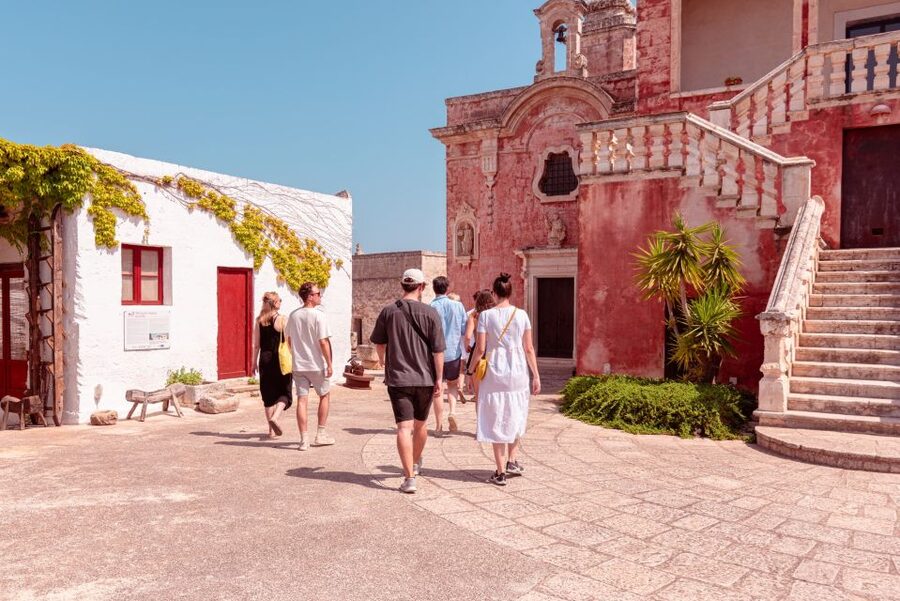
Masseria Spina Grande is the main visual focus of the property. Its red exterior gives the complex a look that is easy to remember, and the guide places the building within the wider story of the fortified farmhouse.
You see the external facade rather than receiving a promise of a full private-house tour. That distinction matters. The appeal here is the architecture, setting, and explanation of the complex, not a broad interior access program.
The Baroque Church of the Immaculate Conception adds a different note. After the defensive tower and working areas, the church shows the religious side of the estate. The route moves between practical rural buildings, defensive structures, and worship spaces, giving the site more variety than a simple farmhouse visit.
I like this portion because it slows the pace. You are not rushing from one famous monument to another. The guide can point out how the parts of the estate fit together, while you take in the red walls and surrounding grounds.
More Guided Tours in Italy:
- From Taormina: Private/Guided Godfather with appetizer and Pasta
★ 5.0 · 233 reviews - Olbia: Traditional Pasta-Making Guided Workshop
★ 4.5 · 73 reviews - People of Bari unusual guided tour with pasta making at Grandma house
★ 5.0 · 54 reviews - Olbia: Sardinian Pasta-Making Guided Workshop
★ 5.0 · 51 reviews
Learning to make Apulian pasta by hand
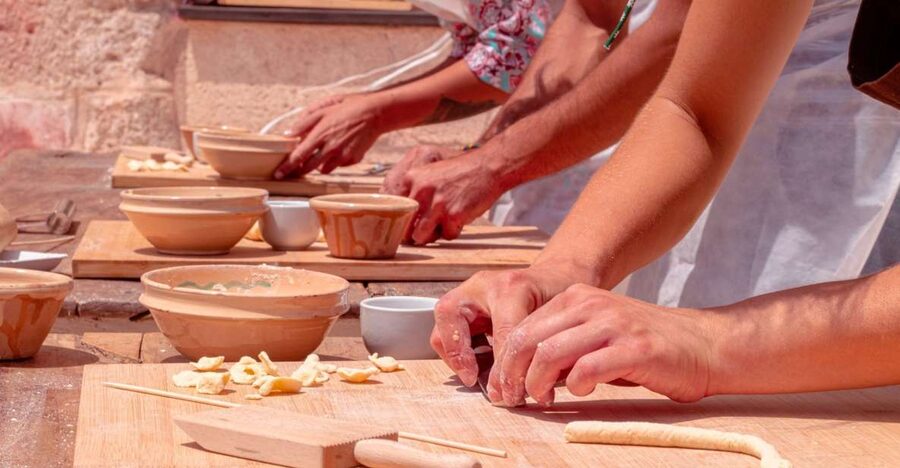
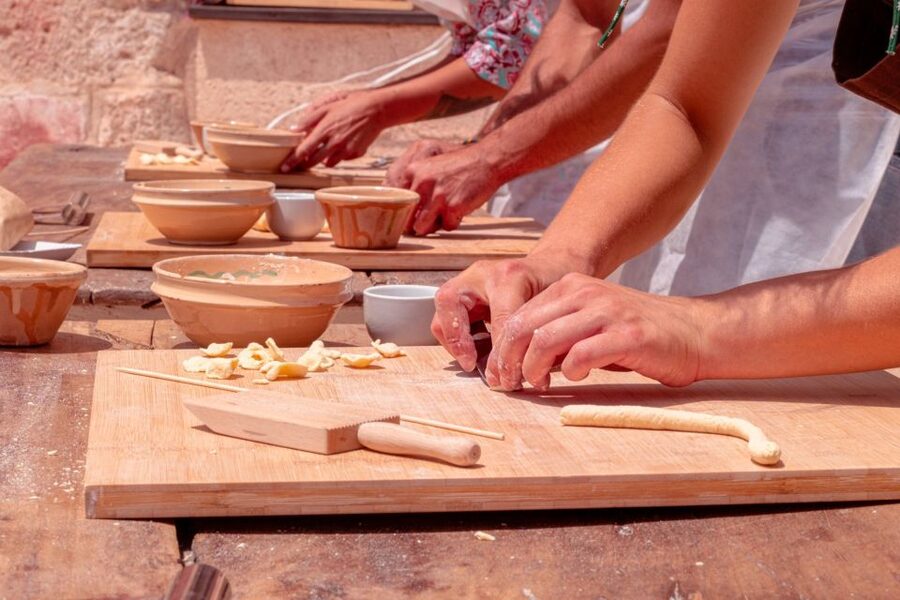
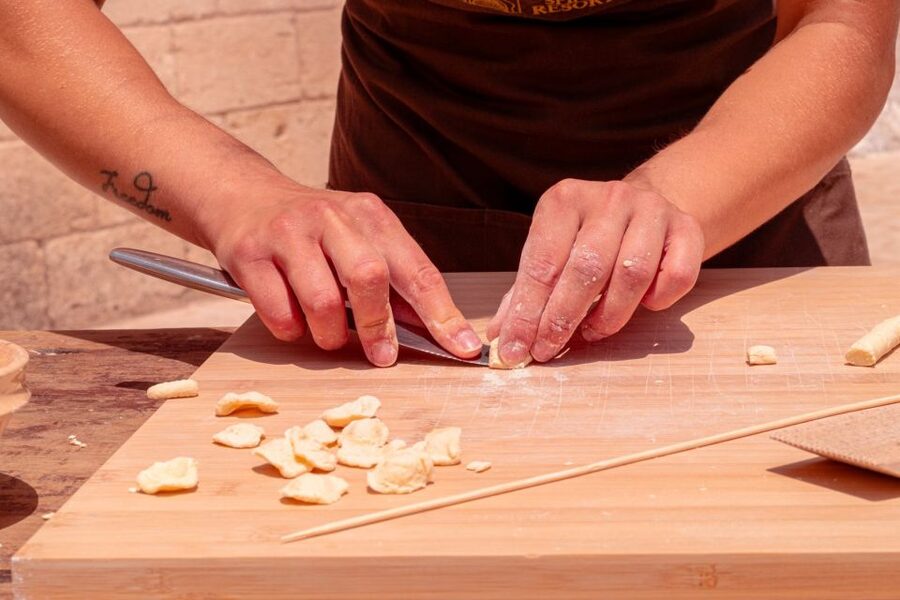
After the walking tour, you move to the pasta lab. Ingredients are included, and your guide leads you through the process of making typical Apulian pasta shapes.
The class is practical. You roll up your sleeves, work the dough, and shape it yourself rather than watching a chef do everything. One participant learned to make three different kinds of pasta, which gives you a useful sense of the lesson’s scope.
The exact shapes may vary with the class, but the focus is on traditional Apulian forms. This is less about mastering a restaurant-level recipe and more about learning the hand movements behind everyday regional cooking.
Expect a social activity. You may work alongside people at different skill levels, and the small group keeps the session manageable. If you are traveling with children or anyone who enjoys tactile activities, this section will likely be the highlight. It also works well for adults who want a souvenir skill rather than another packaged tasting.
A few practical expectations are important. Food and drinks are not included, and the pasta is not cooked and eaten during the activity. One participant specifically found this disappointing. The pasta lab is about preparation, shaping, and instruction, not lunch.
Some participants have been able to bring their pasta shapes home for tasting later. If that matters to you, ask the guide what happens with your batch on the day. Do not book this activity expecting a meal at the end.
What $71 gets you
The $71 price includes four useful pieces:
- Entry to the Parco Rurale historical park
- A guided walking tour
- Ingredients for the pasta lab
- Guided pasta-making instruction
That is a reasonable package if you value both history and food. You would otherwise need to pay separately for access and find a pasta class, while this activity joins them in one visit.
The price is less compelling if you mainly want to eat. Since food and drinks are excluded and the pasta is not cooked as part of the class, you should plan a separate meal in Monopoli. Think of the activity as a cultural tour with a cooking workshop, not a tasting menu.
The small group also helps justify the cost. A class limited to 10 people gives the guide more time to correct your technique and explain the site. The overall rating is 4.9 from 13 reviews, with particularly strong praise for the setting, instruction, and historical explanations. That is a small sample, but the pattern is consistent.
Who should book this experience
I would choose this tour if you want a closer look at Apulian life than a standard town walk provides. It suits people who like architecture, old farm technology, religious sites, and regional food.
It is also a good fit for first-time visitors to the area who want an organized introduction. The guide supplies the context, so you do not need prior knowledge of masserie or traditional pasta.
Families and small groups may appreciate the hands-on format. The activity changes pace often enough to keep it from feeling like a long lecture: walk, look, listen, then make something with your hands.
You may want to skip it if your priority is a relaxed meal, wine tasting, or a cooking class where you eat what you prepare. Those are not the main features here. You should also think twice if your schedule is too tight for a fixed 2.5-hour activity, since the tour has several walking stops before the pasta work begins.
Planning the visit without surprises
The activity is offered in English and Italian, with starting times based on availability. Check the time before booking and arrive at the Masseria Spina Resort meeting point.
Free cancellation is available up to 24 hours in advance for a full refund. You can also reserve and pay later, which helps if your Apulia route is still changing.
Wear footwear suitable for walking around a historic rural property. The provided information does not list special accessibility details, so contact the provider if you have mobility concerns or need specific arrangements.
Bring your appetite for learning, not necessarily for lunch. Since food and drinks are not included, plan where you will eat afterward. Monopoli gives you plenty of reason to continue the food theme on your own.
Should you book the Masseria Spina pasta lab?
Book it if you want two connected experiences in one visit: a guided look at a historic Apulian farm complex and a small-group lesson in traditional pasta-making. The red Masseria Spina Grande, underground olive press, fortified tower, citrus grove, and old churches give the walking portion real variety.
The main limitation is clear. You will not sit down to eat cooked pasta at the end, and meals and drinks cost extra. At $71, the tour makes the most sense for you if instruction and place matter as much as food.
For a hands-on introduction to Monopoli’s rural past and Apulia’s kitchen traditions, this is a well-balanced half-day choice. Just arrive expecting a history walk followed by a pasta lab, not a full culinary feast.
FAQ
How long does the Masseria Spina tour last?
The activity lasts 2.5 hours, including the guided historical walk and pasta-making lab.
Where is the meeting point?
Meet your guide at the Masseria Spina Resort in Parco Rurale, at the historical tour, tasting, and experiences location.
What does the $71 price include?
The price includes the guided walking tour, entry to the Parco Rurale historical park, pasta lab ingredients, and guided pasta instruction.
Are food and drinks included?
No. Food and drinks are not included in the activity price.
Do you eat the pasta you make?
The pasta is not cooked and served as part of the activity. Some participants have been able to take their pasta shapes home, but you should confirm the arrangement with the guide on the day.
What languages are available?
The live guide service is available in Italian and English.
How large is the group?
The activity is limited to 10 participants.
Can I cancel the booking?
You can cancel up to 24 hours in advance for a full refund. Reserve-now, pay-later booking is also available.
Recently added in Italy
- Verona: Tortellini Cooking Class and Lunch with Mamma Ivana★ 5.0 · 20 reviews
- Vicenza: Pasta & Tiramisu Cooking Class at a Local’s Home★ 5.0 · 5 reviews
- Verona: Pasta Cooking Class with Wine Tasting★ 5.0 · 4 reviews
- Verona: Pasta & Tiramisu Cooking Class at a Local’s Home★ 5.0 · 16 reviews
- Verona: Prosecco and Pasta Making Class at a Local’s Home★ 5.0 · 10 reviews
- Volterra: Fresh Pasta Cooking Class at a Tuscan Farmhouse★ 5.0 · 33 reviews
- Venice: Share Your Pasta Love in a Local’s Home★ 4.8 · 20 reviews
- Verona: My Granny’s secrets making gnocchi★ 5.0 · 7 reviews
Fresh Pasta Workshops, compared.
Pasta Making Class with Wine, Limoncello, and Dessert
Read our review →

Enjoy Spritz and Pasta Making in Piazza Navona
Read our review →
Pasta Making & Wine Tasting with Dinner in Frascati from Rome
Read our review →
The Secrets to Learn Fresh Pasta and Tiramisù in a Glam Home
Read our review →
Pasta Making with Wine Tasting and Dinner in Frascati
Read our review →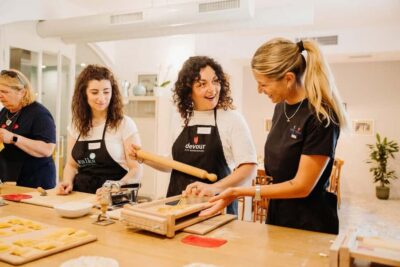
Browse the lists this class appears in