
REVIEW · FRESH PASTA WORKSHOPS
Handmade pasta workshop by Cilento Experience
The best part of this experience is that pasta is only half the story. You begin with a short trip into the countryside, then meet Rosalba, whose cooking comes from years of feeding her younger brother while her parents worked in the fields. The lesson takes place on a flower-filled garden terrace, using ingredients tied to the surrounding Cilento countryside.
I like two things in particular: the food chain is refreshingly short, with buffalo ricotta, olive oil from Rosalba’s grandmother’s mountain trees, and sage picked in the garden; and this is a private activity, so you can ask questions without a classroom crowd. The main consideration is timing. The advertised visit lasts about 2 hours 5 minutes, but one family’s session stretched beyond four hours.
Key points at a glance
- A countryside start: Visit Michele’s vegetable-growing area before the cooking begins.
- Two classic pastas: Learn to make tagliatelle and ricotta-filled ravioli.
- Ingredients from nearby: Use buffalo ricotta, buffalo butter, garden sage, homemade tomato sauce, and local olive oil.
- A family kitchen: Rosalba’s cooking skills come from preparing meals for her family from a young age.
- Private and personal: Only your own group takes part, making questions and conversation easy.
- A flexible afternoon: The official duration is about 2 hours 5 minutes, but the visit may run longer.
From Salerno to the Cilento countryside
This experience is sold as a Salerno activity, but the meeting point is in Capaccio Paestum, at Via della Gueglia 53. That matters when you plan your day. You are not meeting in central Salerno for a quick class in a city kitchen. You are heading into a more rural setting connected to the farms and family homes of the Cilento area.
The start time is 3 p.m. The activity ends back at the same meeting point, which keeps the arrangement simple once you arrive. A mobile ticket is provided, and the experience is offered in English.
Daniel, the provider, has helped with practical arrangements in at least one case, including train planning and a station pickup. Do not treat that as a guaranteed transfer included with every booking. If you are relying on trains or need help reaching Capaccio Paestum, ask Daniel before you commit to your schedule.
The setting is part of the value. A standard cooking class can teach you a recipe, but this one connects the recipe to the land around it. The short excursion to Michele’s vegetable plot gives you a look at where the meal begins. You then return to the family kitchen and cook in the garden, rather than sitting at a polished demonstration counter built only for tourists.
More Fresh Pasta Workshops in Italy:
- Rome: Pasta Making Class with Wine, Limoncello, and Dessert
★ 4.9 · 3,177 reviews - Pastamania – Florence Pasta Making Class
★ 5.0 · 3,050 reviews - Enjoy Spritz and Pasta Making in Piazza Navona
★ 5.0 · 1,681 reviews
Michele’s vegetables and the short countryside excursion
The first portion introduces Michele’s work growing vegetables. The supplied details do not set out a long farm tour or a list of crops, so you should expect a short excursion rather than a full agricultural visit. Still, this stop gives useful context before you handle the ingredients yourself.
I like this order. You see the local setting first, then learn how the cooking fits into it. Cilento food is not presented as an abstract set of Italian dishes. The emphasis is on what comes from the family’s garden, nearby producers, and older household habits.
The excursion may be especially worthwhile if you want more than a pasta lesson. Families and food-focused visitors get a clearer sense of how a simple meal can depend on a small circle of local ingredients. If your only goal is to roll pasta as quickly as possible, this opening will add time to the afternoon.
Rosalba’s family cooking on the garden terrace
Rosalba leads the hands-on kitchen portion. Her experience is personal and practical. From an early age, she cooked for her younger brother while her parents spent the day working in the fields. That background helps explain the style of the lesson: home cooking passed through daily family life, not a restaurant training program.
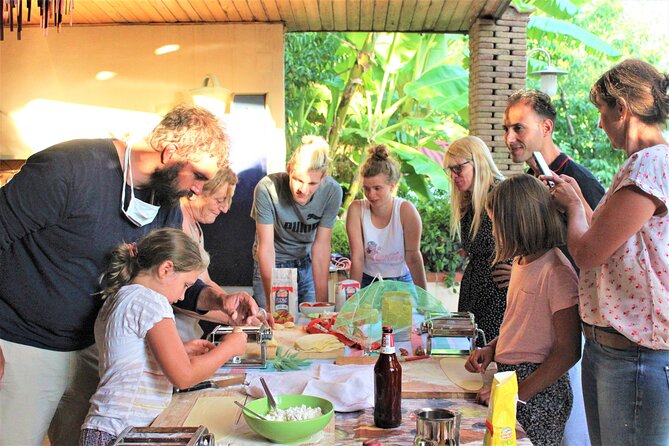
The kitchen is on a terrace filled with flowers and surrounded by greenery. You cook and eat in the same setting. That detail may sound small, but it shapes the mood. The meal is not separated from the work of preparing it. You make the pasta, finish the dishes, and sit down to eat in the same garden environment.
Rosalba welcomes questions, and conversation is a central part of the activity. You can ask about the dough, the fillings, the ingredients, and the family customs behind the dishes. Since your group is private, you should have room to set the pace and ask for clarification in English.
Daniel has lived in Cilento for 13 years with his Italian family and describes southern Italian food culture as part of his daily life. He appears to handle the wider hosting side of the experience, while Rosalba brings the cooking instruction and family background.
Making tagliatelle by hand
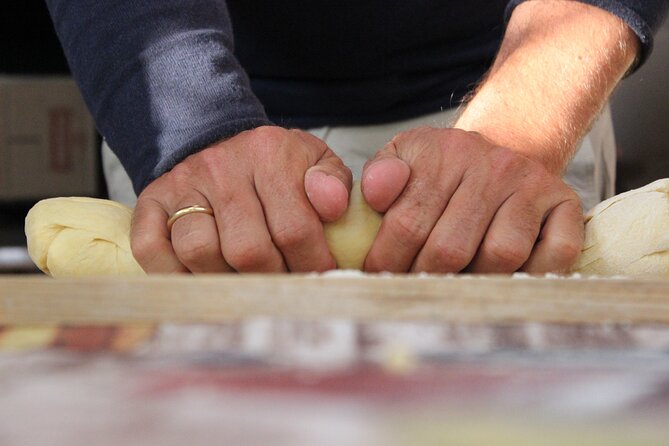
Tagliatelle is one of the two main pasta preparations. You will work through the process of making the dough and shaping the noodles, with Rosalba showing the methods used in a home kitchen.
The description does not give a full ingredient list or specify the equipment, so do not expect a technical pasta-school syllabus. The strength here is the direct guidance and the chance to learn a typical home preparation. You can ask questions as you work, which is more useful than watching a silent demonstration and trying to copy it later.
The finished tagliatelle is served with homemade tomato sauce. That pairing keeps the focus on texture and basic flavor. A good hand-shaped noodle does not need a heavy sauce to make its point. The tomato preparation also fits the wider theme of using straightforward local food instead of piling on elaborate extras.
If you have children in your group, this portion should be approachable. A seven-year-old took part successfully in one family’s session and enjoyed the activity along with the adults. That does not guarantee that every child will have the same level of interest, but it suggests the format can work well for families.
Other Italy classes worth putting on the shortlist
- Florence: Pasta Cooking Class with Unlimited Wine
★ 4.9 · 10,285 reviews - 3 in 1 Cooking Class near Navona: Fettuccine, Ravioli & Tiramisu
★ 5.0 · 7,376 reviews - Florence Pizza or Pasta Class with Gelato Making at a Tuscan Farm
★ 5.0 · 6,801 reviews - Florence: Pasta & Tiramisu Cooking Class with Unlimited Wine
★ 4.9 · 6,708 reviews
Filling ricotta ravioli with local ingredients
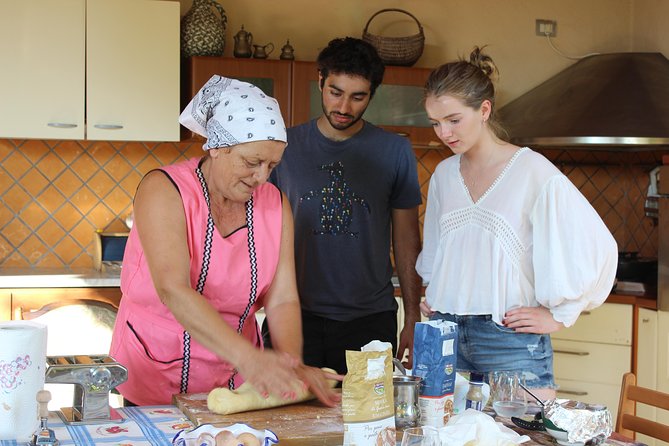
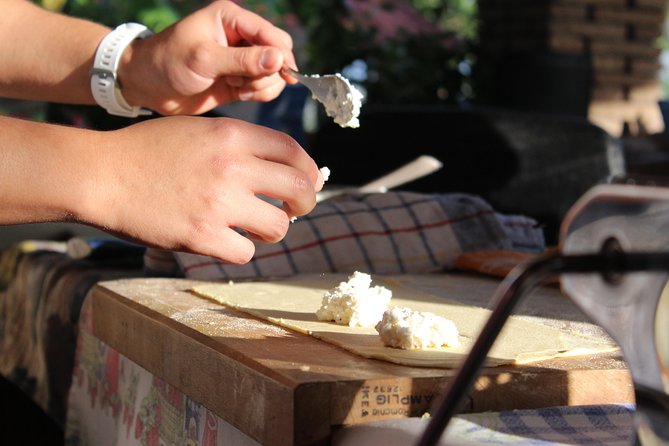
The ravioli are filled with freshly made buffalo ricotta. Buffalo butter is used in the dish, and sage comes from the garden. The ricotta is made nearby, around the corner, rather than shipped in from a distant supplier.
That ingredient list gives the class a clear sense of place. The ravioli are not simply a generic pasta shape with a filling chosen for convenience. You learn how a local dairy product, garden herb, and regional cooking method come together in one dish.
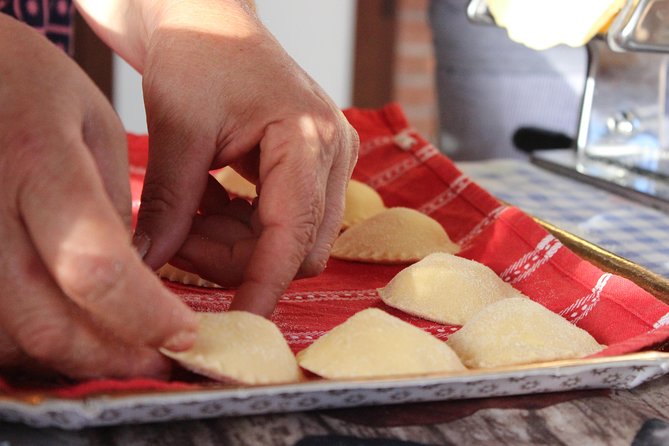
The final ravioli are served in butter and sage sauce. The flavor profile is likely to be simple and savory, allowing the ricotta and sage to carry the plate. The meal also includes tagliatelle with homemade tomato sauce, so you taste both a filled pasta and a ribbon pasta in the same sitting.
I appreciate that the cooking and eating happen together. You are not merely shown how to form ravioli, then handed a pre-cooked meal elsewhere. The terrace meal completes the lesson and gives you a chance to compare the two pastas while the techniques are still fresh.
What the local ingredients add
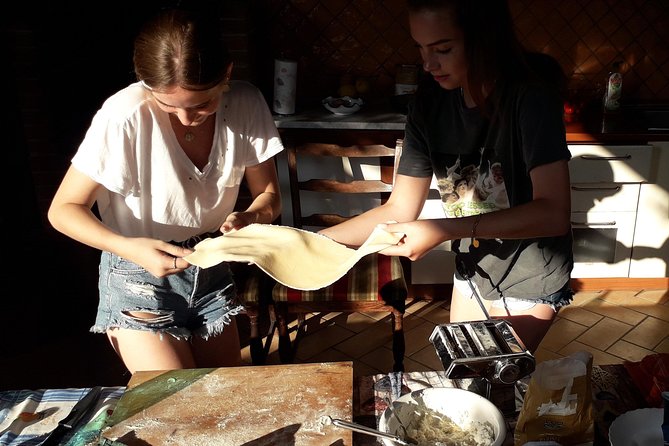
The food story is unusually specific. The ricotta is freshly made buffalo ricotta. The butter is buffalo butter. The olive oil comes from Rosalba’s grandmother’s trees in the mountains. The sage is picked in the garden, and the tomato sauce is homemade.
These details matter because they help you understand why the experience costs more than a casual plate of pasta. You are paying for a private lesson, personal hosting, a countryside visit, and a meal built around ingredients connected to the family and area. At $96.12 per person, it is not a budget lunch, especially for a large family.
The value improves if you want cultural context and instruction, not just food. You are getting several parts in one afternoon: a look at the vegetable-growing area, a pasta lesson, conversation with Rosalba and Daniel, and a meal on the terrace.
The value is less clear if you are comparing it with a simple restaurant dinner. A restaurant will cost less and take less time. This activity makes sense when the cooking, family connection, and local sourcing are the reason you are booking.
A private class with a relaxed pace
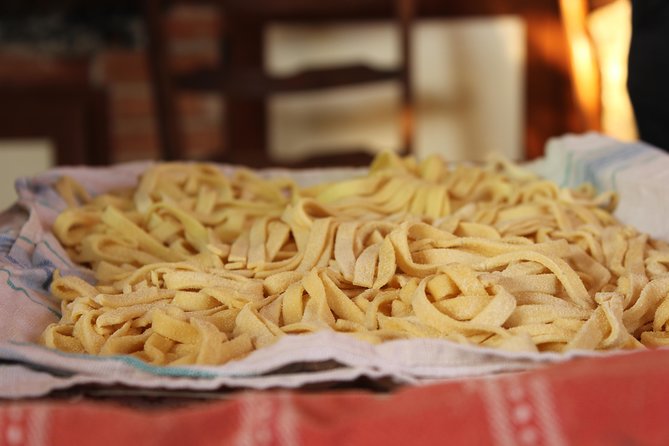
Only your group participates. That is one of the strongest practical features. In a large class, you may spend much of the session watching someone else work or waiting for a turn. Here, you can ask Rosalba to repeat a step, discuss substitutions, or spend more time on the pasta shape that gives you trouble.
Private also means the pace may depend on your group. A family with children may need more time. A group that enjoys conversation may linger over lunch. One reported visit lasted more than four hours instead of the stated two hours 5 minutes, which suggests the hosts may allow the afternoon to expand when everyone is enjoying it.
That flexibility is pleasant, but plan around it. Do not book a train, museum entry, or evening reservation too close to the official end time. The experience begins at 3 p.m., and an unhurried finish could carry well into the evening.
The small-group format also suits people who want to ask direct questions about southern Italian food culture. Rosalba wants the exchange to go both ways. You are not expected to sit quietly and copy instructions.
How the price compares with the experience
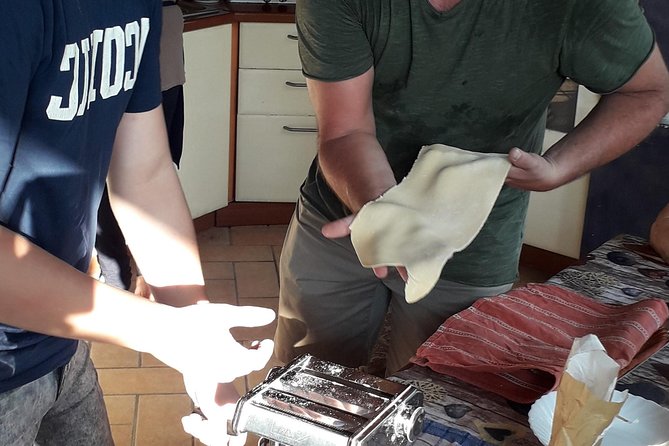
The listed price is $96.12 per person. For a 2-hour cooking class, that may initially seem high. The price becomes easier to justify when you count what is included in the format: private instruction, the short countryside visit, the garden setting, the prepared meal, and ingredients with clear local connections.
You should also consider the time. If your session lasts closer to four hours, the cost covers a substantial afternoon rather than a quick lesson. The longer visit is not guaranteed, though, so base your schedule on the official duration and treat extra time as a possibility.
The strongest value is for couples, families, and small private groups who care about personal contact. A solo visitor may still enjoy it, but the private format can make the per-person cost feel heavier. Larger groups should check the booking details carefully, since the quoted price is per person and the activity has a minimum number of participants.
The 4.9 rating from 18 ratings, along with a 100 percent recommendation figure, points to consistently strong satisfaction. The praise centers on the food, the family atmosphere, the children’s enjoyment, and Daniel’s practical help. That pattern tells you what the experience does best: it creates a warm, personal afternoon rather than delivering a polished, fast-moving class.
Who should book this pasta afternoon
I would choose this experience if you want to connect food with everyday family life. It suits anyone who prefers a home kitchen and garden terrace to a formal cooking school.
It is also a good choice for families. The private setup gives children space to participate, and the seven-year-old who joined one session found it enjoyable. Still, parents should be ready for a relaxed pace and a longer afternoon if the group gets caught up in cooking and conversation.
Food lovers will appreciate the ingredient trail. Buffalo ricotta, buffalo butter, local olive oil, garden sage, and homemade tomato sauce give you more to talk about than a basic pasta lesson using anonymous supermarket ingredients.
You may want to skip it if your schedule is tight, if you dislike rural transfers, or if you want a short class with a fixed finish. The countryside setting is a benefit, but it also means this is not the easiest option for someone staying only in central Salerno and avoiding extra travel planning.
The activity requires good weather. If rain or poor conditions cause a cancellation, you are offered another date or a full refund. You can also cancel for a full refund up to 24 hours before the 3 p.m. start time. Changes or cancellations inside that window are not accepted, and a minimum number of participants is required.
Should you book the Cilento pasta workshop?
Book it if you want to make two traditional pastas, eat them in a family garden, and spend time with hosts who connect the meal to local farms and household cooking. The strongest reasons are Rosalba’s personal story, the private format, and the unusually clear link between the ingredients and the surrounding area.
Before booking, allow extra time beyond the official 2 hours 5 minutes and confirm how you will reach Via della Gueglia 53 in Capaccio Paestum. If those details work for you, the $96.12 price buys much more than a recipe. It buys a relaxed look at how a Cilento family cooks and shares food.
FAQ
Where does the pasta workshop meet?
The meeting point is Via della Gueglia 53, 84047 Capaccio Paestum SA, Italy.
What time does the activity start?
The workshop starts at 3 p.m.
How long does the experience last?
The stated duration is approximately 2 hours 5 minutes. One session lasted more than four hours, so you should allow extra time.
Is the activity private?
Yes. Only your own group participates in the activity.
What pasta will I learn to make?
You will learn to make homemade tagliatelle and ricotta-filled ravioli.
What food is served?
The sample meal includes ricotta ravioli with butter and sage sauce, plus tagliatelle with homemade tomato sauce.
Who leads the cooking lesson?
Rosalba shows you how to make the pasta. Daniel Aleman Lücker is the experience provider and is involved in hosting the activity.
Is the activity offered in English?
Yes. The experience is offered in English.
Can I cancel for a full refund?
Yes, if you cancel at least 24 hours before the local start time. Cancellations or changes made less than 24 hours before the start are not accepted. If poor weather or an insufficient number of participants causes cancellation, you are offered another date or a full refund.
Recently added in Italy
- Verona: Tortellini Cooking Class and Lunch with Mamma Ivana★ 5.0 · 20 reviews
- Vicenza: Pasta & Tiramisu Cooking Class at a Local’s Home★ 5.0 · 5 reviews
- Verona: Prosecco and Pasta Making Class at a Local’s Home★ 5.0 · 10 reviews
- Volterra: Fresh Pasta Cooking Class at a Tuscan Farmhouse★ 5.0 · 33 reviews
- Verona: Pasta Cooking Class with Wine Tasting★ 5.0 · 4 reviews
- Verona: Pasta & Tiramisu Cooking Class at a Local’s Home★ 5.0 · 16 reviews
- Venice: Share Your Pasta Love in a Local’s Home★ 4.8 · 20 reviews
- Verona: My Granny’s secrets making gnocchi★ 5.0 · 7 reviews
Fresh Pasta Workshops, compared.
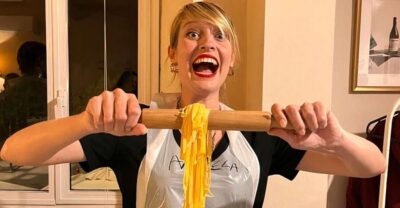
Pasta Making Class with Wine, Limoncello, and Dessert
Read our review →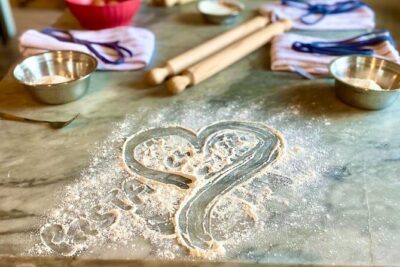

Enjoy Spritz and Pasta Making in Piazza Navona
Read our review →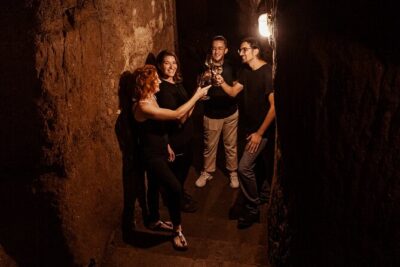
Pasta Making & Wine Tasting with Dinner in Frascati from Rome
Read our review →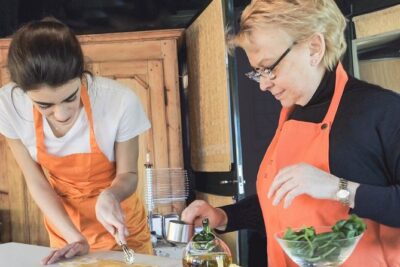
The Secrets to Learn Fresh Pasta and Tiramisù in a Glam Home
Read our review →
Pasta Making with Wine Tasting and Dinner in Frascati
Read our review →
Browse the lists this class appears in