
REVIEW · FRESH PASTA WORKSHOPS
Cagliari: Workshop di pasta fresca tradizionale sarda
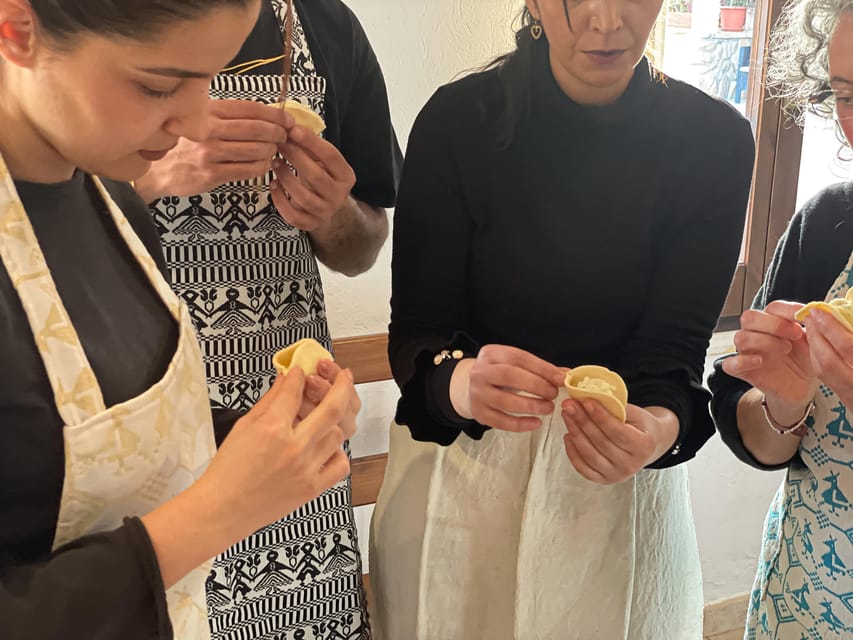
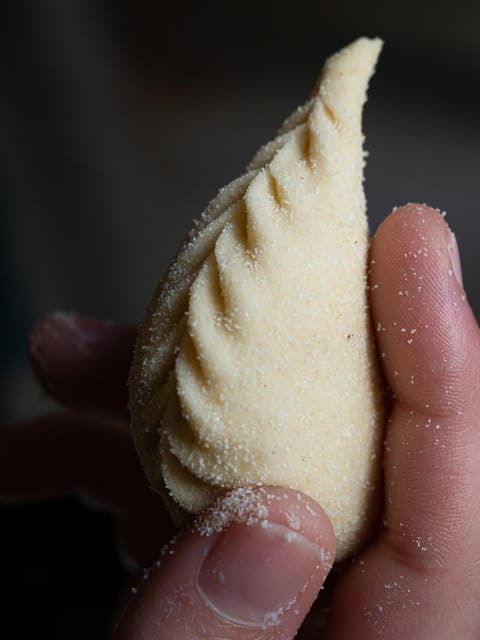
The star of this three-hour experience is culurgiones, Sardinia’s beautifully folded fresh pasta filled with potatoes, cheese, and mint. In the courtyard of a traditional Sardinian house, Carlotta and Matteo show you how to make the dough, prepare the filling, and pinch the pasta into its distinctive wheat-ear pattern, called a sa spighitta.
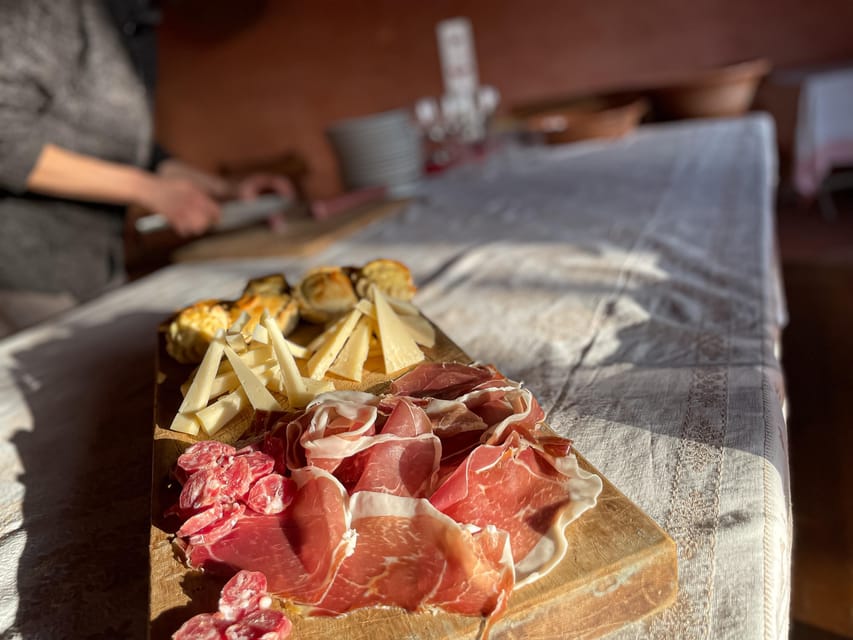
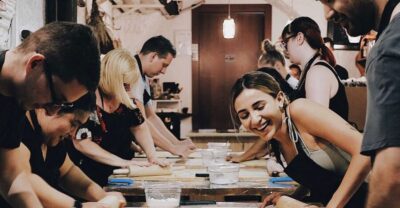
I like the small group size, limited to eight people, because you should get real time at the worktable rather than a quick demonstration from across a room. I also like that the lesson ends with a full tasting of cheeses, breads, panadas, pratzidas, coccoi prena, meats, spreads, local wine, and the pasta you helped prepare.
The main consideration is dietary: this activity is not suitable for people with gluten or lactose intolerance. Culurgiones also take some finger skill, so your first few may look more rustic than Carlotta’s, which is part of the fun but worth knowing before you book.
Key details before you book
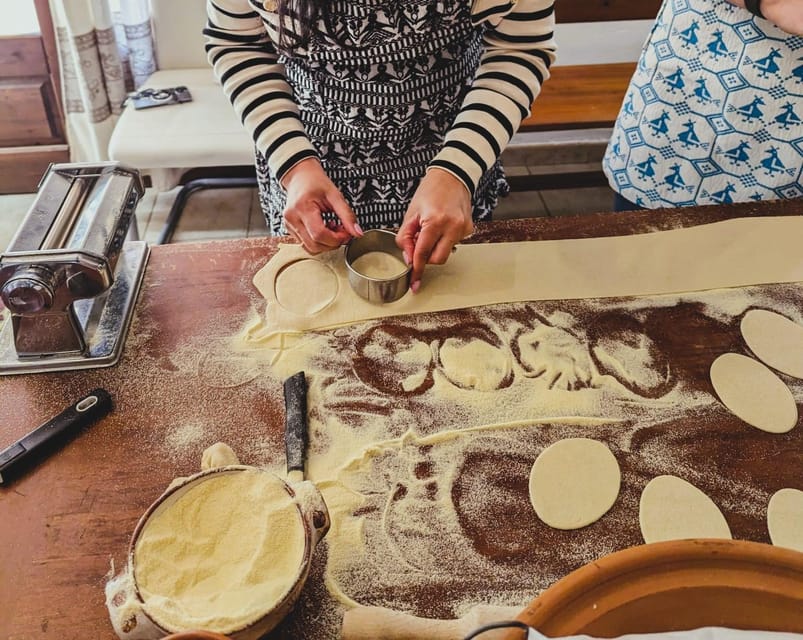
- Make culurgiones by hand: Follow the process from filling and dough to the traditional a sa spighitta closure.
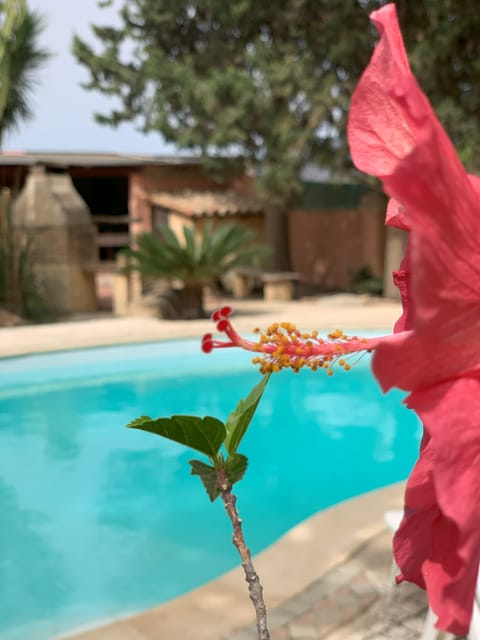
- Learn inside a traditional Sardinian home: The cooking takes place in an internal courtyard, giving the class a strong sense of place.
- Meet Carlotta and Matteo: They lead the class in Italian and English and explain the food and local customs along the way.
- Eat more than pasta: The tasting includes Sardinian cheeses, breads, panadas, pratzidas, coccoi prena, meats, spreads, and wine.
- Take your own creations with you: All cooking materials are provided, and you can leave with the pasta you made.
- Plan for a three-hour visit: The $101.96 price includes the lesson, food, drinks, and a small group capped at eight people.
Making culurgiones in a Sardinian courtyard
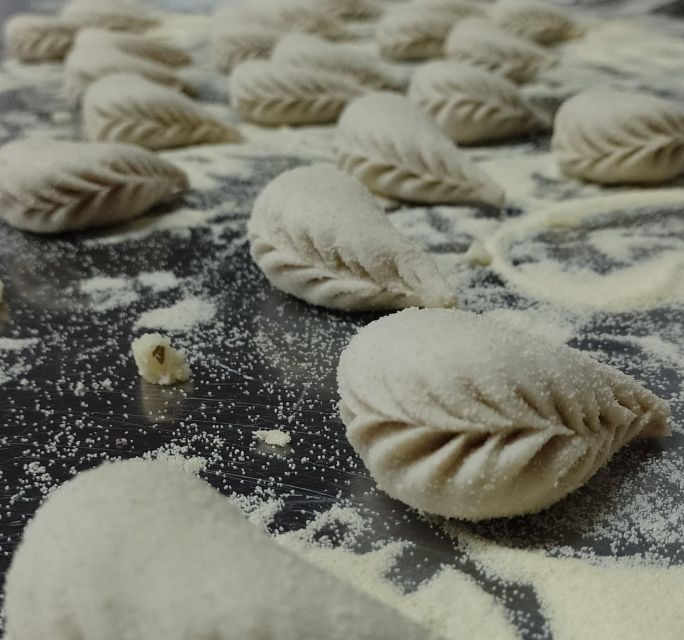
This is not a class built around a polished restaurant kitchen. You work in the internal courtyard of a traditional Sardinian house, a setting that gives the lesson a more personal feel. You are not just learning a recipe. You are seeing how a food tradition fits into an everyday home setting.
Carlotta and Matteo guide the session in Italian and English. Their roles are practical and hands-on: they take you through the dough, filling, folding, and final preparation. You can expect the pace to focus on doing the work yourself, with instruction at each stage rather than simply watching a cook prepare everything.
The small group matters here. With no more than eight participants, you should have a better chance to see the technique clearly and ask questions when your dough or closure needs attention. That is especially useful with culurgiones, since the decorative edge is not just a simple pinch.
More Fresh Pasta Workshops in Italy:
- Rome: Pasta Making Class with Wine, Limoncello, and Dessert
★ 4.9 · 3,177 reviews - Pastamania – Florence Pasta Making Class
★ 5.0 · 3,050 reviews - Enjoy Spritz and Pasta Making in Piazza Navona
★ 5.0 · 1,681 reviews
The potato, cheese, and mint filling
The filling used for the culurgiones includes potatoes, cheese, and mint. It is a good example of Sardinian cooking at its best: a short list of familiar ingredients transformed by careful preparation and a distinctive shape.
You begin by working with the filling before moving on to the dough and assembly. This order helps you understand the pasta as a complete dish, rather than treating the filling as something that arrives ready in a bowl. You will see how much filling belongs inside each piece and how the dough needs to hold it without splitting.
The practical lesson is patience. Too much filling can make the pasta hard to close. Too little leaves a thick, doughy bite. Your first pieces may be uneven, but the class gives you room to improve before the final tasting.
Learning the a sa spighitta closure
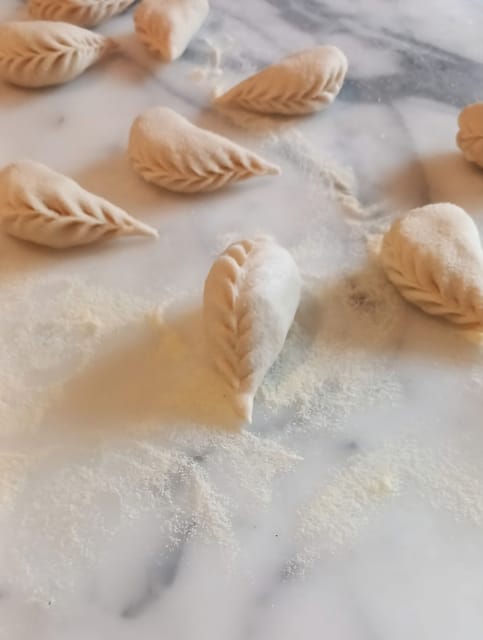
The most memorable technique is the closure known as a sa spighitta. The finished edge resembles a wheat ear, with a neat braid-like pattern running along the seam. It is the detail that gives culurgiones their unmistakable look.
This is also the part most likely to test your fingers. You will need to pinch and fold the dough in a steady rhythm, keeping the filling safely inside. Carlotta’s finished pieces are likely to look much cleaner than your early attempts, but that contrast helps you understand the skill involved.
I would treat the shape as the main lesson rather than expecting every piece to look perfect. You are learning a traditional craft, not producing factory-standard pasta. The useful result is that you leave knowing how the pattern is made and having tried it yourself.
A tasting that goes well beyond the pasta
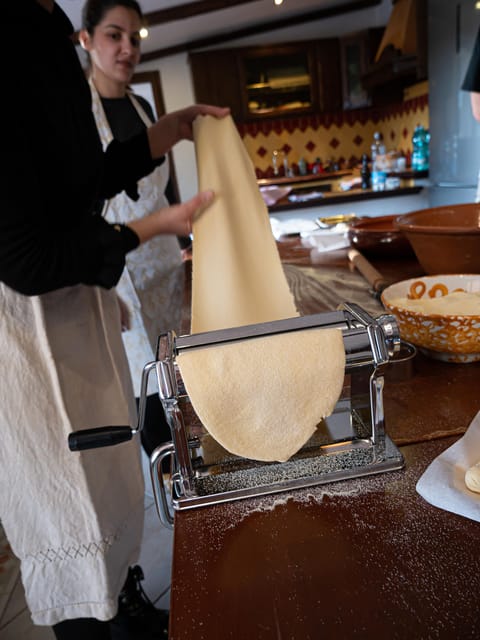
Once the preparation is complete, the experience turns into a shared Sardinian meal. Culurgiones are part of the spread, but they are not the only reason to arrive hungry.
The tasting includes local cheeses, traditional breads, panadas, pratzidas, coccoi prena, meats, and spreads. These dishes give you a broader look at Sardinian food than a pasta class alone. Panadas are part of the island’s traditional savory cooking, while coccoi prena brings another example of how bread and filling work together in local cuisine.
You may also try sweets such as perdulas and seadas with cheese, both mentioned as part of the food served during the experience. The menu gives you a chance to compare different textures and styles: filled pasta, baked specialties, fresh bread, cheese, cured foods, and dessert.
Local wine and water are included. The wine is an important part of the meal because it turns the final tasting into a relaxed table experience rather than a quick sample after the lesson. If you do not drink wine, water is available, and the activity still includes plenty of food to make the price worthwhile.
Other Italy classes worth putting on the shortlist
- Florence: Pasta Cooking Class with Unlimited Wine
★ 4.9 · 10,285 reviews - 3 in 1 Cooking Class near Navona: Fettuccine, Ravioli & Tiramisu
★ 5.0 · 7,376 reviews - Florence Pizza or Pasta Class with Gelato Making at a Tuscan Farm
★ 5.0 · 6,801 reviews - Florence: Pasta & Tiramisu Cooking Class with Unlimited Wine
★ 4.9 · 6,708 reviews
Why the three-hour format works
Three hours gives this experience enough time for both instruction and eating. A shorter class could teach you the basic fold, but it would leave little room for the cultural setting and the full tasting.
The first part centers on preparation. You work through the filling and dough, then practice the final shape. After that, the culurgiones are prepared for eating while you sit down to sample the other Sardinian foods.
That division is useful because you are not expected to cook and eat at the same moment. You get a proper transition from worktable to table, with time to appreciate what you made and try dishes you did not prepare yourself.
Starting times vary, so check availability before planning the rest of your day. The class lasts three hours, and the combination of hands-on work and a generous meal means you should avoid placing it too close to another major food stop.
What the $101.96 price includes
At $101.96 per person, this is not the cheapest way to eat pasta in Sardinia. The value comes from the full package: three hours of instruction, all preparation materials, the meal, drinks, a small group, and pasta creations to take away.
A restaurant meal would likely cost less if your only goal were to eat culurgiones. It would not give you the chance to make the dough, practice the wheat-ear closure, or spend time in a Sardinian home courtyard with a local host.
The price makes more sense for you if you value a food lesson as part of your trip, not just a meal. It also includes several foods beyond the main dish, including cheeses, meats, breads, traditional baked items, sweets, wine, and water. That broad tasting adds real value for anyone who wants to understand Sardinian cooking through several dishes in one sitting.
The take-home creations are another small but useful extra. You can leave with something you made yourself rather than only a memory and a full stomach. The exact amount you take away is not specified, so I would think of this as a bonus rather than the main reason to book.
A good choice for food-focused visitors
This activity suits you best if you like learning by hand. You should be comfortable handling dough, repeating a delicate folding movement, and accepting that your first culurgiones may not look perfect.
It also works well for visitors who want more contact with local life than a standard restaurant visit provides. The traditional house and courtyard are part of the appeal. You get a setting connected to home cooking, along with explanations of Sardinian food traditions from Carlotta and Matteo.
The format can suit couples, friends, and small family groups, provided everyone in the party can eat gluten and lactose. Since the group is limited to eight, it is also a practical option if you prefer a quieter class over a large cooking demonstration.
This is less suitable if you are looking for a fast activity or a highly technical chef-training session. You are there to learn a beloved local dish, share food, and enjoy the setting. The experience is social and hands-on rather than formal or intense.
Dietary limits and practical planning
The activity is specifically listed as unsuitable for people with gluten intolerance and lactose intolerance. Fresh pasta, cheese, and the wider tasting menu are central to the experience, so this is not a class where you can easily skip one ingredient and still enjoy the full program.
If you have any other dietary concern, the supplied information does not confirm whether substitutions are available. It is sensible to ask before booking rather than assume the menu can be changed.
Italian and English are offered. That makes the instructions accessible to English-speaking visitors, while the use of Italian keeps the setting tied to the local culture. Check the available starting time carefully, since the class runs for three hours and no fixed schedule is given.
Cancellation is flexible up to 24 hours before the activity for a full refund. You can also reserve now and pay later, which helps if your Sardinia plans are still shifting.
The strongest part of the experience
For me, the combination of warm hosts and a real home setting is what gives this class its character. Carlotta and Matteo are not simply presenting a dish in a neutral cooking studio. They welcome you into a traditional house and connect the food to Sardinian hospitality.
The food range also deserves emphasis. Culurgiones are the central lesson, but the meal does not stop there. You can taste local cheeses, meats, breads, panadas, pratzidas, coccoi prena, sweets, spreads, and wine. That makes the activity useful even for someone who already knows how to make fresh pasta.
The most important thing to manage is your expectation of the pasta folding. The a sa spighitta closure is a genuine skill. You will learn the method, but you may need practice before your pieces look tidy. That is not a flaw in the activity. It is simply the honest nature of learning handmade pasta.
Should you book this Sardinian pasta class?
Book it if you want a food experience with real participation, a small group, and a meal that covers far more than one pasta dish. It is especially appealing if you want to meet local hosts, work in a traditional house, and learn a recognizable Sardinian technique you can try again at home.
Think twice if you cannot eat gluten or lactose, or if you prefer a short tasting with no kitchen work. For everyone else, the $101.96 price is reasonable for three hours of instruction, a broad food and wine tasting, materials, and your own handmade creations.
I would choose this experience for a day when you can take your time. Arrive ready to work with your hands, expect a few imperfect pasta edges, and save plenty of room for the table that follows.
FAQ
How long does the Sardinian pasta workshop last?
The workshop lasts three hours.
Where does the cooking class take place?
The class takes place in the internal courtyard of a traditional Sardinian house.
What pasta will I learn to make?
You will learn to make culurgiones, including the traditional wheat-ear closure called a sa spighitta.
What languages are available during the class?
The instructors provide the experience in Italian and English.
How many people can join the group?
The group is limited to eight participants.
Are food and drinks included?
Yes. Food and drinks are included, including culurgiones and a selection of Sardinian specialties, local wine, and water.
Can I cancel the activity for a refund?
Yes. You can cancel up to 24 hours in advance for a full refund. You can also reserve now and pay later.
Recently added in Italy
- Verona: Tortellini Cooking Class and Lunch with Mamma Ivana★ 5.0 · 20 reviews
- Vicenza: Pasta & Tiramisu Cooking Class at a Local’s Home★ 5.0 · 5 reviews
- Verona: Pasta Cooking Class with Wine Tasting★ 5.0 · 4 reviews
- Verona: Pasta & Tiramisu Cooking Class at a Local’s Home★ 5.0 · 16 reviews
- Verona: Prosecco and Pasta Making Class at a Local’s Home★ 5.0 · 10 reviews
- Volterra: Fresh Pasta Cooking Class at a Tuscan Farmhouse★ 5.0 · 33 reviews
- Venice: Share Your Pasta Love in a Local’s Home★ 4.8 · 20 reviews
- Verona: My Granny’s secrets making gnocchi★ 5.0 · 7 reviews
Fresh Pasta Workshops, compared.
Pasta Making Class with Wine, Limoncello, and Dessert
Read our review →
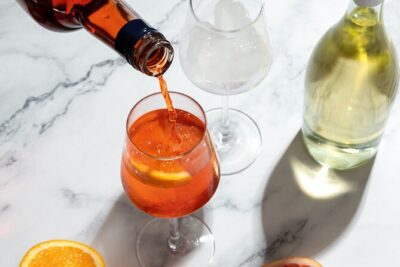
Enjoy Spritz and Pasta Making in Piazza Navona
Read our review →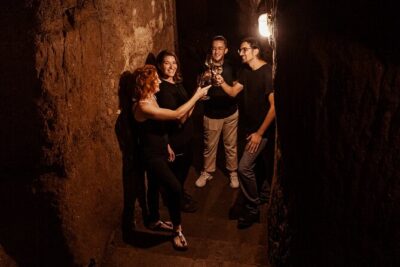
Pasta Making & Wine Tasting with Dinner in Frascati from Rome
Read our review →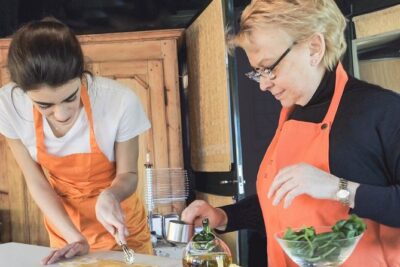
The Secrets to Learn Fresh Pasta and Tiramisù in a Glam Home
Read our review →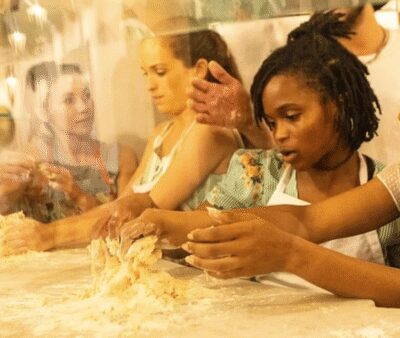
Pasta Making with Wine Tasting and Dinner in Frascati
Read our review →
Browse the lists this class appears in