
REVIEW · RAVIOLI AND GNOCCHI CLASSES
Olbia: cooking class on real pasta carbonara
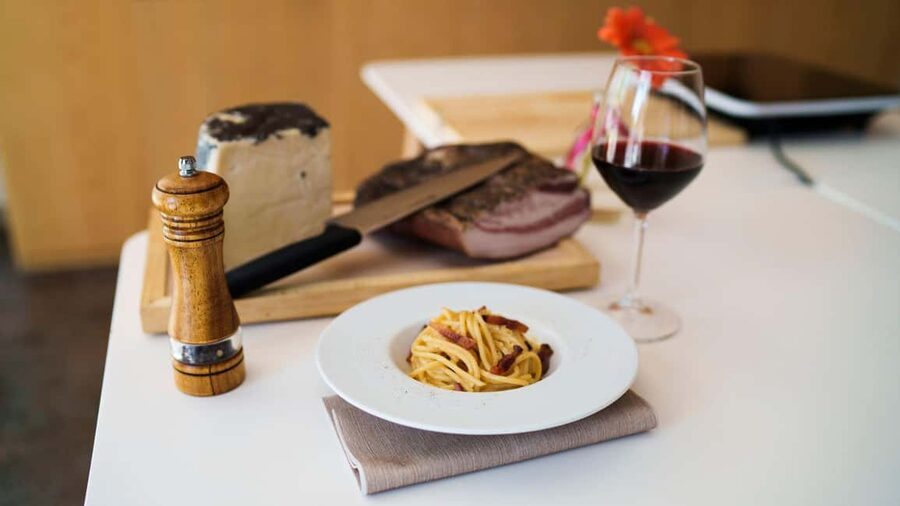
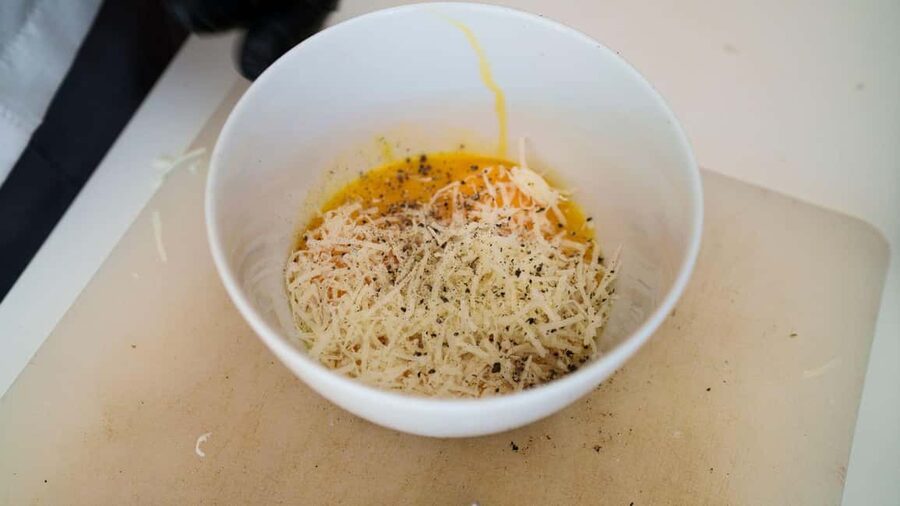
The star here is real carbonara, taught in a tiny group at Rosinita restaurant in central Olbia. You’ll learn why guanciale matters, how the egg and cheese mixture becomes silky, and how to finish the dish without scrambling it. Then you eat what you prepared with selected wine.
I like the six-person limit, which gives the chef room to help rather than lecture from across a crowded room. I also like the simple 90-minute format: you get a focused taste of Italian cooking without surrendering half a day of your Sardinian holiday.
The main thing to consider is that this is a carbonara class, not a full pasta-making workshop. One recent participant found it too simple and was disappointed not to make the pasta itself. At $77 per person, the value depends on how much you want the instruction, meal, and small-group setting.
Key points to know before you book
- You cook the famous sauce, not fresh pasta from scratch: The class focuses on preparing authentic carbonara and mastering its final texture.
- The group is limited to six people: That is a good size for hands-on guidance from the chef.
- Francesco has earned warm praise for his teaching: He is described as helpful, kind, and clear in explaining how to repeat the dish at home.
- The class takes place at Rosinita restaurant: Look for the pink façade at number 6 in Piazza Mercato, beneath the square’s large glass roof.
- Your meal is included: You eat the carbonara you prepared, accompanied by selected wine.
- Food allergies are a serious concern: The activity is not suitable for people with food allergies.
Carbonara in the heart of Olbia
This experience gives you a close look at one of Italy’s most argued-over dishes. Carbonara is short on ingredients, but it is not foolproof. The quality of the guanciale, the balance of egg and cheese, and the final mixing all matter.
That is what makes a short class useful. You are not just watching a chef plate a bowl. You are shown the decisions that make carbonara creamy rather than greasy, firm rather than watery, and full of flavor without relying on cream.
The setting is Rosinita restaurant at Piazza Mercato, number 6. The square is easy to identify by its imposing glass roof, and the restaurant has a pink-painted façade. I like this kind of meeting point because it is specific and visual. You do not need to search for a vague street corner or wait for a guide beside a large monument.
The activity is offered in Italian, English, and Spanish. That matters in a cooking class, where timing and texture can be hard to explain with gestures alone. You will want to understand what the chef is telling you at the exact moment the ingredients come together.
More Ravioli and Gnocchi Classes in Italy:
- 3 in 1 Cooking Class near Navona: Fettuccine, Ravioli & Tiramisu
★ 5.0 · 7,376 reviews - Rome: 3-in-1 Fettuccine, Ravioli, and Tiramisu Cooking Class
★ 4.9 · 2,704 reviews - Rome: Fettuccine Pasta Cooking Class in Rome’s City Center
★ 4.8 · 2,414 reviews
Meeting the chef and starting the class
The programme begins with a meeting with the chef and an introduction to the activity. The information provided names Francesco in connection with the class, and his teaching style has been praised for being friendly and easy to follow.
With only six participants, you should have a fair chance to see the preparation clearly and take part yourself. Small groups also make it easier to ask practical questions, such as how to judge the right consistency or how to avoid overcooking the egg mixture.
The class is designed as a social meal as much as a lesson. That is important in Italy, where cooking often works as a shared ritual rather than a race to produce food. You will prepare your dish alongside the others, listen to stories and bits of culinary trivia, and then sit down to eat.
Do not expect a formal cooking school with a long series of recipes. The focus is narrow and intentional: one classic dish, prepared with care. If you prefer a relaxed class with one clear goal, that focus is a strength. If you want several courses or a tour of Sardinian cuisine, this will feel limited.
Choosing the ingredients for true carbonara
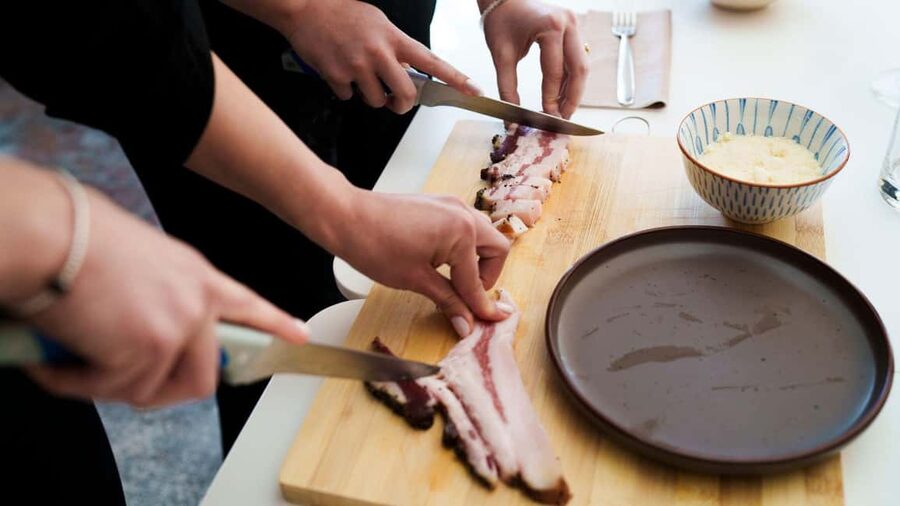
The chef explains the ingredients and traditional method, including the choice of guanciale. This cured pork cheek is one of the details that separates traditional carbonara from many casual versions made with bacon or other substitutes.
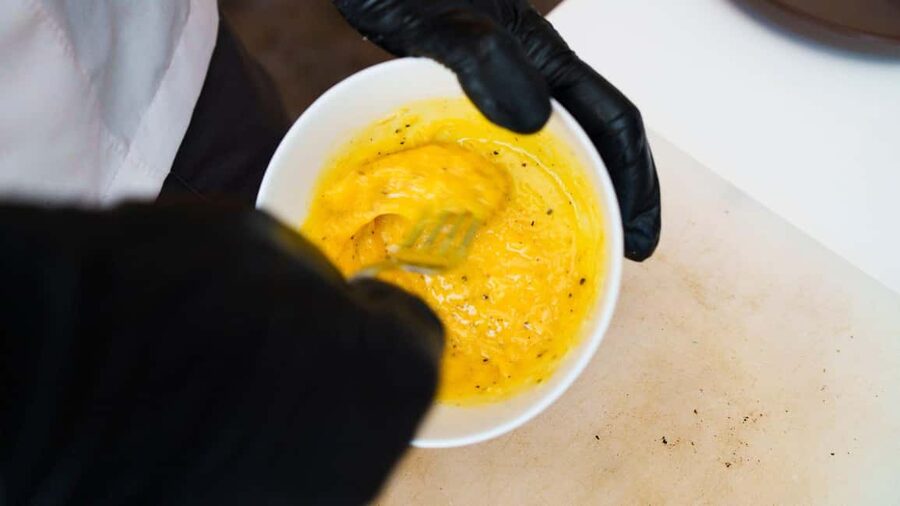
You will also hear about the role of the egg and cheese mixture. Carbonara depends on heat control. The pasta must be hot enough to help form the sauce, but the egg cannot be allowed to cook too aggressively. This is the point where a demonstration alone is less useful than taking part.
I like that the class puts attention on technique rather than only on the finished bowl. You can buy pasta and cheese in any supermarket, but learning how to bring them together properly is what lets you repeat the dish at home.
The experience uses wholesome ingredients and traditional methods, but the supplied details do not name every ingredient or specify the type of cheese used. That is worth keeping in mind if you are booking because you want a very particular regional recipe. You will learn the chef’s approach to authentic carbonara, but this is not advertised as a broad lesson in Sardinian pasta traditions.
The hands-on carbonara preparation
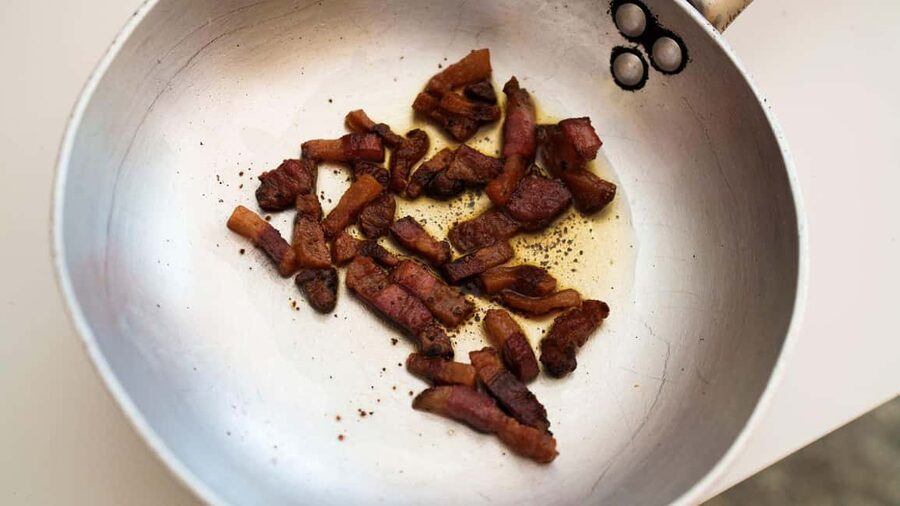
The central part of the class is preparing the carbonara itself. You are expected to cook with your own hands, rather than simply watch the chef work.
The key term to listen for is mantecatura, the final mixing stage that turns the ingredients into a smooth sauce. This is where the dish comes together. You will learn how to combine the pasta, guanciale, egg, and cheese so the result coats the noodles instead of sitting in separate pools.
The class should suit cooks of many levels because the dish has a short ingredient list and a clear sequence. Beginners get a useful introduction to heat and texture. More confident home cooks may enjoy the fine points of finishing the sauce and comparing the method with their own.
Still, you should book with accurate expectations. A participant from the Netherlands rated the experience three out of five after finding it too simple and noting that the pasta itself was not made by hand. That is the clearest limitation in the available feedback.
If your dream is rolling dough, cutting noodles, and shaping fresh pasta, this is not that class. You will prepare the carbonara, but the activity does not promise a pasta-making lesson. For some people, that keeps the experience relaxed. For others, it may not justify the price.
Other Italy classes worth putting on the shortlist
- Florence: Pasta Cooking Class with Unlimited Wine
★ 4.9 · 10,285 reviews - Florence Pizza or Pasta Class with Gelato Making at a Tuscan Farm
★ 5.0 · 6,801 reviews - Florence: Pasta & Tiramisu Cooking Class with Unlimited Wine
★ 4.9 · 6,708 reviews - Florence: Pasta Cooking Class with Unlimited Wine
★ 5.0 · 6,413 reviews
Sitting down to eat what you made
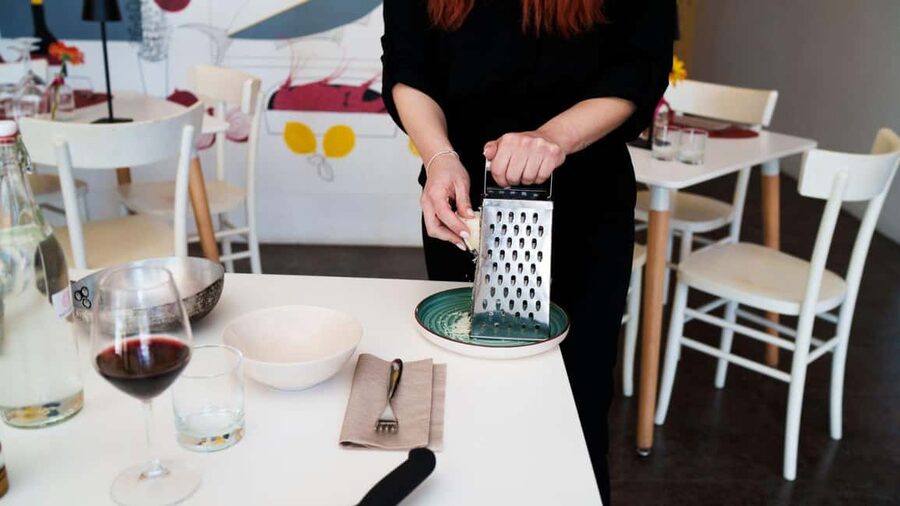
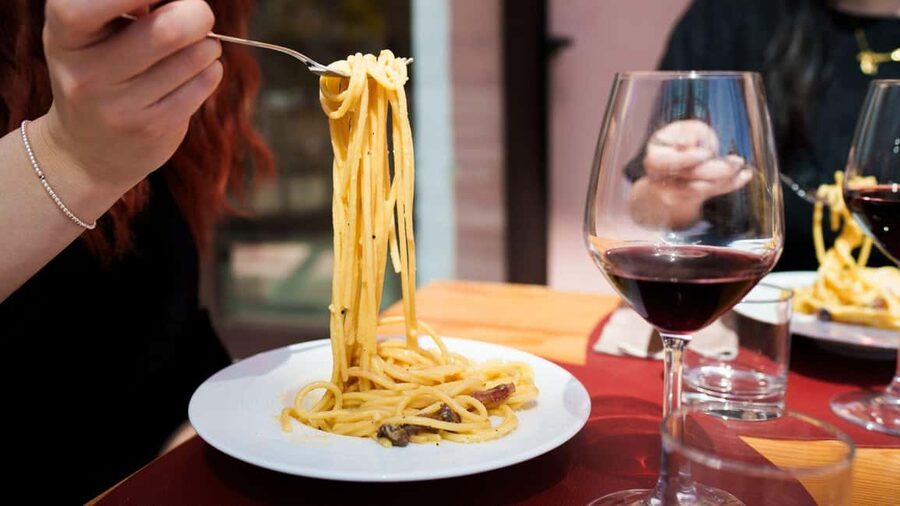
After the preparation, you taste the finished dish as part of lunch. This is more satisfying than watching a chef cook a portion for you because the bowl reflects the work you just completed.
Selected wine is included, adding a social element to the meal. The class is meant to end around the table, with conversation and the chance to enjoy the result together. The meal is not an extra purchase or an optional add-on.
The 90-minute duration is well judged for this format. It gives enough time for an explanation, hands-on preparation, and eating without turning a simple dish into an all-day event. You can fit it into a morning or lunchtime plan in Olbia and still have much of the day available.
The short length also means the experience will not cover every part of Italian food culture. You are getting a focused lesson and lunch, not a market visit, wine course, or multi-course feast. I would see it as a pleasant food stop in Olbia rather than the main culinary event of an entire Sardinia trip.
Is $77 a fair price?
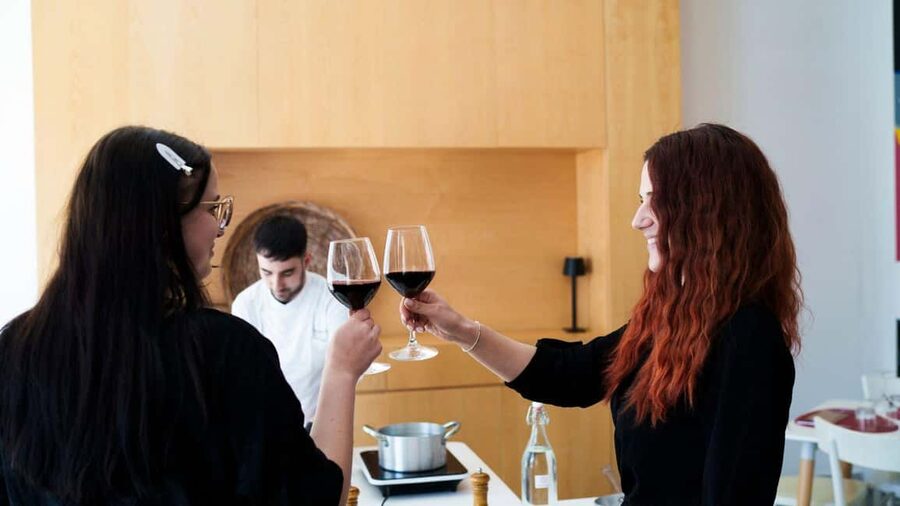
At $77 per person, this class sits above the cost of simply ordering carbonara in a restaurant. That comparison is fair, but it is not the whole calculation. You are paying for the chef’s instruction, the opportunity to prepare the dish, the small group, lunch, and selected wine.
The six-person limit is the strongest argument for the price. A large class can leave you watching from the back, while a group of six should give you more contact with the chef and more control over the cooking. The value is better if you care about learning a method you can use again.
Francesco’s feedback is also encouraging. One participant from the United Kingdom described him as lovely and helpful, and praised the explanations as clear enough to repeat the recipe at home. That is exactly what you want from a cooking lesson: not just a pleasant meal, but a technique you remember after leaving Olbia.
The price is less attractive if you mainly want to eat carbonara or if you expect to make the pasta itself. One Swiss participant rated the experience highly but still considered it too expensive. That combination tells me the class can be enjoyable and well run while remaining a stretch for a budget-conscious diner.
I would book it for the teaching and the social setting, not as a bargain lunch. If you only want the cheapest way to taste carbonara, order it separately at a local restaurant.
Who will enjoy this Olbia activity?
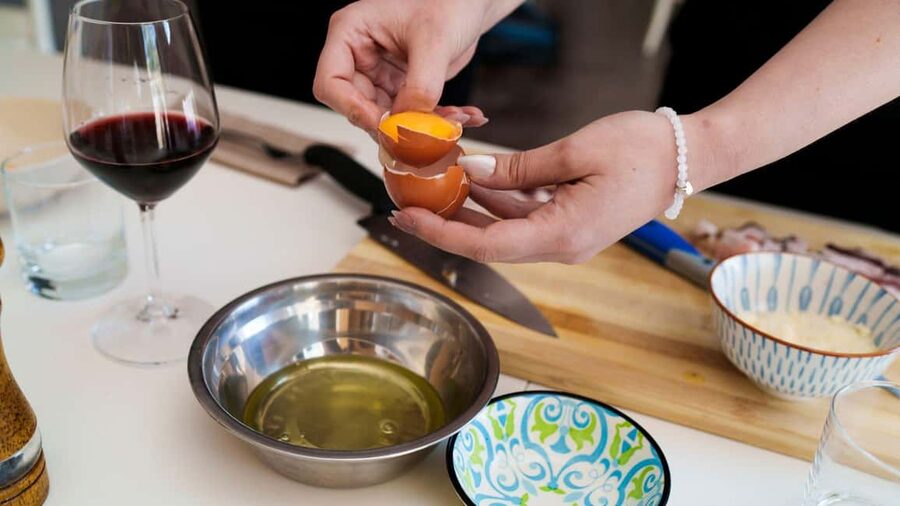
This class is a good fit for you if you enjoy food, want a brief cultural activity, and like the idea of eating something you helped prepare. It should also work well for couples, friends, and solo visitors who enjoy meeting a few other people around a shared meal.
Families can bring children of all ages, but active participation is available from age eight upward. Younger children may attend, but the experience is not presented as a separate children’s programme. If you are traveling with children, think of it as an adult-style cooking class that older kids can join.
The class is especially suited to someone who wants a practical souvenir. A photograph of a Sardinian street is nice, but knowing how to make a better carbonara at home has a longer life. The lesson’s value grows if you plan to try the dish again after your holiday.
It is less suitable for people with food allergies. The activity is specifically listed as unsuitable for those with food allergies, so you should not assume that substitutions or special preparation will be available.
You should also skip it if you want a full exploration of Sardinian cooking. Carbonara is associated mainly with Rome rather than Sardinia, so this is an Italian cooking experience held in Sardinia, not a survey of local island specialties. Its appeal is the classic dish and the convivial setting in Olbia.
Practical details that make the difference
Plan to arrive at Piazza Mercato and identify the glass roof and pink façade before the start time. The clear landmark should make the meeting point straightforward, but giving yourself a few minutes is wise if you do not know central Olbia.
The class lasts 1.5 hours, and starting times vary, so check the available time when booking. The small group is limited to six participants. The chef can teach in Italian, English, or Spanish.
Children of all ages are allowed, with active participation possible from age eight. Pets are not allowed. The activity includes the carbonara cooking class, the chef, and lunch with selected wine.
You can cancel up to 24 hours before the activity for a full refund. You can also reserve now and pay later, which helps if your Sardinia schedule is still shifting.
Should you book this carbonara class?
Book it if you want a friendly, compact cooking experience with a maximum of six people, clear instruction, and a meal at the end. The strongest reasons are the hands-on preparation, the focus on authentic technique, and the chance to learn from Francesco in a central Olbia restaurant.
Think twice if your main goal is making fresh pasta from flour and eggs. That is the one clear mismatch between the experience some people expect and what is actually offered. Also consider the $77 cost carefully: it makes sense for instruction and a social lunch, but not if you are simply seeking an inexpensive plate of pasta.
For most food-focused visitors, I would treat this as a pleasant half-morning activity rather than a major Sardinian culinary tour. You leave with a meal, a few useful carbonara techniques, and a better sense of why such a simple dish demands careful handling.
FAQ
Where does the carbonara class meet?
The meeting point is Rosinita restaurant at number 6 in Piazza Mercato, Olbia. You can identify the square by its large glass roof and the restaurant by its pink-painted façade.
How long does the experience last?
The cooking class and meal last 1.5 hours. Starting times vary, so check availability for the date you want.
How many people are in the group?
The activity is a small-group experience limited to six participants.
Which languages does the chef speak?
The class is available in Italian, English, and Spanish.
Is lunch included?
Yes. The activity includes the carbonara cooking class, the chef, and lunch. You eat the dish you prepared, accompanied by selected wine.
Do children participate in the class?
Children of all ages are allowed, but active participation is possible from age eight and up.
Can I make fresh pasta during the class?
No specific fresh-pasta-making session is included. The activity focuses on preparing authentic pasta carbonara, including the ingredients, cooking method, and final mantecatura.
Recently added in Italy
- Verona: Tortellini Cooking Class and Lunch with Mamma Ivana★ 5.0 · 20 reviews
- Vicenza: Pasta & Tiramisu Cooking Class at a Local’s Home★ 5.0 · 5 reviews
- Volterra: Fresh Pasta Cooking Class at a Tuscan Farmhouse★ 5.0 · 33 reviews
- Verona: Pasta Cooking Class with Wine Tasting★ 5.0 · 4 reviews
- Verona: Pasta & Tiramisu Cooking Class at a Local’s Home★ 5.0 · 16 reviews
- Verona: Prosecco and Pasta Making Class at a Local’s Home★ 5.0 · 10 reviews
- Venice: Share Your Pasta Love in a Local’s Home★ 4.8 · 20 reviews
- Verona: My Granny’s secrets making gnocchi★ 5.0 · 7 reviews
Ravioli and Gnocchi Classes, compared.
3 in 1 Cooking Class near Navona: Fettuccine, Ravioli & Tiramisu
Read our review →
3-in-1 Fettuccine, Ravioli, and Tiramisu Cooking Class
Read our review →
Fettuccine Pasta Cooking Class in Rome’s City Center
Read our review →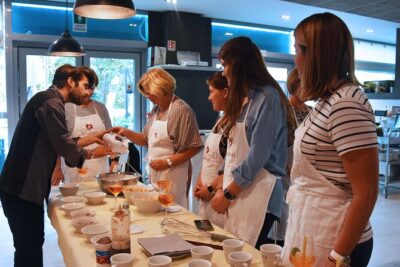
Become a Masterchef in Rome: Pasta, Ravioli and Tiramisù Class
Read our review →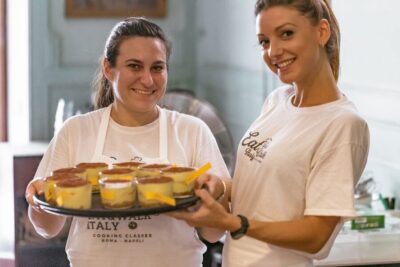
Fettuccine & Tiramisù: Cooking Class with Wine & Limoncello
Read our review →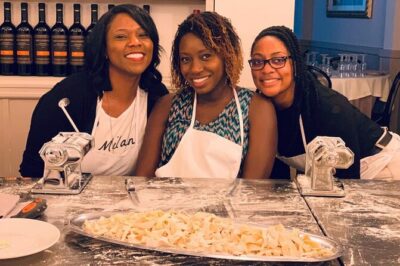
Rome Pasta and Tiramisu Class: Ravioli, Fettuccine & Fine Wine 5*
Read our review →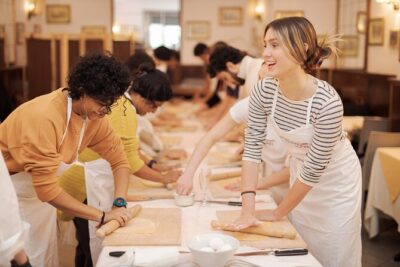
Pasta Cooking Class in Rome – Fettuccine Class in Piazza Navona
Read our review →
Browse the lists this class appears in