
REVIEW · GELATO MAKING CLASSES
Bologna Local Pasta Cooking Class, Ragu, Spritz, Wine & Gelato
Bologna’s best souvenir may be a skill, not a trinket. In this three-hour class, you mix eggs and flour by hand, roll the dough with a pin, cut tagliatelle, and eat the results with homemade ragù. The food is simple, local, and practical, not a staged show built around tourist clichés.
I like the easy social rhythm: Mortadella, Crescenta, and Pignoletto get conversation started before the work begins. I also like the generous drinks and final treats, from the Casoni spritz and San Giovese to coffee, amaro, and mystery gelato. The main consideration is that the ragù is prepared before class, so you learn to make the pasta rather than the sauce.
Key points at a glance
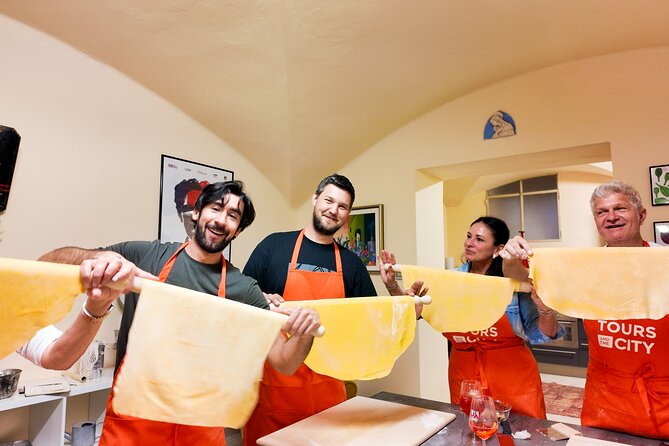
- Hand-rolled tagliatelle: You make the dough and shape the pasta without a machine.
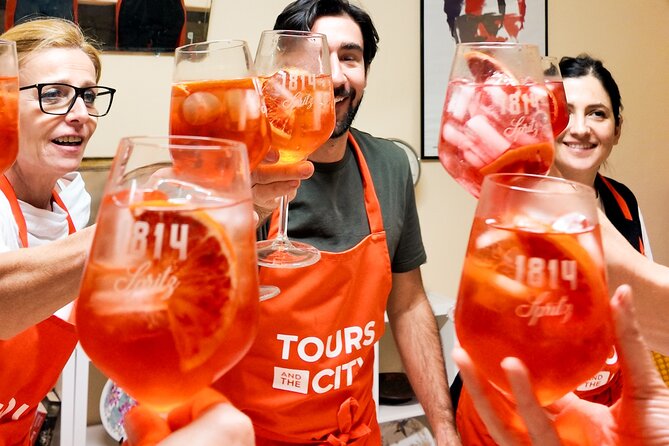
- A local aperitivo: Start with Mortadella, Crescenta, Pignoletto, and a Casoni spritz.
- A complete meal: Eat your pasta with house-made ragù, 24-month Parmigiano Reggiano, and red wine.
- Friendly instruction: Teachers including Sonia, Stella, Stefania, Claudia, Roberta, and Valentina have led sessions.
- Useful take-home skills: Recipes are available by email, and you may have pasta left to cook later.
- Good value at $59.26: Food, several drinks, dessert, and a three-hour class are included.
Why this Bologna cooking class works
Bologna is often called Italy’s capital of food, and this class makes a good case for the title without turning lunch into a lecture. You work with the ingredients that define the local table: eggs, flour, Mortadella, Parmigiano Reggiano, ragù, wine, coffee, and gelato.
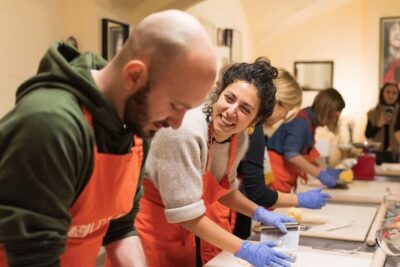
The appeal is its hands-on format. You are not simply watching a cook fold pasta while someone else handles the messy part. You mix, knead, roll, and cut the dough yourself. That matters because fresh pasta looks easy until the dough sticks to the board, rolls unevenly, or refuses to become a neat sheet. A patient teacher can turn those small problems into useful lessons.
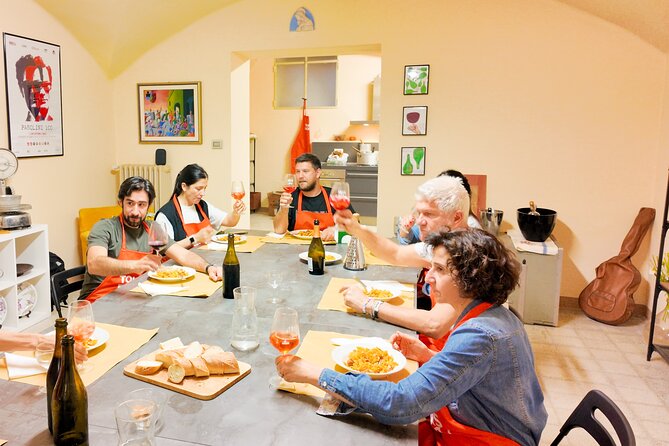
The class is also built around sharing a meal. You cook alongside a small group, then sit down with the food and drinks together. Solo participants can meet people quickly, while couples and families get an activity that gives the day more shape than another restaurant meal.
The advertised format is limited to 10 people, although the general information allows a maximum of 13. That is still a manageable number for a practical class, but the exact group size may vary. If personal instruction is your top concern, ask about the size when booking.
More Pasta Classes with Wine in Bologna
- Bologna Food & Market Tour with 6 Tastings, Pasta, Wines & More
★ 5.0 · 1,328 reviews - Bologna: Pasta Cooking Class, Ragu, Spritz, Wine & Gelato
★ 4.9 · 775 reviews - Bologna: Pasta and Tiramisu Small Group Cooking Class with Wine
★ 5.0 · 409 reviews
Meeting near Piazza Galileo Galilei
The class begins at Piazza Galileo Galilei in Bologna’s old town and ends at the same meeting point. The location is near public transportation, which makes it easier to fit into a day of sightseeing.
Give yourself enough time to find the square. Bologna’s historic center is pleasant for wandering, but the same porticoes and side streets that make the city enjoyable can slow you down when you are trying to arrive at a precise point. The meeting point is listed as P.za Galileo Galilei, 40123 Bologna.
The mobile ticket is useful for a phone-based itinerary. Still, I would save the confirmation before leaving your accommodation, especially if your phone connection is unreliable. The class runs about three hours, so it works well as a long lunch or an early evening activity.
Starting with Mortadella, Crescenta, and Pignoletto
The welcome aperitif is more than a polite snack. It introduces the local food culture before you touch the dough. You begin with Mortadella and Crescenta, accompanied by Pignoletto, a local sparkling wine.
Mortadella is Bologna’s famous contribution to the cold-cut counter. It is far more delicate than the oversized supermarket versions many people know, with a smooth texture and a gentle, savory flavor. Crescenta gives you another local bite to try with it.
This opening is also when the group starts talking. That social element is a real part of the experience. The class is not designed for silent concentration at individual workstations. You will likely compare pasta attempts, ask questions, and get to know the people sharing your table.
If you prefer a quiet, private cooking lesson, this format may feel too communal. If you like meeting people over food, the aperitivo makes the class feel relaxed from the start.
Mixing the dough with two basic ingredients
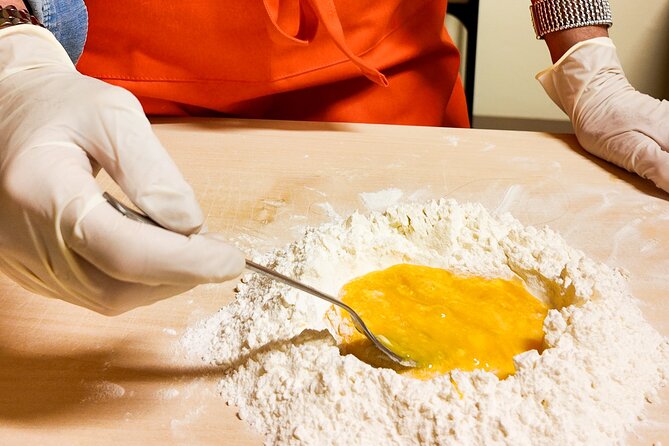
The pasta lesson uses eggs and flour. That sounds almost too simple, but it is exactly why the class is useful. You can repeat the method at home without special equipment or a long shopping list.
The instructors demonstrate how to bring the ingredients together, then guide you through the process. Teachers named in the experience include Sonia, Stella, Stefania, Claudia, Roberta, Valentina, Beatrice, and others, so the exact instructor depends on the session.
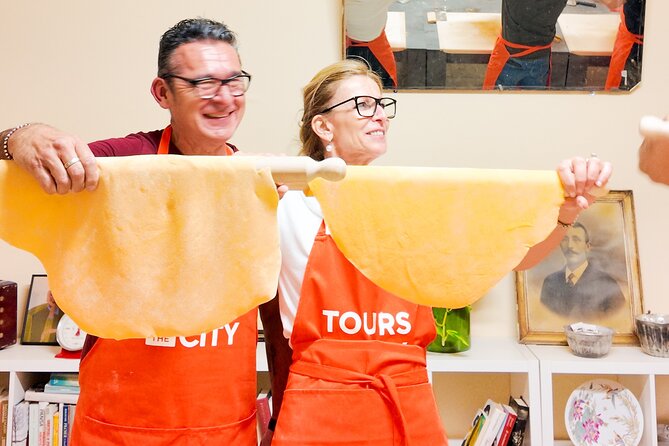
There are no machines doing the work for you. The rolling pin is your main tool, and your arms provide the effort. That gives you a better sense of the dough than pressing a button on a pasta roller. You learn how the sheet should feel as it becomes thinner, and how to handle it without tearing.
Beginners should not worry about arriving with kitchen skills. The class is designed for first-time pasta makers, and the teaching style is step by step. People with more experience can still pick up useful details about Bolognese technique and local tradition.
You should expect flour on your hands and some uneven pasta at first. That is part of the lesson, not a failure. The finished noodles do not need to look factory-perfect to taste good.
More Gelato Making Classes in Bologna:
- Bologna: Original Lasagna & Gelato Class at a Cooking School
★ 4.9 · 59 reviews - Bologna Original Lasagna and Gelato Class with Aperitif
★ 5.0 · 18 reviews - Florence Pizza or Pasta Class with Gelato Making at a Tuscan Farm
★ 5.0 · 6,801 reviews - Florence: Pizza or Pasta Class with Gelato at a Tuscan Farm
★ 4.9 · 1,181 reviews
Rolling and cutting tagliatelle by hand
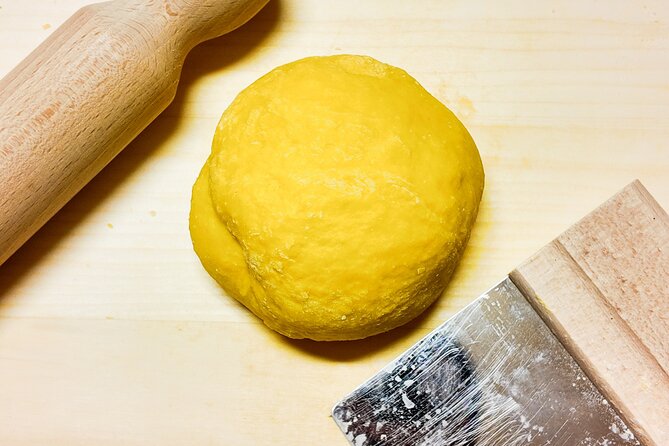
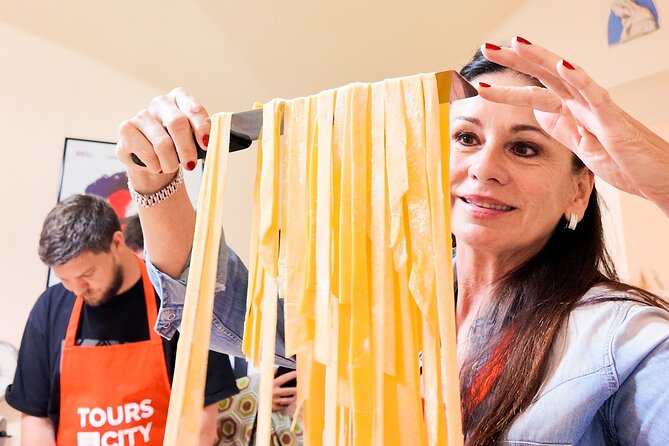
Once the dough is ready, you roll it out and cut it into tagliatelle. This is the central skill of the class, and it is also the part you are most likely to repeat at home.
Tagliatelle is a classic Bolognese pasta shape. Its broad ribbons hold a meat sauce well, which is why it pairs naturally with ragù. The class connects the shape to the sauce instead of treating pasta as a generic craft project.
The teachers help when the dough becomes difficult. This hands-on support is important because the difference between a frustrating class and a satisfying one often comes down to how quickly someone spots a problem. If your dough is too thick, too dry, or sticking to the surface, an instructor can show you what to change.
You may also finish with extra pasta to take home. That is not guaranteed in every session, but it has been part of the experience for some participants. It gives you a second chance to practice the cooking method after you return to your apartment or home.
Learning the Casoni spritz
While the pasta is being made, you learn how to prepare a Casoni spritz. Casoni is tied to Emilia-Romagna and uses local herbs and recipes, giving this drink a different identity from the better-known international aperitivo brands.
This is a nice touch because it shifts the drink lesson from a standard Aperol demonstration to something more regional. Some sessions have also included comparisons involving Campari and Aperol spritzes, so you may get a useful sense of how different bitter aperitifs change the drink.
The spritz is part of the activity, not just a drink placed in front of you. You learn how it is put together while working on the pasta. That keeps the class moving and adds a bit of fun when the dough requires patience.
The alcohol matters when planning your day. Wine, spritz, amaro, and coffee are all included, so this is not the right choice if you want a dry cooking class. Anyone under legal drinking age should not expect alcoholic substitutes to be the focus, even though children are welcome.
Homemade ragù, Parmigiano, and San Giovese
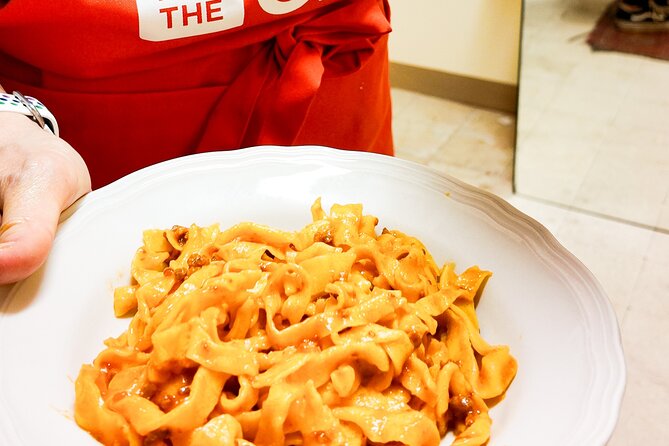
The ragù is made in advance because three hours is not long enough to teach the sauce properly and still give you time to prepare pasta. This is the clearest limitation of the class, so you should know it before booking.
That said, the ragù is described as fully homemade, not a jarred shortcut. You will eat it with your freshly cut tagliatelle, then finish the dish with 24-month Parmigiano Reggiano. The aged cheese adds a firm, salty note that works especially well with the meat sauce.
The pasta is cooked during the session, then combined with the ragù for the meal. You get to taste the result while it is fresh, which helps explain why hand-made pasta has a different texture from dried supermarket noodles.
San Giovese, the local red wine served with the main course, completes the meal. The portions are presented as generous, with plenty of refreshments throughout the class. If you are expecting a formal tasting menu, this is not that. It is a home-style meal built around the food you have just made.
Coffee, amaro, and mystery gelato
Italian meals do not usually end when the main plate is cleared. Here, the final course includes local coffee, amaro, and mystery gelato.
The gelato flavor is not announced ahead of time, which adds a small surprise at the end. One session also included aged balsamic vinegar from Modena with the dessert, though that should be treated as a possible extra rather than a guaranteed part of every class.
Amaro gives you a chance to try a traditional after-dinner drink. It is bitter and herbal, and it will not suit every palate. Coffee offers a familiar finish, while gelato keeps the last course light and playful.
By this point, you have had a full meal rather than a short demonstration. Plan the rest of your day accordingly. You may not want to schedule a large dinner immediately afterward.
What the $59.26 price really covers
At $59.26 per person, this class offers good value if you want food, instruction, and drinks in one booking. You receive roughly three hours of teaching, an aperitivo, a main meal, wine, a spritz, coffee, amaro, and gelato.
A cheaper pasta lesson might include only the cooking activity and a small tasting. A restaurant meal might cost a similar amount without giving you anything useful to take home. Here, the value comes from combining both parts: you learn a repeatable technique, then eat the result with several local products.
The value is less clear if you mainly want to learn ragù. Since the sauce is prepared before class, you will not receive a full lesson in browning meat, building the sauce, or managing the cooking time. For pasta skills and regional food culture, the price is more persuasive.
Recipes can be sent by email as PDFs upon request. That is important because fresh pasta is easy to enjoy once and easy to forget later. Having the recipe at home gives you a practical way to repeat the dish.
Who will enjoy it most
I would choose this class for couples, friends, solo visitors, and families with older children who are willing to take part. The shared table and drinks make it especially suitable for people who enjoy conversation as much as cooking.
It also works well for beginners. You do not need to know how to make pasta, and the instructors are there to help when the dough goes wrong. More experienced home cooks can still enjoy the cultural details and the chance to compare their technique with a local method.
Children are welcome, but the menu and teaching style are designed for adult participation. That means parents should decide if their child will be comfortable with a three-hour food activity centered on hand work, conversation, and an adult-oriented drink menu.
The class can accommodate gluten-free pasta and vegetarian sauces if you give advance notice. It may not suit people with severe allergies or strict dietary requirements, so ask before booking rather than relying on last-minute changes. Shared kitchens and prepared ingredients make careful allergy management important.
Timing, cancellation, and practical planning
The activity is offered in English and confirms at the time of booking. It is often reserved well ahead, with an average booking time of about 27 days, so I would not leave it until the final day of a short Bologna visit.
Free cancellation is available up to 24 hours before the start time for a full refund. Changes or cancellations inside that 24-hour window are not accepted for a refund, and the cut-off follows Bologna local time.
The class returns to Piazza Galileo Galilei, so you do not need to arrange a separate ride after the meal. Wear clothes you can work in comfortably. The information does not specify a dress code, but flour and food preparation are naturally easier in practical clothing.
Should you book this Bologna pasta class?
Book it if you want to do more than eat Bolognese food. The strongest parts are the hand-rolled tagliatelle, the relaxed teaching, the local aperitivo, and the generous meal afterward. You leave with a technique you can use at home, and possibly extra pasta and emailed recipes.
Skip it if your main goal is learning ragù from start to finish, or if you need a tightly controlled allergy-friendly kitchen. The sauce is prepared in advance, and strict dietary needs require advance checking.
For most visitors, the $59.26 price is fair for three hours of instruction, food, wine, cocktails, and dessert. I would book it early in your Bologna stay, then use the rest of the trip to compare the city’s tagliatelle with your own version.
FAQ
Where does the Bologna pasta class begin?
It begins at Piazza Galileo Galilei, P.za Galileo Galilei, 40123 Bologna BO, Italy.
Where does the activity end?
The class ends back at the meeting point in Piazza Galileo Galilei.
How long does the cooking class last?
The experience lasts approximately three hours.
What pasta will I make?
You will make tagliatelle by hand using eggs and flour, then cook it and serve it with homemade ragù.
Is the ragù made during the class?
No. The ragù is prepared in advance because of the limited class time, but it is described as 100 percent homemade.
What drinks and food are included?
The experience includes Pignoletto, Mortadella, Crescenta, a Casoni spritz, San Giovese with the pasta, coffee, amaro, and mystery gelato.
Is the class taught in English?
Yes. The activity is offered in English.
Can I request gluten-free or vegetarian options?
The class can accommodate gluten-free pasta and vegetarian sauces. You should provide dietary information in advance, and it may not be suitable for severe allergies or strict dietary requirements.
Can I cancel for a full refund?
Yes. You can cancel at least 24 hours before the start time for a full refund. Cancellations or changes made less than 24 hours before the activity are not accepted for a refund.
Recently added in Bologna
- Colorful Pasta Workshop in Bologna with meal★ 5.0 · 2 reviews
- Tortelloni and Tagliatelle Cooking Class in Bologna + Wine★ 3.0 · 2 reviews
- 3 hour Lasagna Bolognese cooking class★ 5.0 · 6 reviews
- Cesarine: Small group Tortellini Class at Local’s Home in Bologna★ 5.0 · 18 reviews
- Pasta and Tiramisu Masterclass with organic wines★ 3.5 · 3 reviews
- Lasagna Masterclass: Learn, Cook & Taste Authentic Bolognese★ 5.0 · 4 reviews
- Pasta Making Class: Tagliatelle & Bolognese Sauce★ 5.0 · 15 reviews
- Home Cooking: Pasta Making with Natural Colors in a Tiny Group★ 5.0 · 6 reviews
Gelato Making Classes, compared.
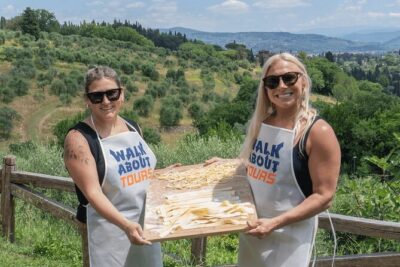
Florence Pizza or Pasta Class with Gelato Making at a Tuscan Farm
Read our review →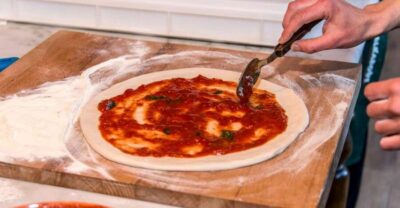
Pizza or Pasta Class with Gelato at a Tuscan Farm
Read our review →
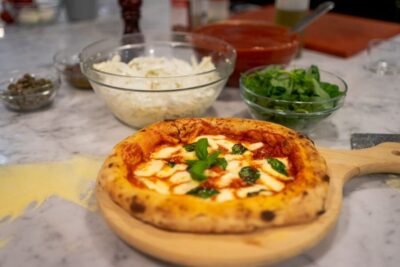
Pizza or Pasta and Gelato-Making Class with Wine
Read our review →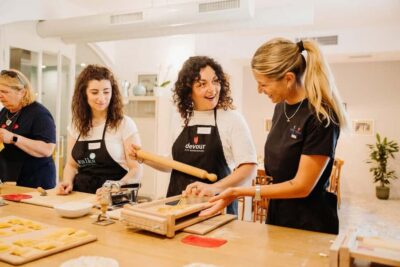
Pasta Cooking Class, Ragu, Spritz, Wine & Gelato
Read our review →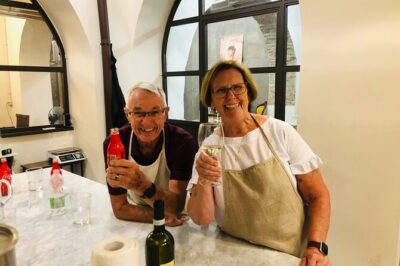
Super Fun Pasta & Gelato Class by Vatican with Wine + Oil Tasting
Read our review →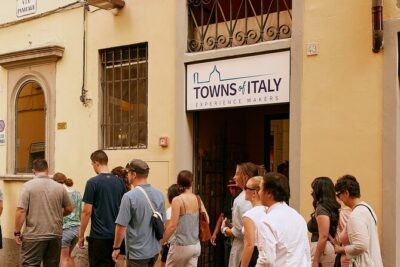
Premium Pasta and Gelato Cooking Class in Florence
Read our review →Browse the lists this class appears in