REVIEW · RAVIOLI AND GNOCCHI CLASSES
Fettuccine, Ravioli and Tiramisu Pasta Making in Rome
Making pasta from scratch is a fine way to give your feet a rest from Rome’s churches and ruins. In about three hours, you prepare fettuccine, ricotta ravioli, and tiramisu, then sit down to eat the meal you made with a drink and a little limoncello or coffee.
I like the friendly, practical teaching style reported from chefs such as Lori, Dani, Tommo, Carlotta, Maria, and Furio. I also like that the class suits families and beginners, with children as young as seven enjoying the hands-on work. The main concern is group size: the class can reach 18 people, and one isolated scheduling problem left a participant waiting outside, so arrive early and confirm the meeting details.
Key points to know before booking
- Three Italian staples in one class: Make tiramisu, fresh fettuccine, and ricotta-filled ravioli rather than learning only one dish.
- A meal is included: Eat your pasta and dessert afterward, with wine or a soft drink, water, and coffee or limoncello.
- Central Rome location: Meet at Via Giuseppe Zanardelli 14, close to public transportation and within the city center.
- Beginner-friendly instruction: Chefs including Lori and Dani focus on clear steps and individual help with the dough.
- Good for families: Children and adults can work together, and the tone is casual rather than formal.
- Plan around a shared class: Up to 18 people may attend, so this is social and lively rather than private.
A Roman cooking break with something to eat at the end
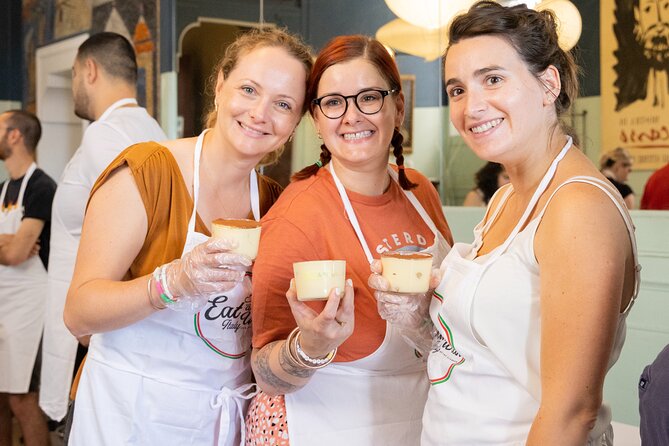
The clever part of this class is its simple promise: you do the work, then eat the results. Rome offers endless places to order pasta, but a cooking lesson gives you a useful skill and a meal that feels tied to your day in the city.
You meet at Via Giuseppe Zanardelli 14, in central Rome. The class is offered in English and lasts about three hours, though one session ran a little over two and a half hours. That timing fits well between sightseeing plans, but I would not place it immediately before a timed museum entry or train departure.
The setting is a real Roman restaurant rather than a classroom designed only for demonstrations. That matters. You are working at a table, handling dough, watching the food come together, and then moving into the meal portion without changing venues.
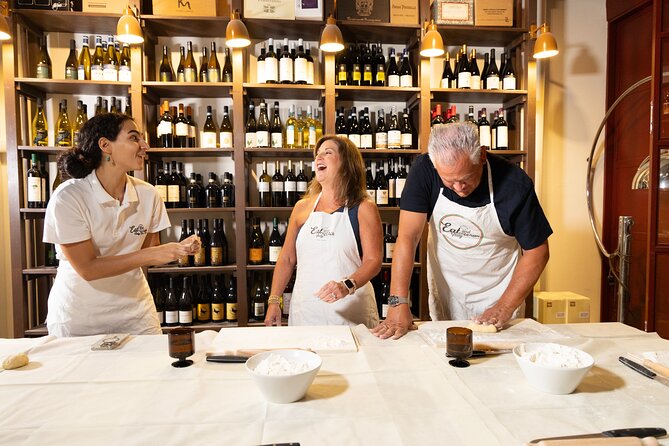
The social side is part of the deal. You may be sharing the table with couples, families, and other food-focused people. A group of nine can feel quite relaxed, while a full group of 18 will naturally require patience as the chef checks each station.
More Fresh Pasta Workshops in Rome
- Rome: Pasta Making Class with Wine, Limoncello, and Dessert
★ 4.9 · 3,177 reviews - Enjoy Spritz and Pasta Making in Piazza Navona
★ 5.0 · 1,681 reviews - Pasta Making & Wine Tasting with Dinner in Frascati from Rome
★ 5.0 · 1,326 reviews
First course: tiramisu before the pasta
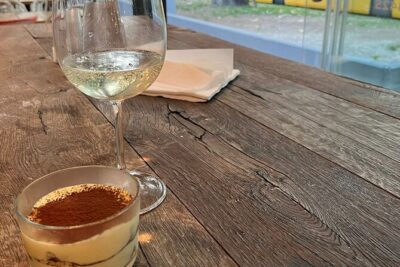
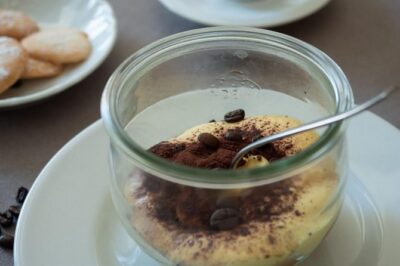
The class begins with tiramisu. You layer savoiardi biscuits with mascarpone cream and finish the dessert with cocoa. This is a smart first step because tiramisu needs time to settle while you make the pasta.
It is also the least physically demanding part of the lesson. You can get comfortable with the kitchen, meet the people at your table, and learn how the chef gives instructions before tackling dough.
The appeal here is not just dessert. You learn the basic structure of a classic tiramisu and can repeat it at home without special pasta equipment. The recipe is approachable, though the supplied details do not specify the exact quantities or whether an alcohol-free version is available. If that matters to you, ask the chef at the start.
Families may find this portion especially useful. Children can take part in layering and finishing the dessert, although an adult should handle any task the instructor identifies as unsuitable for younger children.
Rolling dough into fettuccine
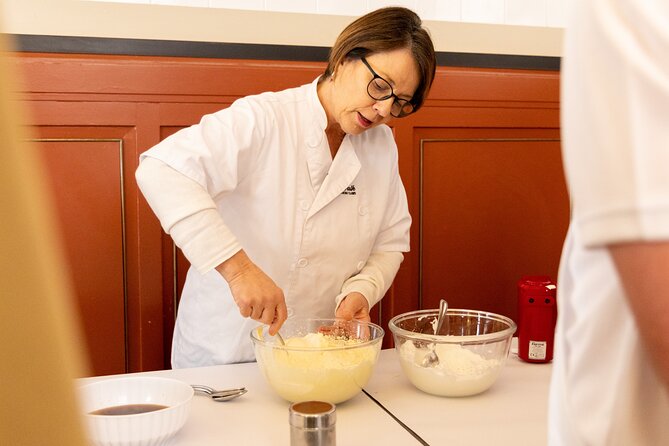
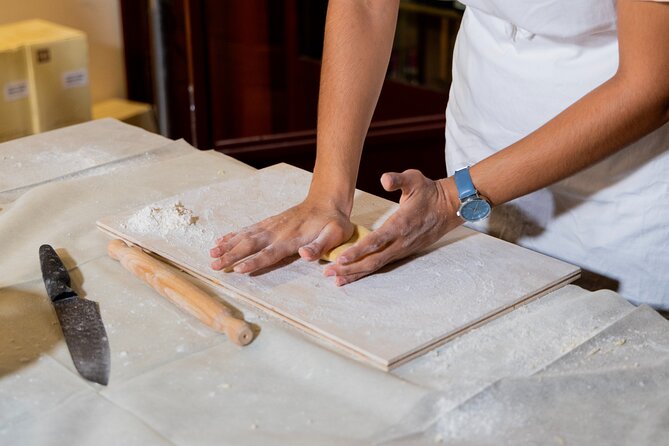
Next comes the main hands-on task: fresh pasta dough. Under the chef’s guidance, you knead, roll, and shape the dough into fettuccine.
This is where the teaching quality matters most. A dough that is too dry, too wet, or unevenly rolled can quickly become frustrating. Chef Lori is particularly noted for checking that each person’s dough is right before moving on, while Chef Dani is described as patient and clear with each step. Those are valuable habits in a group class.
You should expect to use your hands and make a bit of floury mess. This is not a demonstration where you sit back and watch a professional do everything. The payoff is that you leave knowing what fresh pasta dough feels like and how the process fits together.
The fettuccine is served with your choice of one sauce:
- Amatriciana
- Cacio e pepe
- Tomato and basil
The sauces are selected for you to choose from, but making the sauce is not included. That distinction is worth noting. You are learning the pasta itself, not a full lesson in Roman sauce preparation.
Cacio e pepe is the most classic choice for a Roman meal, with its cheese and pepper focus. Amatriciana gives you a stronger tomato and pork-based flavor profile, while tomato and basil is the simplest option. The information provided does not specify the exact ingredients in the sauces or any substitutions, so ask about dietary needs before the cooking begins.
Shaping ricotta and Parmigiano ravioli
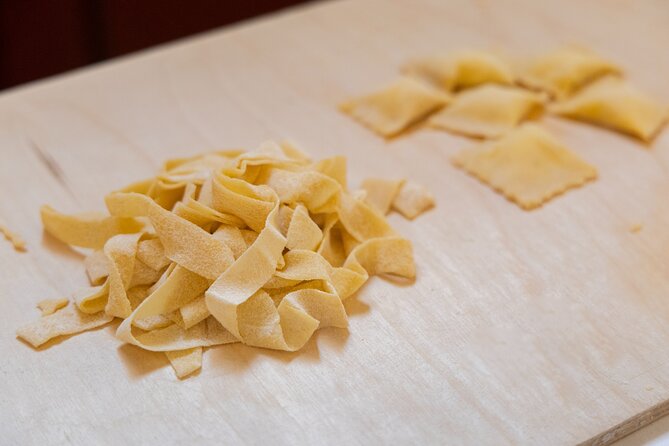
After the fettuccine, you make stuffed ravioli. The filling includes ricotta and Parmigiano, and the finished ravioli is served with butter and sage.
This is a different skill from making long noodles. You need to place the filling, seal the pasta, and avoid trapping too much air. The chef’s help is useful here, especially for first-time pasta makers. You may find the ravioli takes more care than the fettuccine, but that is also what makes it satisfying.
The butter and sage sauce is deliberately restrained. It lets the filling and fresh pasta do most of the work. If you prefer strong sauces, this may seem plain, but it is a good pairing for delicate ravioli.
Portions are served as part of the meal after the cooking portion. The menu lists fettuccine as the starter and ravioli as the main course, followed by your tiramisu. You are not simply taking home a small sample of what you made. The planned finish is a sit-down meal.
More Ravioli and Gnocchi Classes in Rome
- 3 in 1 Cooking Class near Navona: Fettuccine, Ravioli & Tiramisu
★ 5.0 · 7,376 reviews - Rome: 3-in-1 Fettuccine, Ravioli, and Tiramisu Cooking Class
★ 4.9 · 2,704 reviews - Rome: Fettuccine Pasta Cooking Class in Rome’s City Center
★ 4.8 · 2,414 reviews - Become a Masterchef in Rome: Pasta, Ravioli and Tiramisù Class
★ 5.0 · 2,156 reviews
The meal: pasta, wine, and a small Roman toast
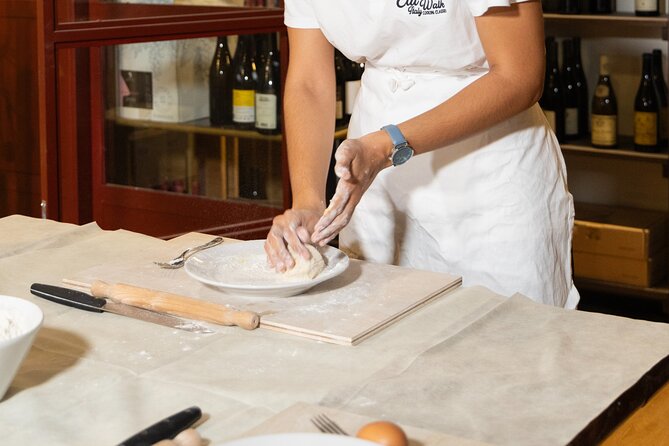
Once the cooking is done, you sit down to eat. Included drinks are a glass of wine or a soft drink, plus water. You can finish with your choice of a shot of limoncello or hot coffee.
That makes the $84.69 price easier to judge. You are paying for instruction, ingredients, a central restaurant setting, and a three-course meal with drinks. It is not the cheapest way to eat pasta in Rome, but a restaurant meal alone would not teach you how to make the dishes.
The value is strongest if you want an activity rather than only dinner. I would choose this class for a day when you need a slower change of pace. It gives you an indoor break from sightseeing and leaves you with techniques you can try at home.
Extra drinks and extra food are not included. If you want anything beyond the listed meal and beverages, budget separately.
What the teaching style is like
The class depends heavily on the chef assigned to your session. Several instructors are associated with the experience, including Lori, Dani, Tommo, Carlotta, Maria, Furio, Mimi, Alessia, and Tommy.
The common thread is a casual teaching style. Tommo is described as precise but lighthearted. Carlotta combines instruction with a relaxed atmosphere. Maria is enthusiastic and helpful, while Furio brings energy to the lesson. Alessia is praised for making pasta feel simple rather than intimidating.
Of course, chef assignments can change. You should not book expecting one particular instructor unless the operator confirms that person for your date.
The strongest feature is the amount of direct help. The chef is expected to move around the table, check the dough, and explain each stage. In a larger group, you may need to wait briefly for individual attention, but this is still more practical than watching a cooking show.
Family appeal and group size
This is one of the better choices in Rome for a family that wants to do something together. Children aged seven, ten, and twelve have taken part successfully, and the format gives younger participants several jobs: layering tiramisu, kneading dough, cutting pasta, and shaping ravioli.
The class is also low pressure. You do not need professional cooking experience, and the instructions are designed for beginners. A parent may still need to help a younger child, especially during fast-moving parts of the lesson, but the structure allows adults to take part rather than acting only as supervisors.
For couples, the class offers an easy way to meet other people. You will likely share the work and meal with a mixed group, which can be part of the fun. If you want a quiet, private cooking lesson, this is not the right format.
The maximum group size is listed as 18 people. One account described a class of 20, so the actual number may occasionally vary. I would plan for a social group rather than an intimate chef-led session.
Timing, meeting point, and the one practical concern
The starting point is Via Giuseppe Zanardelli 14, 00186 Rome. The activity ends back at the meeting point, and the location is near public transportation.
Give yourself time to find the address. One participant arrived before the scheduled start, found the metal door closed, and could not join the class when no instructor appeared at the expected time. This appears to be an isolated operational problem, but it is still worth treating as a practical warning.
I would arrive 15 to 20 minutes early, keep the booking confirmation available on your phone, and check that you are at the correct entrance. The experience provides a mobile ticket, which makes carrying paper documents unnecessary.
The class is booked, on average, 41 days in advance. That suggests popular dates can fill well ahead of time, especially during busy periods. If the cooking lesson is important to your Rome plans, reserve before you arrive rather than hoping to find a last-minute opening.
Free cancellation is available up to 24 hours before the start time for a full refund. Within 24 hours, the payment is not refunded and changes are not accepted.
Who will get the most from this class
I would recommend it to you if:
- You want a hands-on food activity rather than another sightseeing stop.
- You enjoy learning a skill you can repeat at home.
- You are visiting Rome with children who like making things.
- You want a complete meal built into the activity.
- You are comfortable sharing a table with a group.
- You like pasta and tiramisu more than formal culinary theory.
It is less suitable if you need strict control over ingredients, want to study sauce-making, or prefer a private class. The operator specifically excludes making the sauce, so the focus is pasta and dessert technique.
People with dietary restrictions should ask questions before booking. The listed dishes contain wheat, dairy, ricotta, Parmigiano, mascarpone, and possibly other ingredients in the sauces. The available information does not confirm substitutions, vegetarian details for every sauce, or allergy procedures.
Is $84.69 a fair price?
For Rome, the price makes sense when you count the full package. You receive roughly three hours of instruction, all the food you prepare, a sit-down meal, a glass of wine or soft drink, water, and either coffee or limoncello.
You are also buying a break from the usual sightseeing rhythm. A cooking class can be a good middle-of-the-trip choice, when your feet need a rest but you still want to do something active.
The value drops if you mainly want a cheap dinner or already know how to make fresh pasta. In that case, you may prefer to spend the money on a restaurant with a more elaborate menu. But for a first pasta lesson, the included meal and three different dishes give the price a reasonable foundation.
Should you book the Fettuccine, Ravioli, and Tiramisu class?
I would book this if you want a friendly, practical food activity in central Rome and like the idea of eating what you make. The combination of fettuccine, stuffed ravioli, and tiramisu gives you enough variety to keep the three hours interesting, and the class is well suited to families and beginners.
Book with realistic expectations. This is a shared class, not a private chef lesson. You will learn how to make the pasta and dessert, but not how to prepare the sauces, and occasional meeting-point confusion is possible.
For most visitors, the best reason to choose it is simple: you get a meal, a useful kitchen skill, and a few hours away from the crowds. If that sounds better than another restaurant reservation, this is a good Rome experience to put on your schedule.
FAQ
Where does the cooking class start?
It starts at Via Giuseppe Zanardelli 14, 00186 Rome, Italy.
Where does the activity end?
The activity ends back at the meeting point.
How long does the class last?
The advertised duration is approximately three hours. One session lasted just over two and a half hours.
Is the class offered in English?
Yes. The class is offered in English.
What dishes will I make?
You will make fettuccine, ricotta and Parmigiano ravioli, and tiramisu.
What sauce choices are available for the fettuccine?
You can choose Amatriciana, cacio e pepe, or tomato and basil.
What sauce comes with the ravioli?
The ravioli is served with butter and sage.
Are drinks included?
Yes. The included beverages are a glass of wine or a soft drink, water, and your choice of hot coffee or a shot of limoncello.
Is making the sauce included?
No. Making the sauce is not included.
How many people can join the class?
The class has a maximum of 18 participants.
Can I cancel for a full refund?
Yes. You can cancel at least 24 hours before the start time for a full refund. Cancellations within 24 hours are not refunded.
More Tiramisu Classes in Rome
- Rome: Pasta & Tiramisu Class with Fine Wine by the Vatican
★ 4.9 · 4,852 reviews - Learn to Make Pasta & Tiramisu with Wine and Limoncello Included
★ 5.0 · 2,345 reviews - Fettuccine & Tiramisù: Cooking Class with Wine & Limoncello
★ 4.9 · 2,103 reviews - Rome: Pasta & Tiramisu Cooking Class near the Spanish Steps
★ 4.8 · 1,395 reviews
Recently added in Rome
- Trastevere Food Tour with Pasta-Making Class★ 5.0 · 5 reviews
- Rome: Pasta and tiramisu class with wine pairing at Come Na Vorta★ 5.0 · 30 reviews
- Traditional Pasta Cooking Class with Tiramisu Small Group★ 5.0 · 7 reviews
- Spritz and Pasta! Spritz, Fettuccine & Tiramisù★ 5.0 · 2 reviews
- The Pasta Factory Class★ 4.5 · 21 reviews
- Top Class in Fettuccine, Ravioli, and Tiramisu★ 5.0 · 7 reviews
- Private 4 Roman Pastas Tasting Tour in Rome★ 5.0 · 6 reviews
- Authentic Pasta and Tiramisù cooking class at spanish steps★ 4.5 · 14 reviews
Ravioli and Gnocchi Classes, compared.
3 in 1 Cooking Class near Navona: Fettuccine, Ravioli & Tiramisu
Read our review →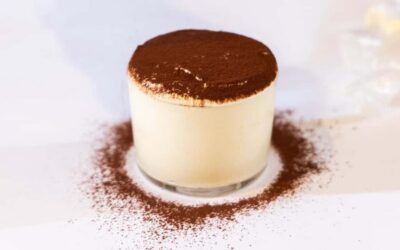
3-in-1 Fettuccine, Ravioli, and Tiramisu Cooking Class
Read our review →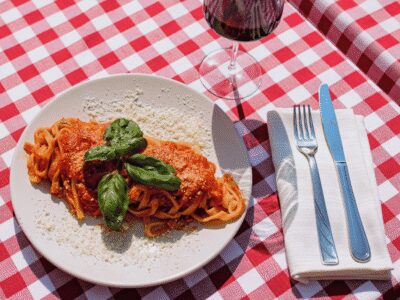
Fettuccine Pasta Cooking Class in Rome’s City Center
Read our review →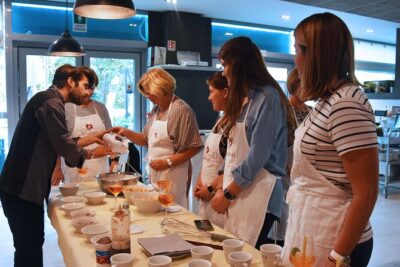
Become a Masterchef in Rome: Pasta, Ravioli and Tiramisù Class
Read our review →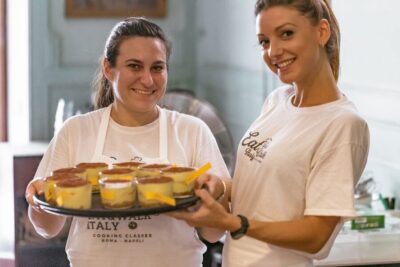
Fettuccine & Tiramisù: Cooking Class with Wine & Limoncello
Read our review →
Rome Pasta and Tiramisu Class: Ravioli, Fettuccine & Fine Wine 5*
Read our review →
Pasta Cooking Class in Rome – Fettuccine Class in Piazza Navona
Read our review →