
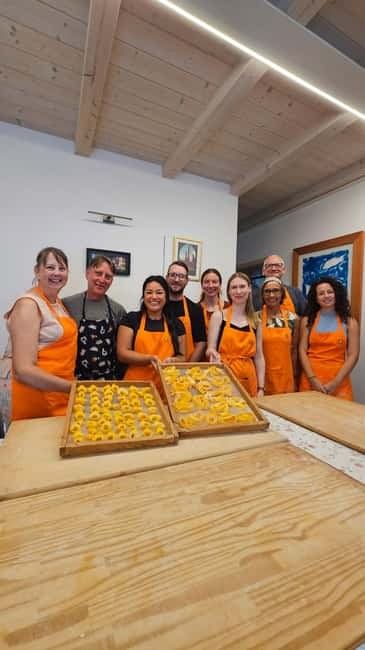
REVIEW · PASTA CLASSES WITH WINE
Bologna: Pasta Cooking Class, Ragu & Wine with Local Host
The best part of this Bologna class is that you do not simply watch a demonstration. You make pasta by hand, cook traditional Emilian dishes, then sit down to eat them with local wine. Alessia Fiocchi, a certified sommelier and cook, adds food history and practical technique without turning the evening into a lecture. I especially like the small, home-based setting and the choice of pasta dishes, from tagliatelle with ragù to tortelloni with butter and sage. The main thing to consider is that this is a real home kitchen, not a polished cooking school, so anyone wanting a formal, restaurant-style setup may prefer something else.
I also like that vegetarian diners can receive pasta and sauces adapted to their needs, and that the meal is generous enough to feel like dinner rather than a quick tasting. Pol the cat, Alessia’s unofficial judge, adds a little personality to the class. At $79 per person for three hours of food, wine, instruction, and materials, this is a strong value if you want a useful skill and a social evening, not just another meal out.
Key points at a glance
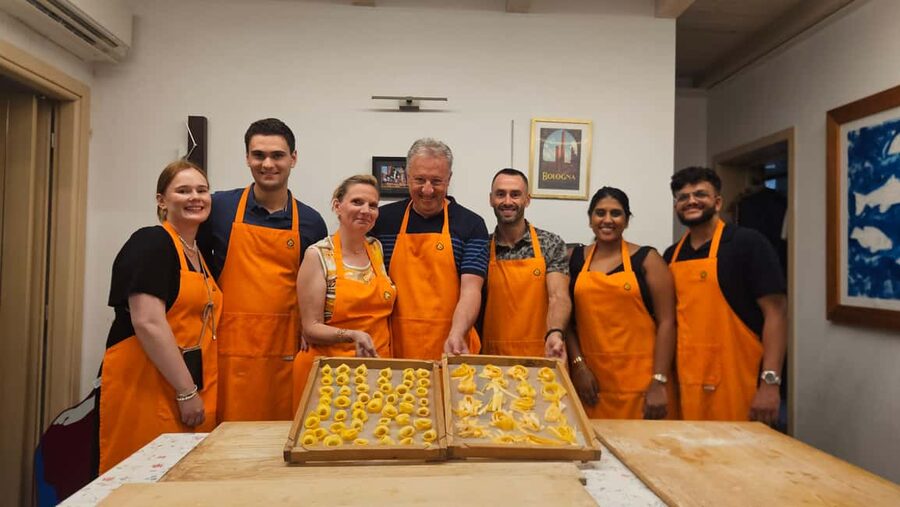
- Make two kinds of fresh pasta: Depending on the chosen menu, you may prepare tagliatelle, tortellini, tortelloni, lasagne, passatelli, balanzoni, or farfalle.
- Learn from a sommelier and cook: Alessia explains the dishes, cooking methods, and wine pairings in English or Italian.
- Eat what you prepare: The class ends with a sit-down meal featuring your pasta, dessert, wine, homemade bread, and other local foods.
- Choose a traditional dessert: Make either tiramisu or trifle, with tiramisu receiving especially strong praise for its flavor.
- Vegetarian options are available: Alessia can adapt the pasta and sauce for vegetarian diners.
- Expect a personal home setting: The class takes place in Alessia’s home, with her cat Pol often serving as the friendly food critic.
Handmade pasta in Alessia’s Bologna home
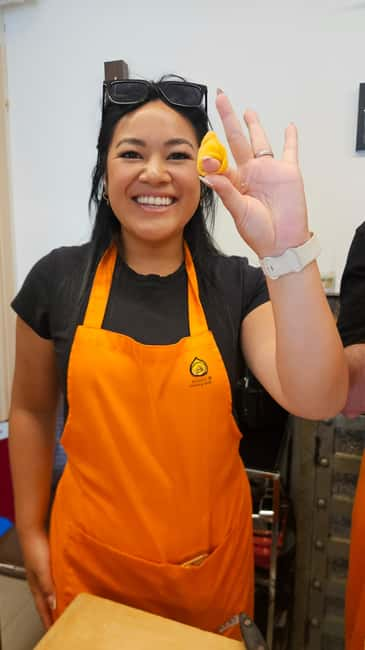
Bologna is famous for food that is both comforting and exacting. The city’s pasta traditions depend on simple ingredients, careful technique, and time at the table. This class gives you a chance to work with those traditions instead of only ordering them in a restaurant.
You meet at a gray gate and ring the bell marked Fiocchi. The class takes place in Alessia’s home, close enough to Bologna’s center to make it a practical addition to a city sightseeing day. You should plan your route carefully, since the meeting instructions are simple and the entrance is residential rather than a clearly marked commercial venue.
That home setting shapes the whole evening. You are not entering a large teaching kitchen with rows of workstations. You are sitting in an Italian home, working alongside a host who cooks and teaches. The mood is casual and personal, and the small-group format allows Alessia to watch your technique and help when dough becomes too dry, too sticky, or unevenly rolled.
I find that setting especially useful for beginners. You can ask basic questions without feeling out of place, and Alessia’s teaching style is described as patient and easy to follow. Families and mixed-age groups have also found the atmosphere welcoming. Still, a home kitchen means the class may feel less structured than a professional culinary school. That is part of its appeal, but it is worth knowing before you book.
More Pasta Classes with Wine in Bologna
- Bologna Food & Market Tour with 6 Tastings, Pasta, Wines & More
★ 5.0 · 1,328 reviews - Bologna: Pasta Cooking Class, Ragu, Spritz, Wine & Gelato
★ 4.9 · 775 reviews - Bologna Local Pasta Cooking Class, Ragu, Spritz, Wine & Gelato
★ 5.0 · 527 reviews
Choosing your pasta dish
The menu gives you several ways to experience Bolognese cooking. The exact selection is chosen with the customer, so you may not prepare every dish listed. The main options include tagliatelle with meat sauce, tortellini in broth, lasagne alla Bolognese, passatelli in broth, tortelloni with butter and sage, balanzoni, and farfalle with sauce.
For many people, tagliatelle with ragù is the natural choice. Bologna’s meat sauce is not the same as a quick tomato sauce. It is slow, savory, and built to cling to broad ribbons of fresh pasta. Making the pasta yourself helps you understand why shape matters. Wide tagliatelle carries the sauce differently from filled pasta or small shapes.
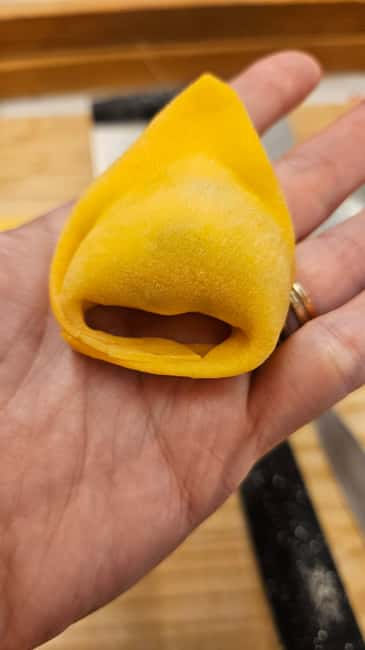
Tortellini offers a different lesson. The work is more detailed, since the pasta must be rolled thin, filled, and shaped without tearing. Served in broth, it shows the softer, more delicate side of Emilian cooking. Tortelloni with butter and sage is a good choice if you want to focus on filled pasta while keeping the sauce simple enough to let the pasta do the work.
Lasagne alla Bolognese provides a more substantial route. It combines sheets of pasta, sauce, and layers into a dish that is familiar around the world but still tied closely to local cooking. Passatelli, balanzoni, and farfalle give you less common choices, though the class may be better suited to one or two pasta projects rather than attempting the entire list in three hours.
The hands-on work is the point. You learn how to handle the dough, shape the pasta, and recognize the right texture. Several people have returned home intending to repeat the recipes, and Alessia has provided recipes in print during classes. That makes the lesson more useful than a meal you simply enjoy and forget.
A starter of Parmesan, mortadella, and local flavor
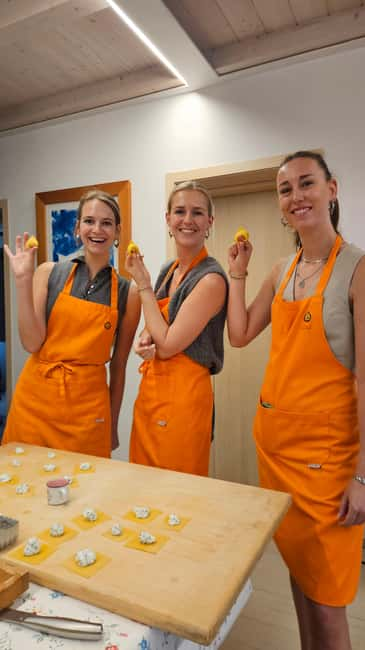
Before or alongside the pasta, the meal begins with a simple starter. You may receive Parmesan with balsamic vinegar or mortadella, two products closely linked with Emilia-Romagna.
Parmesan with balsamic vinegar lets you compare salty, nutty cheese with the sweet acidity of aged vinegar. Mortadella gives you a taste of Bologna’s famous cured meat in its home region. These are not elaborate courses, but they provide a clear introduction to the local pantry.
Homemade bread is also offered. The class information notes that wine, bread, and rice cake are available to eat after the meal. The rice cake is a traditional touch that helps make the evening feel like a full home meal rather than a narrow pasta lesson.
The food is generous enough to serve as dinner. That matters when comparing the $79 price with a standard restaurant meal. You are paying for the ingredients, instruction, the kitchen experience, wine, and the meal at the end. If you only want a quick pasta demonstration, the price may seem high. If you want dinner plus a skill you can take home, the value is much better.
Tiramisu, trifle, and the sweet finish
Dessert is not an afterthought. You can choose between trifle and tiramisu, with tiramisu appearing to be the favorite choice for many class menus.
The appeal is partly practical. Tiramisu is a dessert you can make again without special equipment, and the process shows how Italian cooking often depends on balance rather than a long list of ingredients. You learn how the coffee, cream, and biscuits work together, then taste the result after the pasta meal.
Several diners have been surprised by how much they enjoyed the tiramisu, including people who normally do not choose it. Others have described it as the highlight of the class. That is a useful clue if you are deciding between dessert options. Choose tiramisu if you want the most widely praised sweet course. Choose trifle if you prefer to try a different traditional dessert.
The meal may also include rice cake and bread after the main food. Portions are not presented as a formal tasting menu. This is a generous, relaxed dinner, so arrive ready to eat and avoid scheduling a second substantial meal immediately afterward.
Same town, a different thing to roll out:
- Pastamama, Home Cooking Classes at Grace’s Home
★ 5.0 · 521 reviews - Bologna: Pasta and Tiramisu Small Group Cooking Class with Wine
★ 5.0 · 409 reviews - Bologna: Food Tour with Pasta Tasting & Local Specialties
★ 4.8 · 312 reviews - Bologna: Pasta Tagliatelle al Ragu Cooking Class with Wine
★ 4.7 · 225 reviews
Wine with a sommelier’s explanation
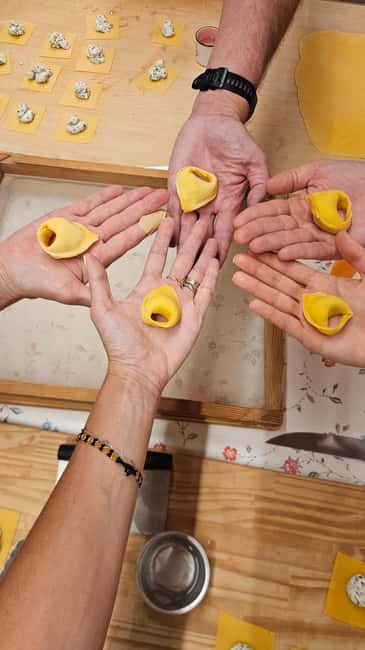
Wine is included, and Alessia explains the pairings as you eat. Her sommelier training adds a layer that many pasta classes do not provide. You are not simply handed a glass and told that it goes well with the food. You get some context for why a particular wine suits a rich ragù, a filled pasta, a cheese starter, or dessert.
I like this feature because it connects cooking with the table. Pasta is not only about making dough. It is also about how the finished dish fits into a meal. Even a basic explanation of acidity, body, and flavor can help you choose better wine at home.
The wine is part of the included price, along with the food and materials. Keep in mind that the activity lasts three hours and includes several courses, so pace yourself. The focus is food and instruction, not heavy drinking. You can enjoy the pairing without treating the class as a wine tasting.
The wine component also makes this a good evening activity for couples and friends. You have something to do with your hands, then time to talk while eating. The shared meal helps the group get acquainted, especially when the class is small.
Vegetarian adaptations and family suitability
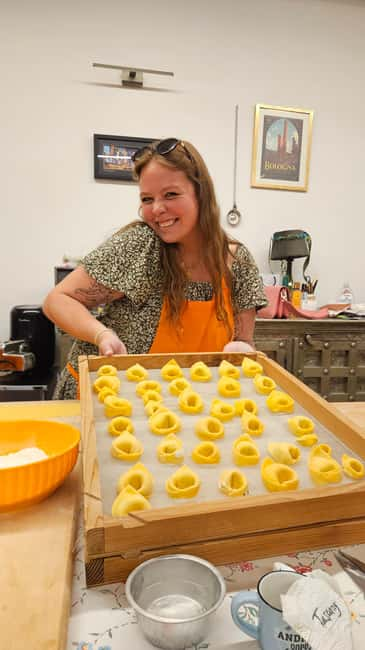
Vegetarian diners can request pasta and sauces suited to their needs. This is important to confirm when booking or in advance, since the standard menu includes meat sauce and mortadella. The availability of adaptations makes the class more flexible for mixed groups, including couples or families with different diets.
The class has worked well for families, and Alessia is comfortable making children feel involved. The work is tactile and visual, which can be more engaging for children than a long cultural talk. Still, you should consider your child’s patience with a three-hour activity and the pace of a shared kitchen.
This is also a good option for first-time cooks. The teaching is aimed at participation, not professional training. You will not leave as a pasta maker in the Italian culinary sense, but you should leave with a better feel for dough, shapes, fillings, and sauces.
People who already cook Italian food may find the most value in the local details. Alessia shares tips about preparing different pasta types and traditional dishes, so the class can add regional context even if you are comfortable in your own kitchen.
Pol the cat and the personal touch
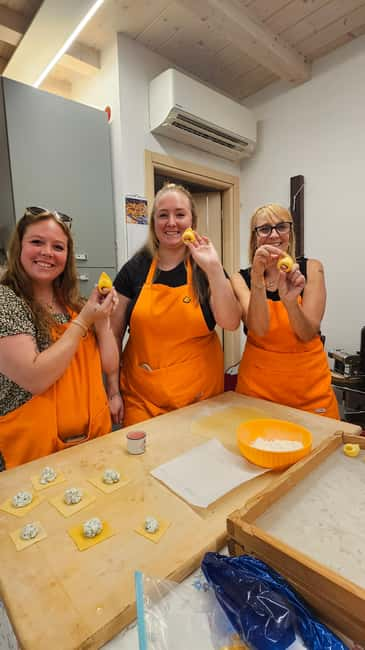
Pol, Alessia’s cat, is part of the character of the evening. He serves as the self-appointed judge, which adds a little humor to the kitchen. If you like animals, this can make the home setting feel even more relaxed.
As with any experience in a private home, guests with allergies should consider that a cat is present. The supplied information does not describe a separate pet-free workspace, so this is a sensible question to ask before booking if allergies are a concern.
The personal touches go beyond the cat. Alessia has marked birthdays with small surprises, including serving tiramisu with a candle. Those details help explain why the class feels different from a standard group cooking lesson. You are not only following a recipe. You are sharing a meal in someone’s home.
That said, personal hosting also means the exact rhythm can vary. One group may spend more time shaping tortellini, while another may move quickly through the dough work and spend longer over wine. I would choose this class for warmth and direct contact, not for a tightly timed production.
What the $79 price really includes
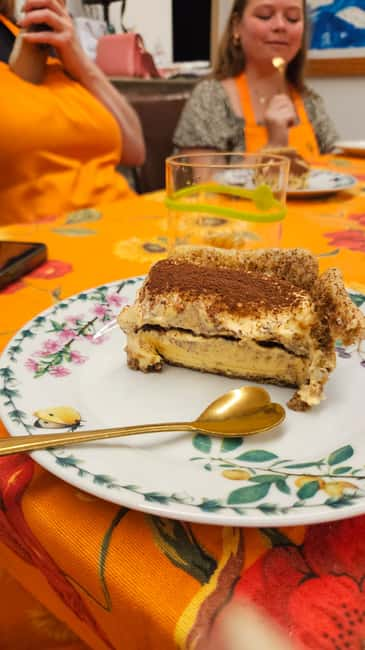
At $79 per person, the cost covers three hours of instruction, food, wine, cooking materials, and a one-day chef certificate. You also receive the meal you helped prepare, plus homemade bread and additional foods offered with it.
The value is strongest when you count the evening as both a class and dinner. A Bologna restaurant meal could provide excellent food, but it would not teach you how to make pasta or let you shape tortellini yourself. A formal cooking school might offer more equipment and a more polished format, but this class gives you the warmth of a private home and direct instruction from a cook and sommelier.
I would not book it solely for the certificate. The certificate is a pleasant extra, but the lasting benefit is the technique and the printed recipes provided in some classes. You can try the dishes again at home, which gives the cost more long-term value.
The class also includes free cancellation up to 24 hours before the start time and a reserve-now, pay-later option. It lasts three hours, so it works best on an evening when you can give the meal your full attention rather than squeezing it between major sightseeing plans.
Who should book this Bologna cooking class
I would recommend it most strongly to:
- First-time pasta makers who want patient, hands-on guidance
- Couples looking for a social evening beyond restaurant dining
- Families who want a practical food activity
- Diners interested in Emilia-Romagna’s classic dishes
- Vegetarian visitors who confirm their adaptations in advance
- Anyone who enjoys wine with a meal and wants basic pairing guidance
You may want another type of class if you prefer a large professional kitchen, a strictly fixed menu, advanced culinary training, or a quick demonstration with little sitting time. This experience is intimate, home-based, and centered on eating together.
It is also worth remembering that pasta making involves flour, dough, shaping, and waiting for food to cook. If you dislike hands-on work or want a purely sightseeing activity, you may find three hours too long. If you enjoy learning by doing, the time passes naturally.
My recommendation for booking
I would book this class if you want to understand Bologna through its food rather than simply photograph it. The combination of handmade pasta, tiramisu, local wine, traditional ingredients, and Alessia’s friendly instruction gives you a real sense of how the meal comes together.
The strongest reasons to choose it are the personal home setting, the chance to select from several pasta dishes, and the generous meal afterward. The main cautions are the residential setting, the presence of a cat, and the fact that the class may feel informal rather than highly choreographed.
At $79, it is a fair buy for a three-hour activity that includes dinner, wine, instruction, and recipes or cooking materials. I would reserve it early if you want a particular date, especially for a family or small private group. Come hungry, tell Alessia about dietary needs ahead of time, and plan to leave with flour on your hands and a better idea of how to make Bologna’s food at home.
FAQ
How long does the Bologna pasta class last?
The experience lasts three hours. Starting times vary, so you should check availability when booking.
Where does the class meet?
You meet in front of a gray gate and ring the bell marked Fiocchi. The class takes place in Alessia Fiocchi’s home in Bologna.
Which languages are available?
The class is available in English and Italian.
What food and wine are included?
The price includes the food and wine tasted during the class, along with homemade bread and additional foods such as rice cake. The menu may include a Parmesan and balsamic vinegar starter or mortadella, handmade pasta, and a dessert.
Can vegetarian diners take part?
Yes. Vegetarian guests can have pasta and sauce adapted to their needs. It is sensible to mention dietary requirements when booking.
Is cancellation available?
You can cancel up to 24 hours in advance for a full refund. A reserve-now, pay-later option is also available.
Recently added in Bologna
- Colorful Pasta Workshop in Bologna with meal★ 5.0 · 2 reviews
- Tortelloni and Tagliatelle Cooking Class in Bologna + Wine★ 3.0 · 2 reviews
- 3 hour Lasagna Bolognese cooking class★ 5.0 · 6 reviews
- Cesarine: Small group Tortellini Class at Local’s Home in Bologna★ 5.0 · 18 reviews
- Pasta and Tiramisu Masterclass with organic wines★ 3.5 · 3 reviews
- Lasagna Masterclass: Learn, Cook & Taste Authentic Bolognese★ 5.0 · 4 reviews
- Pasta Making Class: Tagliatelle & Bolognese Sauce★ 5.0 · 15 reviews
- Home Cooking: Pasta Making with Natural Colors in a Tiny Group★ 5.0 · 6 reviews
Pasta Classes with Wine, compared.
Pasta & Tiramisu Cooking Class with Unlimited Wine
Read our review →
Pasta & Tiramisu Class with Fine Wine by the Vatican
Read our review →
Pasta Making Class with Wine, Limoncello, and Dessert
Read our review →
Rome Cooking Class: Make Pasta and 3 Spritz Cocktails
Read our review →
Learn to Make Pasta & Tiramisu with Wine and Limoncello Included
Read our review →
Cooking Class Pasta & Tiramisu Making Unlimited Wine
Read our review →
Fettuccine & Tiramisù: Cooking Class with Wine & Limoncello
Read our review →Browse the lists this class appears in