
REVIEW · PRIVATE PASTA CLASSES
Civitavecchia Private Cooking Course to Make Pasta
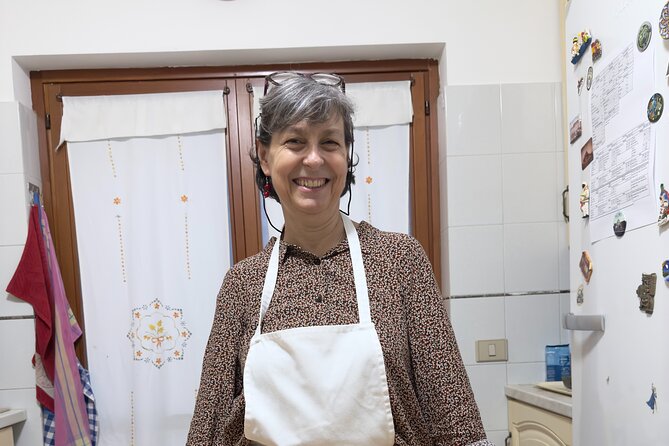
Making pasta by hand is the heart of this private cooking class near Civitavecchia. With Graziella guiding you, you shape dough on a wooden board, roll it thin, cut tagliatelle with a knife, fill ravioli, and press spaghetti alla chitarra through the traditional guitar tool. The work is simple in theory, but getting the dough smooth takes patience and a good eye.
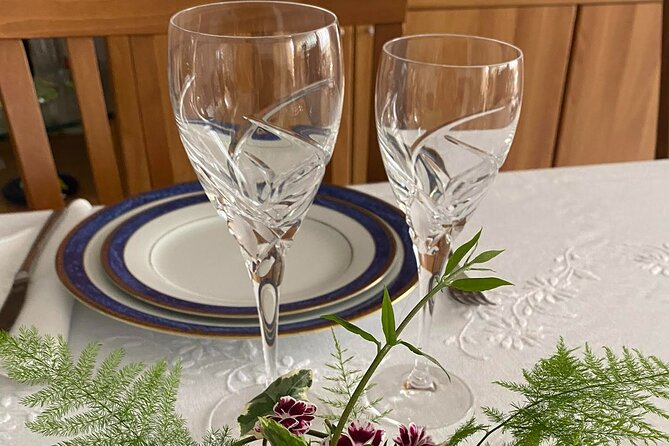
I like two things right away: you cook several classic dishes rather than just one, and you eat the results around a family table with Graziella and Giovanni. The welcome aperitif, wine, dessert, and coffee make this feel like a full meal, not a quick demonstration. The main drawback is that private transportation is not included, so you must arrange your way to Via San Liborio in Civitavecchia.
Key points to know before booking
- Three pasta styles in one class: Make hand-cut tagliatelle, ricotta and spinach ravioli, and spaghetti alla chitarra.
- Graziella teaches from family tradition: Her instruction focuses on the feel of the dough, including the smoothness and consistency that can be hard to judge at first.
- A full Italian meal follows the work: Expect an aperitif, three pasta preparations, dessert, wine, water, and coffee.
- The guitar is a pasta tool: Spaghetti alla chitarra is cut with a wire-string tool, not made with a musical instrument.
- This is a private activity: Only your own group takes part, giving the class a more personal pace.
- Plan your arrival carefully: Meet at Via San Liborio in Civitavecchia, and arrange transportation yourself.
Why this pasta class feels different
Many cooking classes give you one recipe and send you home with a small plate. This one takes you through several kinds of fresh pasta, each with a different technique. You begin with the classic fountain of flour on a wooden work surface, add the ingredients, and work the dough by hand.
The rolling pin does most of the heavy work. You stretch the dough until it is thin enough for tagliatelle and ravioli. The next dough is used for spaghetti alla chitarra, a pasta shape associated with central Italian cooking. The chitarra tool has parallel wires that cut the sheet into square-edged strands.
That variety gives you a better sense of how Italian pasta changes from region to region and shape to shape. You are not simply watching someone cook. You are learning how the dough behaves, how much pressure to use, and how a basic mixture becomes several familiar dishes.
I especially like that the class includes the less glamorous part of pasta making: getting the dough right. That stage can be laborious. It may take time to reach the proper consistency and smoothness, and the class gives Graziella room to correct your technique as you work.
More Private Pasta Classes in Italy:
- Rome: Pasta Making Class with Tiramisu & Wine PRIVATE OPTION
★ 4.8 · 404 reviews - From Taormina: Private/Guided Godfather with appetizer and Pasta
★ 5.0 · 233 reviews - Cesarine: Private Pasta Class & Meal at Local’s Home in Bologna
★ 5.0 · 111 reviews
Meeting Graziella and Giovanni in Civitavecchia
The meeting point is Via San Liborio, Via S. Liborio, 00053 Civitavecchia RM. The activity lasts about three hours and ends back at the meeting point. The tour is described as taking place in the Lake Bracciano area, while the listed start and end point is in Civitavecchia, so check the exact meeting instructions carefully before setting out.
The class is offered in English, which makes the hands-on teaching easier to follow. Graziella leads the pasta instruction, while Graziella and Giovanni welcome you into their home and share the meal with you. The setting matters here. You are not only learning a recipe, but also seeing how family cooking is passed from one person to another.
Because the activity is private, your group does not have to match the pace of a large class. That is useful when you need extra help with the dough or want to ask about a particular pasta shape. It also means the $193.49 per-person price is paying for a personal session and a complete meal, not just ingredients and a short lesson.
You should still allow time to reach the meeting point. Transportation is not included, though the location is near public transportation. The available information does not specify a transfer from the port, so cruise passengers should not assume that a port pickup is part of the booking.
The welcome aperitif sets the pace
The meal begins with an aperitif and a glass of Valdobbiadene Prosecco, specifically Cartizze, served with small bites such as pizzas, olives, and cherry tomatoes in oil. This is a pleasant way to settle in before the flour reaches the table.
The welcome drink also tells you what kind of afternoon this is. The focus is not on racing through a list of dishes. You start with food, conversation, and a drink, then move into the practical work of making pasta.
Alcoholic drinks are served only to people aged 18 and older. Those under 18 receive soft drinks instead. The included wine is listed as Tuscan red wine, such as Chianti Classico, or white wine, such as Frascati Superior. The sample menu also specifies the Prosecco aperitif, so you can expect several Italian wine styles across the meal.
If you do not drink alcohol, unlimited bottled water is included, both still and sparkling. The class also includes coffee, which fits nicely with the dessert at the end.
Rolling pasta by hand with a wooden board
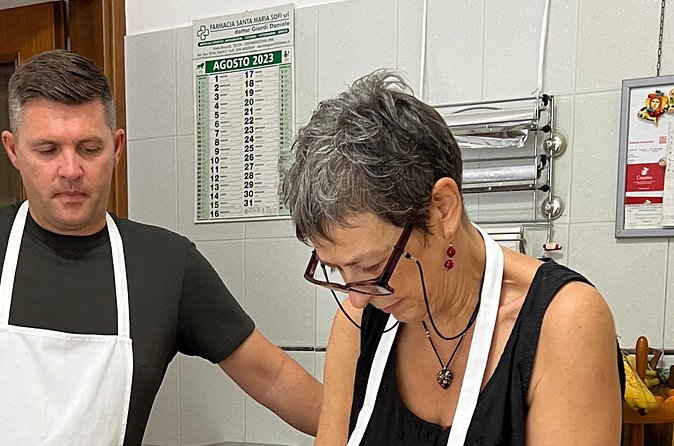
The first major task is making dough using the traditional flour fountain. You place flour on the wooden surface, create a well, and work the mixture until it becomes a dough you can knead and roll.
This is where Graziella’s instruction seems most useful. The right texture is not always obvious when you are starting out. The dough can feel too firm, too sticky, or uneven, and the difference between acceptable and excellent pasta comes from small adjustments.
You then use a rolling pin to flatten the dough. There is something satisfying about this method because you can feel the pasta change under your hands. It is also more demanding than using an electric pasta machine. If you are looking for a relaxed demonstration with little participation, this may feel like work. If you want to understand how fresh pasta is actually made, that effort is the point.
The class gives you a chance to learn a skill you can repeat at home without special equipment. You need flour, a work surface, a rolling pin, and a knife for the first pasta shapes. That low-tech approach is one of the strongest reasons to choose this class over a more polished but less practical cooking show.
Other Italy classes worth putting on the shortlist
- Florence: Pasta Cooking Class with Unlimited Wine
★ 4.9 · 10,285 reviews - 3 in 1 Cooking Class near Navona: Fettuccine, Ravioli & Tiramisu
★ 5.0 · 7,376 reviews - Florence Pizza or Pasta Class with Gelato Making at a Tuscan Farm
★ 5.0 · 6,801 reviews - Florence: Pasta & Tiramisu Cooking Class with Unlimited Wine
★ 4.9 · 6,708 reviews
Tagliatelle and the pride of getting the dough right
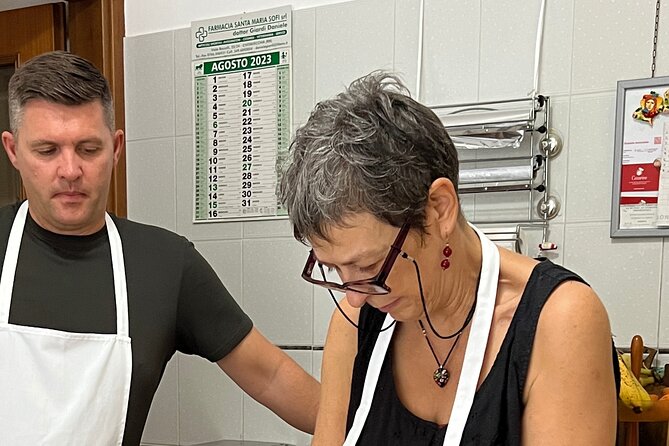
Once the dough is thin, you make tagliatelle. These ribbons are cut by hand with a knife, giving you a direct connection between the sheet of dough and the finished pasta.
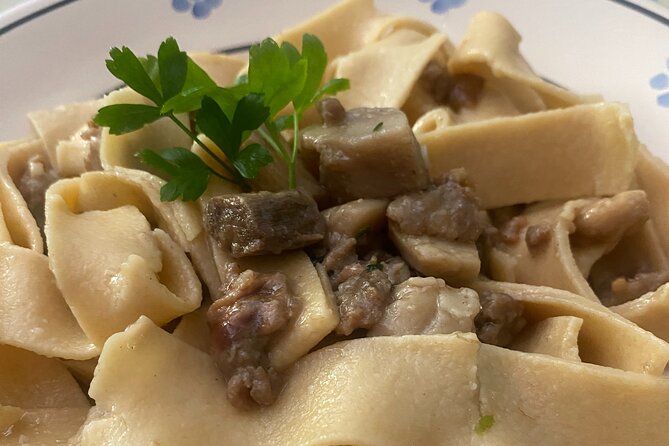
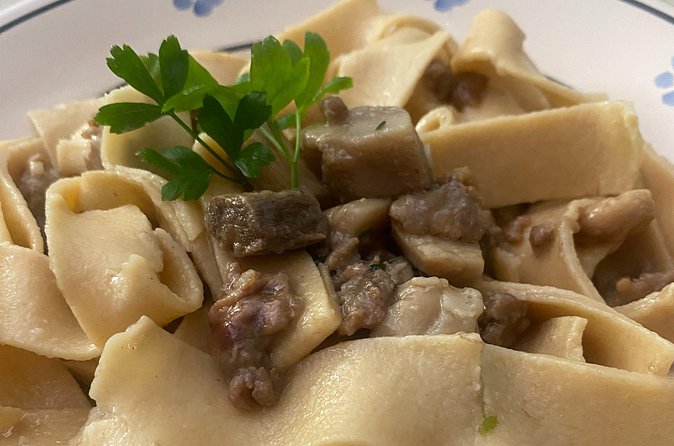
The sample menu pairs the tagliatelle with meat sauce. This is a familiar combination, but the fresh noodles change the texture and make the dish feel more substantial than dried pasta. The sauce may be chosen according to the season and Graziella’s imagination, so the exact preparation can vary.
This is also the dish that may give you the clearest sense of accomplishment. The dough must be thin enough, the ribbons need to be reasonably even, and the pasta should not stick together. Perfectly uniform strands are not required to enjoy the meal, but the process shows why Italian cooks pay so much attention to the feel of the dough.
I would treat the uneven pieces as part of the lesson rather than a flaw. Handmade pasta has a human look. You are there to learn how it works, not to produce factory-perfect noodles.
Ravioli with ricotta and spinach
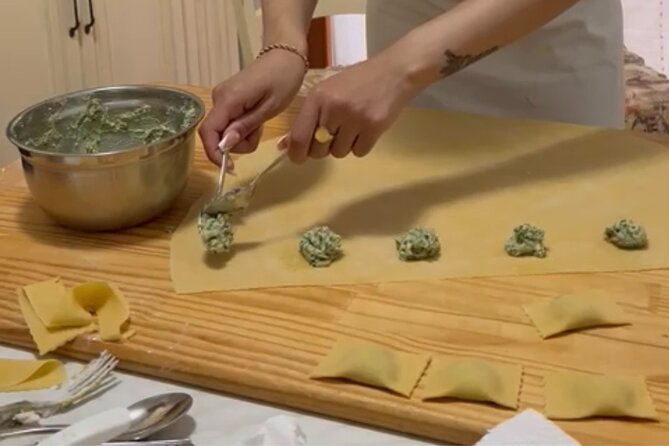
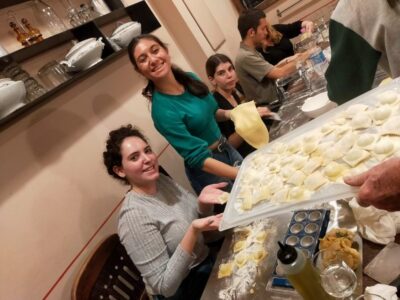
The second pasta is ravioli filled with ricotta and spinach. You roll the dough, add the filling, fold and seal it, then prepare it for cooking.
Filled pasta requires a different kind of care from tagliatelle. You need enough filling for flavor, but not so much that the edges fail to close. You also need to press out excess air and seal the pasta firmly. This makes ravioli a useful next step after cutting ribbons.
The sample preparation serves the ravioli with butter and sage. It is a simple sauce that lets the filling and pasta remain the focus. Ricotta brings a soft, mild center, while spinach gives the filling a little more character.
This part of the class is especially suited to you if you enjoy careful, repetitive work. The shapes may not all look alike, and that is fine. The pleasure comes from making a filled pasta that holds together, then eating it only a short time later.
Spaghetti alla chitarra and the traditional tool
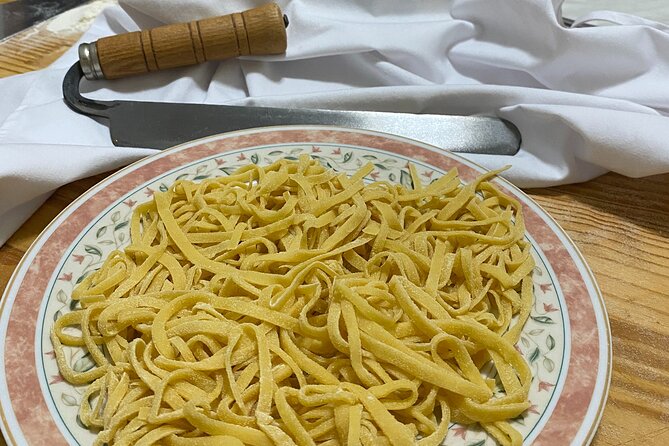
The final dough is used for spaghetti alla chitarra. The name refers to the guitar-shaped tool, whose taut wires cut the pasta sheet into strands. You use the rolling pin with the tool to create the distinctive spaghetti.
This is the most unusual technique in the class. If you have only made pasta with a machine, the chitarra offers a new way to think about shape and texture. The resulting strands are not quite like smooth factory-made spaghetti. Their edges and surface help sauce cling to them.
The sample menu serves the spaghetti with Amatrice bacon, tomato sauce, and Pecorino Romano. That is a classic central Italian combination, with salty pork, tomato, and sharp sheep’s cheese. The ingredients give the pasta a bold finish after the more delicate butter and sage ravioli.
The word guitar could sound confusing if you have never seen the tool. It is not a musical performance, and you do not need any musical ability. You simply press the sheet of dough across the wires with the rolling pin.
Sitting down to eat your work
Once the pasta is ready, you taste it with sauces chosen by Graziella according to the season and her own ideas. The sample menu lists tagliatelle with meat sauce, ricotta and spinach ravioli with butter and sage, and spaghetti alla chitarra with Amatrice bacon, tomato, and Pecorino Romano.
That is a generous meal for a three-hour class. You are not just sampling a bite of each recipe. The meal is paired with wine for every two people, along with unlimited water and coffee.
The dining portion is where the class becomes a cultural visit rather than only a lesson. Graziella and Giovanni share their home and family-style cooking with you, and the meal gives everyone time to talk without flour-covered hands. If you enjoy food as a way to meet people, this part may be as important as the recipes.
Dessert is made by Graziella and chosen from dishes connected to her family or local tradition. The sample dessert is tiramisu, made with coffee-soaked ladyfingers and mascarpone cream. The exact dessert can change, so do not book expecting tiramisu as a guarantee, but expect a homemade sweet finish.
The price and what you receive
At $193.49 per person, this is not a budget meal. I would judge the price against the full package: a private three-hour class, several pasta techniques, a welcome aperitif, multiple pasta dishes, dessert, wine, water, coffee, and a guide.
The value is strongest for people who want personal instruction and a shared meal, not simply a recipe card. You are paying for the host’s time, the private format, the ingredients, and the chance to work directly with the dough.
It is less appealing if you mainly want to eat cheaply or if you are uncomfortable paying for a hands-on activity built around lunch. The price also does not include private transportation, so add that cost if you need a taxi or other arranged ride.
This activity is often booked about 118 days in advance. That suggests you should reserve early, especially if you have a fixed cruise schedule or only one day in Civitavecchia. Free cancellation is available until 24 hours before the start time, which gives you some flexibility if plans change.
Who should book this class
I would choose this class if you enjoy cooking, want a private setting, and like the idea of learning a technique you can repeat at home. It suits couples, families, and small groups who would rather share one table than join a large public class.
It is also a strong option for a Civitavecchia day when you want more than a quick port stop. The class gives your visit a clear focus and connects food with a local household setting.
I would think twice if you have limited mobility for rolling and shaping dough, though the available information does not provide specific accessibility details. You should also avoid this activity if you have a cat allergy, since it is not recommended for people with cat allergies.
Children can take part, but those under 18 receive soft drinks rather than alcohol. The experience is offered in English, and only your own group participates, which may make it easier for families to follow the instructions.
Should you book the Civitavecchia pasta class?
Book it if you want to get your hands into the flour and leave with a better understanding of tagliatelle, ravioli, and spaghetti alla chitarra. The strongest parts are Graziella’s close attention to the dough, the range of pasta shapes, and the warm meal shared with Graziella and Giovanni.
Skip it if you want included transportation, a short demonstration, or a low-cost lunch. You need to reach Via San Liborio on your own, and the hands-on work takes real effort.
For a private culinary experience with a full meal and family recipes, I think the class offers good value for the right person. Reserve early, confirm the meeting details, and arrive ready to knead, roll, cut, fill, and eat.
FAQ
Where does the pasta class meet?
The meeting point is Via San Liborio, Via S. Liborio, 00053 Civitavecchia RM, Italy.
Where does the activity end?
The activity ends back at the meeting point.
How long does the cooking class last?
The class lasts approximately three hours.
Is transportation included?
No. Private transportation is not included. The meeting point is near public transportation.
Is the class private?
Yes. Only your own group participates in the activity.
What kinds of pasta will I make?
You will make hand-cut tagliatelle, ricotta and spinach ravioli, and spaghetti alla chitarra using the traditional guitar tool.
Is food and wine included?
Yes. The class includes a welcome aperitif, pasta dishes, dessert, wine, unlimited bottled water, and coffee. Wine is provided at a rate of one bottle for every two people.
Can people under 18 drink alcohol during the class?
No. Alcoholic beverages are served only to people aged 18 and older. People under 18 receive soft drinks.
Can I cancel for a full refund?
Yes. You can cancel up to 24 hours before the experience start time for a full refund. Cancellations or changes made less than 24 hours before the start time are not accepted for a refund.
Recently added in Italy
- Vicenza: Pasta & Tiramisu Cooking Class at a Local’s Home★ 5.0 · 5 reviews
- Verona: Tortellini Cooking Class and Lunch with Mamma Ivana★ 5.0 · 20 reviews
- Verona: Pasta Cooking Class with Wine Tasting★ 5.0 · 4 reviews
- Verona: Pasta & Tiramisu Cooking Class at a Local’s Home★ 5.0 · 16 reviews
- Verona: Prosecco and Pasta Making Class at a Local’s Home★ 5.0 · 10 reviews
- Volterra: Fresh Pasta Cooking Class at a Tuscan Farmhouse★ 5.0 · 33 reviews
- Venice: Share Your Pasta Love in a Local’s Home★ 4.8 · 20 reviews
- Verona: My Granny’s secrets making gnocchi★ 5.0 · 7 reviews
Private Pasta Classes, compared.
Pasta Making Class with Tiramisu & Wine PRIVATE OPTION
Read our review →
Private/Guided Godfather with appetizer and Pasta
Read our review →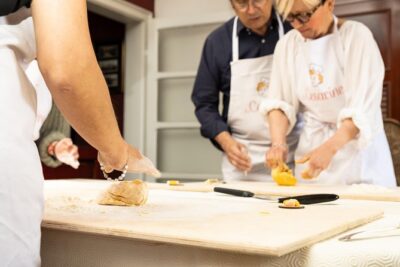
Cesarine: Private Pasta Class & Meal at Local’s Home in Bologna
Read our review →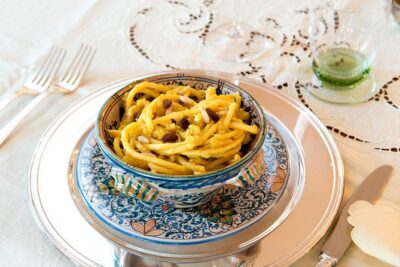
Cesarine: Private Pasta Class at Local’s Home in Messina
Read our review →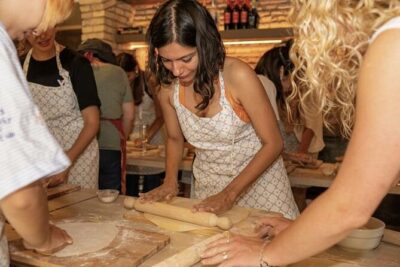
Cooking Class: Pasta & Tiramisu with a Private Italian Chef
Read our review →
Private/Guided Godfather with Appetizer and Pasta
Read our review →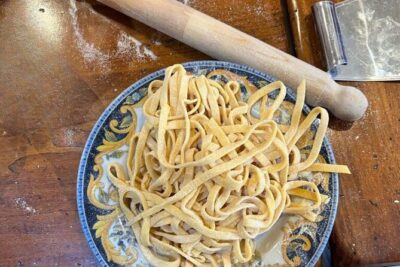
Private Cooking Class in the Heart of Rome 3 types of Pasta and Wine
Read our review →
Browse the lists this class appears in