
REVIEW · PASTA CLASSES WITH LUNCH
From Rome: Pompei by Bullet Train with Pasta Class & Lunch
The best part of this long day is the pairing of Pompeii’s frozen streets with a hands-on pasta class under Mount Vesuvius. You get the ancient city first, then a warm local meal that helps make sense of Campania as a living place, not just an archaeological site.
I like the high-speed train from Rome, which saves you from a long bus ride, and I like the careful handling of the local transfers. The pasta lesson also gets proper attention, with individual supervision from the home chef rather than a quick demonstration.
The drawback is the pace. This is an 11.5-hour outing with plenty of walking, uneven ancient roads, and a fixed schedule. Pompeii is fascinating but tiring, and the cooking class is not suitable for anyone with gluten intolerance, limited mobility, or a low level of fitness.
Key points to know before booking
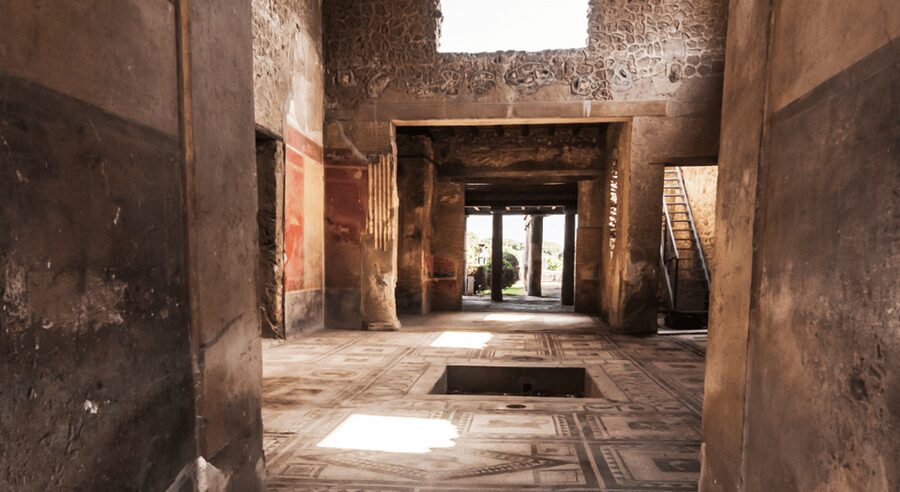
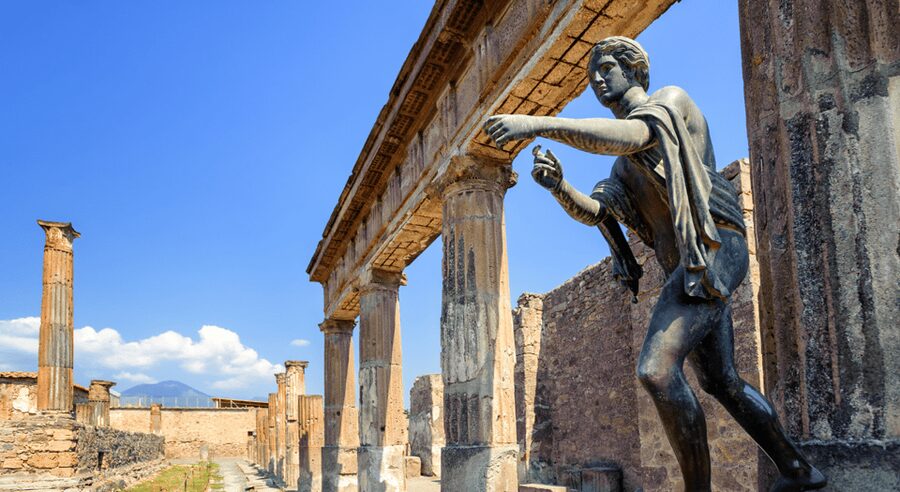
- Two very different experiences in one day: Explore Pompeii’s bakeries, homes, baths, shops, and plaster casts, then cook a Campanian meal.
- High-speed rail keeps the journey manageable: The Rome to Naples train takes about 69 minutes each way, followed by air-conditioned local shuttles.
- A native Pompeii guide leads the ruins visit: You see the ancient city with someone from the area rather than relying only on signs and maps.
- The cooking class is more than a pasta demonstration: You prepare lunch from start to finish and eat it with local wine and antipasti.
- Mount Vesuvius provides the setting: The class takes place near gardens with views toward Vesuvius and the Lattari Mountains.
- This suits active, food-loving visitors: Expect a full day, plenty of walking, and no easy wheelchair access.
Why this Rome to Pompeii day works
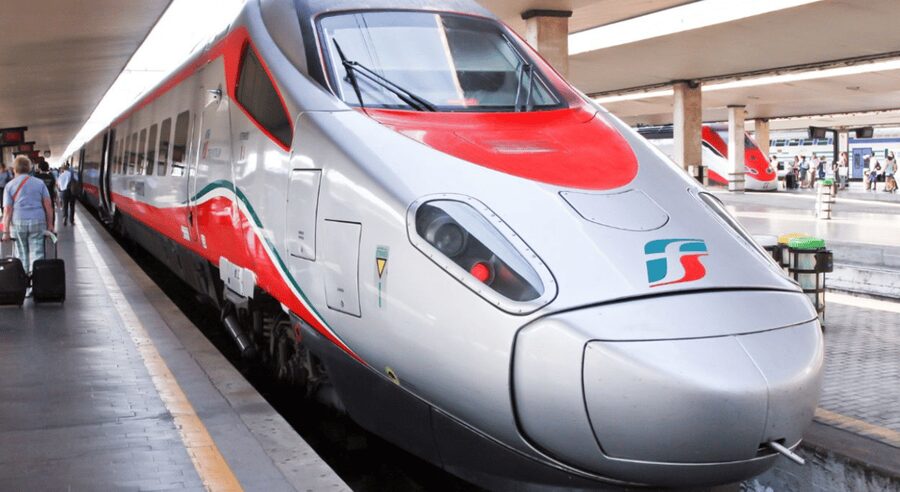
Rome and Pompeii are far enough apart that transportation can make or break the experience. By road, the journey can feel like a test of patience. This tour uses high-speed rail instead, with a roughly 69-minute ride between Rome and Naples in each direction.
That choice matters. You can sit back, watch Italy pass by, and arrive with more energy for the ruins. The train does not take you directly to the archaeological site, so you still have a local shuttle ride of about 30 minutes after the morning rail journey. Even so, the rail-and-shuttle combination is much more comfortable than spending the whole day on a coach.
You meet at Caffè Vergnano inside Rome’s Termini Station, on the departures level near the shopping area facing track 1. An ItaliaTours representative waits with a sign. Termini is large and can be confusing, so arrive with enough time to find the café without rushing.
The day begins with a 30-minute safety briefing and orientation. From there, the train takes you south, followed by a local transfer to Pompeii. The schedule is organized for you, which is useful on a day involving several transport changes. One of the strongest practical features is that the individual transfers are handled for you, rather than leaving you to work out the local connections on your own.
More Pasta Classes with Lunch in Italy:
- Sorrento: Pasta and Tiramisu Cooking Class with Lunch and Wine
★ 4.5 · 165 reviews - Chianti: Homemade Pasta Making Class and Lunch
★ 5.0 · 58 reviews - Truffle Hunting in Chianti, pasta class and lunch
★ 5.0 · 39 reviews
Walking the streets of Pompeii for 2.5 hours
Pompeii is not a quick photo stop. The guided visit lasts about two and a half hours, enough time to get a real sense of the city and the disaster that preserved it.
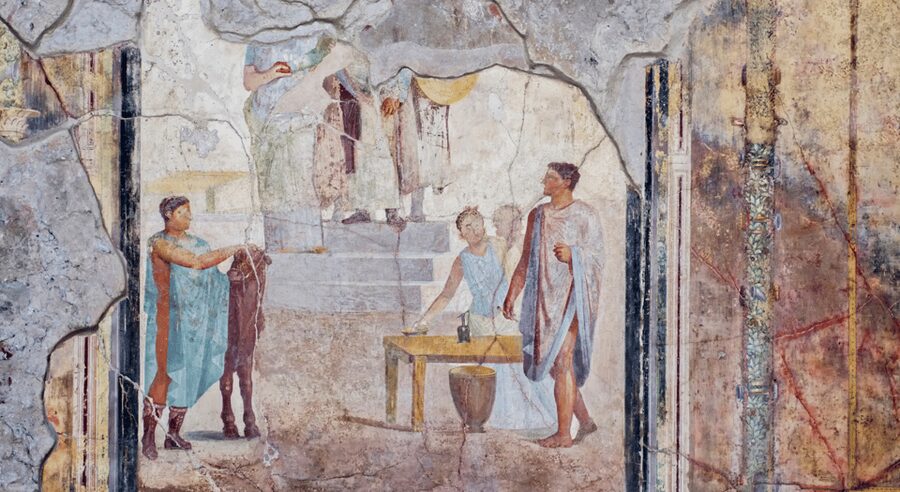
Your local guide leads you along ancient cobblestone roads, where the remains of bakeries, shops, food stalls, private residences, public baths, and brothels still sit in place. These details make Pompeii unusually readable. You are not looking at a single grand monument and trying to imagine daily life. You are moving through a town with the ordinary parts still visible.
I find the shops and bakeries especially useful for understanding the site. They show how people bought food, worked, socialized, and moved through the city. The baths and residences add another layer, while the brothels offer a blunt reminder that Pompeii was a real working community, not a carefully arranged museum.
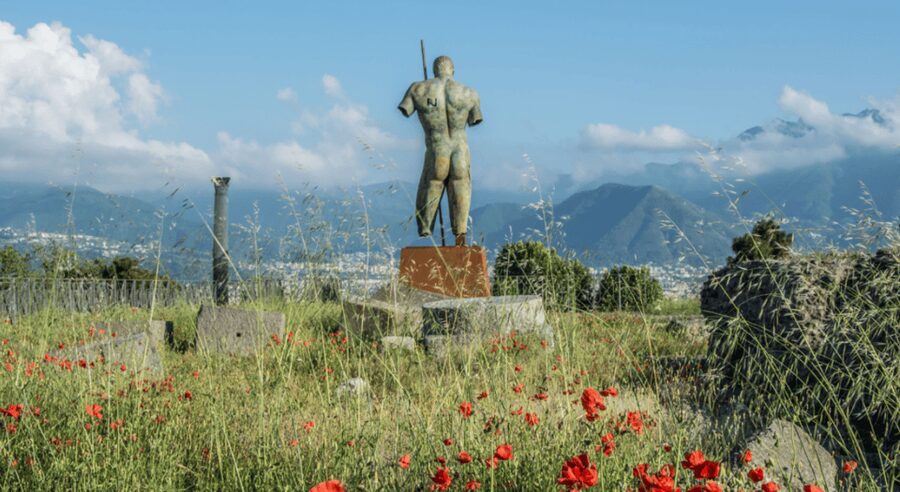
The plaster casts are among the most powerful parts of the visit. They preserve the shapes of people caught by the eruption of Mount Vesuvius in AD 79. They can be difficult to see, particularly for children, so families should prepare young visitors for a serious and sometimes upsetting subject.
The guide is a native local, which adds a useful sense of place. The information provided does not give the guide’s name, but the role is clear: this is someone from Pompeii showing you the city and its surrounding area. That local connection is valuable because Pompeii is not just an isolated ruin. It belongs to the Campania region, where the volcano, food, farms, and towns remain closely linked.
The site is large, and the old roads are uneven. You should wear sturdy shoes and expect to walk outdoors for much of the visit. There is little room for a relaxed, leisurely pace if you want to keep the full schedule, so this section works best for visitors who are comfortable being on their feet.
From ancient ash to a Campanian kitchen
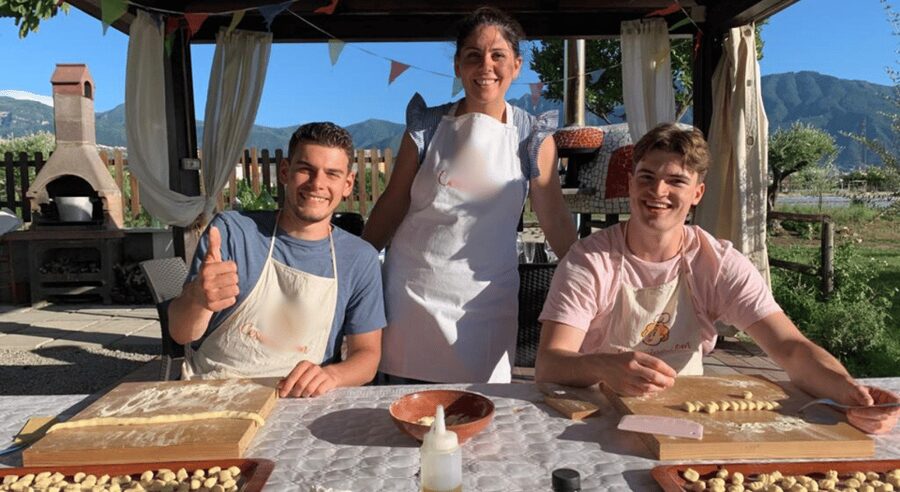
After Pompeii, you take a short shuttle ride of about 10 minutes to the cooking venue. The change of mood is part of the appeal. The morning deals with disaster, archaeology, and a vanished city. The afternoon turns to gardens, food, conversation, and the present-day culture of Campania.
The setting includes views of Mount Vesuvius on one side and the Lattari Mountains on the other. The volcano is not just a distant backdrop here. It gives the cooking class a strong sense of location and helps connect the food to the soil and climate of the region.
Your host is a home chef born and raised in the area. The class begins with a welcome toast and antipasti, including bruschette, garden tomatoes, eggplant, and cured meats. Local wine is served as you get settled, with grapes grown in volcanic soil around Mount Vesuvius.
This opening matters because you are not being rushed straight to the work table. You get a taste of the ingredients first, then learn how they fit into the meal. The emphasis is on simple, genuine products rather than complicated restaurant tricks.
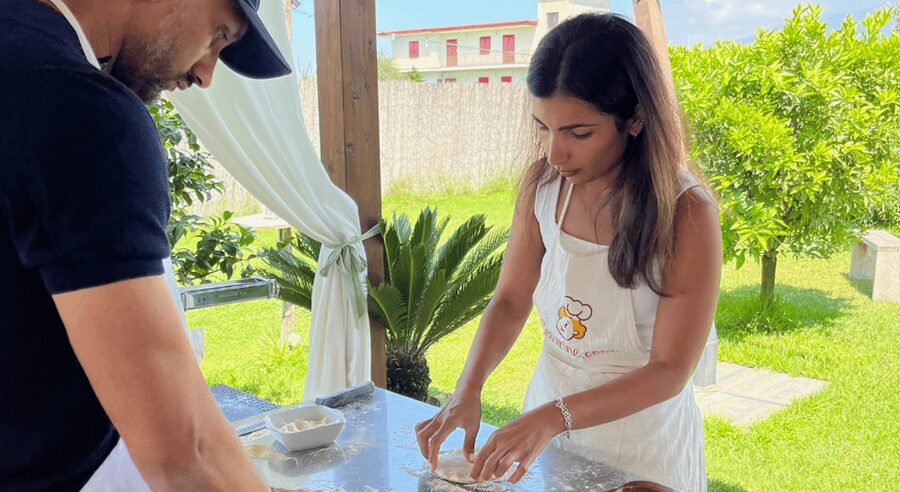
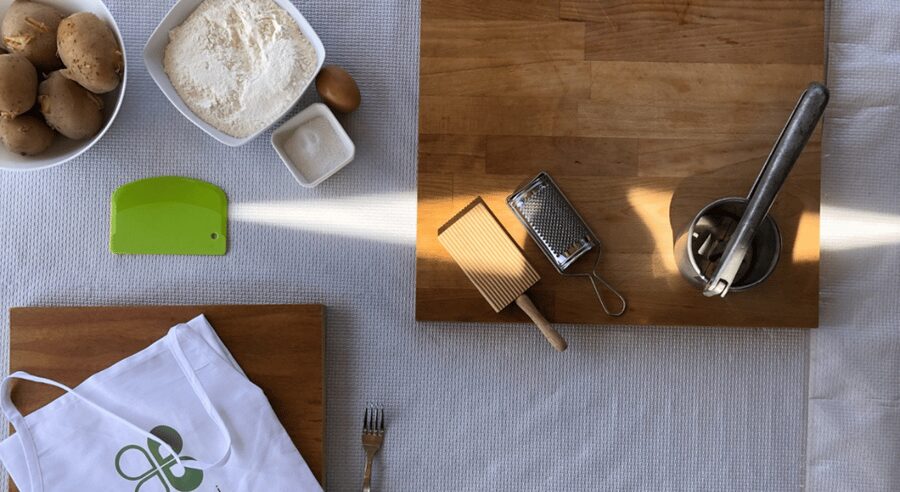
The class lasts about three hours. You put on an apron, gather under a large gazebo, and learn how to make Italian pasta from start to finish. The chef explains the cooking traditions of Campania and shows how pasta is prepared and served.
I like that the reward for the work is a full lunch you helped prepare. It gives the class a clear purpose. You are not making a small sample and then being sent away for a separate meal. You cook, sit down, and eat the results with the other people in your group, along with more local wine.
The supervision is also an important detail. This is not simply a chef working in front of you while you watch from a distance. Individual guidance is part of the experience, which makes it friendlier for beginners and more satisfying if you want to learn a useful technique rather than just take pictures.
The pasta portion requires hands-on effort. You should be comfortable standing, handling ingredients, and following instructions for several hours. Anyone with gluten intolerance should not book this particular experience.
What the food portion tells you about Campania
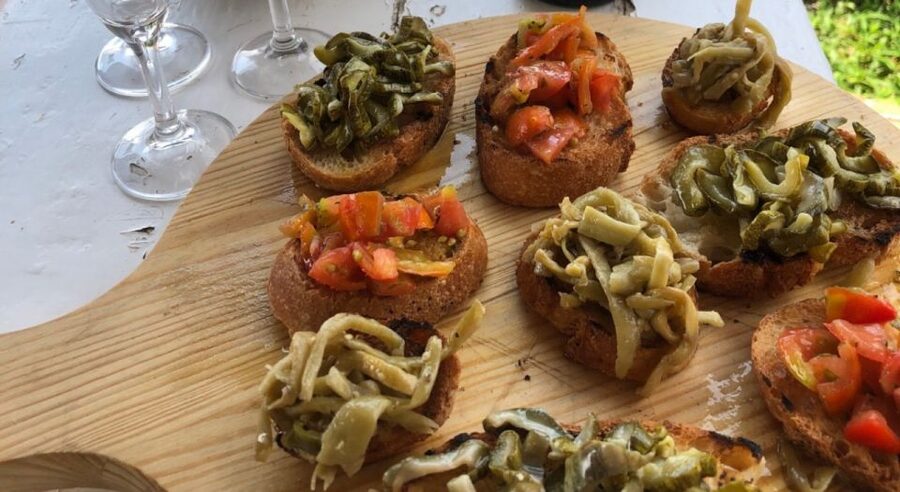
Campanian cooking often makes its point through restraint. The food described here centers on tomatoes, eggplant, cured meats, wine, and pasta. These are familiar ingredients, but the class shows why freshness and local origin matter.
The garden setting makes the meal feel connected to its surroundings. After seeing Pompeii’s old shops and homes, you move into a living food culture that still depends on regional ingredients and family-style cooking.
The wine tasting is also more than an extra drink with lunch. Wine from the volcanic soil around Vesuvius gives the class a local thread. You are not simply eating Italian food in a generic venue. You are tasting products tied to the same mountain that destroyed Pompeii.
This is where the tour earns much of its character. Many day trips from Rome give you a few hours at Pompeii and then send you back. Here, the cooking class gives you a second way to understand the area. Archaeology explains the past, while the meal gives you a direct connection to Campania today.
Same town, a different thing to roll out:
- Florence: Pasta Cooking Class with Unlimited Wine
★ 4.9 · 10,285 reviews - 3 in 1 Cooking Class near Navona: Fettuccine, Ravioli & Tiramisu
★ 5.0 · 7,376 reviews - Florence Pizza or Pasta Class with Gelato Making at a Tuscan Farm
★ 5.0 · 6,801 reviews - Florence: Pasta & Tiramisu Cooking Class with Unlimited Wine
★ 4.9 · 6,708 reviews
The return journey to Rome
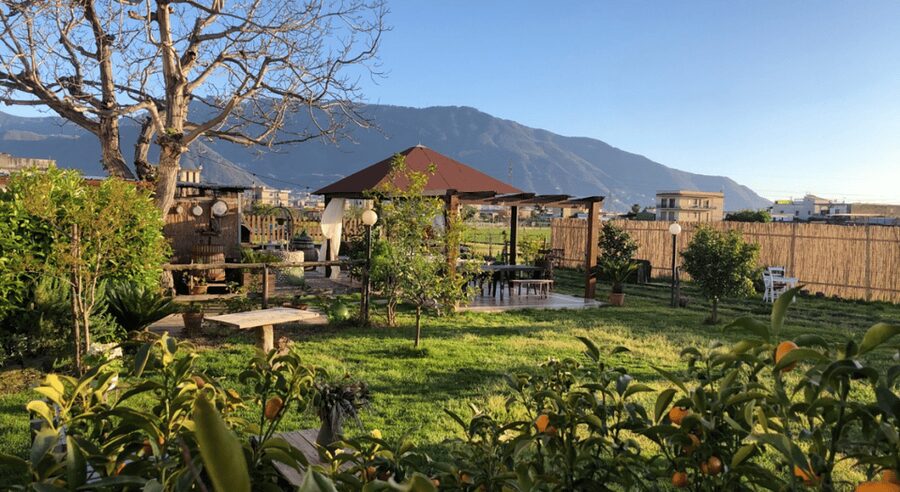
After lunch and the class, the local shuttle takes about 30 minutes to return you to the rail connection. The train ride back to Rome takes another 69 minutes, followed by arrival at Caffè Vergnano inside Termini Station.
You return to the same meeting point where the day began. That is convenient, especially if you are staying near Termini or plan to use the station for another connection. The activity lasts about 11.5 hours, so you should avoid scheduling an evening event that requires you to arrive at an exact time.
The return journey is a good chance to rest. By this point, you will have walked around Pompeii, spent hours cooking, and eaten a substantial meal. The rail seats are far more welcome at the end of the day than another long coach ride would be.
The schedule is efficient but not flexible. You cannot decide to stay longer in one Pompeii neighborhood or linger over lunch. That is the trade-off for fitting two major activities into one day from Rome.
Is $319 a fair price?
The price is $319 per person. That is a serious amount, but the value depends on what you would otherwise need to arrange yourself.
The cost includes round-trip high-speed rail from Rome to Naples, air-conditioned local shuttles, skip-the-line entry and a guided Pompeii visit, the cooking class, antipasti, wine, and a full lunch. You are also paying for coordination across several transfers and for two specialist hosts: a local Pompeii guide and a home chef from the area.
If you only want to see Pompeii as cheaply as possible, this will not be the right choice. A simpler rail trip with an independent visit could cost less, though you would need to arrange the local transport, entry, guide, and return connections yourself.
If you want Pompeii plus a substantial food experience, the price is easier to justify. The high-speed train removes much of the travel strain, and the cooking class adds several hours that would otherwise be free time or another transport segment. The pasta lesson, wine, antipasti, and lunch are not small add-ons. They form half of the day.
The value is strongest for someone who wants convenience without joining a huge coach group. The tour is designed around rail and smaller local transfers rather than a bus carrying more than 50 people. No exact group size is provided, so I would not assume an intimate private outing, but the format avoids the feel of a large road tour.
Who should book this experience?
I would recommend it to an active visitor who has one full day available from Rome and wants more than a standard ruins visit. It is especially well suited to people who enjoy cooking, regional food, and guided sightseeing in equal measure.
Families can book it, since the experience is family-friendly. Still, parents should consider the walking, the long duration, the heat that can occur at an exposed archaeological site, and the serious plaster casts at Pompeii.
Food-focused visitors will get the most from the afternoon. The class is not just a meal with a short recipe card. You prepare pasta, learn about Campanian ingredients, taste local wine, and sit down to eat what you made.
It is a weaker choice for anyone who wants a slow archaeological study. Two and a half hours gives you a strong introduction, but Pompeii is vast. If you want to examine every house, inscription, and public building, you will find the group schedule limiting.
It is also not suitable for wheelchair users or people with mobility impairments. The uneven ancient roads and lengthy walking make that a firm concern, not a minor inconvenience. A gluten-free visitor should choose another cooking experience.
The tour is conducted in English, so you should be comfortable following spoken explanations and cooking instructions in English.
Practical advice for making the day easier
Wear shoes with firm soles. Pompeii’s old paving can be rough, and the guided visit involves continuous walking.
Bring water and sun protection, even though the tour includes transport and lunch. The site visit takes place outdoors, and the cooking venue does not remove the need for sensible clothing.
Keep your schedule clear for the whole day. The advertised duration is 11.5 hours, with a morning departure from Termini and an evening return to the same station.
Arrive at the correct meeting point inside Termini. Caffè Vergnano is on the departures level, in the shopping area facing track 1. Look for the ItaliaTours sign.
The tour offers free cancellation up to 24 hours before departure, and you can reserve while paying later. Those terms are useful if your Rome plans are still shifting, but check the available start time before committing to other activities.
Should you book it?
Book this tour if you want Pompeii explained by a local guide, prefer a high-speed train to a long bus ride, and like the idea of ending the day with handmade pasta and wine beneath Vesuvius.
Skip it if your priority is a low-cost Pompeii visit, a slow archaeological day, wheelchair access, or a gluten-free cooking class. The itinerary is long and active, but for the right visitor, the combination of ancient streets and a Campanian kitchen gives the day more depth than a standard Rome to Pompeii excursion.
FAQ
Where does the tour meet in Rome?
The meeting point is Caffè Vergnano inside Termini Station on the departures level. Enter the main terminal and go to the shopping area facing track 1, where an ItaliaTours representative will wait with a sign.
How long does the experience last?
The full experience lasts 11.5 hours. Check availability for the exact starting time.
How do you travel from Rome to Pompeii?
You travel by high-speed train from Rome to Naples, with each train ride taking about 69 minutes. Air-conditioned local shuttles handle the transfers between the station, Pompeii, and the cooking venue.
Is entry to Pompeii included?
Yes. The experience includes a fully guided skip-the-line tour of the Pompeii Archaeological Site.
Is lunch included?
Yes. The cooking class includes antipasti, local wine, and a full lunch made with locally grown ingredients.
Is the tour suitable for people with mobility impairments or gluten intolerance?
No. The experience is not suitable for people with mobility impairments, wheelchair users, or gluten intolerance. It also requires a reasonable level of fitness because of the walking and extended activity.
More Tours with Lunch in Italy
- Truffle hunting in Chianti with pasta cooking class & lunch
★ 5.0 · 28 reviews - Lunch at Masseria Pasta Making Experience
★ 5.0 · 26 reviews - Homemade Pasta Class and Lunch in the Heart of Chianti
★ 5.0 · 21 reviews - Verona: Tortellini Cooking Class and Lunch with Mamma Ivana
★ 5.0 · 20 reviews
Recently added in Italy
- Verona: Tortellini Cooking Class and Lunch with Mamma Ivana★ 5.0 · 20 reviews
- Vicenza: Pasta & Tiramisu Cooking Class at a Local’s Home★ 5.0 · 5 reviews
- Verona: Pasta Cooking Class with Wine Tasting★ 5.0 · 4 reviews
- Verona: Pasta & Tiramisu Cooking Class at a Local’s Home★ 5.0 · 16 reviews
- Verona: Prosecco and Pasta Making Class at a Local’s Home★ 5.0 · 10 reviews
- Volterra: Fresh Pasta Cooking Class at a Tuscan Farmhouse★ 5.0 · 33 reviews
- Venice: Share Your Pasta Love in a Local’s Home★ 4.8 · 20 reviews
- Verona: My Granny’s secrets making gnocchi★ 5.0 · 7 reviews
Pasta Classes with Lunch, compared.
Pasta and Tiramisu Cooking Class with Lunch and Wine
Read our review →
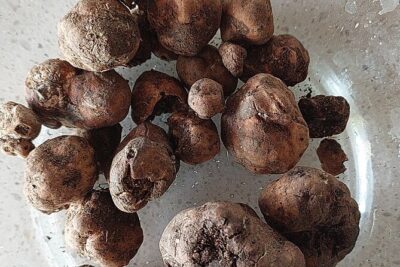
Truffle Hunting in Chianti, pasta class and lunch
Read our review →
Lunch of lobster pasta in a cove in the Lavezzi Islands
Read our review →
Truffle hunting in Chianti with pasta cooking class & lunch
Read our review →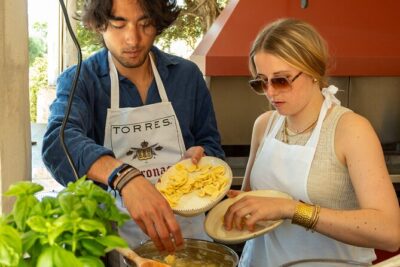
Homemade Pasta Class and Lunch in the Heart of Chianti
Read our review →
Tortellini Cooking Class and Lunch with Mamma Ivana
Read our review →Browse the lists this class appears in