
REVIEW · CHEF-LED PASTA CLASSES
Authentic Pasta Making Class in Florence with a Local Chef
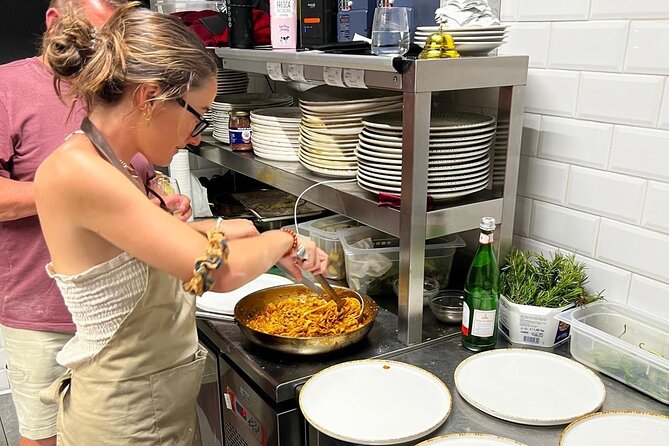
The best part of this Florence class is simple: you make the food, then sit down in the restaurant to eat it. You are not just watching a chef twirl pasta. You work with eggs, semolina flour, olive oil, fillings, and sauces, then taste the result at lunch or dinner.
I like the hands-on format and the warm, patient teaching style reported from chefs including Leon and Rudi. I also like the value: $74 includes the class, wine tasting, tiramisu, and a proper meal. The main consideration is that group size can change a lot. You might work with about 20 people, or find yourself in a tiny class with only one or two other students.
Key points at a glance
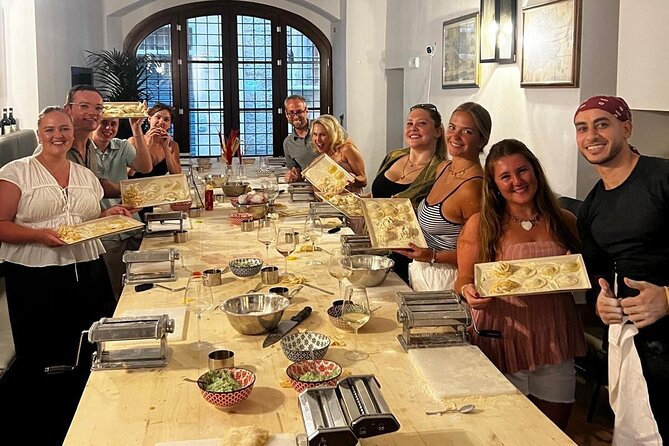
- Make several fresh pastas: Depending on the session, you may prepare ravioli, fettuccine, tagliatelle, or pappardelle.
- Tiramisu is part of the fun: You prepare dessert as well as the savory course, then eat both.
- English instruction: Local chefs explain each step in English and help when your dough or shaping needs attention.
- Restaurant setting: The lesson takes place at Ristorante Tre Pepi, with the finished food served afterward.
- Wine comes with the meal: Wine tasting is included, and some sessions also offer limoncello.
- Good for mixed ages: Families with children, couples, solo visitors, and groups of friends all fit comfortably into the format.
Making pasta at Ristorante Tre Pepi
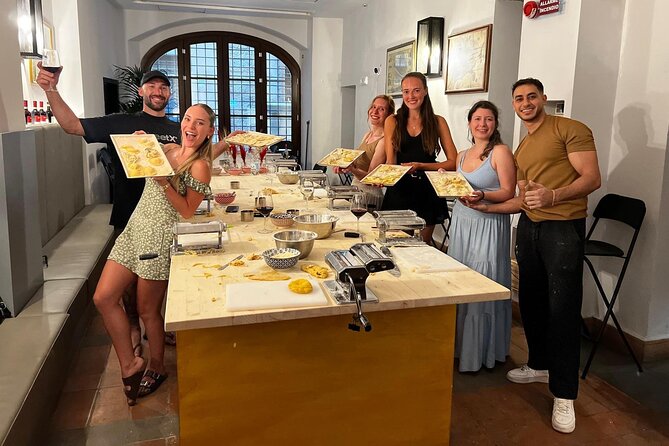
The class meets at Ristorante Tre Pepi on Via dell’Anguillara, 38r, in central Florence. That matters because you can pair the lesson with a day of sightseeing without arranging transport outside the city. You arrive at a working restaurant with a dedicated cooking-school room, rather than a distant farm or hotel kitchen.
The setting sounds practical rather than fancy. One useful detail is air conditioning, especially during Florence’s hot summer months. Aprons add a bit of theater, but the real point is keeping flour and egg off your clothes while you work.
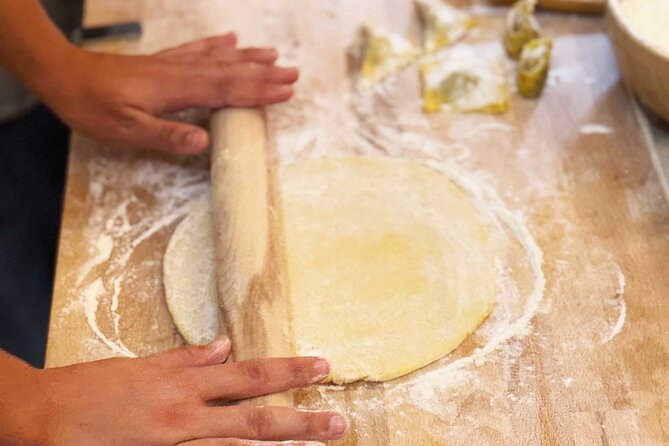
Your chef begins with the pasta dough. The ingredients are the familiar building blocks of Italian cooking: organic eggs, semolina flour, and extra virgin olive oil. The lesson focuses on the feel of the dough, not just a recipe printed on a card. You learn how ingredients come together, how the dough changes as you knead it, and how to judge when it is ready to roll and shape.
That is valuable for a beginner. Fresh pasta looks easy until you have a sticky mass on the table or a sheet that tears. The instructors are there to demonstrate, correct, and explain. Leon, Rudi, and Mamude are named as instructors in the class feedback, and the repeated description is of chefs who are friendly, patient, and willing to help when someone gets stuck.
You should not expect a formal culinary diploma in two and a half hours. You can expect a useful introduction that gives you the confidence to try pasta at home. The class works best when you accept that your ravioli may not look perfectly uniform. Italian home cooking is about getting food on the table, not producing identical pieces for a photograph.
More Chef-Led Pasta Classes in Florence
- Authentic Tuscan Pasta Class in Florence with Local Chef Cinzia
★ 5.0 · 42 reviews - Fresh Pasta in a Michelin Kitchen: The Secrets of Taste
★ 5.0 · 30 reviews - Authentic Pasta Making Class in Florence with a Local Chef
★ 5.0 · 25 reviews
From dough to ravioli, fettuccine, and pappardelle
The exact pasta shapes can vary, but the class commonly includes two or three types. Ravioli, fettuccine, tagliatelle, and pappardelle are all named as possible preparations. That variety keeps the lesson interesting because each shape demands a different technique.
Ravioli gives you the most delicate task. You need to place the filling carefully, press out air, seal the edges, and cut the pieces without breaking them. This is also where the chef’s help matters most. A little too much filling or a weak seal can cause trouble when the pasta reaches boiling water.
Fettuccine and tagliatelle teach you how to work with a pasta sheet. You roll, cut, and separate the ribbons, then see how fresh pasta differs from the dried kind sold in supermarkets. Pappardelle uses wider ribbons, so it gives you a good lesson in how shape affects texture and sauce.
I appreciate that this is not merely a demonstration followed by a meal. You make your own personalized pasta, and the food on your plate comes from the work you just completed. That connection is the reason to book a class instead of simply ordering a plate of handmade pasta at a restaurant.
The sauce matters, too. The class follows the Italian idea of la cucina semplice, using seasonal vegetables, herbs, and farm-fresh produce rather than burying the pasta under heavy ingredients. Different pastas are served with complementary sauces, which lets you notice why a delicate ribbon and a stuffed pasta do not need the same treatment.
One practical warning: flour-based cooking can get messy. You will be handling dough for much of the class, so wear comfortable clothes and avoid bringing your most delicate outfit. The provided aprons help, but they are not a substitute for common sense.
Tiramisu adds a sweet second lesson
Tiramisu is included, and it gives the session a welcome change of pace. After the work of kneading, rolling, cutting, and filling pasta, you shift to a dessert that is assembled rather than shaped.
Several participants particularly enjoyed making the tiramisu themselves. That makes sense for families and younger cooks because dessert feels immediately rewarding. Children can take part without needing the same fine control required for sealing ravioli.
The class does not end when the last piece of pasta is prepared. You sit down and eat the pasta and tiramisu you made. That full meal is one of the strongest reasons the $74 price feels fair. You receive instruction, food, wine, and a social evening rather than a short cooking demonstration.
The portions can be generous. One session produced enough pasta and tiramisu to feel like a substantial meal, so do not schedule another large dinner immediately afterward. The food is served with different sauces, and wine is available during the meal. Limoncello has also been offered in some sessions, though it should not be treated as a guaranteed inclusion beyond the stated wine tasting.
The meal is part of the experience
Many cooking classes finish with a small sample and send you on your way. This one is structured more like lunch or dinner at the restaurant. You prepare the food, move to the dining area, and enjoy the finished dishes together.
That arrangement gives the experience a social side. A group can include families, couples, friends, and solo visitors. If you come alone, you are not left with an awkward half-meal at a counter. You eat with the group and have a natural chance to meet people.
The atmosphere can vary with the number of bookings. A class of around 20 feels like a group activity, with more energy and less individual attention. A very small class can feel almost private, giving the instructor more time to watch your technique and answer questions. I would not book this expecting one fixed group size.
The instructors appear to be a major part of the experience. Leon is praised for looking after the group and explaining things clearly. Rudi is described as funny, attentive, and good with children. Mamude is also named as one of the teachers. Since the exact chef may vary, think of the class as a team-led activity rather than a guaranteed meeting with one particular person.
The language is English, which makes the practical instruction easy to follow. You do not need advanced cooking skills. The format is designed for beginners, but experienced home cooks still get the pleasure of working with fresh pasta in a Florence restaurant.
More Fresh Pasta Workshops in Florence
- Pastamania – Florence Pasta Making Class
★ 5.0 · 3,050 reviews - Florence: Handmade Pasta & Dessert Class with Unlimited Wine
★ 4.8 · 788 reviews - Florence: Tuscan cooking class with handmade pasta and wine
★ 4.7 · 316 reviews - Hands-On Pasta Cooking Class in Florence with optional Pizza
★ 4.5 · 276 reviews
Why the $74 price makes sense
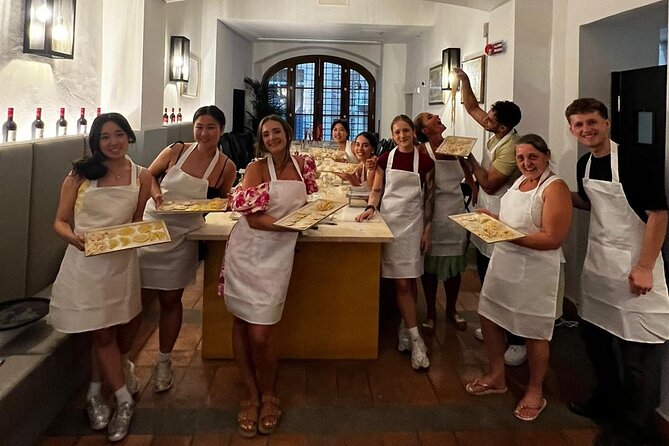
At $74 per person, this is not the cheapest meal you can buy in Florence. It is also not simply a meal. The price covers a 2.5-hour class, the ingredients, wine tasting, tiramisu, and lunch or dinner.
If you value only the food, you may find a restaurant meal for less. If you want a memorable activity that also feeds you, the calculation looks better. You avoid paying separately for a cooking lesson and an evening meal, and you leave with techniques you can repeat at home.
I especially like that the food is not treated as a token sample. You eat the pasta and dessert you prepared, with sauces and wine at the restaurant. That makes the experience feel connected from start to finish.
The main value question is personal. If you dislike group activities, you should know that the class may have a sizable group. On the other hand, a small class can turn into a very personal lesson. One student described having Leon as the only instructor for the session, while another group ate together with about 20 people.
The flexible booking terms help if your Florence schedule is still taking shape. You can reserve and pay later, and cancellation is free up to 24 hours before the class for a full refund. Check the available start times before booking, since the class does not have one universal departure hour.
Who will enjoy this Florence class most
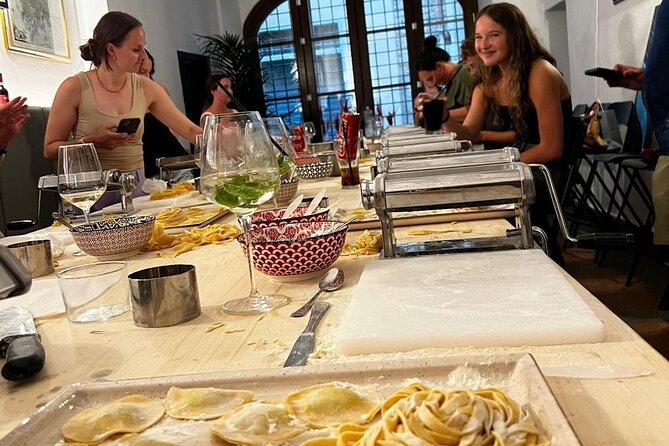
I would put this near the top of the list for families. Children aged seven, nine, and 13 have all been specifically described as enjoying the activity, and the staff are comfortable making the lesson engaging for younger cooks. Tiramisu also gives children a clear reward at the end.
Couples can use it as an alternative to another restaurant dinner. You get a shared task, a little flour on your hands, and a meal with wine afterward. It is more relaxed than a formal food tour and more active than sitting at a table.
Solo visitors are also a good fit. You can join the group without needing to arrange your own cooking partner, and the meal creates an easy social setting. If you are hoping for a quiet, private lesson, however, ask about the group before you commit.
It suits beginners especially well. You will receive direct demonstrations and help with the steps that tend to cause trouble. Experienced cooks may enjoy it too, but should choose it for the setting and meal rather than expecting advanced professional training.
This is less suitable if you have strict dietary requirements that have not been confirmed with the provider. The supplied details describe eggs, flour, olive oil, vegetables, herbs, pasta, tiramisu, and wine, but do not specify alternative menus or allergy handling. Ask before booking if that affects your decision.
Allow more than two and a half hours
The official duration is 2.5 hours. That is a useful planning figure, but I would avoid placing a major museum booking immediately afterward. One participant described staying for five hours after expecting a shorter activity, while another session was described as a three-hour event.
The reason is easy to understand. Cooking, serving, eating, and conversation do not always follow a strict clock. If you have a timed train, ticket, or dinner reservation, leave a generous buffer.
For most people, the extra time is a benefit rather than a problem. The meal is part of what you paid for, and rushing from the kitchen to the table would weaken the experience. Still, Florence days are often tightly scheduled, so plan this as a half-day-friendly activity rather than a quick stop between attractions.
Practical tips before you book
Arrive at Ristorante Tre Pepi on Via dell’Anguillara, 38r, and confirm the meeting details when you reserve. The activity is conducted in English, so you can follow the demonstrations without relying on translation.
Wear something comfortable and suitable for cooking. An apron is provided according to the class experience, but flour, egg, and sauce can still find their way around the work surface.
Eat lightly beforehand. You will make several pastas and tiramisu, then sit down for a complete meal. The food can be plentiful, and arriving hungry is wiser than arriving after a large lunch.
Keep your afternoon or evening flexible. The listed duration is 2.5 hours, but the meal and social side can stretch the visit. I would also check the class time carefully because start times vary by availability.
If you have children, tell them this is a working cooking session, not a show where everything is done for them. That is the fun, but it also means they will handle dough and take part in the less glamorous steps.
Should you book it?
I would book this class if you want to do more than photograph food in Florence. You will learn the basics of fresh pasta, prepare tiramisu, drink wine, and sit down to eat a meal made by your own hands.
The best reasons to go are the friendly English-speaking instructors, the chance to make several pasta shapes, and the fact that the class includes a full meal. Families and solo visitors get particular value from the social setup, while couples get a memorable dinner with something to do before the plates arrive.
Skip it if you want a private, highly technical lesson, or if your schedule cannot tolerate a class that may run beyond the advertised 2.5 hours. For most visitors who enjoy food, meeting people, and a little flour on the apron, $74 is a sensible Florence splurge.
FAQ
Where does the pasta class take place?
The class meets at Ristorante Tre Pepi, located at Via dell’Anguillara, 38r, in Florence.
How long does the class last?
The stated duration is 2.5 hours. Some sessions may last longer because the meal and social time can extend beyond the cooking portion.
What language is the class taught in?
The instructor teaches in English.
What pasta can I learn to make?
Depending on the session, you may make ravioli, fettuccine, tagliatelle, or pappardelle. Some participants prepare two types, while others make three.
Is tiramisu included?
Yes. The class includes making tiramisu and eating it afterward with the pasta you prepare.
Is wine included?
Yes. Wine tasting is included with the class and meal. Limoncello has also been offered during some sessions.
Is a meal included?
Yes. You eat the pasta and tiramisu you make as lunch or dinner at the restaurant.
Is the class suitable for children?
Yes. Children aged seven, nine, and 13 have taken part, and the activity is described as suitable for families.
Can I cancel for a refund?
You can cancel up to 24 hours in advance for a full refund. You can also reserve now and pay later.
Recently added in Florence
- Hands on Deluxe Traditional 4-course dinner with fresh pasta★ 5.0 · 15 reviews
- Vegan Cooking Class in Florence: Pasta Making & Wine!★ 5.0 · 2 reviews
- Tuscan Pasta Masterclass Small-Group Cooking Experience★ 5.0 · 17 reviews
- MaMa Florence: The Art of Corzetti – Hands-On Pasta Class★ 5.0 · 15 reviews
- The Art of Pasta and Wine Tasting with Local Sommelier★ 5.0 · 16 reviews
- Cooking class and home made pasta in Florence with LA VIVANDIERA!★ 5.0 · 5 reviews
- Gluten free pasta and dessert class 6 guests max★ 5.0 · 2 reviews
- Share Your Pasta Love in a Local’s Home in Florence★ 4.5 · 16 reviews
Chef-Led Pasta Classes, compared.
Rome Cooking Class: Make Pasta, Dine & Drink Wine With Local Chef
Read our review →
2-in-1 Pasta and Tiramisu Cooking Masterclass in Rome
Read our review →
Pasta Fettuccine, Ravioli and Tiramisu MasterClass
Read our review →
Pasta and Pizza Master Class with Pick Up in Sorrento
Read our review →
Fettuccine and Tiramisu Masterclass in the Heart of Rome
Read our review →
Homemade Pasta and Pesto Class with a Local Chef in Genoa
Read our review →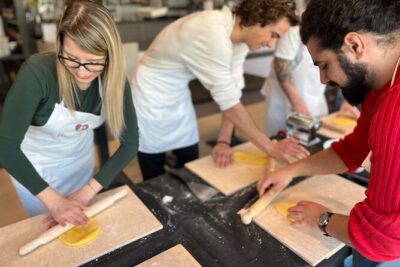
Rome Small Group Pasta Making Class with Wine and Italian Chef
Read our review →Browse the lists this class appears in