
REVIEW · HOME COOKING CLASSES
Share Your Pasta Love in a Local’s Home in Florence
The best part of this Florence experience is the setting: you trade a crowded restaurant or formal cooking school for a local home kitchen, where pasta making feels social and personal. You’ll mix, knead, and shape fresh pasta, then sit down to eat it with wine and a small aperitivo.
I like the hands-on format and the chance to learn old-school Tuscan methods for pici, tortelli, pappardelle, tagliatelle, or ravioli. I also like the warm hosting. Donatella and Ivana are named hosts connected with especially personal classes, including one where three pasta shapes were made. The main drawback is the 90-minute schedule, which leaves little time for a long lesson or a leisurely meal, and a group of up to 20 can feel less intimate than a private class.
Key points to know before booking
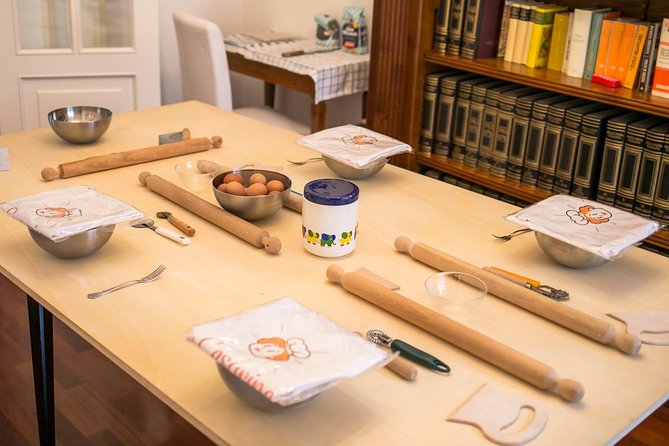
- You cook in a real Florentine home: This is built around hospitality, conversation, and a shared table rather than a polished cooking-school setup.
- Fresh pasta is the main event: Expect to mix, knead, roll, and shape pasta by hand, with examples including pici, tortelli, pappardelle, tagliatelle, and ravioli.
- Wine is included: The meal comes with local wine at a rate of one bottle for every three people, plus an opening aperitivo.
- The class is short and social: The experience lasts about 1 hour and 30 minutes and can include up to 20 people.
- Hosts make a real difference: Donatella and Ivana are among the named local hosts associated with this experience, with Ivana’s home described as close to the city center.
- It is easy to plan: You receive confirmation at booking, use a mobile ticket, and can cancel for a full refund up to 24 hours before the start time.
Why a Florentine home kitchen changes the experience
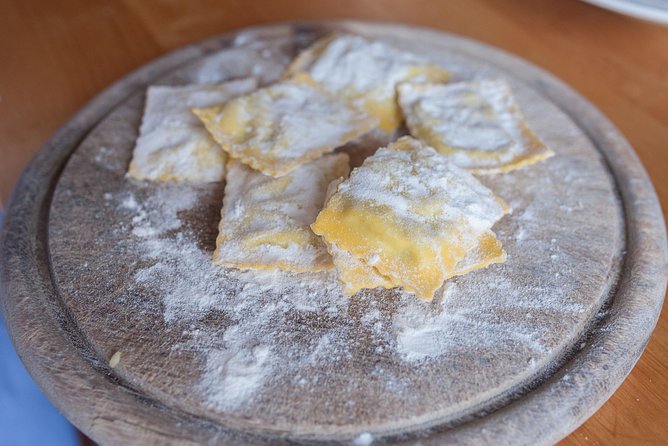
Florence has no shortage of cooking classes. Some take place in bright studios designed for instruction. This one aims for a different feeling: you enter a private home and share a meal prepared in the host’s own kitchen.
That change matters. Pasta is not simply a dish to watch someone prepare. It is a daily skill shaped by touch, timing, and habit. A local cook can show you how dough feels when it needs more work, how thin to roll it, and how to handle a delicate filling without tearing the pasta.
The setting also creates more room for conversation. You are not only learning a recipe. You are sitting at a Florentine table, meeting the person who welcomes you into their home, and sharing food with other people who came for the same reason.
The trade-off is that a private home may not have the space or equipment of a professional teaching kitchen. With as many as 20 people, some parts of the demonstration may be easier to follow from the front than from the back. If you want a long, technical lesson with individual coaching, check the group size and consider asking if a private course with a host such as Ivana is available.
More Home Cooking Classes in Florence:
- Private Pasta & Tiramisu Class at Cesarina’s home in Florence
★ 5.0 · 28 reviews - Pastamama, Home Cooking Classes at Grace’s Home
★ 5.0 · 521 reviews - Small Group Pasta and Tiramisu Class at Local’s Home in Venice
★ 4.5 · 236 reviews
Starting with an aperitivo and a warm welcome
The class begins with a small appetizer and an aperitivo. This gives you a gentle start before the flour appears and helps turn the class into a meal rather than a rushed demonstration.
An aperitivo is a useful part of the Italian dining rhythm. You have something small to eat, a drink in hand, and time to settle into the room. In this case, it also gives the host a chance to welcome the group and introduce local flavors.
Do not expect this opening to fill you up. The fresh pasta is the main meal, and the opening food is best viewed as a taste of what is to come. If you arrive hungry, that is not a bad plan, but you should also avoid expecting a large spread before the cooking begins.
This first stage may be especially pleasant for couples and small groups of friends. One couple described a host who added wine and dessert, though dessert should not be treated as a guaranteed part of every booking since the standard details specifically promise an aperitivo, pasta, and wine.
Mixing and kneading pasta by hand
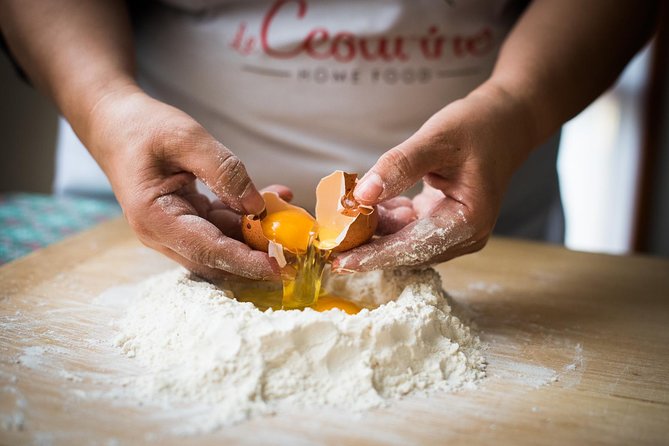
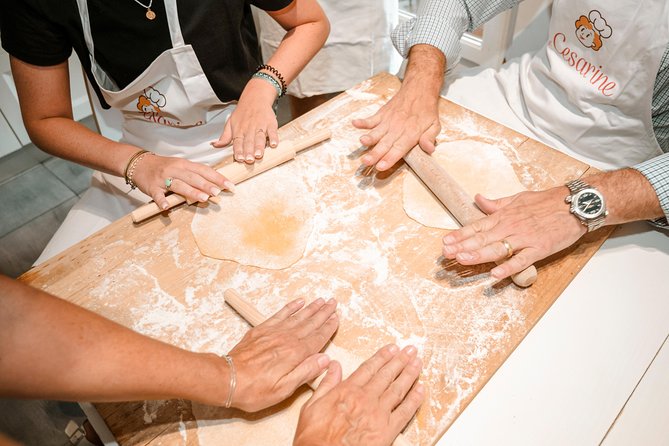
After the welcome, you roll up your sleeves and begin the work. The basic process includes mixing the dough, kneading it, and shaping the pasta under the host’s guidance.
This is where the class earns its keep. Watching a cook prepare pasta is pleasant, but doing the work yourself gives you something useful to take home. You learn that fresh pasta is not just about following a fixed measurement. Your hands tell you when the dough is smooth enough, and the way you roll it affects the final texture.
The pasta may vary by session. The sample regional choices include pici, tortelli, and pappardelle, while the wider examples include tagliatelle and ravioli. That range is important. Pici is a thick, hand-rolled Tuscan pasta. Pappardelle and tagliatelle teach you how to create long ribbons. Tortelli and ravioli add the extra task of filling and sealing pasta.
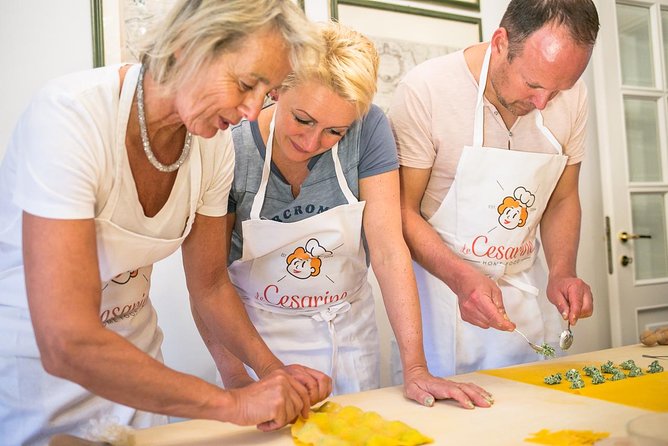
A class that includes filled pasta demands more care. You need to portion the filling, press out air, and seal the edges firmly. That is why the patient teaching described by several guests matters. A calm host can keep beginners from feeling clumsy when the first pieces look uneven.
You should also expect a practical lesson rather than a professional chef’s certification course. The point is not to produce perfect restaurant pasta. It is to understand the basic method, enjoy the process, and leave with a better feel for the food you will eat in Italy.
The pasta choices and what they mean for you
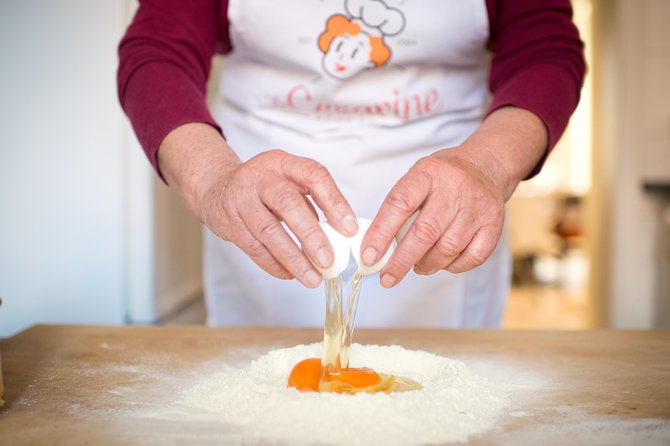
The menu is centered on fresh pasta, but the exact regional style can differ. That makes the experience more flexible, though it also means you may not know your exact dish until the class begins.
Here is what the named examples suggest:
- Pici: A Tuscan specialty made as thick, hand-rolled strands. It is a good introduction to shaping pasta without a machine.
- Pappardelle: Broad ribbons that show off a well-rolled sheet of dough and pair naturally with a substantial sauce.
- Tagliatelle: Narrower ribbons that require neat cutting and even thickness.
- Tortelli and ravioli: Filled pasta that adds folding, sealing, and portioning to the lesson.
If you have your heart set on one particular shape, ask about the day’s menu before booking or at the start of the class. The supplied details present these as sample choices, not a guaranteed menu for every session.
This variety is also useful for repeat visitors to Italy. You may already have made a simple ribbon pasta elsewhere, but a filled shape or a thick Tuscan style gives you a different skill to practice at home.
Other Florence classes worth putting on the shortlist
- Florence: Pasta Cooking Class with Unlimited Wine
★ 4.9 · 10,285 reviews - Florence Pizza or Pasta Class with Gelato Making at a Tuscan Farm
★ 5.0 · 6,801 reviews - Florence: Pasta & Tiramisu Cooking Class with Unlimited Wine
★ 4.9 · 6,708 reviews - Florence: Pasta Cooking Class with Unlimited Wine
★ 5.0 · 6,413 reviews
Sitting down to eat what you made
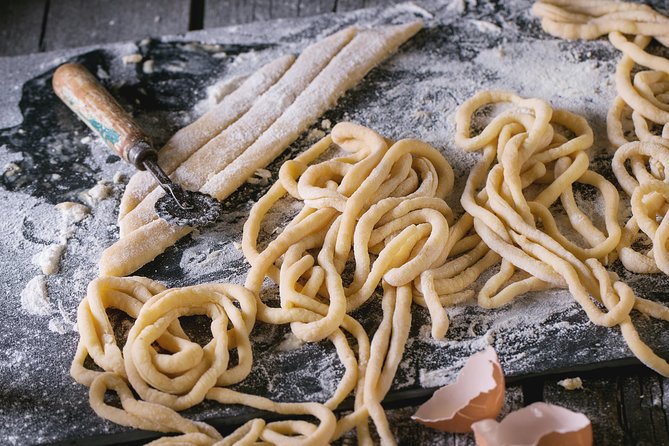
Once the pasta is ready, you gather around the table and eat the dish you prepared. This is the satisfying turn in the experience. The food is no longer a recipe on a counter. It is your lunch or dinner, made with your own hands and shared with the people beside you.
Local wine is included, with one bottle provided for every three people. That is a reasonable serving arrangement for a casual meal and adds to the sense of an Italian table. It is not an unlimited drinks package, so you should not book this expecting a wine tasting.
The shared meal also helps balance the instructional side of the class. You are not sent away immediately after the last piece of pasta is shaped. Instead, you have time to eat, talk, and enjoy the result.
Still, keep the timing in mind. Ninety minutes covers the welcome, cooking, and meal, so the final dining period may be shorter than what you would have in a full restaurant. If you prefer a slow evening with several courses, this is not that kind of event. If you want one compact food activity between sightseeing plans, the pace should suit you.
The hosts are central to the quality
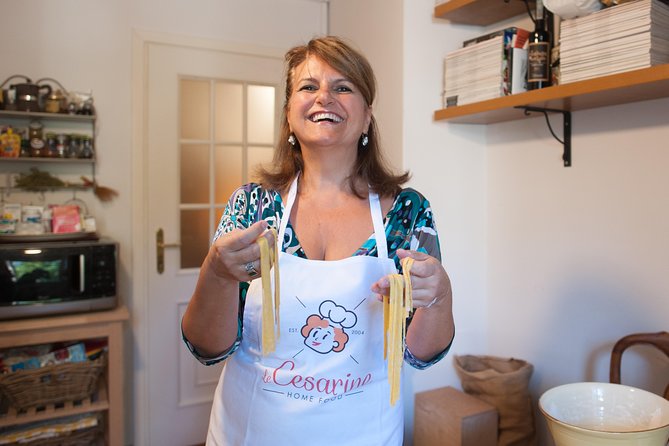
A home cooking class rises or falls on the person leading it. The host needs to explain each step clearly, keep the group moving, and make beginners feel comfortable in a private space.
Donatella is named as a gracious host who brought patience, humor, and clear pasta instruction to the class. Ivana is another named host, praised for making three kinds of homemade pasta and welcoming people into a home not far from the city center. Her husband Vincent also helped create the warm atmosphere at that session.
You cannot assume that every booking will be with Donatella or Ivana. Host assignments can vary, and the experience is provided through Cesarine, a network built around local home cooks. If a particular host matters to you, request that person when arranging the class, but understand that a request is not the same as a guarantee unless confirmed.
The strongest fit is someone who values a host’s personality as much as the recipe. You will get more from the class if you enjoy asking questions, meeting people, and accepting a little imperfection in the finished pasta.
Group size, timing, and location
The maximum group size is 20 people. That is not a tiny class, but it is still small enough to retain a social feel if the host organizes the kitchen well.
A group of this size has two clear benefits. You meet people from different places, and the shared table feels lively. It can also help solo visitors feel less conspicuous. The downside is less individual attention, especially during delicate steps such as filling and sealing ravioli.
The activity lasts approximately 1 hour and 30 minutes. Build your day around that full period rather than treating the class as a quick 30-minute stop. The welcome, pasta preparation, and meal all take time.
The meeting point is Via Quintino Sella in Florence, and the activity ends back at the meeting point. The location is near public transportation, which makes it practical to reach without arranging a private transfer. Since the class takes place in a local home, follow the meeting instructions carefully and allow time to find the address.
A mobile ticket is provided, and confirmation arrives at the time of booking. Service animals are allowed. These details are useful, but the larger planning point is simple: this is a fixed-time activity, so avoid scheduling a major museum reservation immediately afterward.
Is $70.89 a fair price?
At $70.89 per person, this is more expensive than buying a bowl of pasta in Florence. That comparison misses the point, since you are paying for instruction, a home setting, an aperitivo, the meal, and wine.
The value is strongest if you want three things in one short activity: a cooking lesson, a social meal, and contact with a local host. The price also includes the ingredients used for the pasta and the food you eat afterward, though the supplied details do not spell out every ingredient or portion.
The value is weaker if you only want to learn a recipe as efficiently as possible. A formal class with a smaller group may offer more technical coaching, while a restaurant meal may give you more food for less money. This experience makes sense for someone who wants a personal connection to Florence and sees the cooking as part of the sightseeing.
The high rating of 4.7 from 16 ratings and the 94 percent recommendation figure suggest that the experience has made a strong impression overall. The repeated praise centers on warm hosts, patient instruction, homemade pasta, wine, and the feeling of being welcomed into a local home. Those are the parts that justify the price, not simply the plate of pasta itself.
Who will enjoy this most?
I would recommend this class to couples, families with teenage or adult children, and friends who want an activity they can share. It also suits solo visitors who like meeting people around a table rather than eating alone.
It is a good choice for first-time cooking-class participants. The instruction is practical, the pasta is familiar, and the host’s guidance keeps the work approachable. You do not need to arrive with professional kitchen skills.
Families should note the age fit. The supplied experiences point most clearly to teenagers and adults, not small children. The class involves hands-on dough work and a shared meal, so children need to be comfortable following instructions and taking part in a group setting.
You may want a different option if you need strict dietary control, a very small class, or a long multi-course menu. The available details do not specify vegetarian, vegan, gluten-free, or allergy accommodations, so ask before booking if those needs affect your meal.
How to make the most of the 90 minutes
Arrive ready to participate. Wear something comfortable and avoid treating the class as a passive food demonstration. The more you handle the dough, the more useful the lesson becomes.
Ask the host to explain what to look for at each stage. You can learn more from questions about texture, rolling thickness, and sealing than from simply copying hand movements. If you make uneven pasta, keep going. That is part of learning a skill made by feel.
Take advantage of the meal for conversation. Ask about the pasta shape being served, the local traditions behind it, and how the host would prepare it at home. The home setting gives you a chance to learn small cultural details that a standard restaurant cannot provide.
Finally, leave room in your Florence schedule. You may finish at the meeting point, but the pace of the activity is not entirely in your control. A generous buffer will keep you from watching the clock while your pasta is being prepared.
Should you book this Florence pasta class?
Book it if you want a friendly home meal with a hands-on lesson, not simply a cooking demonstration. The strongest reasons are the local setting, the chance to make fresh pasta from scratch, the included aperitivo and wine, and the hosts’ personal touch.
I would be especially inclined to book this for a couple, a small group of friends, or a family with older children. Ask about Donatella or Ivana if their hosting style appeals to you, and confirm the pasta shape and any dietary needs before committing.
Skip it if your priority is a private, highly technical class or a long dinner with several courses. The possible 20-person group and 90-minute limit can make the experience feel brisk. For most people seeking a warm, social taste of Florentine food culture, though, the combination of cooking and conversation offers solid value at $70.89.
FAQ
Where does the pasta class meet?
The meeting point is Via Quintino Sella, Firenze FI, Italy.
Where does the activity end?
The activity ends back at the meeting point.
How long does the experience last?
The class lasts approximately 1 hour and 30 minutes.
What food will I prepare?
You will prepare fresh pasta. Sample regional choices include pici, tortelli, and pappardelle. Tagliatelle and ravioli are also listed as possible pasta styles.
Is wine included?
Yes. The experience includes local wine, with one bottle provided for every three people.
Does the class include food before the pasta?
Yes. The experience begins with a small appetizer and an aperitivo.
How many people can join?
The activity has a maximum of 20 people.
Is the class offered in English?
Yes. The experience is offered in English.
Can I cancel for a refund?
Yes. You can cancel at least 24 hours before the start time for a full refund. Cancellations or changes made less than 24 hours before the start time are not accepted for a refund.
Recently added in Florence
- Hands on Deluxe Traditional 4-course dinner with fresh pasta★ 5.0 · 15 reviews
- Vegan Cooking Class in Florence: Pasta Making & Wine!★ 5.0 · 2 reviews
- Tuscan Pasta Masterclass Small-Group Cooking Experience★ 5.0 · 17 reviews
- MaMa Florence: The Art of Corzetti – Hands-On Pasta Class★ 5.0 · 15 reviews
- The Art of Pasta and Wine Tasting with Local Sommelier★ 5.0 · 16 reviews
- Cooking class and home made pasta in Florence with LA VIVANDIERA!★ 5.0 · 5 reviews
- Hands-On Pasta Making Class in Central Florence with Patrizia★ 5.0 · 5 reviews
- Gluten free pasta and dessert class 6 guests max★ 5.0 · 2 reviews
Home Cooking Classes, compared.
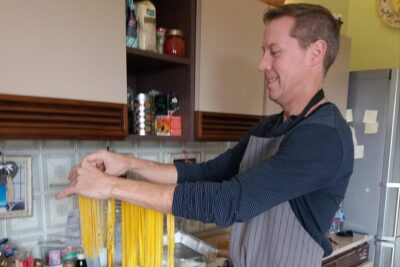
Pastamama, Home Cooking Classes at Grace’s Home
Read our review →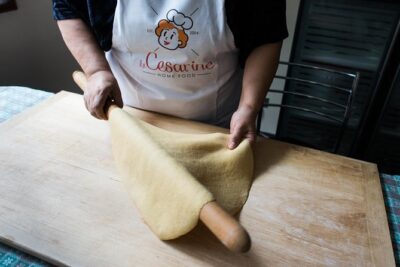
Small Group Pasta and Tiramisu Class at Local’s Home in Venice
Read our review →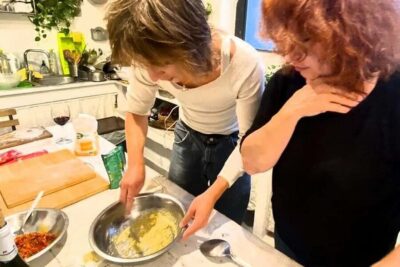
Pistachio Ravioli, Pasta Home Cooking Class w/ Wine
Read our review →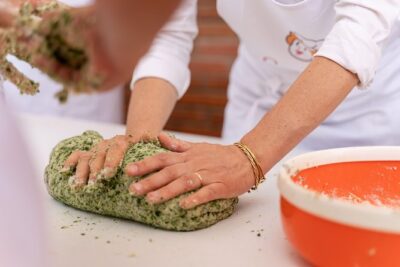
Cesarine: Small group Pasta and Tiramisu class in Varenna
Read our review →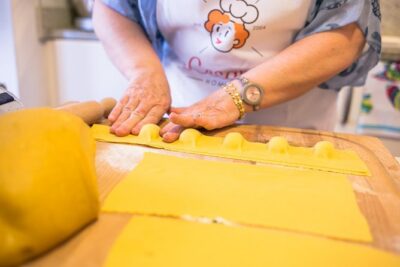
Cesarine: Small group Pasta and Tiramisu with Mamma in Lucca
Read our review →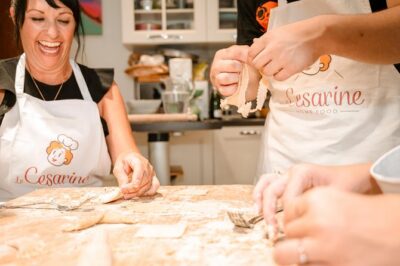
Cesarine: Small group Pasta and Tiramisu class in Bologna
Read our review →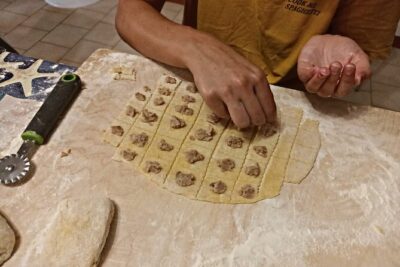
Authentic Bologna Home Cooking Class: Tagliatelle & Tortellini
Read our review →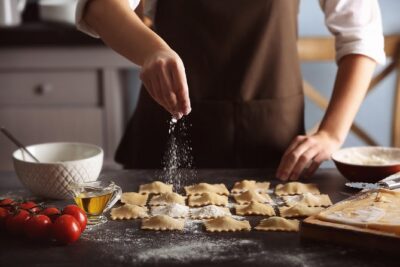
Alghero Home Cooking Pasta Class at a Farmhouse with Wine
Read our review →Browse the lists this class appears in