REVIEW · ITALY PASTA CLASSES
Matera: Pasta Cooking Class Old Farmer Style in Sassi Cellar
Matera’s best food lesson may happen underground. In a restored Sassi cave cellar, Lorenzo and Chef Cosimo lead you through local recipes, family stories, and a hands-on pasta class before serving the meal you helped prepare. I especially like the setting and the relaxed, personal teaching style.
I also like that this is more than a pasta demonstration. You make bruschetta, fresh pasta, and strascinate al tegamino, while learning how food shaped family life in Matera. The main drawback is clear: this is not suitable for anyone with gluten intolerance, and the class is built around wheat-based cooking.
Key points at a glance
- A restored cave home: The class takes place at Cava Marlò, an old wine cellar and former cave dwelling in the Sassi.
- Personal local hosts: Lorenzo handles the welcome and stories, while Chef Cosimo leads the cooking and shares family recipes.
- Three hours of food and culture: Allow time for a cellar tour, a 90-minute workshop, a short break, and a full tasting meal.
- Small-group setting: With no more than eight participants, you get room to ask questions and work at the table.
- Farmer-style Matera dishes: You prepare fresh pasta, bruschetta, and strascinate al tegamino using traditional local methods.
- Good value for a meal and class: At $80.55 per person, the price covers the cave visit, instruction, stories, recipes, and food tasting.
Cooking inside Matera’s stone caves
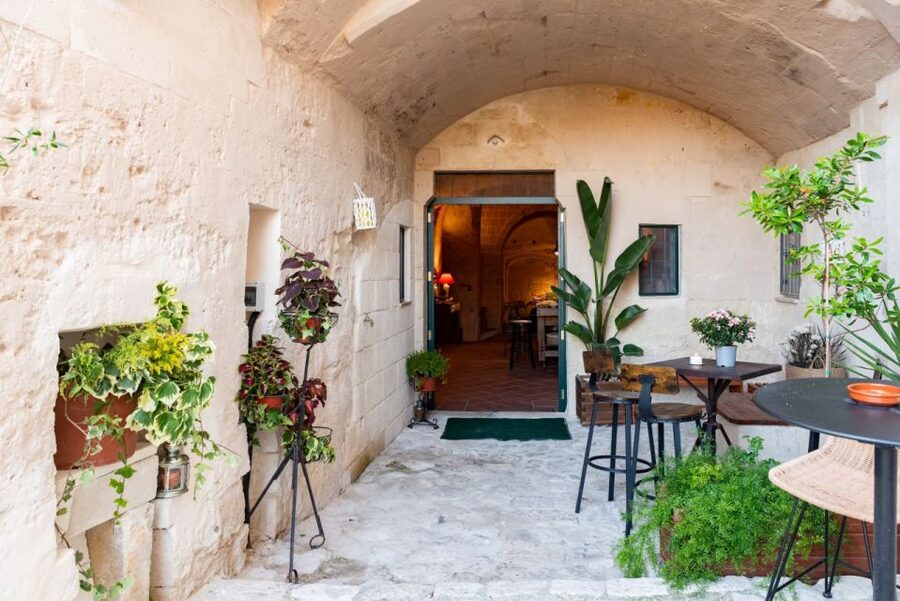
The setting does much of the work before the first bowl of flour reaches the table. Matera’s Sassi are famous for homes and workspaces cut into pale stone, and this experience takes you inside one of those spaces rather than keeping you on the street with a camera.
Cava Marlò is identified by an arch and a large green door on Recinto Santa Maria. That detail matters because the Sassi can feel like a maze of steps, lanes, and stone facades. Search for Cava Marlò on your map and look for the green door rather than expecting a large tour sign.
Inside, the old cellar has been restored for cooking and dining, while parts of the original cave remain visible. You get the useful combination of comfort and atmosphere: a proper place to sit and cook, but still a clear sense that this was once part of Matera’s working and family life.
The experience begins with about 20 minutes of stories and a guided look around the cave. Lorenzo helps explain the setting and the way people once lived with food, work, and family in close quarters. This short introduction gives the cooking a purpose. You are not simply making a regional dish in a pretty room. You are seeing where the food traditions belonged.
Other Italy classes worth putting on the shortlist
- Florence: Pasta Cooking Class with Unlimited Wine
★ 4.9 · 10,285 reviews - 3 in 1 Cooking Class near Navona: Fettuccine, Ravioli & Tiramisu
★ 5.0 · 7,376 reviews - Florence Pizza or Pasta Class with Gelato Making at a Tuscan Farm
★ 5.0 · 6,801 reviews
Meeting Lorenzo and Chef Cosimo
The hosts are central to the tone of the class. Lorenzo acts as the organizer and storyteller, and Cosimo takes the lead at the stove and worktable. Adeline is also part of the hosting team on some sessions.
Their roles seem to blend naturally. You can expect practical instruction from Cosimo, along with stories about cooking with mothers and grandmothers. Lorenzo adds background about Matera and keeps the session moving. The result is less like a formal school lesson and more like a long meal with local friends who happen to be teaching you how to cook.
That relaxed mood is one of the strongest reasons to choose this activity. The hosts make time for questions, personal conversation, and small explanations about Italian kitchen habits. You learn not only what to do, but why simple local ingredients matter.
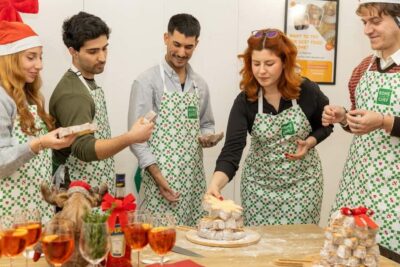
The small group limit of eight helps. A group this size gives you a reasonable chance to see the demonstrations, handle the dough, and speak with the hosts. It also keeps the meal from feeling like a large food production. If your idea of a cooking class is standing silently behind a demonstration table, this should feel more hands-on.
The 20-minute cellar tour and local stories
The opening tour is short, but it gives the rest of the morning or afternoon some context. You see the traditional ex-wine cellar and learn about the cave as a lived-in space. The setting includes views toward the paleolithic caves of Matera, adding another layer to the visit.
I would pay attention during this part even if you came mainly for the food. The cave is not just decoration. It helps explain why preservation, simple ingredients, shared meals, and practical cooking have such an important place in local culture.
The hosts also connect the room to their own families. Stories about nonna recipes and childhood meals make the dishes easier to remember later. This personal angle is more useful than a long lecture about dates and monuments. You get a sense of food as something passed from one generation to another.
Do not expect a full historical tour of Matera. The explanation is designed to support the cooking experience, not replace a dedicated Sassi walking tour. If you want detailed architecture or archaeology, book that separately. Here, the cave stories are brief and closely tied to food and family.
The 90-minute fresh pasta workshop
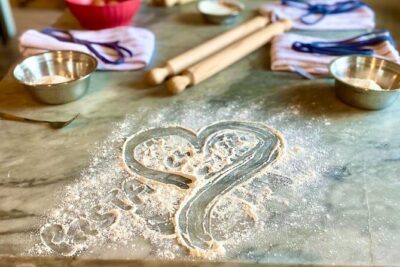
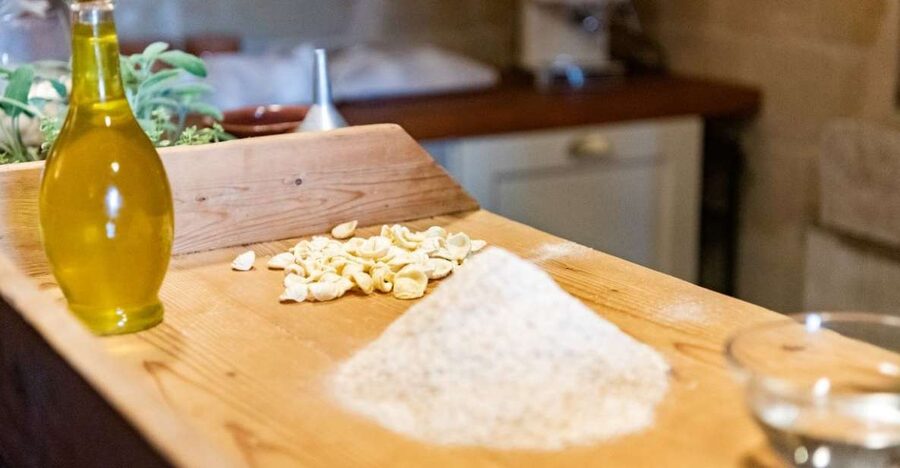
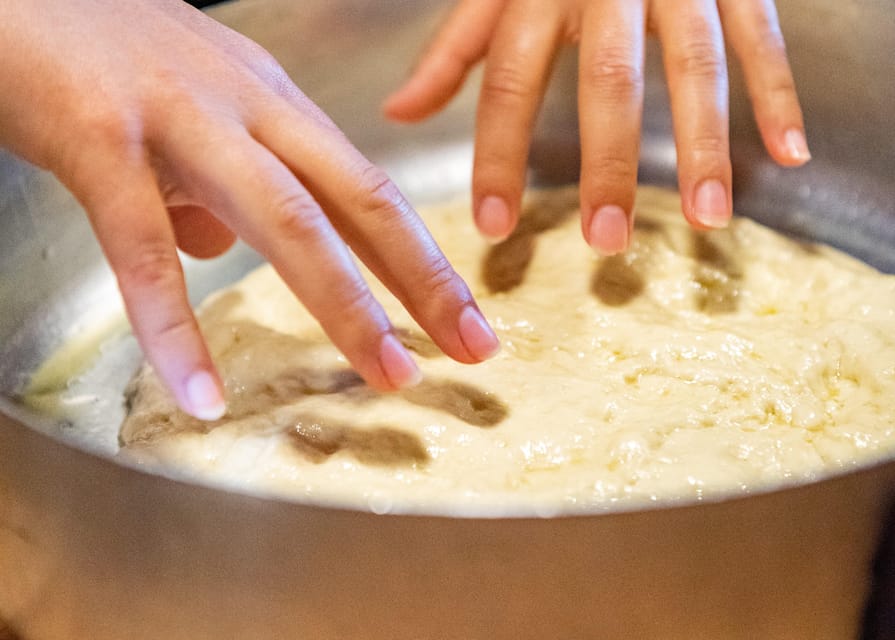
The cooking section lasts about an hour and a half. You roll up your sleeves, knead the dough, and shape fresh pasta under Cosimo’s direction. The class focuses on traditional technique rather than complicated restaurant tricks.
This is the part where comfortable clothing helps. You will be working with flour and dough, and the point is to take part rather than watch from a distance. Cosimo explains the movements and gives you time to repeat them. The emphasis is on approachable methods you can try again at home.
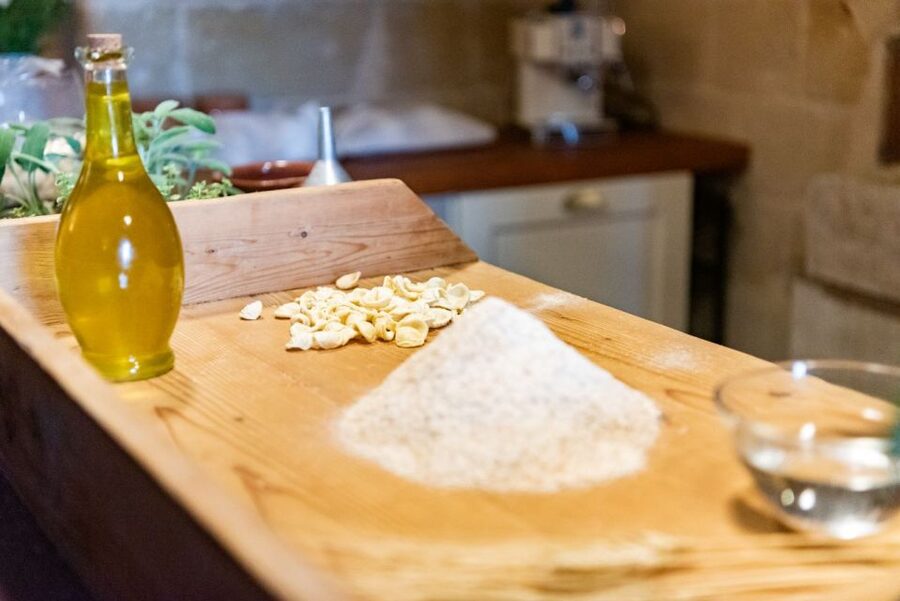
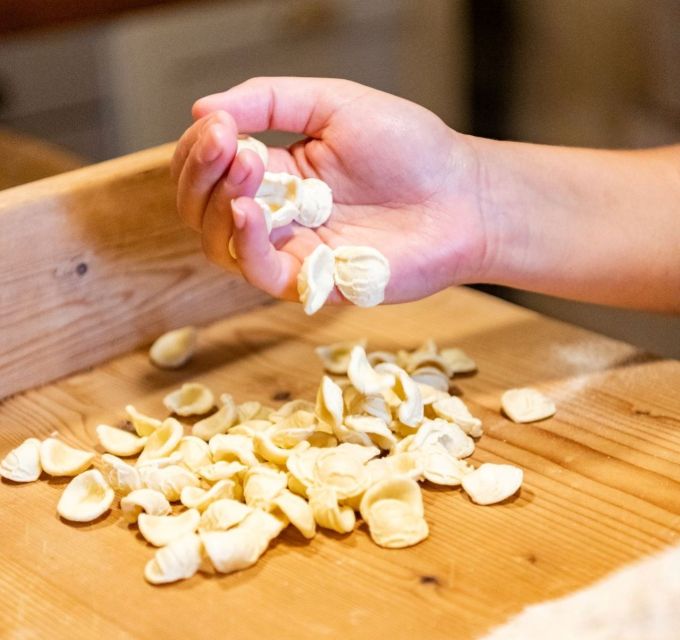
The pasta shape is a local style, and the lesson gives you a practical look at how it is made. You can expect instruction on the dough, the shaping process, and how the pasta fits into a wider regional meal. The recipes are rooted in older farmer cooking, where a few good ingredients had to provide both flavor and substance.
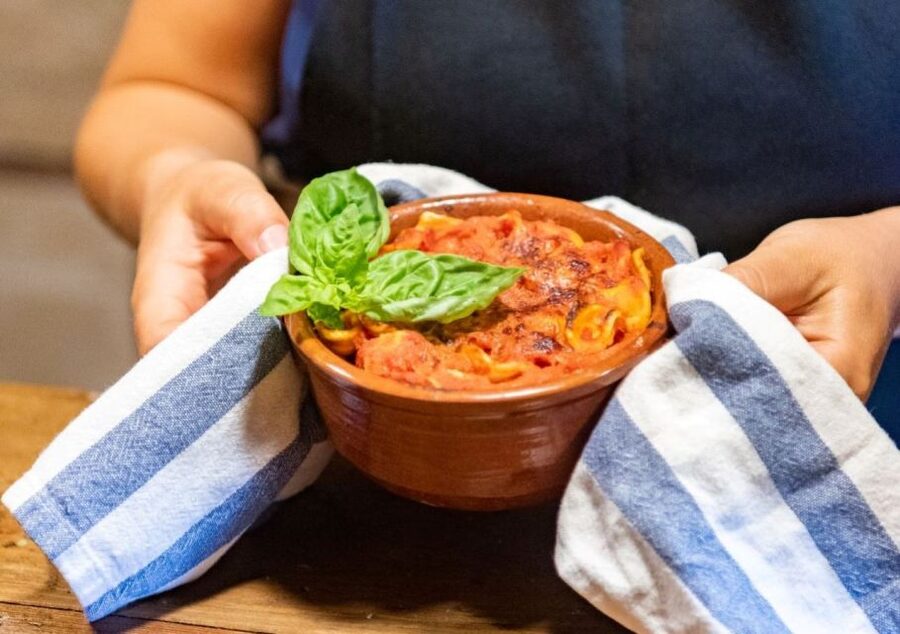
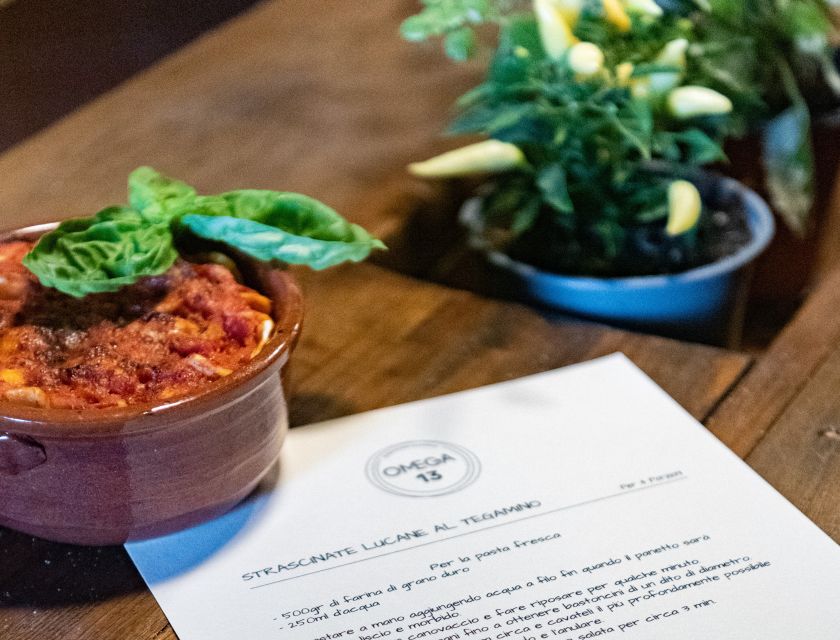
The class also includes bruschetta and strascinate al tegamino. Bruschetta offers a simple introduction to the local approach: good bread, fresh toppings, and careful seasoning. Strascinate al tegamino brings a more substantial dish to the table and shows how pasta can be finished in a traditional baking dish.
The appeal is partly the simplicity. You are not chasing rare ingredients or difficult restaurant plating. You are learning how to turn flour, vegetables, bread, and local products into food with plenty of character. Cosimo also shares small kitchen tips that can make the recipes easier to repeat after your trip.
Same town, a different thing to roll out:
- Florence: Pasta & Tiramisu Cooking Class with Unlimited Wine
★ 4.9 · 6,708 reviews - Florence: Pasta Cooking Class with Unlimited Wine
★ 5.0 · 6,413 reviews - Rome: Pasta & Tiramisu Class with Fine Wine by the Vatican
★ 4.9 · 4,852 reviews - Rome: Pasta Making Class with Wine, Limoncello, and Dessert
★ 4.9 · 3,177 reviews
A short break before the meal
After the workshop, there is about 10 minutes for a break and photographs. This pause is useful because the class moves from preparation to eating, and you may want to wash up, take in the cave, or step outside for a few pictures.
The break also keeps the experience from feeling rushed. You have time to look at the restored room and take in the contrast between the modern furnishings and the original stone. The cave is cool and comfortable in hot weather, according to the experience details shared by past participants, though the temperature may still vary by season.
Because the venue is in the Sassi, this is a good time to appreciate the location rather than treating it as a standard cooking studio. The stone walls, old cellar character, and views are part of what you are paying for.
The one-hour farmer-style lunch
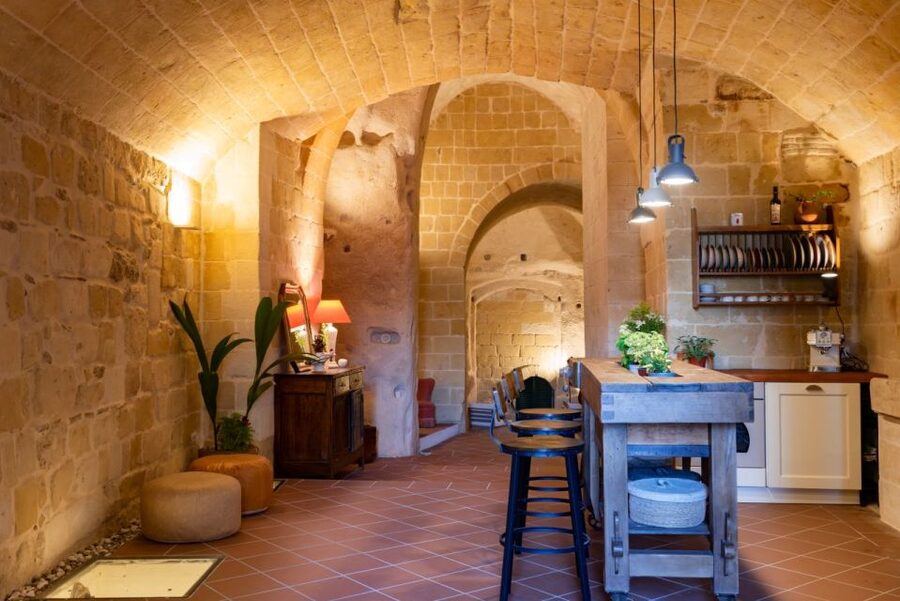
The final hour is a proper tasting meal, not a quick sample at the end of class. You sit down to eat the dishes prepared during the session, including the pasta and other regional foods. The meal is described as hearty and based on local farm-style recipes.
Bruschetta comes before or alongside the cooking, and other simple foods such as Matera bread, tomatoes, onions, olives, and salad may form part of the spread. Cialledda, a traditional bread salad, has also featured in the food experience. The exact menu can vary, but the focus remains on fresh, local, uncomplicated cooking.
This is where the price begins to make sense. For $80.55, you are not paying only for a one-hour lesson. The cost includes a three-hour experience, a cave tour, personal instruction, cultural background, and a full meal. You also get the setting, which is far more distinctive than a standard kitchen classroom.
Wine and water have been available during the meal in past sessions, but you should confirm the current serving details when booking if drinks matter to you. The food itself is the main event. Expect generous portions rather than a tiny tasting menu.
I like the farmer-style approach because it avoids turning Matera’s cuisine into a polished performance. The dishes are meant to taste like food connected to home kitchens and family tables. You get a better feel for the region by working with ordinary ingredients prepared carefully than by sampling something designed only for tourists.
Why the small group matters
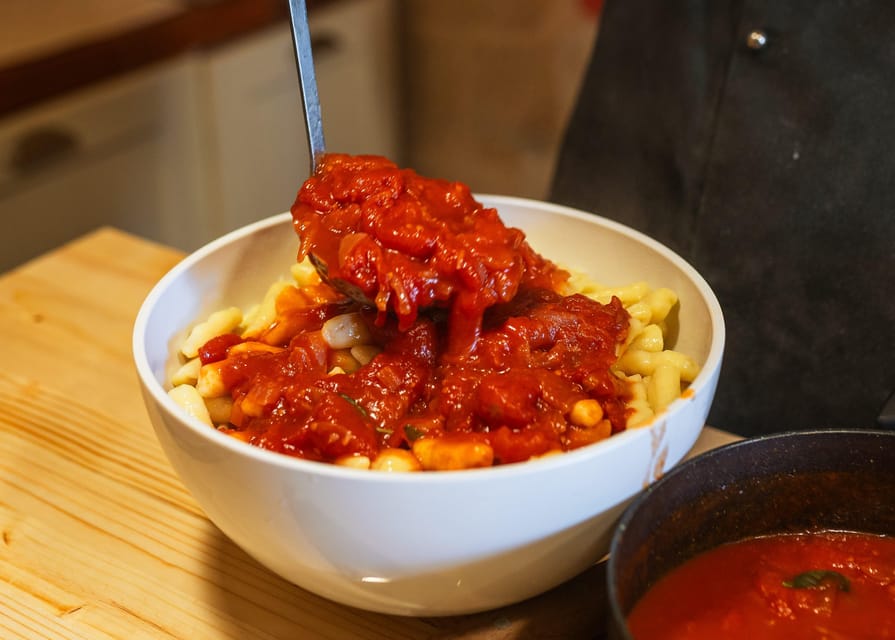
The group limit of eight is an important part of the experience. Pasta making requires table space, attention, and a chance to ask for help. A smaller group lets Cosimo correct your technique and lets Lorenzo tell stories without having to project across a crowded room.
It also supports the social side of the meal. You sit down with the people who cooked beside you, which makes the final lunch feel shared rather than served by a restaurant. The hosts’ warm, easygoing style works best in this format.
The tradeoff is that availability may be limited. If you are traveling on a tight schedule, check starting times early. The activity lasts three hours, so you should not place it immediately before a train, transfer, or timed attraction.
The class is offered in English, Italian, and Spanish. That makes it practical for many international visitors, though the personal stories and cooking instructions are a large part of the appeal, so choose a language in which you can comfortably follow kitchen directions.
Who will enjoy this most
I would recommend this to you if you want a slower, social activity in Matera and enjoy learning by doing. It suits couples, families, and small groups who want food, local stories, and a memorable setting in one booking.
Families can benefit from the hands-on format, especially if children enjoy mixing, shaping, and tasting. The source details do not give a minimum age, so confirm that point before booking for young children.
It also suits people who have already seen the main Sassi viewpoints and want a different way to understand the city. Instead of another walk past cave facades, you spend time inside one and learn how food fits into local life.
It is less suitable if you want a fast activity, a formal professional cooking course, or a menu built around dietary substitutions. Gluten intolerance is specifically listed as a reason not to take the class. The food centers on pasta and bread, so this is not the place to hope for a gluten-free alternative.
Vegetarians may find the experience appealing because the named dishes center on pasta, bread, vegetables, salad, tomatoes, onions, and olives, but the available information does not promise a vegetarian or vegan menu. Ask before booking if you have any dietary needs beyond gluten.
Practical details before you book
The price is $80.55 per person. I consider that fair for Matera because the fee covers much more than instruction: you receive a guided look at a traditional cellar, local anecdotes, a pasta workshop, old farmer recipes, and a meal.
The experience runs for three hours. The listed sequence is roughly 20 minutes for the cave tour, 90 minutes for cooking, 10 minutes for a break and photographs, and one hour for food tasting. That makes this a substantial half-day activity, even though it does not take the entire day.
Meet directly at the cave in Recinto Santa Maria, 8. Look for the arch and big green door, or search for Cava Marlò on your map. The activity ends at the same place, so you do not need to arrange a separate return transfer.
You can cancel up to 24 hours before the start for a full refund, and reserve now while paying later. Starting times vary, so check availability and leave enough room around the three-hour session.
Wear something comfortable for cooking and arrive ready to participate. This is a flour-on-your-hands class, not a demonstration where you sit back and take notes.
Should you book this Matera pasta class?
I would book it if you want one organized activity in Matera that combines food, local people, and the Sassi setting without feeling overly formal. The strongest features are the restored cave, the small group, and the personal connection created by Lorenzo and Cosimo.
The experience offers real value at $80.55 because the class ends with a full regional meal, not just a taste. It also gives you recipes and techniques you can repeat at home, along with a better sense of why food matters in Matera.
Skip it if you cannot eat gluten, dislike group cooking, or have only a short window in the city. For everyone else, this is a warm, practical way to spend three hours underground, with flour on your hands and a farmer-style lunch waiting at the end.
FAQ
Where does the pasta cooking class meet?
Meet at the cave in Recinto Santa Maria, 8. Look for an arch and a large green door, or search for Cava Marlò on a map.
How long does the experience last?
The activity lasts three hours. It includes a 20-minute cave tour, a 90-minute cooking workshop, a 10-minute break and photo stop, and about one hour of food tasting.
What dishes will I learn to prepare?
The experience includes fresh pasta, bruschetta, and strascinate al tegamino. Traditional farmer recipes and other regional foods are part of the meal.
Who leads the cooking class?
Lorenzo helps host and explain Matera and the cave, while Chef Cosimo leads the cooking instruction. Adeline is also part of the hosting team on some sessions.
How many people can join the class?
The activity is limited to eight participants, making it a small-group cooking experience.
Is the class suitable for people with gluten intolerance?
No. The experience is specifically listed as unsuitable for people with gluten intolerance because it focuses on pasta and other wheat-based foods.
Recently added in Italy
- Verona: Tortellini Cooking Class and Lunch with Mamma Ivana★ 5.0 · 20 reviews
- Vicenza: Pasta & Tiramisu Cooking Class at a Local’s Home★ 5.0 · 5 reviews
- Verona: Pasta Cooking Class with Wine Tasting★ 5.0 · 4 reviews
- Verona: Pasta & Tiramisu Cooking Class at a Local’s Home★ 5.0 · 16 reviews
- Verona: Prosecco and Pasta Making Class at a Local’s Home★ 5.0 · 10 reviews
- Volterra: Fresh Pasta Cooking Class at a Tuscan Farmhouse★ 5.0 · 33 reviews
- Venice: Share Your Pasta Love in a Local’s Home★ 4.8 · 20 reviews
- Verona: My Granny’s secrets making gnocchi★ 5.0 · 7 reviews
Italy Pasta Classes, compared.
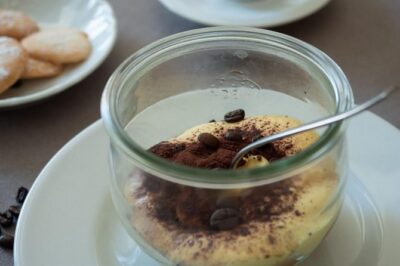
3 in 1 Cooking Class near Navona: Fettuccine, Ravioli & Tiramisu
Read our review →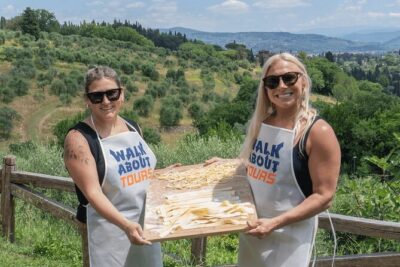
Florence Pizza or Pasta Class with Gelato Making at a Tuscan Farm
Read our review →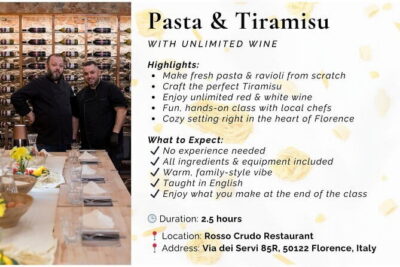
Pasta & Tiramisu Cooking Class with Unlimited Wine
Read our review →
Pasta & Tiramisu Class with Fine Wine by the Vatican
Read our review →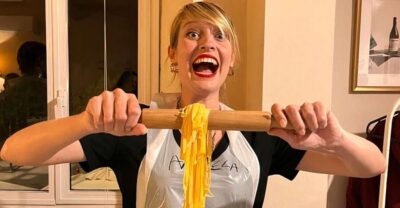
Pasta Making Class with Wine, Limoncello, and Dessert
Read our review →