
REVIEW · PASTA CLASSES WITH LUNCH
Trip Excursion to Mt. Vesuvius – Pompeii + Handmade pasta class with lunch
The most unusual part of this long day is the change of pace: you go from Roman streets and a volcano trail to a handmade pasta class at Antonino’s home, where his wife teaches the cooking and serves lunch on a terrace overlooking the port of Naples. It turns a history-heavy outing into something personal and local.
I like the private transport, which links Pompeii, Herculaneum, and Vesuvius without making you sort out southern Italy’s trains and buses. I also like the guides’ role at Pompeii and Herculaneum, where their explanations give shape to ruins that can otherwise blur together. The main drawback is the schedule: this is a very full eight- to nine-hour day, and admission to Vesuvius is not included.
Key points at a glance
- Three major sights in one day: Pompeii, Herculaneum, and Mount Vesuvius are joined by private vehicle.
- A real cooking stop: Make fresh pasta with Antonino’s wife, then sit down for lunch at their home.
- Private group service: Only your booking group takes part, with a minimum of two people.
- Useful pickup range: Collection may be arranged from accommodations, cruise ports, train platforms, and airports in the Naples, Salerno, Amalfi Coast, and Sorrento areas.
- A serious walking day: Pompeii lasts about two hours, Herculaneum about one hour and 40 minutes, and the Vesuvius walk takes about 70 minutes.
- Check ticket costs carefully: Pompeii tickets may be included if you select that option, but Vesuvius admission is extra.
Why this Pompeii and pasta day feels different
Many day trips around the Bay of Naples stay focused on ruins. This one adds a home meal and a cooking lesson, so the day has two distinct halves.
The first half is about public life in the Roman world. You walk through forums, baths, shops, houses, and theaters. The second half is more intimate. Instead of ending at a parking area or train station, you make pasta and eat lunch with a local family.
That contrast is the main reason I find this experience appealing. Pompeii can be mentally demanding. You are looking at streets, walls, painted rooms, and public buildings while trying to picture the people who used them. A cooking class gives you a relaxed ending and lets you connect with the region through food.
Antonino is the driver and may also guide Pompeii if you choose the guide option. The day can include a great deal of local context because he knows the peninsula well. His wife leads the pasta lesson, and the cooking is described as patient and easy to follow. Her name is not provided, so do not expect a formal chef-led school with a named instructor. This is presented as a home-based experience, which is precisely its appeal.
More Fresh Pasta Workshops in Italy:
- Rome: Pasta Making Class with Wine, Limoncello, and Dessert
★ 4.9 · 3,177 reviews - Pastamania – Florence Pasta Making Class
★ 5.0 · 3,050 reviews - Enjoy Spritz and Pasta Making in Piazza Navona
★ 5.0 · 1,681 reviews
Pompeii begins at Porta Marina
You meet the licensed guide at the main gate of Pompeii after tickets are purchased. The main archaeological visit lasts about two hours, with the route touching several of the park’s major sights.
The first important stop is Piazza Porta Marina, the western entrance to the ancient city. This is considered the most impressive of Pompeii’s seven gates. It is a useful place to begin because it gives you a clear sense of how the city connected with the outside world.
From there, the route moves toward the Civil Forum. This was the center of public life, with buildings tied to administration, justice, business, markets, and worship. The forum can look like a broad field of columns and broken stone if you walk through it alone. A guide helps explain how the separate buildings worked together.
The Basilica was used for business and legal matters. Its five entrances open from the forum, separated by tuff pillars. This is a short stop, but it helps explain that Pompeii was not just a residential town. It had a formal system for commerce and justice.
Shops, houses, and baths in the ancient city
The Thermopolium VI offers a smaller but more immediate detail. It was a cook-shop selling hot food. I like this stop because it brings the ancient city down to street level. Rather than focusing only on grand monuments, you see a place connected with an ordinary meal.
The Casa del Fauno is one of Pompeii’s largest houses. It covers about 3,000 square meters and dates, in its original arrangement, to the second century BC. The size tells you something about wealth and status in the city. It is not a quick glance at a single room. It is a chance to understand how an entire city block could belong to one residence.
The Casa dei Vettii adds a different view of success. This was one of Pompeii’s wealthiest and most famous houses, owned by the brothers Aulus Vettius Restitutus and Aulus Vettius Conviva, freedmen who became rich through trade. Priapus, the god of prosperity, is painted near the door. That detail gives the house a personal and slightly cheeky touch, while also showing how owners displayed their hopes for continued wealth.
The Stabian Baths reveal the Roman approach to public bathing. The complex includes a pool, a colonnade, a dressing room, and rooms for cold, warm, and hot baths. The sequence from the frigidarium to the tepidarium and then the calidarium helps you picture bathing as a social routine, not simply a quick wash.
The final Pompeii stop is the Teatro Grande. The theater uses the natural slope of the hill for its auditorium. Its seating was divided into sections by stairways and corridors, with a barrel-vaulted passage below. It is a good place to end the Pompeii visit because it shows how entertainment fit into the city’s public life.
Two hours is enough for a guided overview, but not enough for every major building. If Pompeii is your main reason for booking, you should accept that this is a highlights visit rather than a full archaeological study. Wear comfortable shoes and bring water. Bottled water is included, but you will still spend much of the morning walking over uneven ancient surfaces.
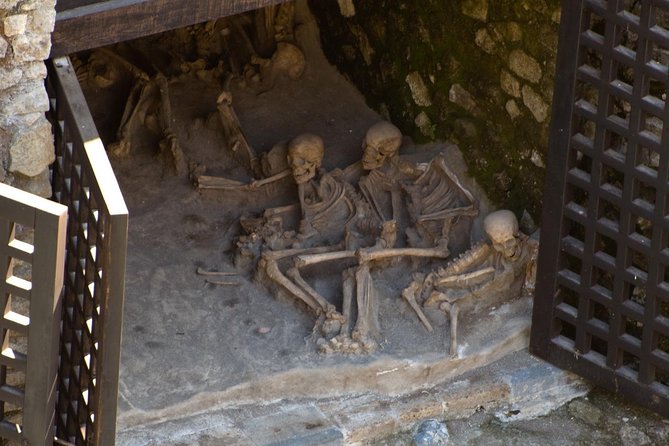
Herculaneum adds a different Roman story
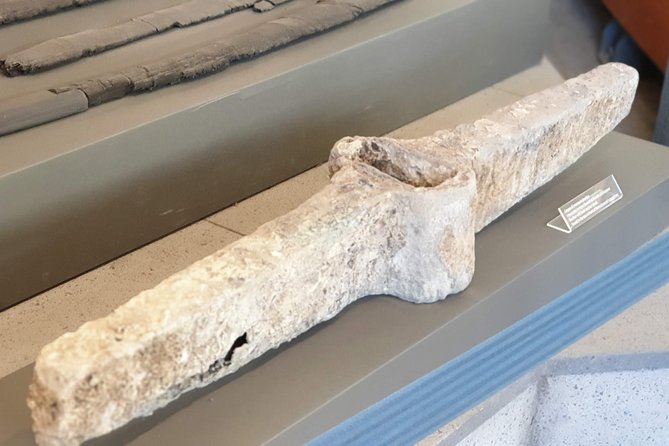
After Pompeii, the driver takes you to the Archaeological Park of Herculaneum. You meet another licensed guide at the main gate after buying tickets, and the guided visit lasts about one hour and 40 minutes.
Herculaneum is a useful companion to Pompeii because the two sites do not feel identical. The schedule does not provide a detailed list of Herculaneum buildings, so your exact route depends on the guide and site conditions. Still, the added stop gives you another view of Roman town life instead of asking Pompeii to carry the entire history portion of the day.
The drawback is time. By the time you have completed Pompeii, Herculaneum, transport, and the volcano, you may feel that the ancient sites are moving quickly. If you want long, quiet periods inside houses or time for detailed photography, a dedicated Pompeii and Herculaneum day would suit you better.
For a first visit, though, the combination makes sense. You see the larger public scale of Pompeii and then add another archaeological site before moving outdoors to Vesuvius.
More Pasta Classes with Lunch in Italy:
- Sorrento: Pasta and Tiramisu Cooking Class with Lunch and Wine
★ 4.5 · 165 reviews - Chianti: Homemade Pasta Making Class and Lunch
★ 5.0 · 58 reviews - Truffle Hunting in Chianti, pasta class and lunch
★ 5.0 · 39 reviews - Truffle hunting in Chianti with pasta cooking class & lunch
★ 5.0 · 28 reviews
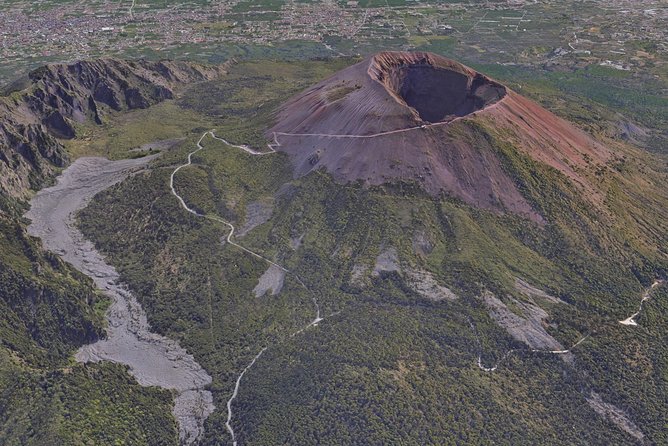
The climb to Mount Vesuvius
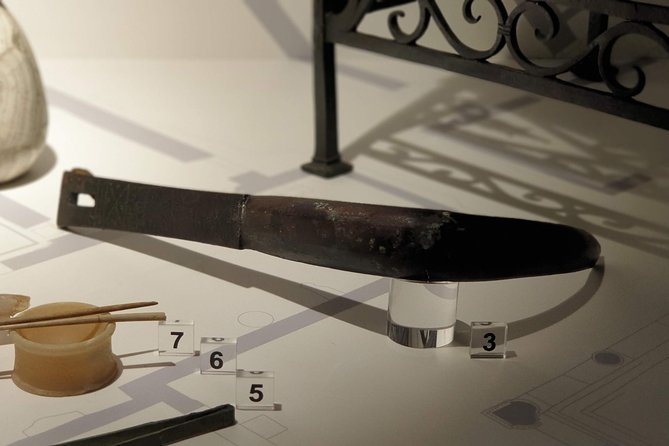
The drive from the highway to the point nearest the Vesuvius trail takes about 40 minutes. From the parking area, the walk to the summit takes roughly 35 minutes, followed by about 35 minutes back down to the vehicle. The full Vesuvius portion is listed at about two and a half hours, including transport and time at the park.
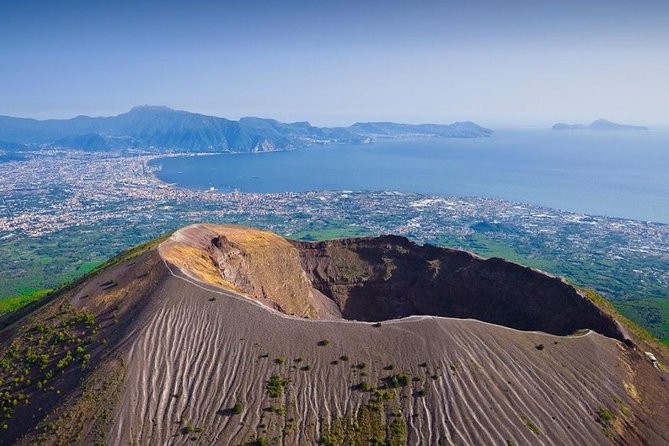
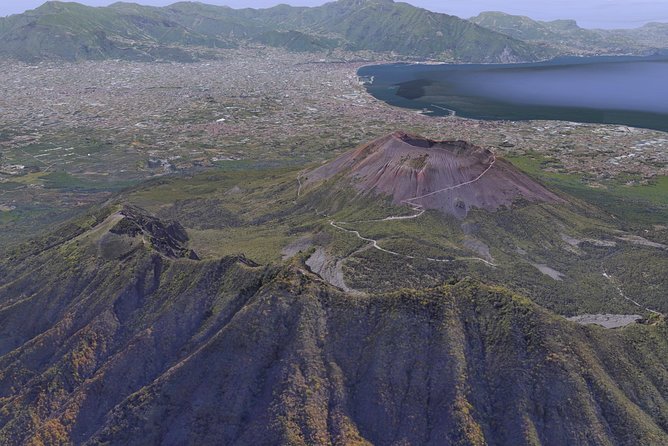
The Gran Cono nature trail begins at a square called the Piazzale, about 1,000 meters above sea level in the municipality of Herculaneum. An information point can provide details about the protected area, and you can buy a map before starting. The route leads toward the bottom edge of the volcano’s crater.
You can also look across toward Mount Somma, with the peaks of Sant’Anastasia and Punta Nasone. Punta Nasone reaches 1,132 meters and is the top of the older volcano. Across the view are the cognoli of Ottaviano and Levante.
This is not a technical mountain hike, but it is still a climb after two archaeological sites. Good shoes matter. Smart casual clothing is the stated dress code, but for the volcano I would favor practical layers and sturdy footwear over anything polished. The tour requires good weather, and Vesuvius admission is not included, so confirm the extra ticket cost before booking.
The mountain stop is valuable because it changes the scale of the day. At Pompeii and Herculaneum, you see the effects of the eruption in streets and buildings. At Vesuvius, you approach the volcano itself. The connection is clear without needing a long lecture.
The pasta class brings you into local life
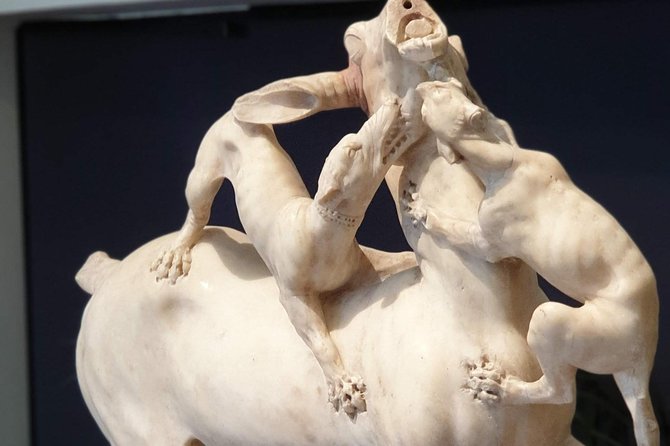
After the ruins and climb, the handmade pasta lesson provides the day’s most personal moment. You make pasta at Antonino’s private residence with his wife, then eat lunch there.
The home is on a terrace overlooking the port of Naples. That setting is a major part of the experience. You are not simply handed a plate of pasta in a restaurant. You take part in making the meal, then sit down in a private home with a view across the port.
The cooking lesson is described as easy and patient, which matters after a demanding day. You do not need an advanced cooking background. The point is participation, not a timed professional kitchen session.
The meal fee and cooking class fee are included. Bottled water is also included. The details of the menu are not specified, so you should not book expecting a particular pasta shape, sauce, dessert, or dietary arrangement unless the provider confirms it directly.
This part also explains why the tour earns its relatively high price. At $352.51 per person, it is not a cheap transfer with a quick stop. You are paying for a private driver, long-distance transport, guide services if selected, the class, lunch, and a full day that connects several difficult-to-link sights.
Still, value depends on your group. For two people, the price may feel reasonable if private pickup and transport save you a day of planning. For a larger group, ask about group discounts. For a solo visitor, the minimum booking requirement of two people means this experience is not designed for independent single bookings.
The private vehicle is the practical advantage
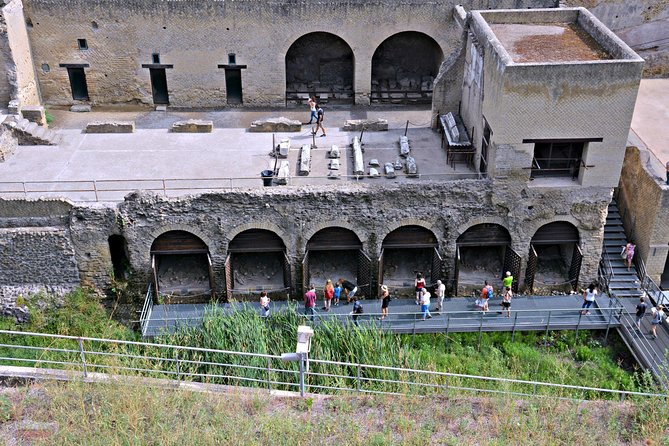
The driver can collect you from accommodation if the streets allow it. If the vehicle cannot reach your door, pickup takes place at the nearest accessible point. Cruise passengers can arrange collection from docking areas in Naples, Salerno, the Amalfi Coast, or Sorrento. Pickup can also be arranged from a train platform, and the service includes airport, port, and station pickup and drop-off.
That flexibility matters in this part of Italy. Pompeii, Herculaneum, and Vesuvius are close enough to combine but awkward enough to require planning. A private driver removes the need to manage separate tickets, transfers, and connections during a packed day.
The return is normally to the pickup point, though a different requested drop-off in the excursion area may be possible. Cruise passengers should provide the ship name, docking time, disembarkation time, and re-boarding time at booking. I would allow a generous margin before the ship’s departure because this is a long day with several stops.
The experience is private, meaning only your group participates. That is useful for families, couples, or friends who want to set their own pace within a fixed schedule. It also means the social energy depends on your own group, not on a larger bus tour.
Who should book this experience?
I would choose this day for someone who wants to see the main volcanic sights around Naples but does not want to handle the transport alone. It suits first-time visitors who want Pompeii, Herculaneum, and Vesuvius in one outing, then want a meal that feels less formal than a restaurant.
It is also a strong fit for couples and families. The private setting allows the guide to answer questions directly, while the pasta class gives children or non-history enthusiasts something active to look forward to.
I would be more cautious if your priority is a slow archaeological visit. Pompeii receives about two hours and Herculaneum about one hour and 40 minutes, so this is a broad introduction. The volcano climb also adds physical work and can make the day tiring.
The price deserves a close look. At $352.51 per person, compare it with the cost of separate transport, guides, site tickets, lunch, and a cooking lesson. Pompeii tickets may be included only when that option is selected, Herculaneum admission is listed separately, and Vesuvius tickets are extra. Those additions can change the final total.
Booking details worth checking
The tour runs daily and requires at least two people per booking. Confirmation is received at booking, and service animals are allowed. Most people can participate, but the long walking day and climb mean you should consider your own comfort with uneven ground and uphill walking.
Cancellation is free up to 24 hours before the local start time. Later cancellations and changes are not refunded or accepted under the stated policy. If poor weather forces cancellation, you are offered another date or a full refund. The same applies if the minimum number of participants is not met.
Should you book this Pompeii and Vesuvius tour?
Book it if you value private transport, a local home meal, and a wide range of sights more than a slow, specialist visit to one ruin. The strongest feature is the arc of the day: public Roman life at Pompeii, another archaeological perspective at Herculaneum, the volcano above the Bay of Naples, and fresh pasta at a private home.
Skip it if you want to spend most of your day inside Pompeii, avoid uphill walking, or keep costs as low as possible. Before paying, confirm which site tickets are included in your chosen option and budget extra for Mount Vesuvius.
For the right group, Antonino’s driving, the licensed guides, and the pasta lesson with his wife make this more than a standard ruins tour. It is a demanding day, but it finishes with food, conversation, and a view of Naples that you are unlikely to get from a tour bus.
FAQ
How long does the experience last?
The full experience lasts approximately eight to nine hours.
Where does the tour begin?
The listed meeting point is the Archaeological Park of Pompeii in Pompei, Italy. Pickup may also be arranged from eligible accommodations, ports, train platforms, and airports.
Is this a private tour?
Yes. Only your booking group participates, and at least two people are required per booking.
Are Pompeii tickets included?
Pompeii tickets are included if you select the option that includes them. The main Pompeii visit begins after tickets are purchased.
Are Mount Vesuvius tickets included?
No. Admission to Mount Vesuvius is not included.
Is lunch included?
Yes. The cooking class fee and lunch fee are included. The meal takes place after making handmade pasta at a private residence.
Is a guide included?
A professional guide is included if that option is selected. The Pompeii and Herculaneum visits are led by licensed guides at the archaeological park entrances.
What happens if the weather is poor?
Because the experience requires good weather, a cancellation caused by poor conditions results in an offer of another date or a full refund.
More Tours with Lunch in Italy
- Lunch at Masseria Pasta Making Experience
★ 5.0 · 26 reviews - Homemade Pasta Class and Lunch in the Heart of Chianti
★ 5.0 · 21 reviews - Verona: Tortellini Cooking Class and Lunch with Mamma Ivana
★ 5.0 · 20 reviews - Chianti -Fresh Pasta Making Class and Sauces with Lunch or Dinner
★ 5.0 · 19 reviews
Recently added in Italy
- Vicenza: Pasta & Tiramisu Cooking Class at a Local’s Home★ 5.0 · 5 reviews
- Verona: Tortellini Cooking Class and Lunch with Mamma Ivana★ 5.0 · 20 reviews
- Verona: Pasta Cooking Class with Wine Tasting★ 5.0 · 4 reviews
- Verona: Pasta & Tiramisu Cooking Class at a Local’s Home★ 5.0 · 16 reviews
- Verona: Prosecco and Pasta Making Class at a Local’s Home★ 5.0 · 10 reviews
- Volterra: Fresh Pasta Cooking Class at a Tuscan Farmhouse★ 5.0 · 33 reviews
- Venice: Share Your Pasta Love in a Local’s Home★ 4.8 · 20 reviews
- Verona: My Granny’s secrets making gnocchi★ 5.0 · 7 reviews
Pasta Classes with Lunch, compared.
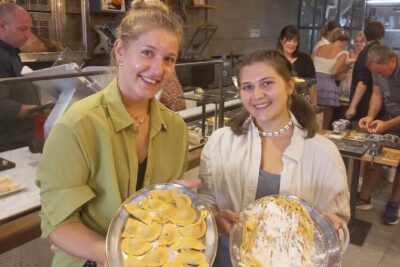
Pasta and Tiramisu Cooking Class with Lunch and Wine
Read our review →
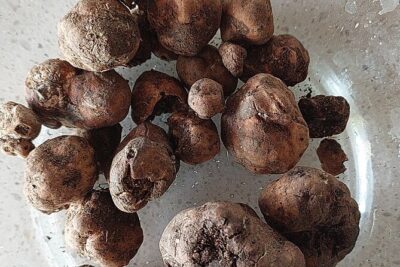
Truffle Hunting in Chianti, pasta class and lunch
Read our review →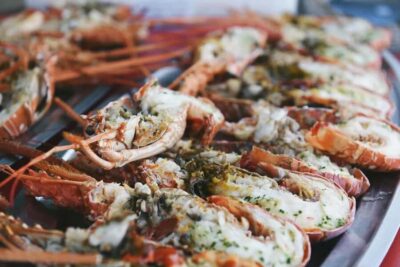
Lunch of lobster pasta in a cove in the Lavezzi Islands
Read our review →
Truffle hunting in Chianti with pasta cooking class & lunch
Read our review →
Homemade Pasta Class and Lunch in the Heart of Chianti
Read our review →
Tortellini Cooking Class and Lunch with Mamma Ivana
Read our review →Browse the lists this class appears in