
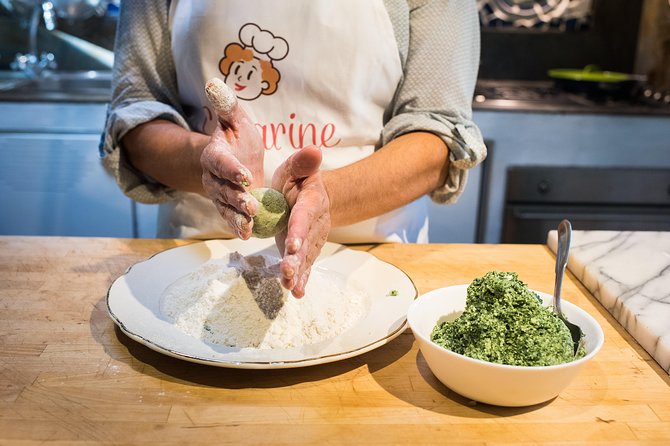
REVIEW · SMALL GROUP PASTA CLASSES
Share your Pasta Love: Small group Pasta and Tiramisu class in Pisa
The best part of this Pisa experience happens away from the Leaning Tower. You enter a local home, put your hands in pasta dough, and learn family-style cooking from a host such as Flora and Claudio or Elena. You make two pasta dishes and tiramisu, then eat them at the same table.
I like the personal scale, with no more than 12 people, and the fact that you do the work yourself instead of watching a chef perform. I also like the generous meal that can include appetizers, bread, and wine. The main caution is practical: the exact home address is not shared before booking, and two people missed the class after discovering that their host lived outside central Pisa and transport was difficult.
Key points at a glance
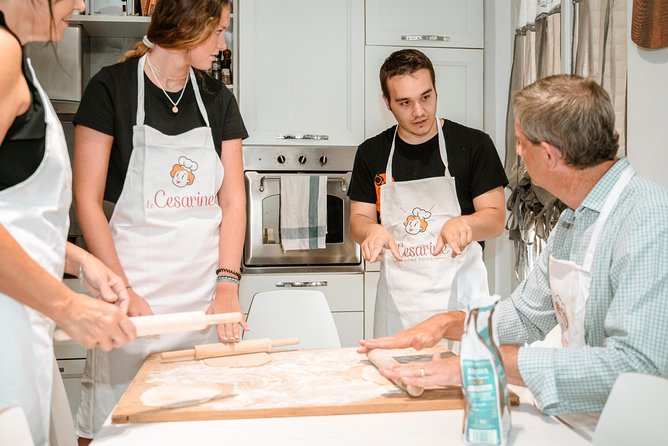
- Two kinds of pasta: You may work with different doughs, roll pasta by hand, fill it, and use a pasta machine.
- Tiramisu from scratch: Dessert is prepared during the class, then served with the pasta you made.
- A real home setting: Hosts welcome you into their own homes rather than a commercial cooking studio.
- Small-group attention: The maximum group size is 12, though some bookings have been intimate classes for just two people.
- A social meal: Hosts may add appetizers, bread, wine, and conversation to the dishes on the menu.
- Plan transport carefully: Pisa is the advertised area, but the precise home address comes only after booking.
What the three-hour Pisa class is really like
This is not a quick demonstration followed by a tasting. You are expected to cook. The class centers on two Italian staples, handmade pasta and tiramisu, and the roughly three-hour schedule gives enough time to prepare, cook, and eat.
Your Cesarina host welcomes you into a private home in Pisa. Cesarine is the name used for the local home cooks who host these classes. The tone is intended to be personal and informal, more like being invited into someone’s kitchen than attending a formal culinary school.
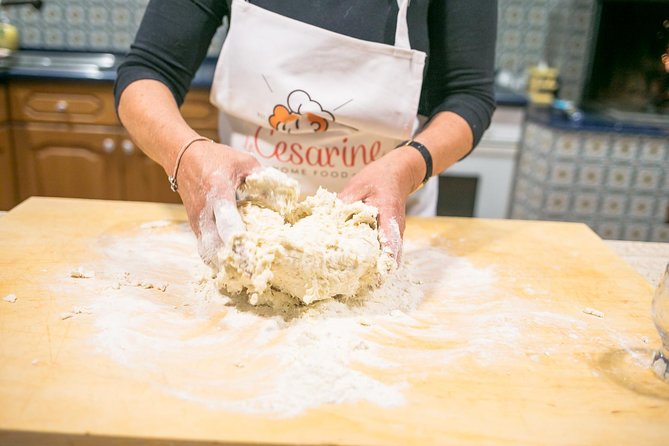
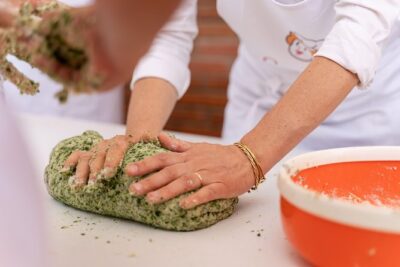
I appreciate that setup because pasta is easier to understand when you handle the dough yourself. You feel how soft it should be, see how thin it needs to become, and learn that the finished shape depends on more than simply following a printed recipe.
The exact menu can vary by host. The stated sample menu is pasta and tiramisu, while past classes have included dishes such as gnocchi with pistachio pesto and pici with tomato sauce. One host taught both an egg-based dough and a dough without egg, then showed how to roll one pasta by hand and another with a machine.
That variation is part of the appeal, but it also means you should not book expecting one fixed regional recipe. You are booking a home-cooking format, not a tightly standardized lesson.
More Tiramisu Classes in Italy:
- 3 in 1 Cooking Class near Navona: Fettuccine, Ravioli & Tiramisu
★ 5.0 · 7,376 reviews - Florence: Pasta & Tiramisu Cooking Class with Unlimited Wine
★ 4.9 · 6,708 reviews - Rome: Pasta & Tiramisu Class with Fine Wine by the Vatican
★ 4.9 · 4,852 reviews
Rolling, filling, and cooking two pastas
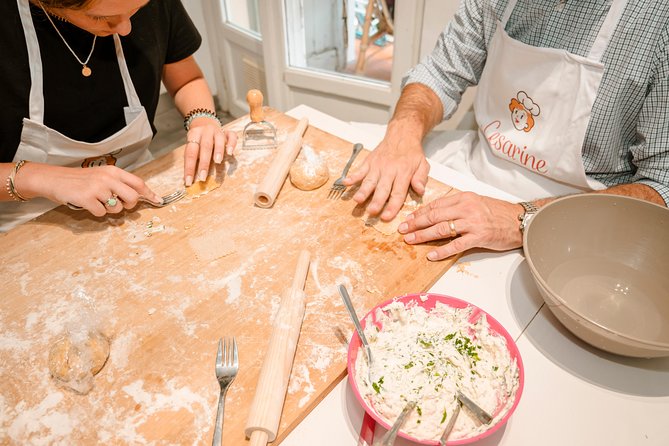
The pasta portion is the main event. You learn to make two kinds of pasta, including the basic work of mixing, rolling, shaping, and, when included by your host, filling the dough.
The hands-on steps matter. Rolling dough teaches you how thin fresh pasta should be, while filling pasta shows why moisture and portion size can make the difference between a neat parcel and a split one. If your host uses a machine for one preparation, you get a useful comparison between traditional hand-rolling and a faster modern method.
You should expect to take part at the counter or table, not simply stand back. One host was praised for being patient with a 12-year-old, which suggests the class can work well for families when children are willing to participate. You will still need to follow instructions and share the workspace with the rest of your group.
The lesson also offers small pieces of food culture that are hard to get from a restaurant menu. One host explained Italian mushrooms and garlic while cooking. Those details help connect ingredients to the way people actually use them at home.
The limitation is that the class is not described as a professional pasta certification course. You will learn useful techniques and family recipes, but the depth of instruction depends on your host, the group, and the dishes chosen that day.
Tiramisu gives the class a sweet finish
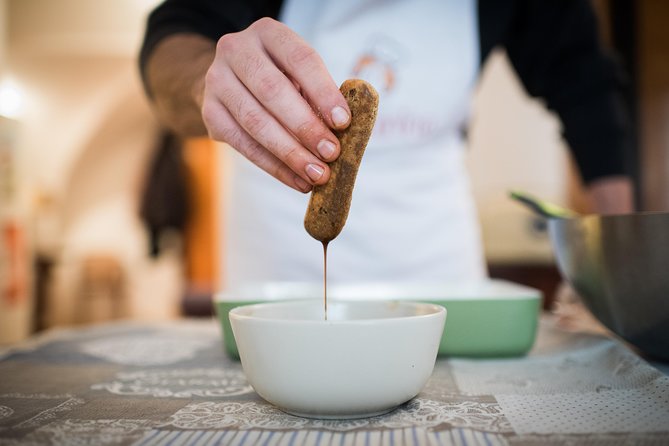
Tiramisu is prepared during the same session, then chilled or set as needed while you work on the pasta. It is a smart choice for a class because you can make dessert early, return to it later, and finish with something familiar but still rooted in home cooking.
You learn the recipe as part of the meal rather than receiving dessert as an afterthought. One participant kept the tiramisu recipe to recreate at home, which points to the practical value of this part of the lesson.
Do not expect a separate pastry course. The listed dessert is tiramisu, and the available details do not promise a choice of sweets or a broader lesson in Italian baking. If tiramisu is one of your favorite Italian desserts, though, it gives the class a satisfying second skill to take home.
The meal is part of the experience
After the work is done, you sit down to eat the two pasta dishes and tiramisu. This shared meal is where the home setting pays off. Several classes included appetizers, bread, and a bottle of wine, giving the experience the feel of a relaxed lunch or dinner rather than a lesson that ends when the burners are switched off.
Hosts Flora and Claudio were especially associated with a warm table and easy conversation. Elena was also praised for her generosity, patience, and hospitality. In some cases, the meal lasted longer because the hosts and participants enjoyed talking together.
I like this format for solo visitors. You are not left to eat alone after class, and the host’s home gives you a natural way to meet other people. At the same time, a shared table is not for everyone. If you want a fast, highly structured activity with little conversation, this may feel too social.
The food is also likely to be more varied than the simple sample menu suggests. One class included gnocchi with pistachio pesto, pici with tomato sauce, and tiramisu. Another included two styles of pasta, appetizers, bread, and white wine. These are examples from individual host menus, not promises for every booking, so treat them as possibilities.
More Small Group Pasta Classes in Italy:
- Milan: Pasta and Tiramisu Small Group Cooking Class with Wine
★ 5.0 · 660 reviews - Florence Small-Group Pasta Class with Seasonal Ingredients
★ 5.0 · 532 reviews - Bologna: Pasta and Tiramisu Small Group Cooking Class with Wine
★ 5.0 · 409 reviews - Palermo: Pasta and Tiramisu Small Group Cooking Class with Wine
★ 5.0 · 348 reviews
Why the home setting matters
Pisa has plenty of restaurants, but a restaurant meal rarely shows you how the food gets made. In this class, you see the ingredients before they become dinner, and you can ask why a host chooses a particular dough, sauce, or ingredient.
The home also puts the focus on local hospitality. Hosts welcome you into a personal space and share family cooking habits, not just a set of tourist recipes. That is especially useful if you are interested in food as a doorway into everyday life.
The tradeoff is less predictability. A cooking school can offer a fixed address, a fixed workstation, and the same menu every day. A home-hosted class may feel more personal, but the setting, route, menu, and teaching style can vary.
Past classes have featured Flora and Claudio, as well as Elena and her husband. The host assigned to you may be different. The important point is that the experience is built around the personality of the local cook, so the quality depends partly on the match between your expectations and your host’s style.
Group size, language, and pace
The class is offered in English and has a maximum of 12 people. That is small enough to allow personal attention, especially compared with a large demonstration class, but it is not a guarantee of a private lesson.
Some bookings have been just a couple and their host, creating a very intimate experience. A solo participant can also be welcomed into the group and included at the table. If your booking is larger, you may spend some time waiting for access to a rolling surface or cooking station.
The three-hour length is sensible for the planned activities. You need time to prepare tiramisu, make two pastas, cook them, and sit down to eat. I would avoid scheduling a tight onward connection immediately afterward, particularly if you are visiting Pisa from a cruise ship or have a train to catch.
The class requires a minimum number of participants. If that minimum is not reached and the activity is canceled, you are offered another date or experience, or a full refund.
The most important detail: the meeting address
The advertised starting area is Pisa, but this is not a standard meeting point outside a museum or railway station. Because the class takes place in a private home, the exact address is withheld until after booking for privacy reasons.
That detail deserves careful attention. The general Pisa location shown during booking may not be the precise home where you will cook. Two unhappy customers arrived expecting a central Pisa location, then found that the class was in another town, about 20 kilometers away in one account. Taxis were unavailable, Uber did not serve the area, and a bus would have taken too long.
This is not a minor issue if you have limited time. Cruise passengers, people without cars, and anyone relying on a train should confirm the full address and transport plan as soon as the voucher provides it. Do not assume that a booking page showing Pisa means you can walk from the Leaning Tower.
The activity is near public transportation in general, but the supplied information does not identify a specific bus route, station, or walking time. Check those details before the day of the class. If the final home is outside the city center, build in extra time and have a backup route.
Is $162.03 a fair price?
At $162.03 per person, this is not a cheap meal. You are paying for a roughly three-hour lesson, two pasta preparations, tiramisu, the ingredients, the host’s time, and a shared meal. In some cases, appetizers, bread, wine, and extended conversation add to the value.
The price makes the most sense if you want more than dinner. A restaurant could cost less, especially if you are traveling alone, but it would not teach you how to make the food or put you in a local home. A formal cooking school might offer more equipment and a fixed location, but the atmosphere could be less personal.
For couples, families, and food-focused visitors, the cost can be reasonable because the meal and lesson are combined. For a solo visitor on a tight budget, it is a significant splurge. I would book it for the experience and the recipe skills, not simply because it is an economical way to eat.
The booking pattern also matters. This experience averages about 27 days of advance booking, so I would not leave it until the last minute if the date is important to you. The cancellation policy allows a full refund when you cancel at least 24 hours before the start time. Changes or cancellations inside that window are not accepted or refunded.
Who will enjoy this most
I would recommend this class to you if you enjoy learning by doing, have several hours to spare, and want a social meal with a local host. It is a good fit for couples, solo visitors, families with children who can follow kitchen instructions, and anyone hoping to recreate Italian dishes at home.
It is also a strong choice for a repeat visitor to Pisa. After seeing the famous sights, a home meal gives you a different view of the city and its food culture.
I would think twice if you have a firm train or ship departure, need a guaranteed central location, dislike shared meals, or want a precise menu and professional kitchen setup. The address issue is the key concern. Confirm it before counting on a short walk or an easy taxi ride.
Should you book the pasta and tiramisu class?
Book it if the idea of making pasta with a local host appeals to you more than simply ordering it. The strongest features are the hands-on work, the warm home setting, and the meal afterward. Flora, Claudio, and Elena are examples of the kind of welcoming hosts connected with the experience, and past classes have included memorable extras such as wine, appetizers, and family cooking advice.
Just handle the logistics carefully. Wait for the actual address, check transportation, and leave room in your schedule. If you do that, this can be one of the more personal ways to spend an afternoon or evening in Pisa, with recipes you can use long after the Leaning Tower is out of sight.
FAQ
Where does the pasta and tiramisu class take place?
The class takes place in a carefully selected local home in Pisa. The exact private-home address is not disclosed before booking for privacy reasons and is provided after reservation.
How long does the cooking class last?
The experience lasts approximately three hours, including preparation, cooking, and eating the pasta dishes and tiramisu.
What food do I make?
The sample menu includes pasta as the main course and tiramisu for dessert. You make two kinds of pasta, including rolling and filling the dough.
Is the class offered in English?
Yes. The experience is offered in English.
How many people can join the class?
The maximum group size is 12 people. Some bookings may be much smaller, including classes with only a couple and the host.
Does the experience include a meal?
Yes. You eat the two pasta dishes and the tiramisu you prepare. Some hosts may also provide appetizers, bread, and wine.
How far in advance should I book?
This experience is booked an average of 27 days in advance. Booking ahead is sensible if you need a particular date.
What is the cancellation policy?
You can cancel for a full refund up to 24 hours before the local start time. Cancellations or changes made less than 24 hours before the experience are not accepted or refunded.
Recently added in Italy
- Verona: Tortellini Cooking Class and Lunch with Mamma Ivana★ 5.0 · 20 reviews
- Vicenza: Pasta & Tiramisu Cooking Class at a Local’s Home★ 5.0 · 5 reviews
- Verona: Pasta Cooking Class with Wine Tasting★ 5.0 · 4 reviews
- Verona: Pasta & Tiramisu Cooking Class at a Local’s Home★ 5.0 · 16 reviews
- Verona: Prosecco and Pasta Making Class at a Local’s Home★ 5.0 · 10 reviews
- Volterra: Fresh Pasta Cooking Class at a Tuscan Farmhouse★ 5.0 · 33 reviews
- Verona: My Granny’s secrets making gnocchi★ 5.0 · 7 reviews
- Venice: Share Your Pasta Love in a Local’s Home★ 4.8 · 20 reviews
Small Group Pasta Classes, compared.
Pasta and Tiramisu Small Group Cooking Class with Wine
Read our review →
Florence Small-Group Pasta Class with Seasonal Ingredients
Read our review →
Pasta and Tiramisu Small Group Cooking Class with Wine
Read our review →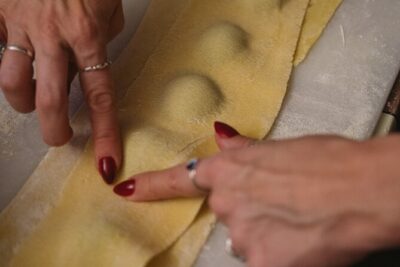
Pasta and Tiramisu Small Group Cooking Class with Wine
Read our review →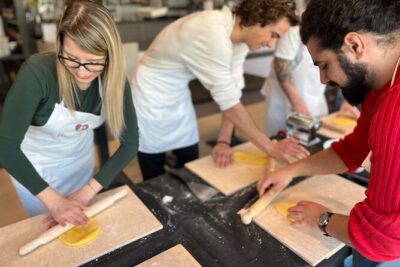
Rome Small Group Pasta Making Class with Wine and Italian Chef
Read our review →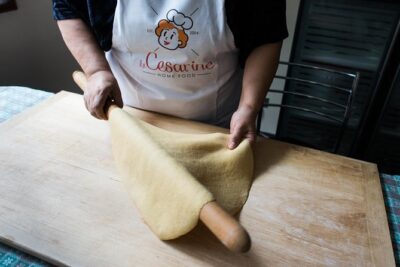
Small Group Pasta and Tiramisu Class at Local’s Home in Venice
Read our review →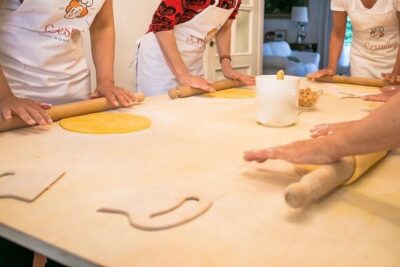
Cesarine: Small group Pasta and Tiramisu class in Varenna
Read our review →Browse the lists this class appears in