
REVIEW · FAMILY PASTA CLASSES
Piedmont Family Home Cooking: Fresh Pasta, Dessert & Wine
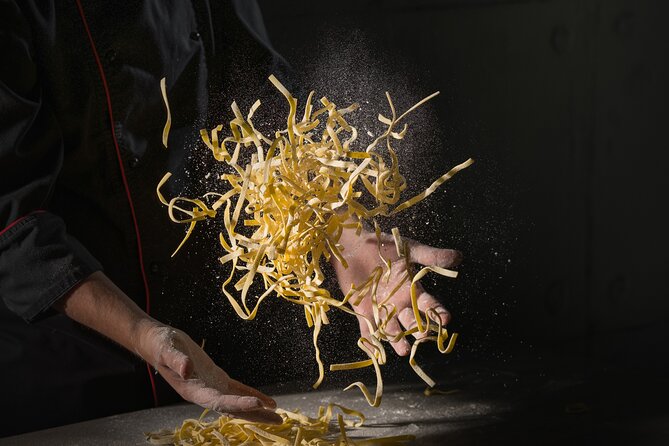
Piedmont’s most personal food lesson starts with a pile of flour and a remarkable number of egg yolks. In Rodello, you’ll turn them into tajarin, the Langhe’s thin, fine-cut egg pasta, then sit down to eat what you made with local antipasti, hazelnut cake, zabaglione, and wine. It is cooking as a shared meal, not a staged demonstration.
I like the small maximum of eight people, which gives a family or couple room to work without getting lost at the counter. I also like the easygoing, family-friendly teaching style associated with Davide Prandi, who has drawn children into the cooking and helped beginners feel at ease. The main consideration is location: you must reach Via S. Rocco 4 in Rodello yourself, and the experience is most useful if you can spare about three hours for a leisurely meal.
Key points at a glance
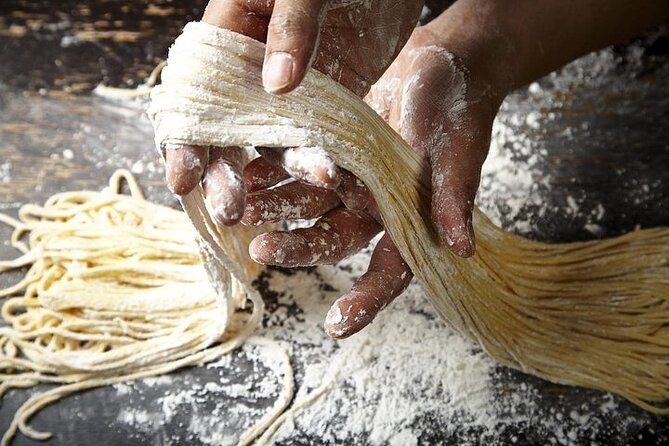
- Make tajarin by hand: Mix an egg-rich dough, roll it thin, and cut the pasta into Piedmont’s signature fine strands.
- Learn zabaglione properly: Whisk egg yolks, sugar, and Marsala over a bain-marie until the cream turns soft and smooth.
- Eat a real Langhe-style lunch: Expect local antipasti, crostini, rustic bread, your handmade pasta, and hazelnut cake.
- Small group, personal pace: The class accepts no more than eight people, a useful size for questions and family participation.
- Wine is part of the meal: One glass of wine is included with the three-course lunch.
- Good for children and beginners: The hands-on format has worked well for families, including children as young as six.
Why tajarin is the right Piedmont lesson
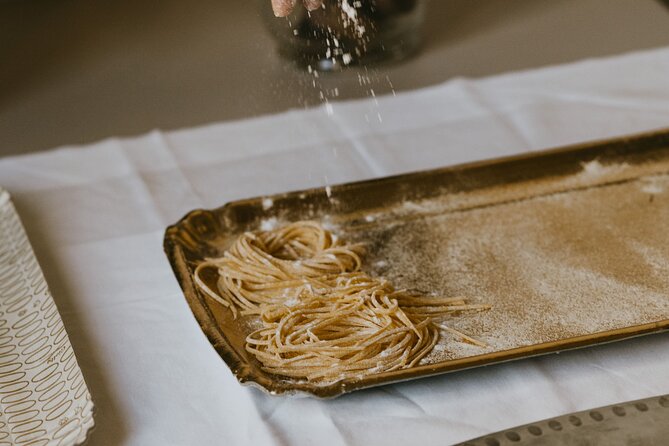
Piedmont has plenty of famous food, but tajarin gives you a direct way to understand the region’s cooking. This is not just pasta cut into a familiar shape. The dough uses flour and many egg yolks, creating a smooth, elastic mixture with a deep golden color and a delicate bite.
You begin by working the dough until it comes together. That stage rewards patience more than strength. You will feel the mixture change as it becomes smoother, and the chef will show you how the dough should behave before it is rolled.
Next comes the rolling. The sheet must become very thin, then it is folded or handled in a way that allows you to cut the strands finely. Tajarin is known for its narrow shape, so this is the point where your hands matter. A little unevenness is part of the fun, but the lesson gives you practical tips for getting more consistent strips at home.
I like this format because you are learning a dish with a clear local identity rather than making generic pasta. You leave with a technique you can repeat, even if your first handful of strands looks more rustic than restaurant-ready.
More Fresh Pasta Workshops in Italy:
- Rome: Pasta Making Class with Wine, Limoncello, and Dessert
★ 4.9 · 3,177 reviews - Pastamania – Florence Pasta Making Class
★ 5.0 · 3,050 reviews - Enjoy Spritz and Pasta Making in Piazza Navona
★ 5.0 · 1,681 reviews
The cooking class at Via S. Rocco 4
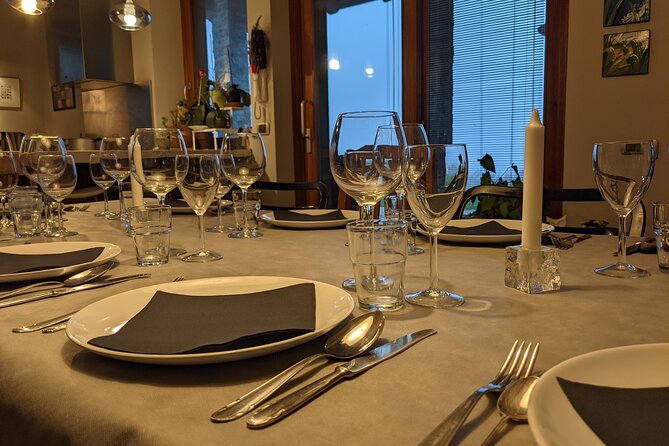
The meeting point is Via S. Rocco 4 in Rodello, in the province of Cuneo. The setting is a home rather than a formal cooking school, and that changes the mood. You are being welcomed into a working kitchen and then invited to sit down for lunch in the same place.
The kitchen has been described as modern and clean, which matters when several people are handling dough, eggs, flour, and dessert. The class is offered in English, and the group limit of eight should keep the instruction close enough for you to follow each step.
Names connected with the teaching and hosting include Davide Prandi, Andrea and his wife, and Viviana. The exact host you meet may depend on the scheduled session, but the experience is built around local personal instruction rather than a large commercial class.
If you are cooking with children, tell them in advance that they will be involved in the work. The format has proved suitable for families, and a six-year-old has enjoyed taking part. Still, this is a real cooking session, not a separate children’s activity, so adults should expect to help with supervision.
Making tajarin from flour and egg yolks
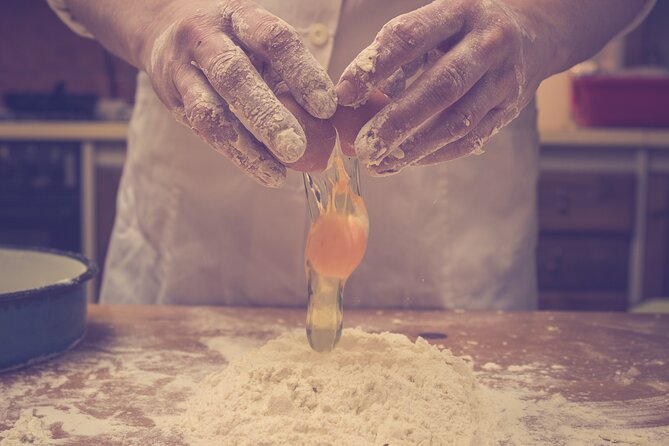
The first major task is the pasta. You combine flour with a generous quantity of egg yolks and work the dough until it becomes smooth and elastic. This is a useful lesson in texture because the recipe gives you a clear sense of what fresh pasta dough should feel like.
The chef will help with the details that are easy to miss in a recipe. You will learn how much pressure to use, how thin the sheet should be, and how to handle the dough before cutting it. Those small corrections are the reason a class is more useful than simply following a printed formula.
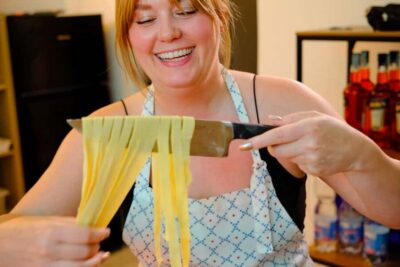
Then you cut the pasta into tajarin. The strands are traditionally fine, so the work requires care. If you have made broad ribbons before, this feels more precise. The payoff comes at lunch, when you can identify the pasta on your plate as something you shaped yourself.
The description gives the main course simply as handmade pasta, with tajarin as the central dish. The exact sauce is not specified, so do not book this expecting a particular named sauce. The important point is the pasta-making process and the chance to eat it soon after preparation.
Whisking zabaglione over a bain-marie
Dessert begins before lunch, with zabaglione. You combine egg yolks, sugar, and Marsala wine, then whisk the mixture over a bain-marie. This gentle water-bath method helps the cream thicken without putting the eggs directly over strong heat.
The texture is the lesson here. Zabaglione should become soft and velvety, not grainy or stiff. You will see why steady whisking matters, and you will learn when the mixture has reached the right consistency.
The finished cream is served with a hazelnut cake from the Langhe. The cake is enriched and drenched with the freshly made zabaglione, pairing two local flavors in one course. Piedmont is closely associated with hazelnuts, so this dessert gives the meal a fitting regional finish rather than a generic pastry.
This part may be especially rewarding if you do not consider yourself a confident cook. It uses a short ingredient list, but the technique makes the difference. You can repeat it at home, provided you are willing to keep whisking and watch the heat.
More Home Cooking Classes in Italy:
- Pastamama, Home Cooking Classes at Grace’s Home
★ 5.0 · 521 reviews - Small Group Pasta and Tiramisu Class at Local’s Home in Venice
★ 4.5 · 236 reviews - Catania: Pistachio Ravioli, Pasta Home Cooking Class w/ Wine
★ 4.7 · 204 reviews - Cesarine: Small group Pasta and Tiramisu class in Varenna
★ 5.0 · 195 reviews
A three-course lunch built around your work
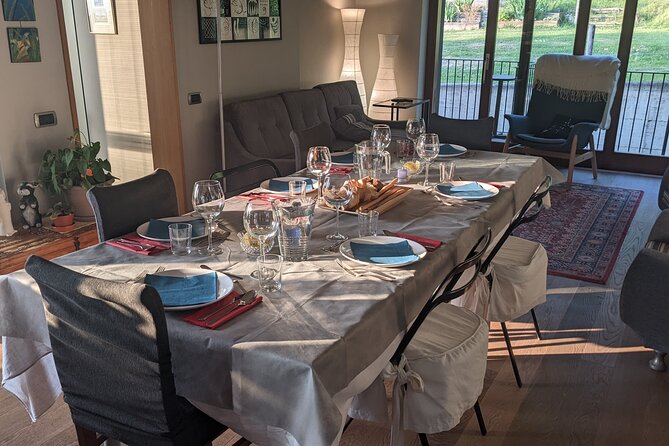
After the preparation, you sit down to eat. The meal includes an antipasto of local Langhe products, crostini, and rustic bread. This opening course gives you a taste of the area beyond pasta and lets you settle into the social side of the experience.
The main course is the tajarin you prepared. That timing is important. Fresh pasta has a different pleasure when it moves quickly from the work surface to the plate, and you get to compare the result with the texture you were aiming for during the lesson.
Dessert is Langhe hazelnut cake with your zabaglione. One glass of wine is included, adding a local drink to the meal without turning the class into a wine tasting. The focus stays on food, conversation, and the pleasure of eating what you have just made.
The meal is listed as three courses: appetizer, fresh pasta, and dessert. The menu description also mentions four courses in one account, but the stated inclusion is a three-course lunch. Plan around the three-course format, with the bread and crostini served alongside the antipasto.
What the $155 price really covers
At $155 per person, this is not a cheap meal, but it is more than a restaurant lunch. The price includes a hands-on class, the ingredients and instruction, a three-course lunch, and one glass of wine. You also receive a small-group setting rather than a large demonstration.
The value is strongest if you want to learn a skill and meet local hosts. A standard meal would let you taste tajarin, but it would not show you how much egg yolk goes into the dough, how thin to roll it, or how to judge zabaglione over a bain-marie.
The price is less compelling if your only goal is to eat. You will spend about three hours on the experience, and part of that time is active work. That is a good use of time for food-minded visitors, but not for anyone looking for a quick stop between sightseeing plans.
The class is often reserved about 47 days ahead on average. That is a useful sign that you should not leave it until the last day of a Piedmont stay, especially if you need a particular date or are traveling as a family.
Why the eight-person limit matters
A maximum of eight people creates a better balance than a large group. You should have a reasonable chance to see the techniques, ask questions, and get your hands into the dough without waiting through a long line of other participants.
It also helps the lunch feel personal. The hosts can spend time talking about the food and the region, and you can share the meal without the room feeling like a classroom cafeteria.
The small size does not guarantee a private class. If you want the kitchen entirely to yourself, the available information does not promise that. Book it for the close scale and personal instruction, not for guaranteed exclusivity.
A strong choice for families and first-time cooks
This experience suits families particularly well. Children can take part in shaping pasta and helping with dessert, and the cooking gives them a clear task instead of asking them to sit quietly through a food talk.
A six-year-old has enjoyed the activity, but age alone does not tell you how your own child will manage the class. The work involves flour, eggs, rolling, cutting, and hot preparation for the zabaglione, so adults should stay involved.
You do not need to arrive as an experienced cook. The class is designed to teach the process, and the hosts have been described as patient with beginners. If you already make pasta often, you may find the basic dough familiar, but the regional focus and tajarin cutting still give the lesson a distinct Piedmont angle.
Couples and friends can also make good use of it. The shared work gives you something to do together, while lunch provides time to slow down and talk.
Practical details before you book
The activity starts and ends at Via S. Rocco 4, 12050 Rodello CN, Italy. It does not include transportation to the meeting point, so check your route before confirming the booking. No transport service is listed as part of the experience.
The class lasts about three hours. Allow the full window, since the meal comes after the cooking rather than replacing it. A tight connection or an important afternoon reservation could make the schedule uncomfortable.
The activity is offered in English and uses a mobile ticket. Confirmation is provided when you book. Tell the provider about dietary requirements in advance, since the menu relies heavily on eggs, wheat, dairy-related ingredients may be present in local products, and wine appears in both the cooking and meal.
The cancellation policy is forgiving if your plans change early. You can cancel for a full refund up to 24 hours before the local start time. Cancellations or changes made less than 24 hours ahead are not accepted for a refund.
What this experience does not promise
The activity gives you a clear food plan, but not every detail is fixed. The pasta is the main dish, while the exact sauce is not named. The hosts and their roles may also vary, with Davide Prandi, Andrea and his wife, and Viviana associated with the sessions described.
You should not expect a full tour of Piedmont or a formal wine education. The setting is in the Piedmont area near Liguria, but the activity itself stays focused on cooking and eating at the Rodello meeting point.
You also should not expect a long list of menu choices. This is a traditional meal built around tajarin, local antipasti, hazelnut cake, zabaglione, bread, crostini, and a glass of wine. If you need a highly flexible menu, contact the provider about your dietary needs before booking.
Should you book it?
Book this class if you want an intimate Piedmont food experience with real hands-on work. It is especially well suited to families, first-time cooks, and anyone who would rather learn tajarin than simply order it in a restaurant.
I would think twice if you are not interested in cooking, if you need transport from another town, or if $155 feels too high for a three-hour meal activity. For everyone else, the combination of small-group teaching, local ingredients, fresh pasta, zabaglione, and a home lunch offers a useful taste of Langhe food culture.
The best reason to go is simple: you do not just hear about Piedmont’s pasta traditions. You make the dough, cut the strands, whisk the dessert, and then eat the result at the same table.
FAQ
Where does the cooking class begin?
The experience begins at Via S. Rocco 4, 12050 Rodello CN, Italy.
Where does the activity end?
The activity ends back at the meeting point in Rodello.
How long does the experience last?
The cooking class and meal last approximately three hours.
What language is the class offered in?
The experience is offered in English.
How many people can join the class?
The activity has a maximum of eight participants.
What food will I prepare?
You will prepare tajarin, a fine-cut egg pasta from the Langhe, and zabaglione, a cream made with egg yolks, sugar, and Marsala wine.
What food is included in the meal?
The meal includes Langhe antipasti with crostini and rustic bread, the handmade pasta, and Langhe hazelnut cake with zabaglione.
Is wine included?
Yes. One glass of wine is included.
Can I cancel for a full refund?
Yes. You can cancel at least 24 hours before the experience start time for a full refund. Changes or cancellations made less than 24 hours ahead are not accepted for a refund.
More Family Pasta Classes in Italy
- Rome: 2-in-1 Family-Friendly Pasta & Tiramisu Cooking Class
★ 4.9 · 249 reviews - Forage Herbs, Make Grandma’s Ravioli & Tiramisù w Our Family
★ 4.8 · 97 reviews - Hands-On Pasta and Tiramisu Class in Positano with Local Family
★ 4.5 · 88 reviews - Verona: Authentic Pasta Making Class with a Local Family
★ 5.0 · 64 reviews
More Pasta Classes with Wine in Italy
- Florence: Pasta Cooking Class with Unlimited Wine
★ 4.9 · 10,285 reviews - Florence: Pasta & Tiramisu Cooking Class with Unlimited Wine
★ 4.9 · 6,708 reviews - Florence: Pasta Cooking Class with Unlimited Wine
★ 5.0 · 6,413 reviews - Rome: Pasta & Tiramisu Class with Fine Wine by the Vatican
★ 4.9 · 4,852 reviews
Recently added in Italy
- Verona: Tortellini Cooking Class and Lunch with Mamma Ivana★ 5.0 · 20 reviews
- Vicenza: Pasta & Tiramisu Cooking Class at a Local’s Home★ 5.0 · 5 reviews
- Verona: Pasta Cooking Class with Wine Tasting★ 5.0 · 4 reviews
- Verona: Pasta & Tiramisu Cooking Class at a Local’s Home★ 5.0 · 16 reviews
- Verona: Prosecco and Pasta Making Class at a Local’s Home★ 5.0 · 10 reviews
- Volterra: Fresh Pasta Cooking Class at a Tuscan Farmhouse★ 5.0 · 33 reviews
- Venice: Share Your Pasta Love in a Local’s Home★ 4.8 · 20 reviews
- Verona: My Granny’s secrets making gnocchi★ 5.0 · 7 reviews
Family Pasta Classes, compared.
2-in-1 Family-Friendly Pasta & Tiramisu Cooking Class
Read our review →
Forage Herbs, Make Grandma’s Ravioli & Tiramisù w Our Family
Read our review →
Hands-On Pasta and Tiramisu Class in Positano with Local Family
Read our review →
Authentic Pasta Making Class with a Local Family
Read our review →Forage Herbs, Make Grandma’s Ravioli & Tiramisù w Our Family
Read our review →
Milk the Cow & Make Mozzarella and Gnocchi with Our Family
Read our review →Milk the Cow & Make Mozzarella and Gnocchi with Our Family
Read our review →
2-Hour Guided Family Pasta or Pizza Cooking Class in Acqui Terme
Read our review →Browse the lists this class appears in