
REVIEW · HOME COOKING CLASSES
Share Your Pasta Love in Local’s Home in Palermo
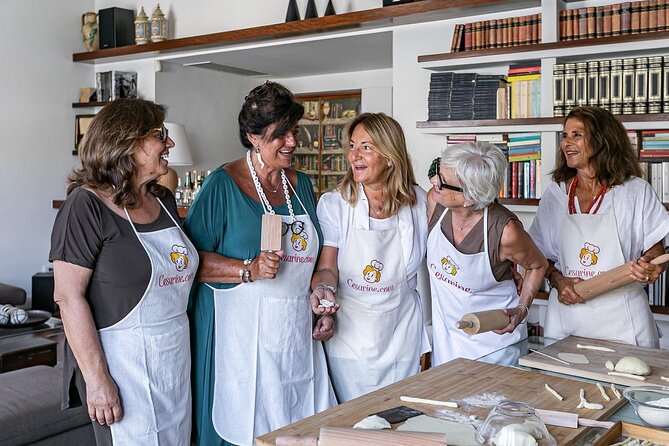
Palermo’s best pasta lesson may happen far from a restaurant kitchen. You enter a local home, meet your host over a small aperitif, then mix, knead, and shape three Sicilian pasta dishes before sitting down to eat them. Hosts have included Rosa Maria, Pina, Velia, Rosaria, and Antonio, so the personality of the class can vary.
I like two things right away: you learn by handling the dough instead of simply watching, and the meal is prepared with the people who taught you. The small group limit of 10 also keeps this more personal than a standard cooking school. The main consideration is time. At about 90 minutes, this is a compact introduction, not a long market visit, multi-course feast, or full afternoon workshop.
Key points to know before booking
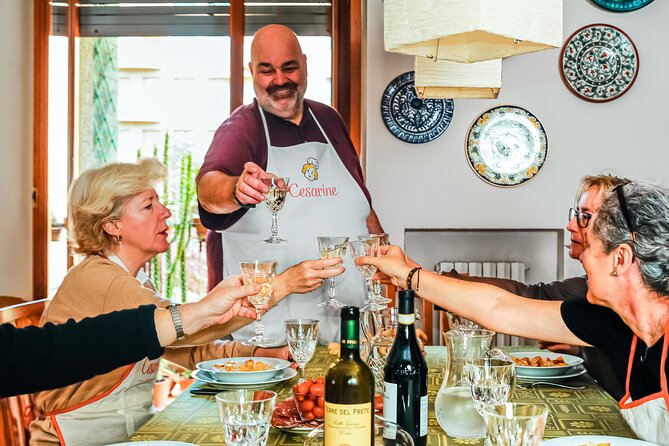
- Three pasta dishes in a Palermo home: You may work with busiate, ravioli, tagliatelle, gnocchi, anellini, or another traditional shape.
- Hands-on instruction: You mix, knead, shape, and cook rather than simply observing a demonstration.
- Family-style welcome: A small appetizer and aperitif begin the class, followed by your homemade meal and wine.
- Hosts make the difference: Past sessions have been led by Rosa Maria, Pina Liguori, Velia Figuccia, Rosaria, and Antonio.
- Small English-speaking group: The activity is offered in English and accepts no more than 10 people.
- Simple logistics: It starts and ends in Palermo, is near public transportation, and costs $95.18 per person.
Entering a Palermo kitchen
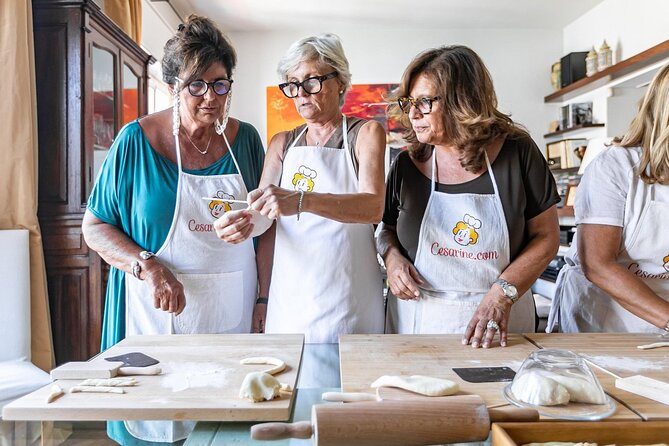
The appeal here is not a grand cooking studio with rows of identical workstations. You are welcomed into a real home, where the lesson unfolds around the kitchen table and the host’s own habits shape the meal.
That setting matters. In a restaurant class, you often learn a polished version of a recipe. In a home, you are more likely to hear the practical details that rarely make it into a cookbook: how the dough should feel under your fingers, when it has been kneaded enough, or how a family has always made a certain sauce.
Hosts have included Rosa Maria, Pina Liguori, Velia Figuccia, Rosaria, and Chef Antonio. The name on your booking may differ, and the tone can change from one home to another. That is not a flaw, but it is worth understanding. You are booking a home-cooking format rather than a fixed restaurant-style production with one permanent chef.
The welcome begins with a traditional Italian greeting, a small appetizer, and an aperitif. It gives you time to meet the host and the other participants before flour covers the table. Some past sessions included extra snacks, local cheeses, and regional wines while the dough was being prepared.
More Home Cooking Classes in Italy:
- Pastamama, Home Cooking Classes at Grace’s Home
★ 5.0 · 521 reviews - Small Group Pasta and Tiramisu Class at Local’s Home in Venice
★ 4.5 · 236 reviews - Catania: Pistachio Ravioli, Pasta Home Cooking Class w/ Wine
★ 4.7 · 204 reviews
Mixing and shaping three pasta dishes
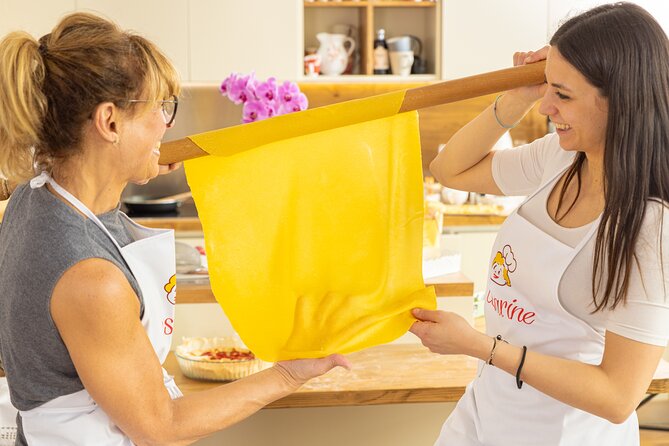
The working part of the class is the heart of the visit. You mix the dough, knead it, and learn how to shape several kinds of pasta. The menu is not locked to one universal set of dishes. Depending on the host, you might make scialatielli, fettuccine, ravioli, busiate, tagliatelle, gnocchi, or anellini.
That flexibility is useful for a short class. You get a sample of different shapes and methods rather than spending the whole session repeating one form. Ravioli teaches filling and sealing. Long pasta teaches rolling and cutting. Gnocchi brings a different texture and handling technique. Busiate and anellini introduce shapes that may be less familiar if your home cooking is based mostly on spaghetti.
The exact three dishes depend on the host and the day. Past menus have included gnocchi with a cheese cream, pasta alla Norma, sausage with tomato sauce, ravioli, busiate, and tiramisu served as an added sweet course in some sessions. You should not assume every item will appear during your booking, but the range gives you a good idea of the Sicilian focus.
The useful lesson is tactile. Pina Liguori, for example, has taught participants to feel when the dough reaches the right texture rather than relying only on a timer or written measurement. That is the sort of advice you can use later, when your dough looks too dry, too sticky, or simply not quite right.
You will also pick up sauce techniques. Tomato, garlic, basil, sausage, cheese, and eggplant flavors have all appeared in the cooking shared by hosts. Pasta in Sicily is often about matching the shape, sauce, and texture, not just boiling noodles and pouring something over them. Even a short class can show you why the shape matters.
From flour-covered hands to the dining table
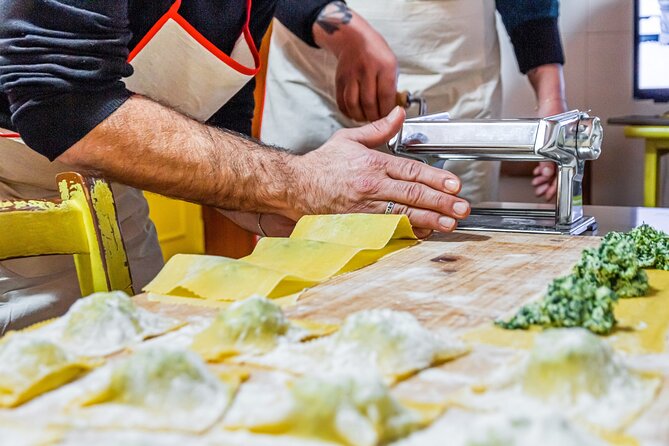
Once the pasta is ready, you sit down and eat what you made. This is more than a final tasting. It lets you see the result of the techniques while the instructions are still fresh in your mind.
The meal is served with wine, generally one bottle for every three participants. A small appetizer and aperitif come first, and the meal follows the pasta preparation. The overall format is relaxed and social, but the 90-minute duration means the pace needs to stay fairly brisk.
Do not expect a long Sicilian banquet with several hours of conversation. The value is concentrated: welcome, instruction, cooking, and a shared meal all fit into a short visit. If you want a full evening built around many courses, this may feel brief. If you have limited time in Palermo, the compact format is a real advantage.
Past sessions have included a simple tiramisu lesson or tasting, but tiramisu is not listed as part of the fixed sample menu. Treat it as a possible extra rather than a guaranteed course.
Why the home setting matters
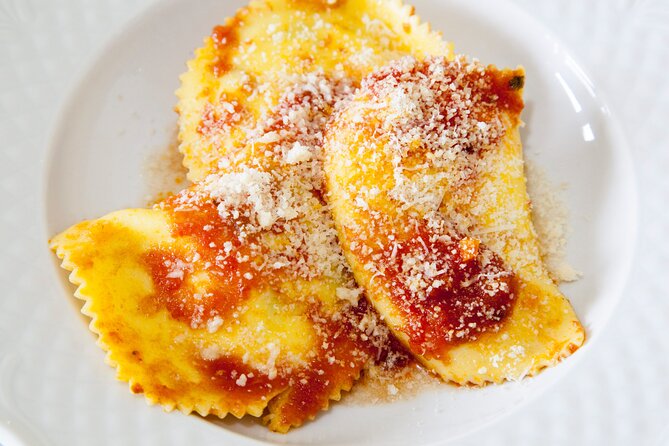
A home meal changes the tone. You are not only learning a recipe, you are seeing how a local cook organizes ingredients, manages the dough, and serves the finished food. The kitchen becomes a place for conversation about Palermo and Sicilian food traditions.
Pina has welcomed participants into an apartment with views toward the mountains and sea, while other hosts have shared meals with family members. Rosa Maria’s home cooking sessions have included her husband at the table. These details make the format feel personal, but they also remind you that each class may have its own rhythm and setting.
The best reason to choose this activity is the chance to learn from a person, not just a printed recipe. A recipe can tell you to knead until smooth. A host can show you what smooth means. A video can demonstrate a fold. A person standing beside you can correct your hands and explain why the dough is behaving badly.
You also leave with ideas you can use at home. One past session provided recipes and notes, though you should not assume that every host provides the same materials. It is worth asking your host if you want written recipes for the dishes you prepare.
Other Italy classes worth putting on the shortlist
- Florence: Pasta Cooking Class with Unlimited Wine
★ 4.9 · 10,285 reviews - 3 in 1 Cooking Class near Navona: Fettuccine, Ravioli & Tiramisu
★ 5.0 · 7,376 reviews - Florence Pizza or Pasta Class with Gelato Making at a Tuscan Farm
★ 5.0 · 6,801 reviews - Florence: Pasta & Tiramisu Cooking Class with Unlimited Wine
★ 4.9 · 6,708 reviews
The food is Sicilian, not generic Italian
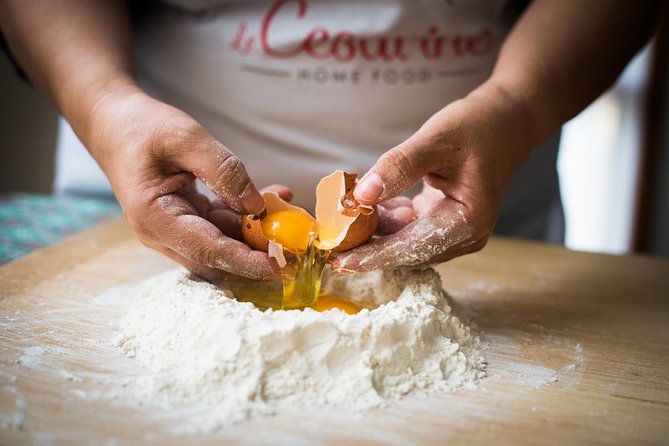
The menu points toward Sicily rather than a broad, all-of-Italy cooking class. Pasta alla Norma, for example, reflects the familiar Sicilian pairing of tomato, eggplant, and cheese. Busiate and anellini also give the lesson a regional feel that you may not get in a generic fettuccine workshop.
That regional focus is a strong reason to book this in Palermo. You can find pasta-making classes in many Italian cities, but the local shapes and sauces help connect the lesson to Sicily. You are not merely learning how to make fresh pasta. You are learning how one part of Italy uses it.
The meal may also include local cheeses, wine, garlic, tomatoes, basil, and other regional ingredients. The supplied information does not specify a single fixed menu, so anyone with strict dietary needs should confirm the arrangements before booking.
Is $95.18 a fair price?
At $95.18 per person, this is not the cheapest way to eat pasta in Palermo. You could order several plates of pasta for less, and you could buy ingredients for a home meal at a lower cost.
The comparison is not really with a restaurant dinner. You are paying for instruction, food, a local setting, conversation, and the chance to prepare several dishes under supervision. For someone who values food skills and personal contact, the price is reasonable, especially since it includes the meal and wine.
The value is strongest if you participate fully. If you plan to stand back and watch, the cost feels less attractive. Roll up your sleeves, ask questions, and pay attention to the host’s hand movements. That is where the useful part of the fee goes.
The small maximum of 10 people also helps. It is large enough for a social meal but small enough that the instructor can watch your dough and answer questions. A private class may be available in some cases, as one past booking with Velia Figuccia shows, but private arrangements should not be assumed from the standard price.
Timing, meeting point, and group size
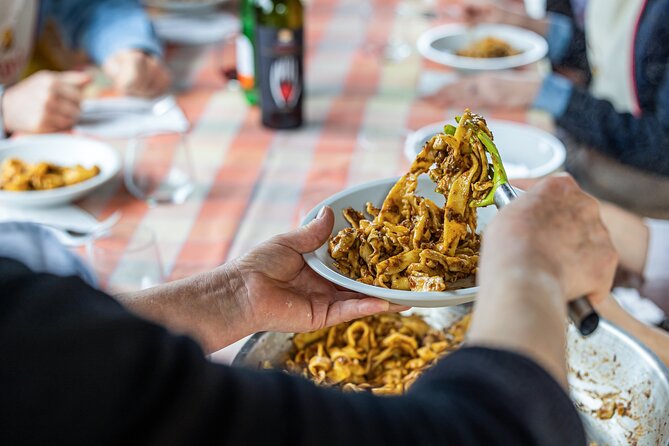
The class lasts about one hour and 30 minutes. It begins and ends at the Palermo meeting point, with no separate final drop-off listed. The meeting point is near public transportation, which makes the activity practical if you are staying in the city center or building it into a day of sightseeing.
The exact home address and host details should be checked in your booking confirmation. Confirmation is provided when you book, and the activity is offered in English.
A group of up to 10 people is a good middle ground. You get the energy of a shared class without the scale of a large culinary tour. Still, a home kitchen is not a theatre. Space may feel close when everyone is rolling dough, so this works best if you are comfortable sharing a table and taking turns.
The activity has also suited families. A past class included six-year-old twins, while another group included people in their seventies and a 10-year-old. The practical point is that several generations can take part, though younger children will need to stay involved and follow kitchen instructions.
A smart choice for cruise stops
This class can work well during a short Palermo port visit because it is compact and begins and ends in the city. One past group chose it during a Mediterranean cruise and considered it the best activity of its trip.
You still need to allow time for getting from the port to the meeting point and returning to your ship. The supplied details do not provide a pickup service, port transfer, or exact travel time, so do not schedule your return too tightly. Confirm the meeting location before the day of the class.
For a full-day Palermo visit, the lesson fits neatly between other sights. You can spend the morning exploring markets or churches, then use the pasta class for a slower meal and a change of pace. Since the activity ends where it starts, you are not left across town after lunch.
Who will enjoy this most?
I would choose this for you if food is one of the ways you connect with a place. It is also a strong pick for couples, families, multigenerational groups, and anyone who prefers a local home to a formal cooking school.
It suits beginners because the host demonstrates each step and lets you practice. It also works for experienced home cooks who want Sicilian shapes, sauces, and texture tips that are difficult to learn from a book.
You may want something else if you need a fixed menu, a long culinary lecture, or a large professional kitchen. The menu can vary, the host can vary, and the class is short. That flexibility is part of the charm, but it means you should not book expecting a precisely scripted event.
The wine portion also deserves a quick note. One bottle is provided for every three participants, so this is a food-focused class with wine, not a wine tasting. Anyone who does not drink should still find the central activity useful, but the included wine will not add much value.
Booking and cancellation details
The experience is offered in English, uses a mobile ticket, and provides confirmation at the time of booking. You can cancel for a full refund if you do so at least 24 hours before the local start time.
Cancellations or changes made less than 24 hours before the start are not accepted for a refund. Because the class is held in a home with a small capacity, check your schedule carefully before reserving.
Should you book this Palermo pasta class?
Book it if you want a personal meal, practical pasta skills, and a taste of Sicilian home cooking in a small group. The strongest parts are the hands-on dough work, the chance to learn from hosts such as Rosa Maria or Pina, and the simple pleasure of eating food you prepared together.
Skip it if you want a long, formal cooking course or a guaranteed menu with one named chef. The host and dishes can vary, and 90 minutes goes quickly.
For most people who enjoy food and local contact, I think the $95.18 price is justified. You are not just buying lunch. You are buying the chance to learn how a Palermo cook handles pasta, then carry that skill home.
FAQ
How long does the pasta class last?
The activity lasts approximately one hour and 30 minutes.
Where does the experience begin and end?
It starts in Palermo, in the Province of Palermo, Sicily, and ends back at the meeting point.
What kinds of pasta might I make?
Possible dishes include busiate, ravioli, tagliatelle, gnocchi, anellini, scialatielli, and fettuccine. The exact selection can vary.
Is wine included?
Yes. The meal includes wine, with one bottle provided for every three participants.
How many people can join the class?
The activity has a maximum of 10 participants.
Can I cancel for a full refund?
Yes. You must cancel at least 24 hours before the experience start time for a full refund. Cancellations or changes made less than 24 hours before the start are not accepted.
Recently added in Italy
- Verona: Tortellini Cooking Class and Lunch with Mamma Ivana★ 5.0 · 20 reviews
- Vicenza: Pasta & Tiramisu Cooking Class at a Local’s Home★ 5.0 · 5 reviews
- Verona: Pasta Cooking Class with Wine Tasting★ 5.0 · 4 reviews
- Verona: Pasta & Tiramisu Cooking Class at a Local’s Home★ 5.0 · 16 reviews
- Verona: Prosecco and Pasta Making Class at a Local’s Home★ 5.0 · 10 reviews
- Volterra: Fresh Pasta Cooking Class at a Tuscan Farmhouse★ 5.0 · 33 reviews
- Venice: Share Your Pasta Love in a Local’s Home★ 4.8 · 20 reviews
- Verona: My Granny’s secrets making gnocchi★ 5.0 · 7 reviews
Home Cooking Classes, compared.
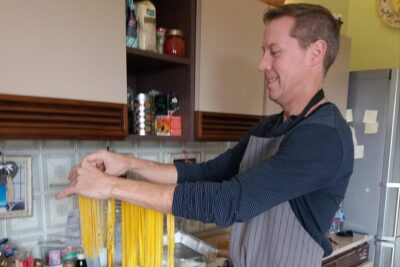
Pastamama, Home Cooking Classes at Grace’s Home
Read our review →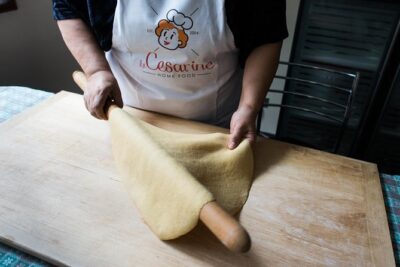
Small Group Pasta and Tiramisu Class at Local’s Home in Venice
Read our review →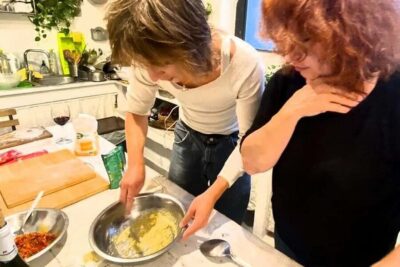
Pistachio Ravioli, Pasta Home Cooking Class w/ Wine
Read our review →
Cesarine: Small group Pasta and Tiramisu class in Varenna
Read our review →
Cesarine: Small group Pasta and Tiramisu with Mamma in Lucca
Read our review →
Cesarine: Small group Pasta and Tiramisu class in Bologna
Read our review →
Authentic Bologna Home Cooking Class: Tagliatelle & Tortellini
Read our review →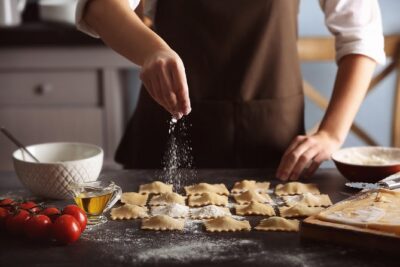
Alghero Home Cooking Pasta Class at a Farmhouse with Wine
Read our review →Browse the lists this class appears in