
REVIEW · HOME COOKING CLASSES
Cesarine: Small group Pasta and Tiramisu class in Modena
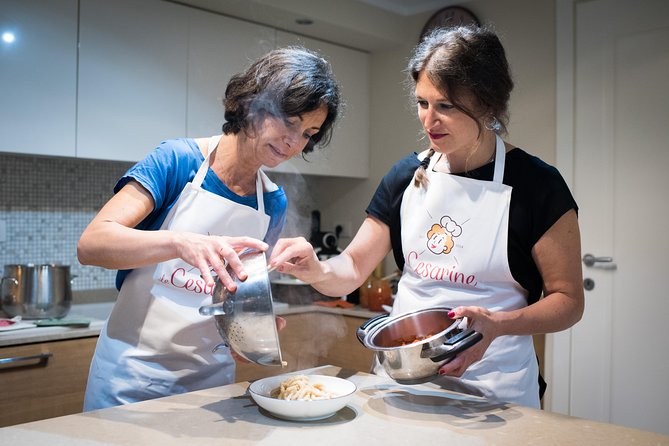
The best part of this Modena cooking class is that you learn pasta in a local home, not in a polished cooking school. A Cesarina welcomes you into her kitchen, shows you how flour and eggs become fresh pasta, and then sits down with you to eat it. I especially like the family-style setting and the chance to learn recipes tied to a real household.
I also like the small group limit of 12 and the fact that your meal includes an aperitivo, wine, water, and coffee. The main thing to consider is that the host and menu can vary. One host, Maria Luisa, spoke little English, and one class substituted chocolate cake for tiramisu because of preparation concerns. That can be part of the home-cooking charm, but it is worth knowing before you book.
Key points to know before booking
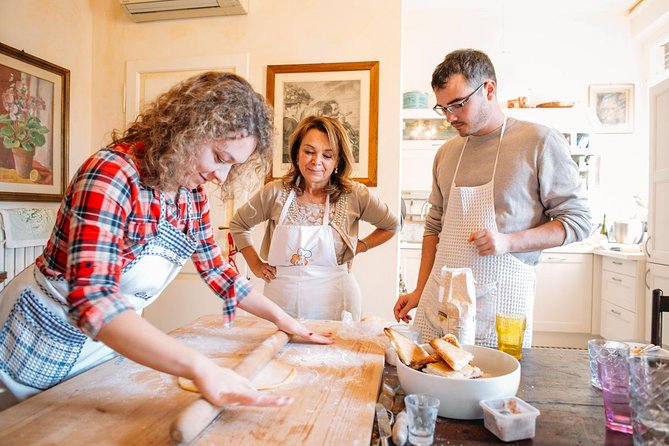
- You cook in a local Modena home: This is a personal kitchen experience rather than a restaurant demonstration.
- You prepare two pasta dishes: Classes may include tagliatelle, tortellini, or tortelloni, depending on the Cesarina.
- Tiramisu may vary: It is listed as the dessert, but one class served an alternate chocolate cake instead.
- Your meal includes more than pasta: Expect an aperitivo, water, wine, and coffee with the food.
- The class lasts about three hours: You can choose a lunch or dinner session.
- Groups are capped at 12: The size allows for hands-on work without making the kitchen feel crowded.
Why a Modena home kitchen changes the experience
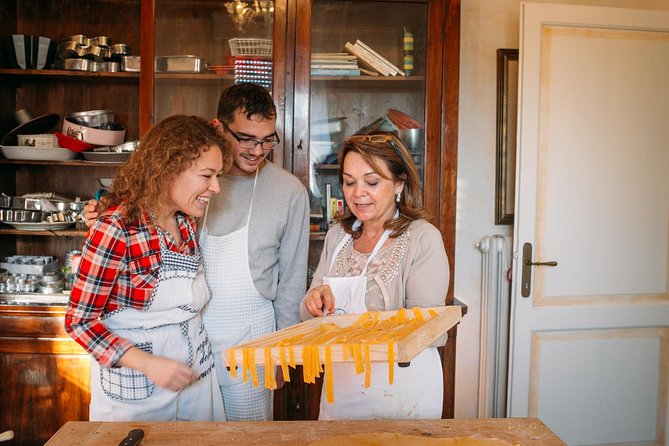
Modena is famous for food that rewards patience and careful technique. Fresh pasta is not simply a dish to order here. It is something families make, teach, adjust, and argue about in the kitchen. This class gives you a chance to see that process up close.
You will meet your Cesarina at the stated meeting point in Modena, then take part in a shared class in a selected local home. The exact home and host are assigned for the experience, so you should not expect the same person every time. Hosts named in past classes include Angela, Maria Luisa, Ilaria, Raffaela, and Alena.
That changing cast is important. One kitchen may focus on tortellini, while another may place more attention on tagliatelle or tortelloni. One host may tell family stories over the dough, while another may give you more direct instruction. You are booking the format and the local setting, not a fixed celebrity chef or identical recipe card.
I like this arrangement because it keeps the experience personal. Reviews of classes with Angela describe her as kind and helpful, with plenty of discussion about cooking and Italian life. Ilaria and Maria Luisa hosted one group together and created the warm atmosphere of a meal among sisters. Raffaela welcomed her group into a beautifully furnished apartment and included starters along with the main cooking lesson.
More Tiramisu Classes in Italy:
- 3 in 1 Cooking Class near Navona: Fettuccine, Ravioli & Tiramisu
★ 5.0 · 7,376 reviews - Florence: Pasta & Tiramisu Cooking Class with Unlimited Wine
★ 4.9 · 6,708 reviews - Rome: Pasta & Tiramisu Class with Fine Wine by the Vatican
★ 4.9 · 4,852 reviews
Turning flour and eggs into fresh pasta
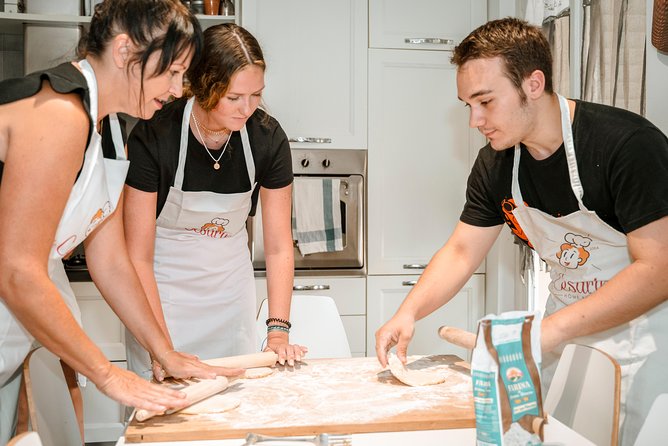
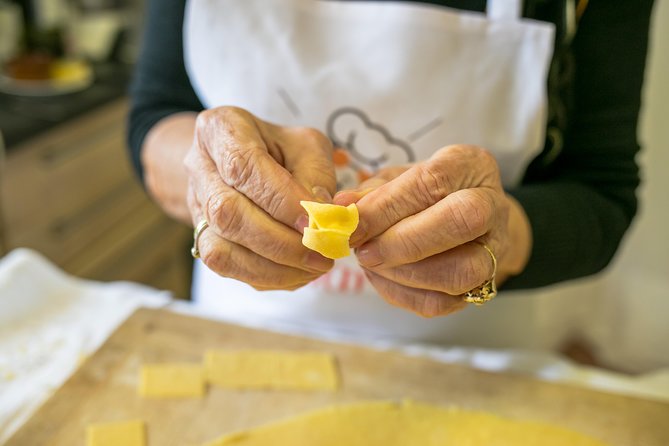
The hands-on pasta work is the heart of the class. You should expect to work with dough rather than simply watch a host roll it out. The practical value is clear: you learn how the dough feels, how it changes as you work it, and how pasta shapes are formed by hand.
The precise dishes depend on your Cesarina. Past classes have included tagliatelle, tortellini, and tortelloni, with some sessions teaching two or more of these shapes. Maria Luisa showed one participant how to make tortellini, while another class prepared tagliatelle, tortelloni, and tortellini.
This is useful for home cooks because pasta technique is easier to understand when you have handled the dough yourself. A recipe can tell you measurements, but it cannot easily tell you how firm the dough should feel or how much pressure to use when shaping it. Your host can correct you at the counter and show you the small details that make the difference.
You should also keep expectations reasonable. This is an introduction to traditional home cooking, not a professional culinary course. The point is not to master every pasta shape in three hours. The point is to understand the method well enough to keep practicing after you return home.
English is offered, but communication may differ by host. Maria Luisa spoke little English during one class, though the cooking itself helped bridge the gap and the participant used some Italian. If you want a highly technical lesson with constant English explanation, this is something to consider. If you enjoy learning through demonstration, gestures, and shared work, the language variation may feel less serious.
The aperitivo makes the class feel like a meal
Before or around the cooking, you can expect an aperitivo. This gives the class a gentle beginning and helps turn it into a social meal rather than a timed lesson. It also gives you something to enjoy while the pasta is being prepared.
The food and drink included with the experience are water, wine, and coffee, served with the meal. Lambrusco is especially relevant in Modena, and one class reintroduced a participant to the local sparkling wine. The supplied information does not promise a specific wine at every session, so you should treat Lambrusco as a possible local touch rather than a guaranteed pour.
This part matters because the meal is not an add-on after the real activity. Eating together is part of the experience. You cook, sit down, taste what you made, and have time to talk with the host and the other members of your group.
The menu lists pasta as the main course and tiramisu as dessert. Some hosts may include starters as well. Raffaela’s class, for example, included tasty starters before the pasta and dessert. Since the menu can reflect the host’s own home cooking, small changes are possible.
Tiramisu, with one important qualification
Tiramisu is listed as the dessert, and most descriptions present it as part of the class. You should know that one past session replaced it with a chocolate cake. The reason given was that tiramisu was not considered local to the region and required two days to prepare.
That detail creates a useful distinction. The class is focused on Italian home cooking, but it is not limited to dishes that originated in Modena. Tiramisu is widely associated with Italy, yet it does not have the same direct connection to Emilia-Romagna as fresh egg pasta or Modena’s local sparkling wine.
If making tiramisu is the main reason you are booking, contact the provider before paying or be prepared for a substitution. If your main goal is learning pasta and sharing a meal in a home, an alternate dessert should not ruin the experience. A chocolate cake made by the host may still fit the relaxed, personal nature of the class.
The dessert portion also shows why this activity is different from a fixed restaurant menu. You are not ordering a guaranteed plate from a standardized kitchen. You are entering someone’s home and following that host’s way of cooking.
More Home Cooking Classes in Italy:
- Pastamama, Home Cooking Classes at Grace’s Home
★ 5.0 · 521 reviews - Small Group Pasta and Tiramisu Class at Local’s Home in Venice
★ 4.5 · 236 reviews - Catania: Pistachio Ravioli, Pasta Home Cooking Class w/ Wine
★ 4.7 · 204 reviews - Cesarine: Small group Pasta and Tiramisu class in Varenna
★ 5.0 · 195 reviews
Three hours at a relaxed pace
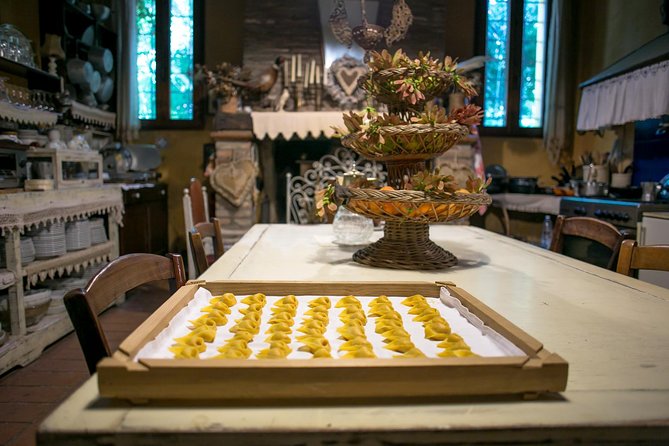
The class lasts about three hours, which is enough time for cooking, conversation, and the meal without taking up your entire day. You can select a lunch or dinner option, so it can fit around sightseeing in Modena.
A lunch session works well if you want the afternoon free for more of the city. A dinner class may be better if you prefer to spend the day exploring and finish with a home-cooked meal. Since the meeting point is in Modena and the activity ends back there, you do not need to plan for a separate return transfer.
The meeting information gives Modena, Province of Modena, Italy, as the start point rather than a detailed street address. Read the final booking instructions carefully for the exact meeting details. The experience is near public transportation, which helps, but the broad meeting description means you should allow time to find the precise location.
Three hours can pass quickly when the group is cooking. You will not spend the whole period standing at a workbench. The time includes the social parts of the meal, and that is one reason the class suits people who want culture as well as instruction.
A small group, but not a private lesson
The maximum group size is 12 people. That is small enough to feel more personal than a large demonstration, but it does not mean you will have a private class or one-on-one attention throughout.
You should expect to share the kitchen and dining space with other participants. This can make the meal more enjoyable if you like meeting people, and it gives you a chance to compare how everyone handles the dough. It also means that your exact amount of hands-on time may depend on the host’s setup and the number of people attending.
The strongest praise for this experience centers on hospitality. People were made to feel welcome, and the cooking was tied to family stories and everyday Italian culture. One participant described arriving as a stranger and leaving with a family feeling after working flour and egg into pasta.
That personal welcome is the main reason to choose this class over a standard cooking studio. You are not just learning a recipe. You are seeing how food connects to home life in Modena.
Is $162.03 a fair price?
At $162.03 per person, this is not a budget meal. The price makes more sense when you count the full package: about three hours of instruction, two pasta preparations, dessert, an aperitivo, water, wine, coffee, and the chance to eat in a local home.
I would consider it good value for someone who wants an experience rather than just dinner. A restaurant meal would give you the food, but not the chance to make it or ask the cook how it is done. A formal cooking course might offer more equipment and structure, but it may not provide the same household setting.
The value is weaker if you mainly want a cheap pasta lunch or if you dislike shared activities. You are paying partly for hospitality, conversation, and access to a private home. If those parts appeal to you, the cost is easier to justify.
This class is booked about 31 days ahead on average. That suggests you should not leave it until the last day of a short Modena visit, particularly if your schedule requires a specific lunch or dinner time.
Who will enjoy this class most?
I would recommend it most strongly to:
- Couples who want a shared food experience
- Families with older children interested in cooking
- Solo visitors who enjoy meeting people over a meal
- Home cooks who want to improve fresh pasta skills
- Anyone looking for a personal view of Italian daily life
It also suits a first visit to Modena because it gives you a practical connection to the region’s food culture. You leave with more than a list of restaurant recommendations. You understand something about the work behind the pasta on your plate.
You may want to choose another activity if you need a fully standardized menu, a guaranteed professional English-speaking instructor, or a formal kitchen classroom. The host, language comfort, pasta shapes, and dessert can vary.
Practical details before you reserve
Confirmation is provided at booking, and the activity is offered in English. Still, English ability can differ by Cesarina, so do not assume every part of the class will be explained in the same way. Demonstration and participation remain central.
The homes provide basic sanitary supplies such as paper towels and hand sanitizer. The guidance also asks people to maintain one meter of distance when possible, or use masks and gloves when that is not possible. Follow the current instructions given by the host, since health rules can change.
The experience requires a minimum number of participants. If that minimum is not reached and the class is canceled, you will be offered another date or experience, or receive a full refund.
You can cancel for a full refund up to 24 hours before the local start time. Cancellations or changes made less than 24 hours before the start are not refunded or accepted, so leave yourself some flexibility when planning a short stay in Modena.
Should you book the Modena pasta and tiramisu class?
Book it if you want personal hospitality, fresh pasta practice, and a meal in a real home. The warm welcome from hosts such as Angela, Ilaria, Maria Luisa, and Raffaela is the strongest reason to go, and the small group size keeps the experience from feeling like a mass-market demonstration.
Go in knowing that the host and dishes can vary. Tiramisu may be replaced, English may be limited with some hosts, and the exact pasta shapes depend on the kitchen you visit. If you can accept those small uncertainties, the class offers a memorable way to connect Modena’s food with everyday family cooking.
FAQ
Where does the cooking class take place?
The class takes place in a carefully selected local home in Modena, Italy. The activity starts and ends at the meeting point in Modena.
How long does the experience last?
The cooking class lasts approximately three hours.
What food will I prepare?
You will prepare two pasta dishes and tiramisu according to the stated menu. Past sessions have included tagliatelle, tortellini, and tortelloni.
Is tiramisu guaranteed?
Tiramisu is listed as the dessert, but one class substituted a chocolate cake. Contact the provider before booking if tiramisu is essential to your plans.
Is the class offered in English?
Yes, the experience is offered in English. However, the level of English may differ by host. One past class with Maria Luisa involved limited English and some Italian conversation.
Is lunch or dinner available?
Yes. You can choose a lunch or dinner option.
What drinks are included?
The experience includes water, wine, and coffee with the meal. An aperitivo is also included.
How many people can join the class?
The activity has a maximum of 12 participants.
Can I cancel for a refund?
Yes. You can cancel at least 24 hours before the local start time for a full refund. Cancellations or changes made less than 24 hours before the start are not accepted or refunded.
More Small Group Pasta Classes in Italy
- Milan: Pasta and Tiramisu Small Group Cooking Class with Wine
★ 5.0 · 660 reviews - Florence Small-Group Pasta Class with Seasonal Ingredients
★ 5.0 · 532 reviews - Bologna: Pasta and Tiramisu Small Group Cooking Class with Wine
★ 5.0 · 409 reviews - Palermo: Pasta and Tiramisu Small Group Cooking Class with Wine
★ 5.0 · 348 reviews
Recently added in Italy
- Verona: Tortellini Cooking Class and Lunch with Mamma Ivana★ 5.0 · 20 reviews
- Vicenza: Pasta & Tiramisu Cooking Class at a Local’s Home★ 5.0 · 5 reviews
- Verona: Pasta Cooking Class with Wine Tasting★ 5.0 · 4 reviews
- Verona: Pasta & Tiramisu Cooking Class at a Local’s Home★ 5.0 · 16 reviews
- Verona: Prosecco and Pasta Making Class at a Local’s Home★ 5.0 · 10 reviews
- Volterra: Fresh Pasta Cooking Class at a Tuscan Farmhouse★ 5.0 · 33 reviews
- Verona: My Granny’s secrets making gnocchi★ 5.0 · 7 reviews
- Venice: Share Your Pasta Love in a Local’s Home★ 4.8 · 20 reviews
Home Cooking Classes, compared.
Pastamama, Home Cooking Classes at Grace’s Home
Read our review →
Small Group Pasta and Tiramisu Class at Local’s Home in Venice
Read our review →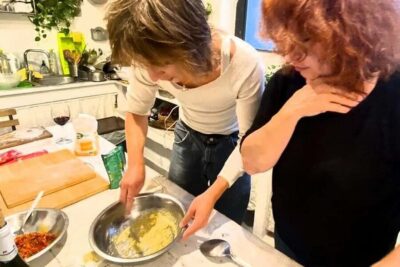
Pistachio Ravioli, Pasta Home Cooking Class w/ Wine
Read our review →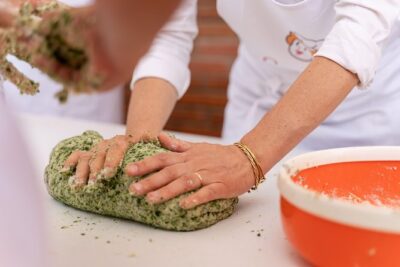
Cesarine: Small group Pasta and Tiramisu class in Varenna
Read our review →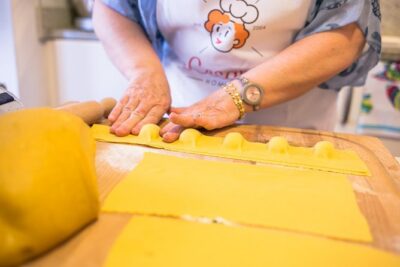
Cesarine: Small group Pasta and Tiramisu with Mamma in Lucca
Read our review →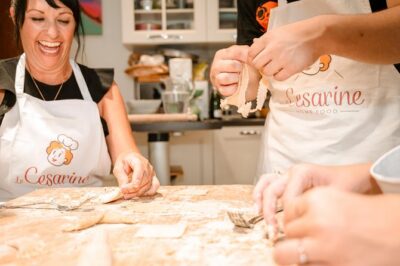
Cesarine: Small group Pasta and Tiramisu class in Bologna
Read our review →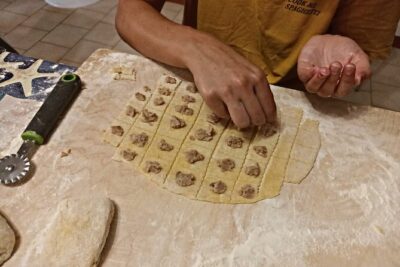
Authentic Bologna Home Cooking Class: Tagliatelle & Tortellini
Read our review →
Alghero Home Cooking Pasta Class at a Farmhouse with Wine
Read our review →Browse the lists this class appears in