
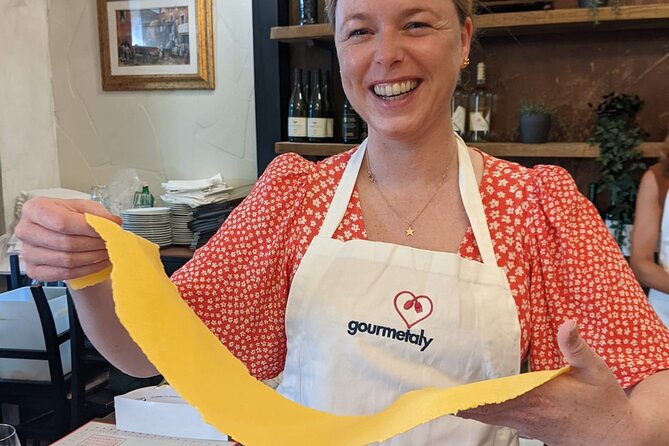
REVIEW · PASTA CLASSES WITH DINNER
Rome: Pasta Cooking Class, Dinner & Wine in Authentic Restaurant
Rome’s best cooking classes do more than hand you a recipe. This one puts you in a 12th-century eatery in the Jewish Ghetto, where Chef Gabriele teaches the Roman dishes he learned while cooking with his grandmother. You make pasta from scratch, prepare sauces, fry a seasonal specialty, then sit down to eat the results.
I like the small maximum of 10 people, which gives you room to work and ask questions. I also like the guides’ role. Lisa, Anastasia, Daniela, Benedetta, and Eleanor are praised for translating, keeping the room lively, and adding stories about the Jewish district. The main consideration is that this is not a kosher class, and the kitchen handles milk, eggs, gluten, nuts, soya, mustard, and other possible allergens.
Key points to know before booking
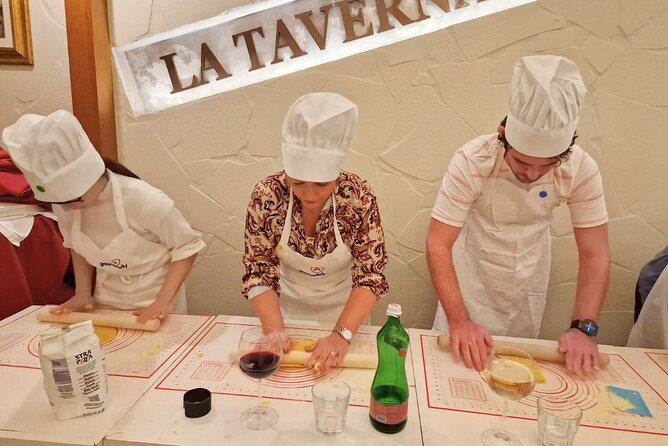
- Cook four Roman-style pasta preparations: Learn the basics behind cacio e pepe, amatriciana, and arrabbiata, with handmade pasta at the center.
- Eat dinner as part of the class: The food includes a fried starter, pasta, ricotta and sour cherry tart, wine, and water.
- Work in a tiny group: The class has a maximum of 10 participants, so you get hands-on time rather than watching from the back.
- Meet in Rome’s Jewish Ghetto: Start near Piazza Mattei and Via del Portico d’Ottavia, an atmospheric setting with food traditions of its own.
- Families and non-meat eaters are welcome: Children, vegetarians, and vegans can take part, though special food needs cannot be guaranteed.
- Bring home practical extras: You receive a cotton apron, a cookbook, and restaurant guides.
Cooking Roman food in the Jewish Ghetto
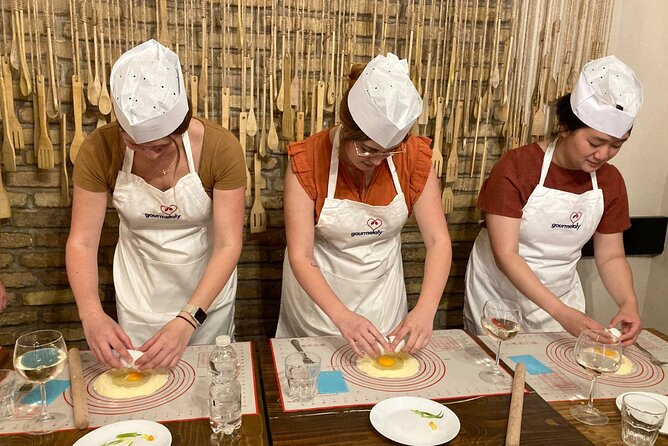
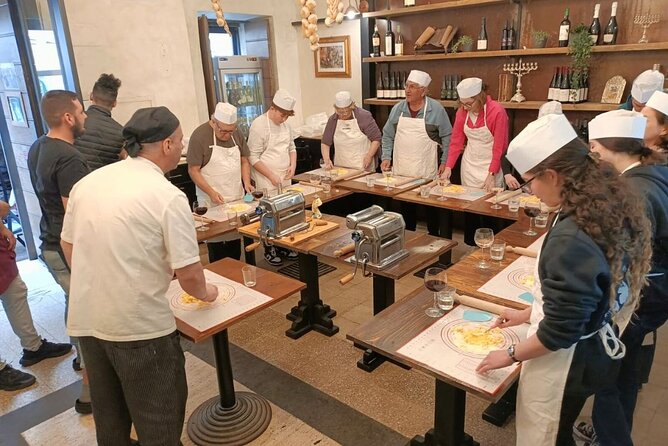
The setting gives this class a useful sense of place. You meet your host at Piazza Mattei, one of central Rome’s most attractive squares, then make your way to the restaurant near Via del Portico d’Ottavia. The class takes place in an old building dating to the 12th century, a detail that makes the meal feel tied to Rome rather than staged in a generic cooking studio.
The Jewish Ghetto is also a good place to discuss food. Its traditions have shaped Roman cooking, and the guide explains local stories, customs, and the district’s distinctive dishes as the evening unfolds. The tour does not treat the neighborhood as background scenery. It uses the location to explain why certain ingredients and recipes matter.
Your guide acts as the bridge between you and the chef. Chef Gabriele leads the kitchen work, while the guide translates and keeps the conversation moving. This matters because cooking instruction can become awkward when the chef and class do not share a language. Here, guides such as Lisa and Anastasia have been praised for making the translation easy to follow while adding information about Rome.
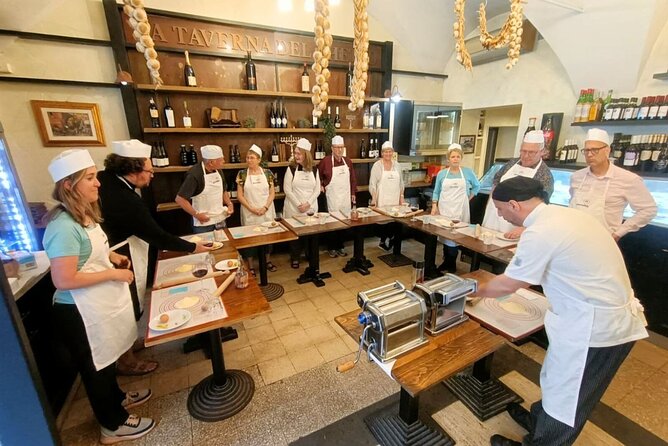
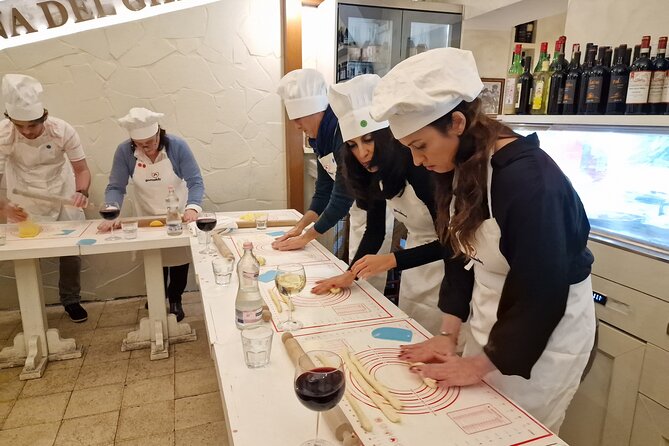
The class is conducted in English. Since the group is limited to 10, you should expect a more direct exchange than at a large demonstration. You will not simply watch a chef toss pasta in a pan. The plan is to clean, prepare, mix, shape, and cook with supervision.
More Pasta Classes with Wine in Rome
- Rome: Pasta & Tiramisu Class with Fine Wine by the Vatican
★ 4.9 · 4,852 reviews - Rome: Pasta Making Class with Wine, Limoncello, and Dessert
★ 4.9 · 3,177 reviews - Rome Cooking Class: Make Pasta and 3 Spritz Cocktails
★ 5.0 · 2,937 reviews
Mixing dough and making pasta from scratch
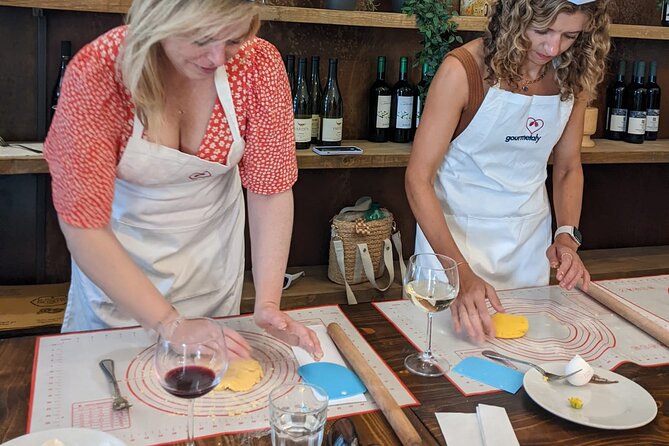
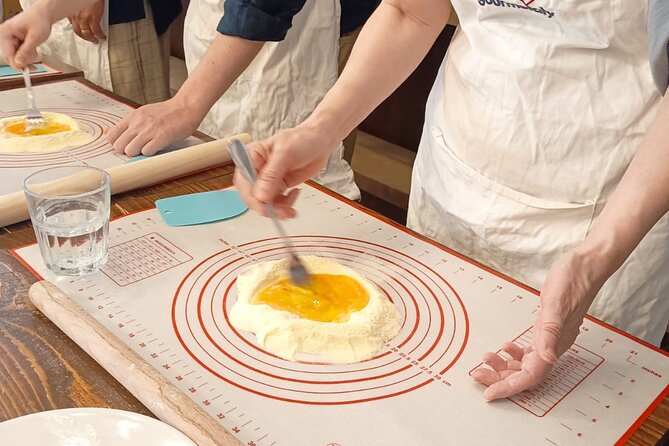
The hands-on work begins with homemade pasta. You learn the basic process of preparing the dough, working it, and turning it into pasta suitable for the sauces on the menu. The appeal here is practical: you get techniques you can try at home, not just a pleasant meal with a cooking speech attached.
Chef Gabriele’s background is part of the charm. He began cooking with his grandmother, and that family connection helps explain the focus on familiar Roman dishes. This is not presented as an advanced culinary course. You are learning the home-style foundations of pasta and sauce, with the chef correcting and guiding you as you go.
The exact pace will depend on the group. A confident cook may want more technical detail, while a family with children may move more slowly. The small size helps both types of participants. You can ask for another explanation, watch a technique close up, and take part without having to fight for a place at the work surface.
The class is suitable for children, vegetarians, and vegans, but that does not mean every dish is vegan. The listed menu contains pecorino, guanciale, mozzarella, anchovy, eggs, and other possible allergens. Tell the provider about your needs, but understand that special requirements cannot be guaranteed.
Cacio e pepe, amatriciana, and arrabbiata
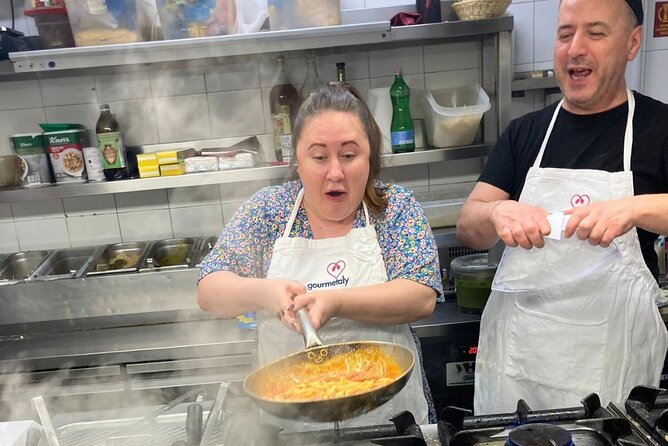
The main lesson centers on classic Roman sauces. Cacio e pepe looks simple, but the balance of pecorino Romano, black pepper, and pasta water takes some care. You will be supervised as you cook the pasta and work the sauce into a smooth dish rather than a clumpy mass of cheese.
Amatriciana brings a different set of lessons. Its traditional combination includes pecorino Romano, guanciale, and tomato sauce. You can see how a small number of strong ingredients create a full-flavored dish, and you learn why timing matters when sauce and pasta come together.
The menu also includes tonnarelli all’arrabbiata, a tomato sauce with chili and parsley. This is the useful option for people who do not eat pork. It also gives the class a vegetarian pasta preparation, though you should confirm any vegan requirements in advance because the wider meal may include dairy, eggs, and other ingredients.
Some descriptions refer to learning the four main pastas of Rome. The clearest menu details identify cacio e pepe, amatriciana, and arrabbiata, with the handmade pasta and sauce work forming the heart of the session. Do not expect a long restaurant-style tasting menu. Expect a focused lesson in Roman staples, followed by a generous dinner.
Fried artichoke or zucchini flower
Before the pasta, you prepare a seasonal fried Roman specialty. In summer, the listed dish is a stuffed zucchini flower with mozzarella and anchovy. In winter, the class turns to fried artichoke.
This part adds welcome variety. Pasta-making can occupy the hands and mind, but the fried starter introduces vegetable preparation, stuffing, and frying. The seasonal change also means the meal is not identical throughout the year. If you have your heart set on zucchini flowers or artichokes, check which season’s menu applies when you book.
The fried dish is not a separate food tour stop. It is part of the kitchen session, so you see how the ingredient is cleaned and prepared before it reaches the table. That simple process can be more useful than a long explanation, especially if you want to recreate Roman food at home.
Anchovy and mozzarella make the summer version unsuitable for some diets. The winter artichoke dish may also involve ingredients that need checking. The provider specifically warns about allergens, so treat the menu as a guide to the standard meal rather than a promise that every course can be altered.
Same town, a different thing to roll out:
- 3 in 1 Cooking Class near Navona: Fettuccine, Ravioli & Tiramisu
★ 5.0 · 7,376 reviews - Rome: 3-in-1 Fettuccine, Ravioli, and Tiramisu Cooking Class
★ 4.9 · 2,704 reviews - Rome: Fettuccine Pasta Cooking Class in Rome’s City Center
★ 4.8 · 2,414 reviews - Learn to Make Pasta & Tiramisu with Wine and Limoncello Included
★ 5.0 · 2,345 reviews
Dinner, wine, and ricotta tart
After the cooking, you sit down to eat what you have made. The meal is intended to cover dinner, which makes the $104.25 price easier to assess. You are paying for instruction, ingredients, equipment, a meal, drinks, and a souvenir rather than for a short pasta demonstration followed by a small sample.
Wine and water are served throughout the class. This is a social evening, and the wine helps the meal feel less like a lesson and more like a shared Roman dinner. Drink at your own pace, especially if you are cooking with children or have an early morning planned.
The dessert is torta di ricotta e visciole, a Roman Jewish ricotta cake with black sour cherry jam. It is described as a tasting portion, so do not expect a full dessert-making lesson. Still, it gives you a final taste of a local specialty that you might not order on your own.
The meal is one of the strongest reasons to choose this class. You eat fresh pasta prepared during the session, a seasonal fried dish, and the ricotta tart. The food is not an add-on after the real activity. It is the payoff for the work you do in the kitchen.
Why the guide can make or break the evening
The chef handles the cooking, but the guide shapes much of the experience. The guide translates instructions, explains the Jewish Ghetto, answers questions, and helps the group work together. That role is especially important when the chef is teaching through another person rather than speaking directly in English.
The guide names associated with this experience include Lisa, Anastasia, Daniela, Benedetta, and Eleanor. Their styles may differ, but the important function remains the same: you have someone helping you understand both the food and the place.
Lisa is noted for explaining the history of the Jewish Ghetto and taking care of the group. Anastasia is praised for her translation and for adding information about Rome and Italian life. Daniela is described as personable and helpful with families, while Benedetta has helped make birthday celebrations feel special. Eleanor is remembered for bringing extra energy and fun to the evening.
You may also get a social evening beyond the formal cooking. Singing, birthday touches, and conversation with people from other countries have all been part of the experience. That is a benefit for people who enjoy meeting others around a shared table. It may be less appealing if you want a quiet, private dinner for two.
Group size, timing, and practical value
The class lasts about 2 hours and 30 minutes. That is enough time for instruction, food preparation, dinner, dessert, and wine without taking your entire evening. I would avoid scheduling a major attraction immediately afterward. Cooking involves several stages, and you will enjoy it more if you are not watching the clock.
The maximum group size is 10. This is a meaningful limit, not a minor detail. In a small class, you have a better chance to handle the ingredients, ask Chef Gabriele for help, and see what is happening at the stove. Several people have described the experience as especially personal when the group was smaller than the maximum.
The meeting point is listed at Via del Portico d’Ottavia, 8, with the host meeting you in the area of Piazza Mattei. Check the exact instructions sent with your booking before setting out, since both locations are used to describe the start. The activity ends back at the meeting point.
The class operates in all weather. You are indoors for the cooking, but dress sensibly for getting to the restaurant and for the season. Public transportation is nearby. Hotel pickup and drop-off are not included, so you handle your own way to and from the Ghetto.
What the $104.25 price includes
At $104.25 per person, this is not the cheapest way to eat pasta in Rome. It can still be fair value if you want dinner and an activity in one booking.
Your price includes:
- The cooking lesson and chef instruction
- All kitchen equipment and ingredients
- Fresh homemade pasta
- A seasonal fried starter
- Ricotta and visciole tart
- Italian wine and water
- A 100 percent cotton apron
- A cookbook
- Restaurant guides
The apron and cookbook add useful value, though you should view them as keepsakes rather than the main reason to book. The larger saving is that you do not need to pay separately for a full dinner after the class. You also leave with techniques for making Roman pasta at home.
Compared with a standard restaurant meal, you pay more for the teaching and social setting. Compared with a high-end culinary workshop, the price includes a substantial meal and drinks. I would call it good value for someone who wants food, local context, and participation in a single evening.
Who should book this class
I would recommend it most strongly to first-time Rome visitors who want a meal connected to the city’s traditions. It also suits families because children are welcome and the activity offers something more active than sitting through a long dinner.
Couples and solo participants can enjoy it too, but remember that this is a shared class. The group may include families, other couples, and people celebrating a birthday. If you like conversation and a little noise, that adds to the evening. If you want a private romantic meal, choose a restaurant instead.
Vegetarians have a clear pasta option in arrabbiata, but you must discuss your needs before booking. Vegans may be accommodated, yet the standard menu contains dairy, eggs, and other ingredients. People with gluten allergies should not choose this class, and anyone with serious allergies should read the warnings carefully.
The experience is also a good fit if you want a neighborhood setting rather than a polished cooking school. The old restaurant, the Jewish Ghetto, the translated instruction, and the seasonal food give it a local character. It is less suitable if you want formal culinary training, exact dietary control, or a private group.
Should you book the Rome pasta class?
Book it if you want to cook your own Roman dinner, meet a lively guide and chef, and spend an evening in the Jewish Ghetto rather than simply moving from sight to sight. The strongest parts are the 10-person limit, Chef Gabriele’s hands-on instruction, the translated stories about the district, and the amount of food and wine included.
Think twice if you have severe food allergies, need a kosher meal, avoid gluten, or dislike group activities. Also check the seasonal starter before booking if fried artichoke or stuffed zucchini flower matters to you.
For most food-loving visitors, this is a worthwhile Rome evening. You get a practical lesson, a full meal, local context, and an apron to take home. Just arrive ready to participate, not merely watch.
FAQ
Where does the pasta cooking class meet?
The listed meeting point is Via del Portico d’Ottavia, 8, 00186 Rome. The host also meets participants in Piazza Mattei, in the Jewish Ghetto area. Check the booking instructions for the exact meeting details.
How long does the experience last?
The class lasts approximately 2 hours and 30 minutes.
How many people can join the class?
The activity has a maximum of 10 participants.
Is the class offered in English?
Yes. The experience is offered in English, with the host assisting with translation between participants and the chef.
What food will I prepare and eat?
The standard meal includes homemade pasta, cacio e pepe, amatriciana, and arrabbiata preparations, plus a seasonal fried specialty. Dessert is ricotta and visciole tart.
Is wine included?
Yes. Italian wine and water are served throughout the cooking class.
Are children, vegetarians, and vegans welcome?
Children are welcome, and the activity states that vegetarians and vegans can participate. Special food requirements cannot be guaranteed, so you should communicate your needs before booking.
Is the class kosher or suitable for people with gluten allergies?
No. The class and food are not kosher, and the experience is not recommended for people allergic to gluten. Possible allergens include milk, eggs, soya, mustard, nuts, and gluten.
What happens if I need to cancel?
You can cancel at least 24 hours before the start time for a full refund. Cancellations or changes made less than 24 hours before the start time are not refunded or accepted.
More Tours with Dinner in Rome
- Gnocchi & Meatballs | Cooking class & dinner at my place
★ 5.0 · 2 reviews - Palermo: Pasta and Gelato Making Class with Dinner and Wine
★ 4.9 · 212 reviews - Florence: Pasta-Making Class with Dinner, Wine and… Sing!
★ 4.9 · 210 reviews - Cagliari: Pasta Cooking Class with 3-Course Dinner
★ 5.0 · 96 reviews
More Pasta Classes with Dinner in Rome
- Pasta Making & Wine Tasting with Dinner in Frascati from Rome
★ 5.0 · 1,326 reviews - Rome: Pasta Making with Wine Tasting and Dinner in Frascati
★ 4.9 · 979 reviews - Pasta&Tiramisu Workshop: Craft Your Dinner with Free Flowing Wine
★ 5.0 · 121 reviews - Gnocchi and meatballs | Cooking class and dinner at my house in Rome
★ 5.0 · 7 reviews
Recently added in Rome
- Trastevere Food Tour with Pasta-Making Class★ 5.0 · 5 reviews
- Traditional Pasta Cooking Class with Tiramisu Small Group★ 5.0 · 7 reviews
- Rome: Pasta and tiramisu class with wine pairing at Come Na Vorta★ 5.0 · 30 reviews
- Spritz and Pasta! Spritz, Fettuccine & Tiramisù★ 5.0 · 2 reviews
- The Pasta Factory Class★ 4.5 · 21 reviews
- Top Class in Fettuccine, Ravioli, and Tiramisu★ 5.0 · 7 reviews
- Private 4 Roman Pastas Tasting Tour in Rome★ 5.0 · 6 reviews
- Authentic Pasta and Tiramisù cooking class at spanish steps★ 4.5 · 14 reviews
Pasta Classes with Dinner, compared.
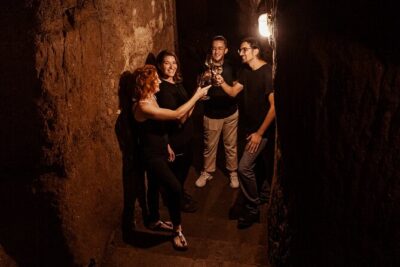
Pasta Making & Wine Tasting with Dinner in Frascati from Rome
Read our review →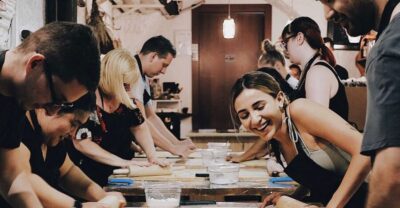
Pasta Making with Wine Tasting and Dinner in Frascati
Read our review →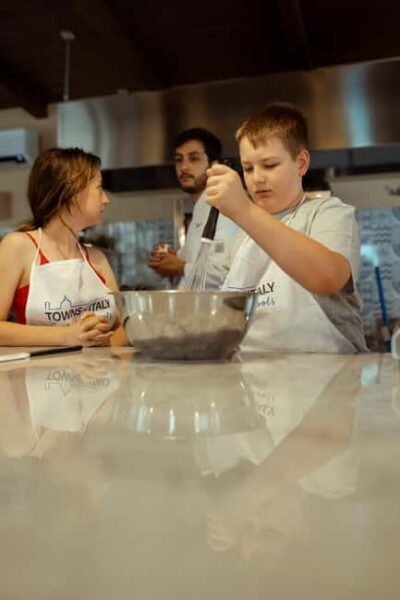
Pasta and Gelato Making Class with Dinner and Wine
Read our review →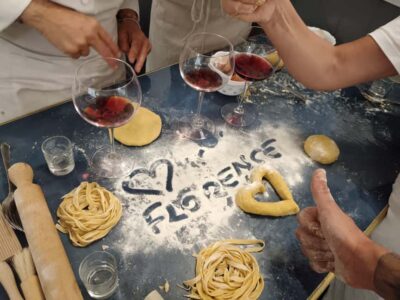
Pasta-Making Class with Dinner, Wine and… Sing!
Read our review →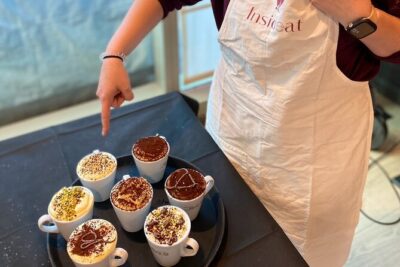
Pasta&Tiramisu Workshop: Craft Your Dinner with Free Flowing Wine
Read our review →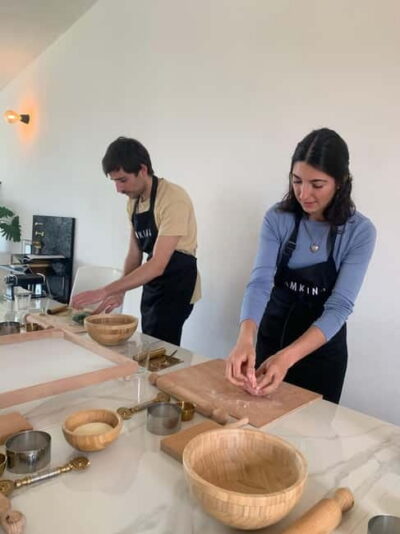
Cagliari: Pasta Cooking Class with 3-Course Dinner
Read our review →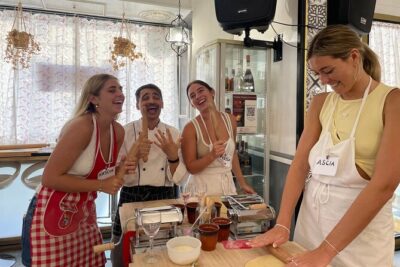
Pasta Making Class with Dinner and Wine in Florence
Read our review →
Fresh Pasta Cooking Class and Dinner with a Local
Read our review →Browse the lists this class appears in