
REVIEW · TIRAMISU CLASSES
Pasta Making and Tiramisù Cooking Class in Rome
Fresh pasta is the star here, but the smart part is that you also learn two traditional Roman sauces and finish with tiramisu. This is not a quick demonstration where you watch a chef work. You knead, shape, cook, and eat your own meal in central Rome.
I like the welcoming start with Prosecco and antipasti, and I like that the class ends with a proper sit-down dinner rather than a few bites at a counter. The main consideration is space: the class can feel lively when two groups share the cooking school, and one past participant found it hard to hear the chef.
- Two pasta styles by hand: Work with fresh dough and shape two kinds of pasta, with examples including spaghetti, fettuccine, ravioli, or another planned style.
- Roman sauces, not just noodles: Learn two traditional sauces and how one basic sauce can lead to several variations.
- Tiramisu included: Make the famous coffee dessert from scratch, then serve it after the pasta course.
- Dinner and drinks are part of the price: Prosecco, antipasti, wine, soft drinks, bottled water, and the prepared meal are included.
- Small class format: The maximum is 15 people, though some sessions use two chefs with up to nine people per chef.
- Central evening location: Meet at Corso del Rinascimento 65, near Piazza Navona, at 5:30 pm, with the activity ending back at the meeting point.
Making Pasta in a 17th-Century Roman Kitchen
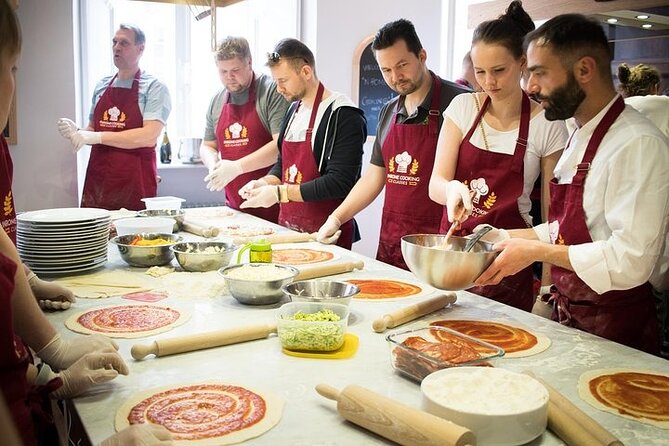
The appeal here is simple: you get to make the food you are likely to order in Rome, then eat it while the memory is still fresh. The class takes place at a cooking school in central Rome, described as a 17th-century setting, with professional-grade equipment and a dining room for the final meal.
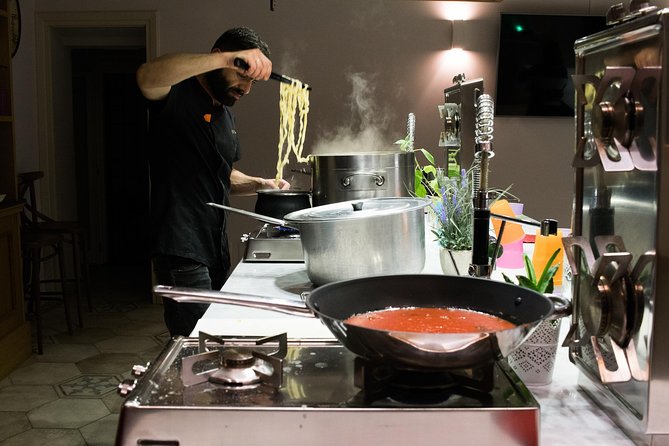
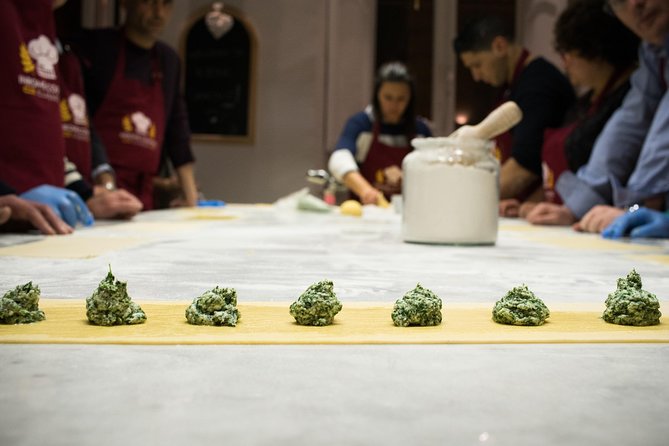
The kitchen work is hands-on. You knead pasta dough by hand, learn how the ingredients come together, and shape two pasta styles. The exact shapes can vary, but past sessions have included spaghetti, fettuccine, and ravioli. That variety matters. You are not simply repeating one easy recipe. You get a feel for how the same basic dough changes when cut, rolled, or filled.
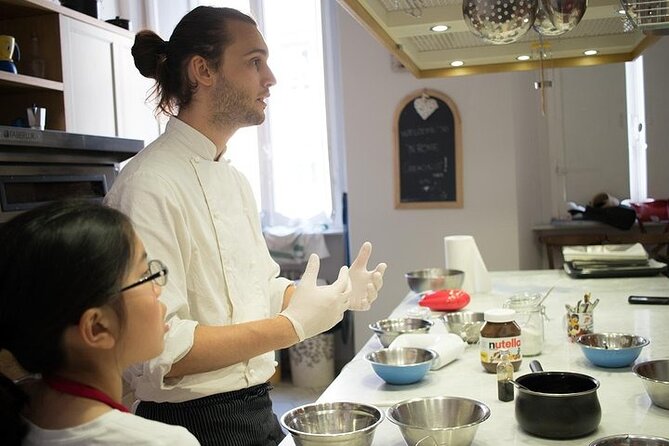
The chefs also explain the reasons behind the ingredients and offer practical substitutions for cooking at home. I especially like this part because it turns the class from a holiday activity into something you can use later. A recipe is useful. Knowing why a sauce thickens, how pasta dough should feel, or how a substitution changes the result is better.
Several instructors are named in the available information, including Simone, Marco, Alessandro, David, Francesco, Fabio, Max, and Sara. The teaching style appears to depend somewhat on the chef assigned to your session, but the strongest pattern is clear: patient instruction, humor, and plenty of help at the worktables.
Prosecco, Antipasti, and a Gentle Start
You begin with a glass of Prosecco, Italian appetizers, and light refreshments. This opening gives everyone time to arrive, settle in, and meet the people at the table before flour starts flying.
That welcome is more than a pleasant extra. Cooking classes work best when the room relaxes quickly, especially if you are traveling alone or joining with people you have not met. The shared meal afterward gives the class a social side, but the opening drink helps break the ice before the practical work begins.
Bread and appetizers have also been part of some sessions, along with plenty of drinks. Alcoholic beverages, soft drinks, and bottled water are included in the package. One small complaint was a wish for wine to be available continuously, so do not treat this as an unlimited wine tasting. The focus is cooking, with drinks served as part of the meal and welcome.
More Fresh Pasta Workshops in Rome
- Rome: Pasta Making Class with Wine, Limoncello, and Dessert
★ 4.9 · 3,177 reviews - Enjoy Spritz and Pasta Making in Piazza Navona
★ 5.0 · 1,681 reviews - Pasta Making & Wine Tasting with Dinner in Frascati from Rome
★ 5.0 · 1,326 reviews
Two Pasta Styles and Two Roman Sauces
The main lesson covers fresh pasta from the beginning. You knead the dough, work it by hand, and shape two types. The chef guides the process step by step, making the class suitable for people with little cooking experience while still giving more experienced cooks useful tips.
You then prepare two authentic Roman sauces. This is one of the strongest parts of the class because sauce technique is what makes homemade pasta practical once you return home. You learn how a base sauce can be adapted into several versions, rather than treating each recipe as an isolated formula.
The pace is usually relaxed enough for questions. Past sessions have included extra sauces when a group requested one or when an allergy required a separate preparation. That suggests some flexibility, though the planned menu remains two pasta styles and two sauces.
At the end, the pasta is cooked and served in the dining room. The meal is not a token tasting. It is described as a full service dinner, with the homemade pasta, sauces, wine, and the dessert you prepared. For many people, this is the moment the class pays off: you sit down, stop working, and enjoy the food while it is fresh.
Tiramisu Adds an Easy Dessert Win
Tiramisu is the second major lesson, and it is a good match for a pasta class. The dessert does not require the same physical work as kneading and shaping dough, so it gives the evening a change of pace.
The chef explains the dish and its background while you prepare a creamy version. The recipe is presented as approachable, even for a first attempt, and the class includes tips that can be used at home.
Including dessert also makes the experience feel like a complete Italian meal rather than a single cooking demonstration. You make the starter elements, prepare the main dish, and finish with tiramisu. That is a good reason to book this instead of a shorter pasta-only lesson.
How the 5:30 pm Schedule Fits Your Rome Plans
The stated start time is 5:30 pm, and the class lasts about two and a half hours. Most sessions therefore finish around 8:00 pm or 8:30 pm, depending on the pace of the group and the meal service.
That timing works well for a day of sightseeing. You can spend the afternoon around Piazza Navona, the Pantheon, or nearby streets, then walk to Corso del Rinascimento 65 for the class. The activity ends back at the meeting point, so you are not left trying to find a distant restaurant after dinner.
The description also refers to morning classes timed to end at lunch. That conflicts with the supplied 5:30 pm start, so check the exact departure time when booking. If your confirmation says 5:30 pm, plan on an evening meal. Do not assume a morning session is available on your chosen date.
The central location is a real advantage. There is no hotel pickup, drop-off, or transport to another attraction, so you need to reach the meeting point yourself. It is near public transportation, and the class is in the Piazza Navona area.
One practical detail deserves attention: the meeting point and kitchen may not be exactly the same door. A short walk to a nearby cooking school has been part of the arrangement, and clearer directions would help. Arrive early enough to find Corso del Rinascimento 65 without rushing.
More Tiramisu Classes in Rome
- 3 in 1 Cooking Class near Navona: Fettuccine, Ravioli & Tiramisu
★ 5.0 · 7,376 reviews - Rome: Pasta & Tiramisu Class with Fine Wine by the Vatican
★ 4.9 · 4,852 reviews - Rome: 3-in-1 Fettuccine, Ravioli, and Tiramisu Cooking Class
★ 4.9 · 2,704 reviews - Learn to Make Pasta & Tiramisu with Wine and Limoncello Included
★ 5.0 · 2,345 reviews
A Small Class, With One Space-Related Caution
The maximum group size is 15 people. Some sessions have used two chefs with up to nine people per chef, which keeps the work fairly personal and gives you a chance to ask for help.
The strongest experiences seem to come from the instructor’s personality and attention. Simone is praised for patience and kindness. Marco is noted for explaining noodle technique and handling an allergy concern carefully. Alessandro is described as funny and engaging. David receives praise for clear directions, while Sara is noted for patience, cheerfulness, and useful cooking techniques.
Still, the room may feel busy. One negative account described two classes operating in a tight space, with enough noise to make instruction hard to hear. The provider describes the kitchen as about 1,180 square feet, with two chefs and up to nine people per chef. That is not a huge professional kitchen, even if the class is designed to stay hands-on.
If you need a very quiet lesson or have trouble hearing in a lively room, this is worth considering. Ask where your group will be placed when you arrive, and stay close to the chef during demonstrations. For most people, the social energy will be part of the fun. For some, it may make the instruction less comfortable.
Food Restrictions and Family Suitability
Vegetarian and gluten-free options are available. You should communicate your needs when booking and confirm them before the class begins, rather than assuming a substitute will appear at the table.
The class can work well for families. Children as young as six have taken part in family groups, and children around 10 and 13 have enjoyed making pasta and tiramisu with their parents. The tasks are practical and easy to understand, although young children will need adult help around cooking equipment and shared work areas.
It also suits couples, friends, and solo participants. The shared table encourages conversation, and the included dinner gives solo participants a natural way to meet others without having to arrange a separate restaurant meal.
This is not aimed only at beginners. People who have made pasta before can still pick up sauce ideas, shaping tips, and ways to adjust a recipe. The class is forgiving for a first-timer but not so basic that an experienced home cook has nothing to learn.
Is $119.77 a Fair Price?
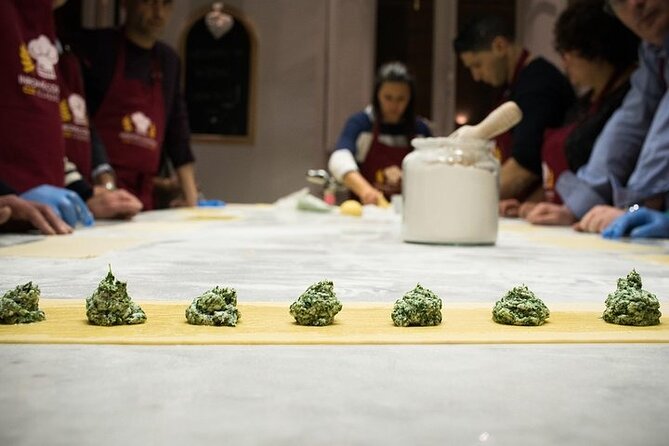
At $119.77 per person, this is not a cheap meal. You can order pasta in Rome for far less, especially if you choose a casual trattoria. The value comes from combining instruction, ingredients, several drinks, a welcome aperitif, antipasti, and a two-course meal.
You are also paying for the setting, the chef’s guidance, the use of a proper kitchen, and recipes to take home. If you only want dinner, spend the money at a restaurant. If you want to learn a skill and enjoy a social evening, the price is more reasonable.
The format is especially good for anyone who might otherwise book both a food tour and a cooking class. You get context about pasta and sauces, hands-on work, and a meal in one sitting. It is also a practical choice for the final night of a Rome visit, since you leave with recipes and techniques instead of only a restaurant memory.
The food quality can depend on execution. Most of the available feedback praises the meal, but one negative experience found the pasta undercooked and average. That is a reminder that handmade pasta requires timing, and a busy kitchen can affect the final plate.
What to Bring and How to Prepare
Wear clothes and shoes you can work comfortably in. The provided details do not specify a dress code, but cooking with flour and sauce is easier when you are not worried about delicate clothing.
Arrive at Corso del Rinascimento 65 with enough time to identify the meeting point. The activity is mobile-ticket friendly, and confirmation is sent within 48 hours of booking, subject to availability.
Come hungry, but not so hungry that you cannot enjoy the opening Prosecco and antipasti. The evening includes a complete meal, so you do not need to arrange a separate dinner afterward.
If you want to recreate the dishes, save the recipe link provided after the class. Some participants received a digital cookbook containing the class recipes and extra ones, which adds value well beyond the evening itself.
Who Should Book This Rome Cooking Class?
I would choose this class if you want an active food experience in central Rome, especially if you enjoy learning by doing. It is a strong fit for couples, families with older children, friends, and solo visitors who like meeting people over a shared table.
I would also recommend it to anyone who wants more than a carbonara lesson. The combination of two pasta types, two Roman sauces, tiramisu, wine, and dinner gives the evening a full arc.
I would think twice if you dislike group activities, need a quiet room, or mainly want the least expensive possible meal. The kitchen can get noisy, and the class price reflects the teaching and social setting rather than the food alone.
Free cancellation is available up to 24 hours before the start time for a full refund. Changes or cancellations inside that 24-hour window are not accepted for a refund.
FAQ
Where does the pasta and tiramisu class meet?
The meeting point is Corso del Rinascimento 65, 00186 Rome, Italy, near Piazza Navona.
What time does the class start?
The supplied start time is 5:30 pm. The class lasts about two and a half hours and may finish around 8:00 pm or 8:30 pm.
How long is the experience?
The advertised duration is approximately 2 hours and 30 minutes.
What food do you prepare?
You prepare two types of fresh pasta, two traditional Roman sauces, and homemade tiramisu.
Is dinner included?
Yes. The included meal consists of the pasta you prepare and tiramisu, with the package described as a two-course lunch or dinner depending on the session time.
Are drinks included?
Yes. Prosecco, Italian appetizers, bottled water, soft drinks, and alcoholic beverages are included.
Is the class taught in English?
Yes. The experience is offered in English and is led by English-speaking chefs.
Are vegetarian and gluten-free options available?
Yes. Vegetarian and gluten-free options are available.
How many people can join the class?
The maximum is 15 people. Some sessions use two chefs with up to nine people per chef.
Can I cancel for a full refund?
Yes. You can cancel at least 24 hours before the local start time for a full refund. Cancellations or changes made less than 24 hours before the start time are not refunded.
Should You Book It?
Book it if you want to turn dinner into an activity and learn recipes you can use at home. The hands-on pasta work, Roman sauces, tiramisu, and included drinks make the $119.77 cost defensible, especially for a family or couple seeking one organized evening in central Rome.
Skip it if your priority is a quiet restaurant meal or a low-cost plate of pasta. The cooking school can be lively, and the class depends on the timing and teaching style of the chef assigned to your session. For most people who want food, conversation, and a practical taste of Roman cooking in one evening, it is a well-rounded choice.
Recently added in Rome
- Trastevere Food Tour with Pasta-Making Class★ 5.0 · 5 reviews
- Traditional Pasta Cooking Class with Tiramisu Small Group★ 5.0 · 7 reviews
- Rome: Pasta and tiramisu class with wine pairing at Come Na Vorta★ 5.0 · 30 reviews
- Spritz and Pasta! Spritz, Fettuccine & Tiramisù★ 5.0 · 2 reviews
- Top Class in Fettuccine, Ravioli, and Tiramisu★ 5.0 · 7 reviews
- The Pasta Factory Class★ 4.5 · 21 reviews
- Private 4 Roman Pastas Tasting Tour in Rome★ 5.0 · 6 reviews
- Authentic Pasta and Tiramisù cooking class at spanish steps★ 4.5 · 14 reviews
Tiramisu Classes, compared.
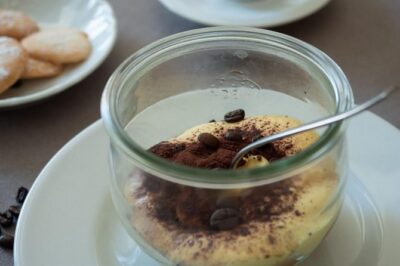
3 in 1 Cooking Class near Navona: Fettuccine, Ravioli & Tiramisu
Read our review →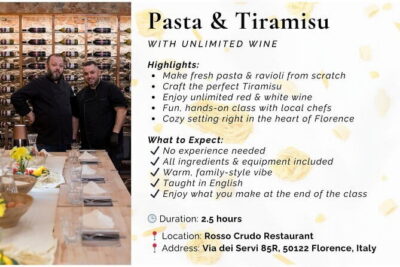
Pasta & Tiramisu Cooking Class with Unlimited Wine
Read our review →
Pasta & Tiramisu Class with Fine Wine by the Vatican
Read our review →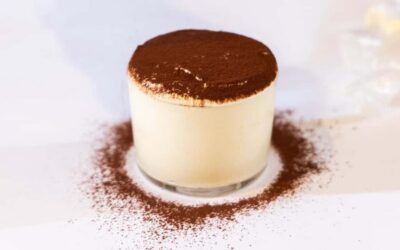
3-in-1 Fettuccine, Ravioli, and Tiramisu Cooking Class
Read our review →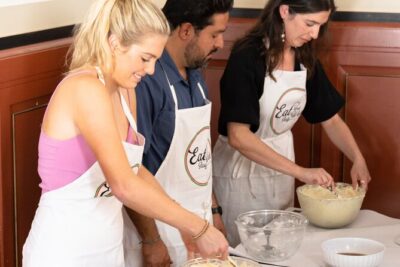
Learn to Make Pasta & Tiramisu with Wine and Limoncello Included
Read our review →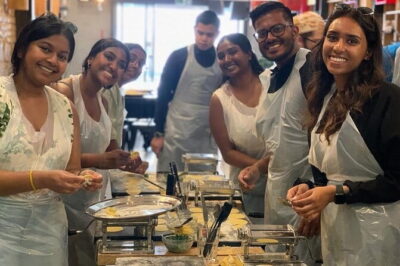
Cooking Class Pasta & Tiramisu Making Unlimited Wine
Read our review →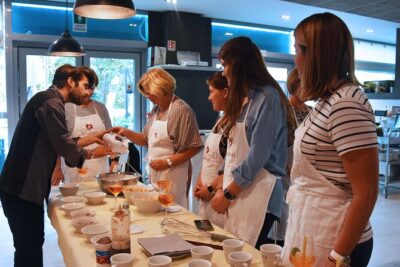
Become a Masterchef in Rome: Pasta, Ravioli and Tiramisù Class
Read our review →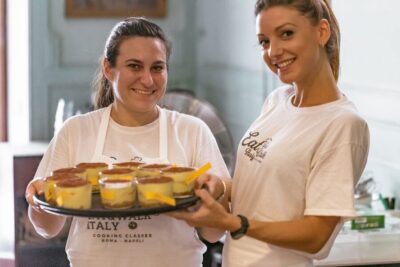
Fettuccine & Tiramisù: Cooking Class with Wine & Limoncello
Read our review →Browse the lists this class appears in