
REVIEW · PASTA CLASSES WITH WINE
Gluten Free Pasta Class in Florence with limitless Wine
The best thing about this Florence experience is that it lets you join a proper Italian cooking class without wheat flour taking you out of the fun. In a medieval room linked to the old San Lorenzo church, Chef Roberto teaches you to make three kinds of gluten-free pasta, then cooks the results for a shared meal.
I like the small group of no more than eight, which gives you room to ask questions and get help with your rolling pin. I also like the unusual mix of hands-on cooking, Florence history, and unlimited Tuscan wine for $35. The important caution is food safety: this is not suitable for people with severe gluten allergies or intolerances because the class takes place in a restaurant where cross-contamination may occur.
Key points at a glance
- Chef Roberto leads the class in English, with cooking guidance and historical stories about Florence.
- You make ravioli, tortellini or strozzapreti, and pappardelle, with some freedom to invent shapes.
- The class takes place in a 1309 Volta Room associated with the Nuns of San Lorenzo Church.
- Wine and soft drinks are unlimited, and the finished pasta becomes your meal.
- The small group is limited to eight people, making this more personal than a large demonstration.
- Check your medical needs before booking, especially for celiac disease, severe allergies, diabetes, vegan diets, or nut allergies.
A pasta class built for the gluten-free table
Florence is full of food activities, but many begin with a mountain of ordinary wheat flour. That can leave you watching from the side if you have celiac disease or a serious gluten restriction. This class takes a different approach by making gluten-free pasta the main event, not a last-minute substitute.
You do not need to be gluten intolerant to join. That is useful if you are traveling with a partner, friend, or family member who avoids gluten. One person can follow a gluten-free diet while the rest of the group still gets a full cooking lesson and a satisfying meal.
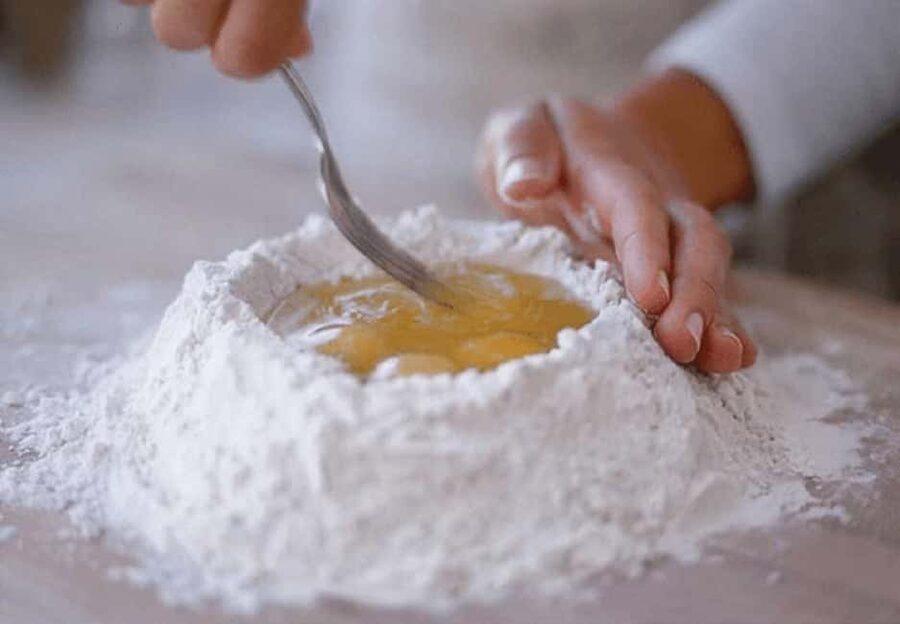
I especially like that the class is not presented as a short demonstration followed by a plate of food. You work the dough yourself. You learn how to roll it, shape it, and prepare different forms. That gives the experience value after you leave Florence, since the aim is to send you home with skills you can use in your own kitchen.
Chef Roberto is the central figure. He combines cooking instruction with information about Florence and the surrounding region, so the class is not only about measurements and technique. His teaching style is described as warm, funny, and interactive, which matters when your first ravioli looks more like a folded envelope than a neat pasta parcel.
More Pasta Classes with Wine in Florence
- Florence: Pasta Cooking Class with Unlimited Wine
★ 4.9 · 10,285 reviews - Florence: Pasta & Tiramisu Cooking Class with Unlimited Wine
★ 4.9 · 6,708 reviews - Florence: Pasta Cooking Class with Unlimited Wine
★ 5.0 · 6,413 reviews
Inside the 1309 Volta Room
The setting gives the class a sense of place before you touch the dough. You meet in a Volta Room dating to 1309, connected with the Nuns of San Lorenzo Church in the San Lorenzo neighborhood. The church is tied to Florence’s early religious history and is described as the city’s first cathedral, dating to the year 250 AD.
You are not cooking in a generic suburban kitchen or a modern classroom with no connection to the city. You are in the heart of Florence, surrounded by the kind of old architecture that makes even a practical lesson feel rooted in local history.
The medieval setting is also convenient. The class is in central Florence, so you do not need to arrange transportation to a distant farm or cooking school. Transportation is not included, but the central location makes this easiest to reach on foot if you are already sightseeing around San Lorenzo.
There is one practical limitation: large bags and oversize luggage are not allowed. Arrive with comfortable clothes, comfortable shoes, and only what you need for the class. A cooking lesson is a poor place to drag a suitcase.
Rolling dough and shaping three pasta styles
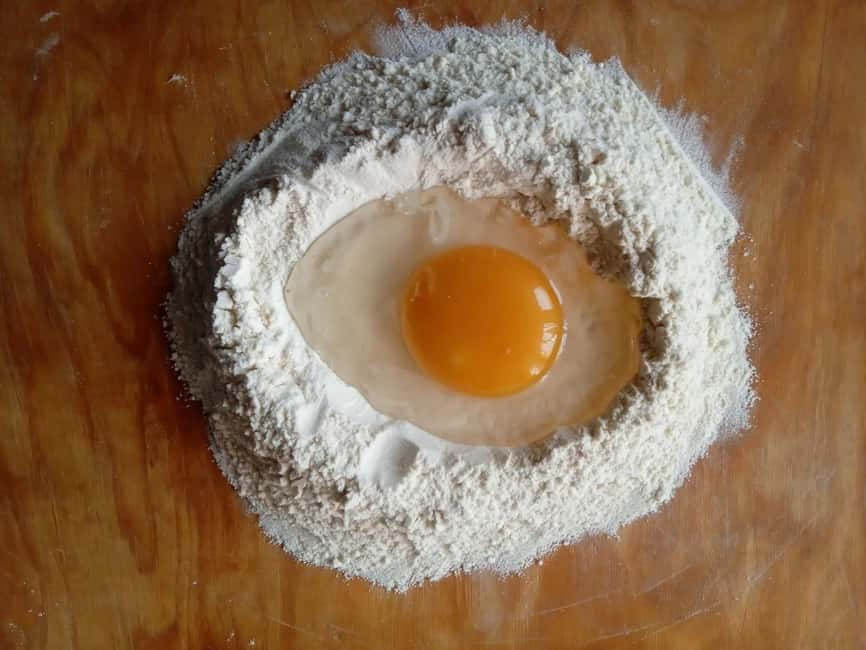
The hands-on work begins with the basics of gluten-free pasta dough. Gluten-free dough behaves differently from standard pasta dough, so the lesson is useful even if you have made ordinary pasta before. You will need to pay attention to texture, pressure, and rolling technique rather than relying on the elasticity of wheat dough.
Chef Roberto guides you through the process and explains the reasons behind the steps. That science matters here. Gluten-free cooking can feel mysterious when dough cracks, sticks, or refuses to hold its shape. Understanding what is happening gives you a better chance of repeating the recipe at home.
The class focuses on three pasta forms:
- Ravioli, which teaches you to work with filling and sealed edges.
- Tortellini or strozzapreti, depending on the preparation, giving you either a filled shape or a hand-formed pasta style.
- Pappardelle, broad ribbons that let you practice rolling and cutting.
You may also invent new pasta shapes if you want. That small touch keeps the lesson from feeling like a rigid test. You can follow Roberto closely, then play around once you understand the basic method.
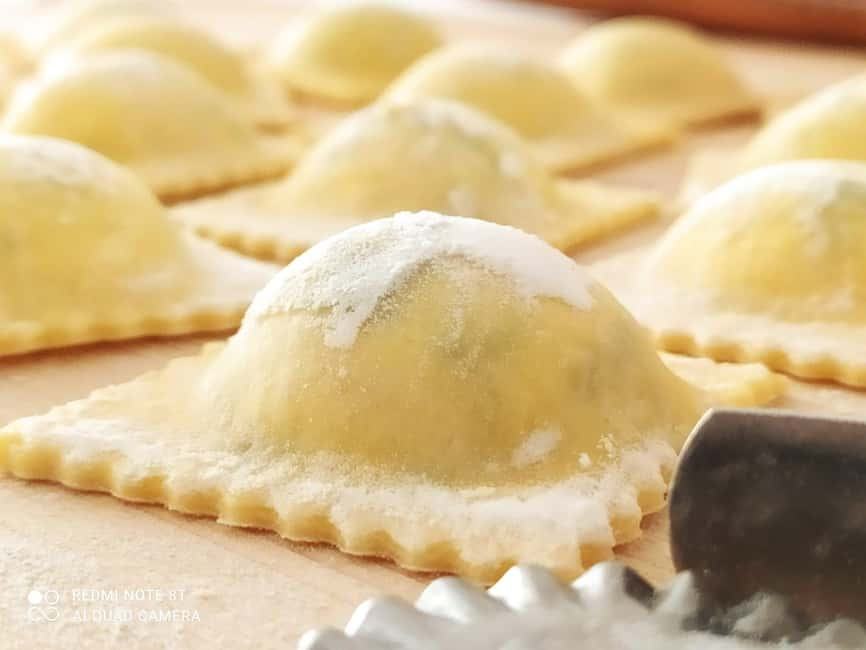
The rolling pin is a major tool here. You will get your hands dirty and work at the dough rather than watching a chef do everything for you. If you are cooking with children or a first-time pasta maker, expect a little mess and uneven shapes. That is part of the charm, and the final meal does not need to look like a restaurant advertisement to taste good.
The wine changes the pace
Unlimited Tuscan wine is included, along with soft drinks. At this price, that adds real value, especially since the class lasts 195 minutes, or just over three hours. You are not paying $35 for a quick lesson and a tiny tasting. You receive the ingredients, equipment, instruction, cooking, and the meal you prepare.
The wine also helps create a relaxed social setting. You can talk with the other participants while the dough rests or while the pasta is being prepared. The group size of eight is small enough for conversation without turning the class into a private event.
Still, I would treat the unlimited wine as an option, not an obligation. Pasta making requires attention, particularly when you are learning to roll and shape gluten-free dough. You can choose soft drinks instead, and pacing yourself is sensible when the activity lasts three hours.
The wine is best understood as part of the atmosphere and value, not the whole point of the class. If you mainly want a wine tasting, this is not the right experience. If you want to cook, eat, and enjoy a glass while meeting other people, it fits well.
Same town, a different thing to roll out:
- Florence Pizza or Pasta Class with Gelato Making at a Tuscan Farm
★ 5.0 · 6,801 reviews - Pastamania – Florence Pasta Making Class
★ 5.0 · 3,050 reviews - Florence: Cooking Class Pasta & Tiramisu Making Unlimited Wine
★ 5.0 · 2,234 reviews - Florence: Pizza or Pasta Class with Gelato at a Tuscan Farm
★ 4.9 · 1,181 reviews
Cooking and eating what you made
The payoff comes at the end, when the handmade pasta is cooked and served for everyone to eat together. This is more satisfying than receiving a separate restaurant meal because you have seen the dish from dough to plate.
The pasta is served with sauces described as authentic, and the food receives some of the strongest praise in the feedback. That is especially important for gluten-free diners, who are often asked to accept a lesser version of a dish. Here, the purpose is to make the pasta itself enjoyable, not merely safe enough to get by.
You may find that the meal is also the most social part of the experience. Instead of scattering after the lesson, you sit down with the people who worked beside you. The result is informal and communal, more like a shared table than a formal restaurant service.
For families, this can be a good way to include a child who normally misses out on cooking classes. Children as young as nine have taken part successfully according to the supplied information, and the activity is described as suitable for different ages. The stated minimum age is five, so very young children cannot join.
Why the small group matters
A limit of eight participants is one of the strongest practical features. In a large class, you might spend most of the lesson waiting for the instructor to reach your table. Here, Roberto can watch your technique, correct your rolling, and answer questions more easily.
A small group also helps if you are nervous about gluten-free cooking. You have more chance to explain your needs before the class and ask how ingredients and equipment are being handled. The experience has been particularly meaningful for people who rarely find cooking activities designed with gluten-free diners in mind.
That said, small group does not mean private. You will cook and eat with other participants, and the social mood is part of the experience. If you want one-on-one tuition or a completely private kitchen, this may not be the right format.
The English instruction is another advantage for international visitors. You can follow the cooking steps and ask questions without needing Italian. Roberto’s background as a certified tour guide adds context about Florence beyond the recipe itself.
Gluten safety: read this before booking
This is the most important section for anyone with celiac disease or a serious allergy. The class is designed around gluten-free pasta, and people with celiac disease have taken part and found the experience carefully organized. But the information also clearly warns that the class takes place in a restaurant where gluten contamination in the air may be possible.
Those two facts can both be true. The pasta and class plan may be gluten-free, but the wider restaurant environment may not be a controlled medical setting. If even trace exposure creates a serious health risk for you, contact the host before booking and explain your needs in detail.
All food allergies, intolerances, and dietary restrictions must be discussed with the host before you reserve. The activity is listed as unsuitable for people with food allergies, nut allergies, diabetes, and vegans. Do not assume that a gluten-free label means every ingredient or preparation method will fit your diet.
The class may work well for someone managing a less severe gluten restriction, but you must make that decision with accurate medical information. At $35, the price is attractive. It is not worth risking your health to save money.
Who will get the most from this experience
I would recommend this class to you if you want a social Florence activity with a real result at the end. It suits first-time pasta makers, couples with different dietary needs, food-focused visitors, and anyone who likes learning a skill instead of simply ordering dinner.
It is also a strong choice for a gluten-free visitor who has felt left out of Italian food experiences. You can take part in the same activity as everyone else, make the same sort of dishes, and sit down to eat what you prepared.
Families should check the age and food restrictions carefully. Children under five cannot join, and the activity may not work for children who cannot safely handle the food or the three-hour length. Older children who enjoy hands-on tasks may get a lot from the shaping and rolling.
You should probably skip it if you dislike group activities, cannot sit or work comfortably for an extended period, or want a polished restaurant meal without doing the preparation. People with back problems are advised not to take part.
There is also conflicting information about wheelchair access. The activity details describe it as wheelchair accessible, but the suitability information says it is not suitable for wheelchair users. Ask the host directly before booking rather than relying on either statement alone.
Is $35 a good value?
Yes, for the right customer. The $35 price includes the class, equipment, ingredients, English instruction, unlimited Tuscan wine and soft drinks, plus the meal made during the lesson. Spread over more than three hours, that is a strong deal in central Florence.
The value is even clearer if you care about gluten-free food. A standard cooking class may not allow you to participate fully, while this one is built around gluten-free pasta. You are paying for access to an activity that can otherwise be difficult to find.
The price does not include transportation or luggage storage. Those omissions are minor if you are staying in central Florence, but they matter if you are arriving with bags or coming from outside the city. Plan to leave luggage elsewhere before you arrive.
Free cancellation is available up to 24 hours in advance, and you can reserve now and pay later. Those terms make it easier to fit the class into a changing Florence itinerary. Still, check the starting time and allow the full 195 minutes, since this is not a quick stop between major sights.
Should you book this Florence pasta class?
Book it if you want to make food with your own hands, meet a small group, and finish with a shared meal. The setting, the three pasta shapes, Chef Roberto’s lively instruction, and the included wine make this a good-value half-day activity.
For gluten-free diners, it can be especially meaningful because you are not treated as an afterthought. But take the contamination warning seriously. Speak with the host before booking if you have celiac disease, severe intolerance, an allergy, diabetes, or another strict dietary need.
For everyone else, the decision is simple: if you enjoy cooking and do not mind a little flour-free mess, $35 buys a generous slice of Florence. If you only want to eat pasta and see the sights, spend the afternoon elsewhere.
FAQ
Is this pasta class only for people who avoid gluten?
No. The class is open to gluten-intolerant and non-gluten-intolerant participants, so people with different dietary needs can take part together.
How long does the class last?
The class lasts 195 minutes, or about three hours.
Which pasta shapes will I make?
You will learn to make three types of pasta, including ravioli, tortellini or strozzapreti, and pappardelle. You may also create your own shapes.
Is wine included in the price?
Yes. Unlimited Tuscan wine and soft drinks are included.
Can someone with celiac disease join?
The class is designed for gluten-free pasta, but the activity warns that severe allergies or intolerances may be unsafe because it takes place in a restaurant where gluten contamination may occur. Contact the host about your condition before booking.
What should I bring, and what cannot I bring?
Bring comfortable shoes and comfortable clothing. Oversize luggage and large bags are not allowed.
Recently added in Florence
- Hands on Deluxe Traditional 4-course dinner with fresh pasta★ 5.0 · 15 reviews
- Vegan Cooking Class in Florence: Pasta Making & Wine!★ 5.0 · 2 reviews
- The Art of Pasta and Wine Tasting with Local Sommelier★ 5.0 · 16 reviews
- Tuscan Pasta Masterclass Small-Group Cooking Experience★ 5.0 · 17 reviews
- MaMa Florence: The Art of Corzetti – Hands-On Pasta Class★ 5.0 · 15 reviews
- Cooking class and home made pasta in Florence with LA VIVANDIERA!★ 5.0 · 5 reviews
- Hands-On Pasta Making Class in Central Florence with Patrizia★ 5.0 · 5 reviews
- Gluten free pasta and dessert class 6 guests max★ 5.0 · 2 reviews
Pasta Classes with Wine, compared.
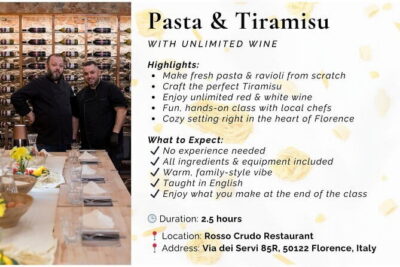
Pasta & Tiramisu Cooking Class with Unlimited Wine
Read our review →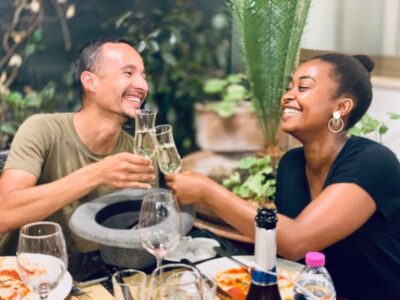
Pasta & Tiramisu Class with Fine Wine by the Vatican
Read our review →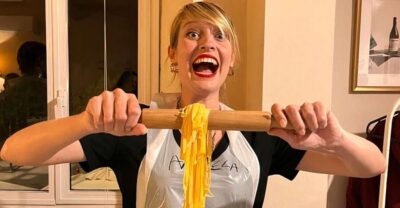
Pasta Making Class with Wine, Limoncello, and Dessert
Read our review →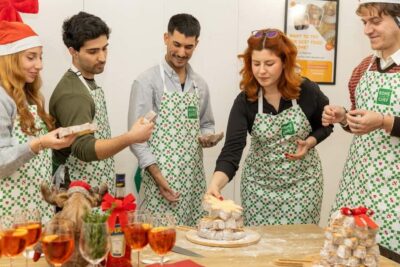
Rome Cooking Class: Make Pasta and 3 Spritz Cocktails
Read our review →
Learn to Make Pasta & Tiramisu with Wine and Limoncello Included
Read our review →
Cooking Class Pasta & Tiramisu Making Unlimited Wine
Read our review →
Fettuccine & Tiramisù: Cooking Class with Wine & Limoncello
Read our review →Browse the lists this class appears in