
REVIEW · HOME COOKING CLASSES
Home Cooking: Pasta Making with Natural Colors in a Tiny Group
Bologna is famous for pasta, but this class gives you more than a plate of tagliatelle. In Sara’s apartment on Via Saragozza, you’ll work with traditional pasta tools, organic ingredients, and natural colors made from foods such as beetroot, purple potatoes, herbs, and seaweed. The small private setting makes the lesson feel like a visit to an Italian home, not a cooking school assembly line.
I like two things right away: the hands-on pace, which lets you make the pasta yourself, and the creative shapes, from tortellini and garganelli to hearts, boats, pyramids, and bonbons. Sara is clear and friendly, and the class suits beginners. The main consideration is that the finished pasta is taken home rather than presented as a full meal during the lesson, so plan another meal afterward.
Key Points
- Private apartment setting: Your group meets in an historic Bologna building with a mix of antique and modern style.
- Natural pasta colors: Beetroot, purple potatoes, seaweed, herbs, and powders add color without artificial dyes.
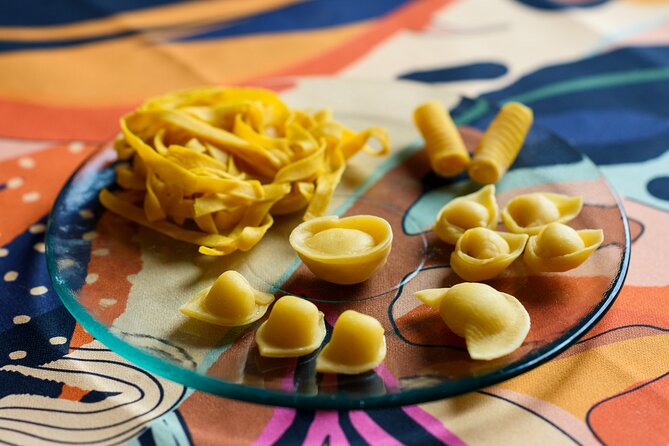
- Classic and playful shapes: Make tortellini, cappelletti, garganelli, tagliatelle, lasagne, ravioli, and decorative forms.
- Vegetarian by design: The ingredients are vegetarian and cruelty free, with vegan, gluten-free, and lactose-free options available in advance.
- Small-group instruction: Only your group participates, allowing time for questions and individual help.
- Two-and-a-half-hour lesson: You begin with organic dough and finish ready to make fresh pasta at home.
A Bologna Pasta Class With Room to Experiment
I see this as a cooking lesson for people who want both tradition and a little play. The classic shapes anchor the class in Emilia-Romagna’s food culture, while the colored dough and unusual designs give you permission to go beyond the usual pasta plate.
That balance matters. A lesson focused only on tortellini can feel narrow, especially if you already know your way around a kitchen. Here, you can learn the fundamentals and then try shapes that look almost like small paper sculptures. Pasta making becomes part craft project, part practical cooking skill.
The class lasts about two hours and 30 minutes. That is long enough to work through several forms without turning the experience into an all-day commitment. You should still expect to concentrate. Rolling, filling, pinching, and shaping fresh pasta takes practice, even when the mood is relaxed.
The activity is offered in English. That makes it easier to follow instructions about dough texture and shaping, two parts of the process where a small misunderstanding can lead to a sticky or cracked result.
More Fresh Pasta Workshops in Bologna
- Bologna: Traditional Bolognese Pasta Making with Meal
★ 4.8 · 97 reviews - Traditional bolognese pasta making with a meal
★ 4.5 · 69 reviews - Learn and taste the real bolognese ragù and pasta making
★ 4.8 · 32 reviews
Entering Sara’s Historic Bologna Apartment
The meeting point is Via Saragozza, 27, in Bologna’s 40123 postal area. The class takes place inside an apartment in an historic building, furnished with a mix of modern and antique elements. You will find the traditional tools used for making pasta there, which helps connect the lesson to the ordinary kitchen methods behind Bologna’s famous food.
I like this setting because it keeps the focus on home cooking. You are not watching a chef perform behind a counter. You are working at the table, using your hands, and receiving instruction in a personal space.
The private format also matters. Only your group takes part, so the class is not built around a large demonstration where you struggle to see the work surface. You can ask Sara to repeat a fold, check the thickness of your dough, or show you a shape again before moving on.
The tradeoff is simple: a home setting may feel less polished than a purpose-built cooking studio. If you prefer a formal classroom with multiple stations and professional equipment, this may feel informal. If you want a personal lesson with a local host, the apartment is part of the appeal.
Starting With Organic Dough
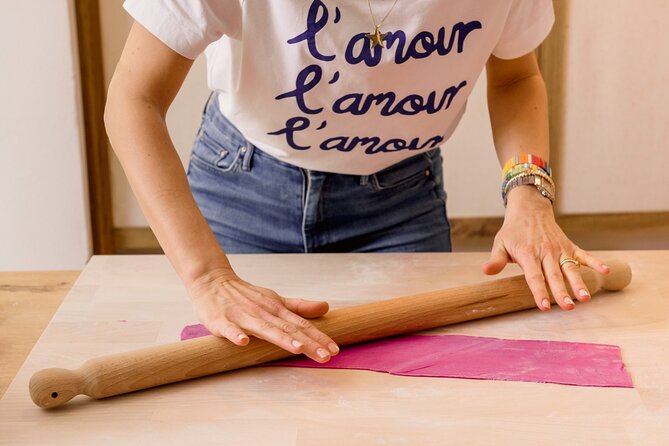
The first practical step is making the dough with organic ingredients. This is the foundation of the class, and it is where you learn the most useful skill for later: how to bring the ingredients together into a workable dough.
You will not simply receive prepared sheets to decorate. You begin at the start, then move toward rolling and shaping. That gives you a better sense of how fresh pasta is made at home, where the texture of the dough matters as much as the final form.
This stage is especially useful for beginners. You learn by touch, and Sara can explain what to look for as the dough comes together. The class is designed so you can begin making pasta yourself after the masterclass, rather than copying a recipe without understanding the process.
I would pay close attention here and take mental notes about texture. The colorful shapes are fun, but the basic dough is the part you will use again and again once you return home.
Classic Shapes From Tortellini to Tagliatelle
Once the dough is ready, the class moves through traditional forms. The listed shapes include tortellini, cappelletti, garganelli, tagliatelle, and lasagne, along with classic ravioli and other fresh pasta styles.
Each shape teaches a different movement. Tortellini and cappelletti require careful folding and sealing. Garganelli adds a ridged surface. Tagliatelle shows you how to handle long strands, while lasagne gives you a broader sheet to work with.
You should not expect to become a master of every shape in one sitting. The value comes from trying several techniques and learning which ones feel natural in your hands. Some forms are simple. Others require more patience and neat finger work.
The class also gives you a useful comparison between pasta shapes. A long ribbon of tagliatelle behaves differently from a stuffed piece of ravioli. A ridged garganelli can hold sauce in a different way than a smooth sheet. Even if you do not remember every fold, you leave with a better sense of how shape affects fresh pasta.
More Home Cooking Classes in Bologna
- Pastamama, Home Cooking Classes at Grace’s Home
★ 5.0 · 521 reviews - Cesarine: Small group Pasta and Tiramisu class in Bologna
★ 5.0 · 172 reviews - Authentic Bologna Home Cooking Class: Tagliatelle & Tortellini
★ 4.5 · 136 reviews - Cesarine: Private Pasta Class & Meal at Local’s Home in Bologna
★ 5.0 · 111 reviews
Adding Beetroot, Purple Potato, and Herbs
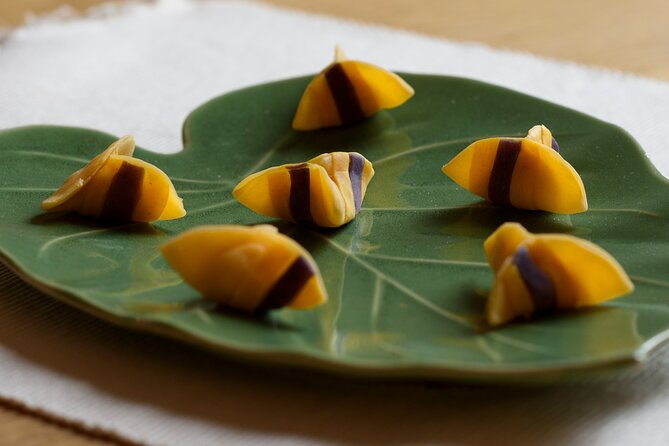
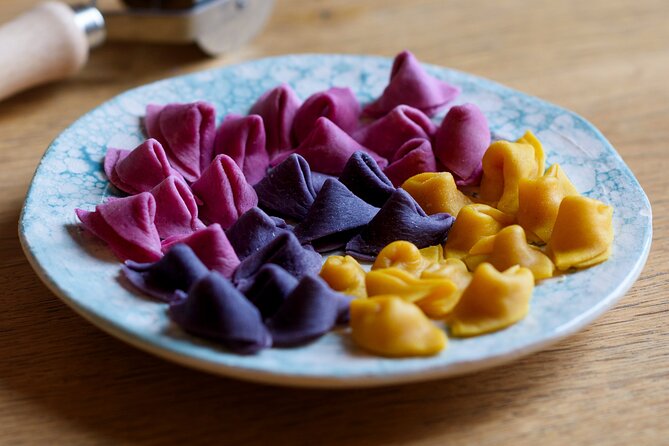
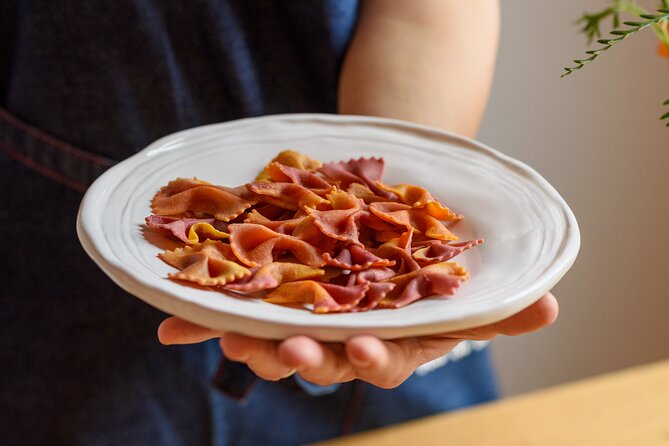
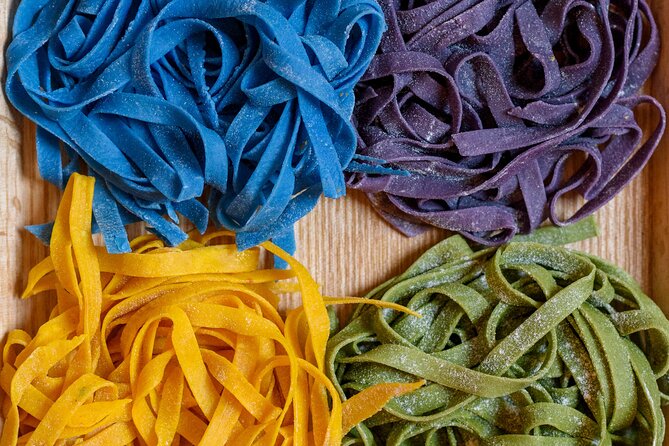
The unusual feature here is the use of natural colors. Purple potatoes, beetroot, seaweeds, herbs, and powders are used to add color and patterns to the pasta.
This is not just decoration. Natural ingredients can change the look of the dough while keeping the activity connected to food. You may create colored sections, patterns, or small designs instead of producing only one uniform batch of yellow pasta.
The color work also makes the class appealing to families and creative cooks. The shapes can be traditional, but the finished pieces may look very different from the pasta you see in a shop. Hearts, little boats, pyramids, and bonbons turn a basic cooking lesson into something more playful.
I would keep expectations sensible. Natural colors are likely to be softer and less predictable than artificial food coloring. That is part of the charm, but anyone seeking perfectly uniform, highly polished pasta may find the results more handmade than picture-perfect.
From Ravioli to Tiny Pasta Sculptures
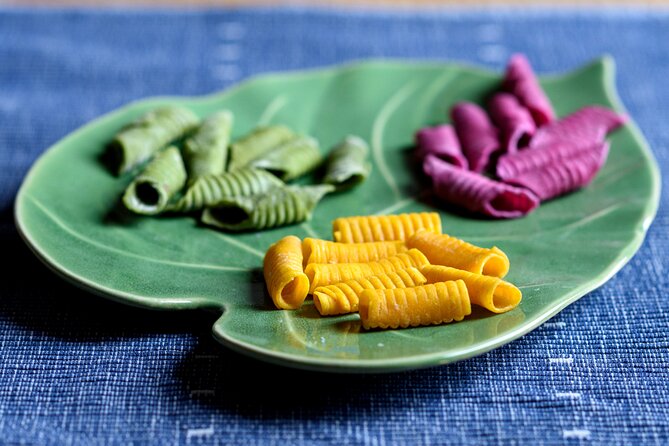
The class includes classic ravioli as well as more decorative forms. Ravioli gives you practice with filling and sealing, while the smaller designs focus on shaping and presentation.
The list of playful forms is unusually broad. You may work with hearts, boats, pyramids, and bonbons, alongside the more familiar pasta styles. The idea is to show that pasta shapes are not limited to the few forms most visitors recognize from restaurant menus.
I like this section for a practical reason: it helps you find a style you can repeat at home. Some people will prefer the orderly rhythm of tagliatelle. Others will enjoy the careful folding needed for tortellini. You might find that the odd-looking pyramid or boat is actually the shape you remember most clearly.
The lesson is described as relaxed and funny, but it is still hands-on. Your own pasta may not look perfect on the first try. That is normal. The point is to learn the movement, improve with each piece, and leave with something you made yourself.
Vegetarian Ingredients and Dietary Requests
The ingredients used in the class are vegetarian and cruelty free. That makes the experience a natural fit for vegetarians who want to enjoy a pasta lesson without needing to remove meat-based ingredients from the activity.
Vegan, gluten-free, and lactose-free options can also be requested in advance. This is important: do not wait until you arrive. The information provided says these choices are available by prior arrangement, so include your needs when booking.
The standard vegetarian format does not necessarily answer every dietary question. If you have a serious allergy or a strict medical requirement, you should confirm the details before committing. The class offers useful alternatives, but the available information does not provide a full allergen policy.
For a group with mixed diets, the advance options can make planning easier. One person may need gluten-free dough while another prefers the standard recipe. Ask before the class so Sara can prepare the right ingredients and format.
What the Two-and-a-Half Hours Feel Like
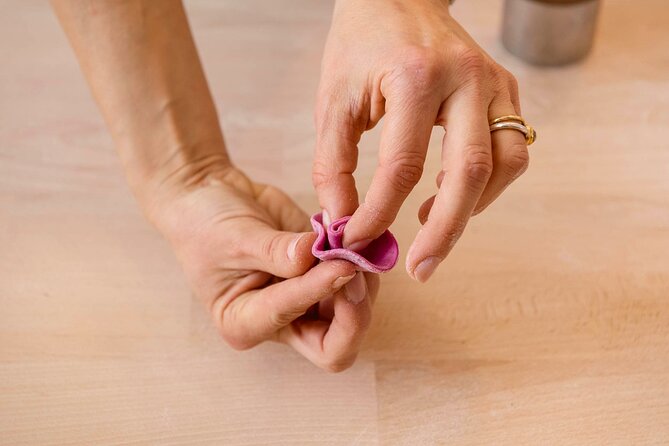
The timing gives the lesson a comfortable shape. You start with dough preparation, move into classic pasta forms, explore colored patterns, and finish with a selection of pasta you have made yourself.
Because the class is private, the schedule can likely feel less rushed than a large group lesson, although you should still expect the full 150 minutes to include instruction and practice. You have enough time to repeat techniques, but not unlimited time to perfect every shape.
The class ends back at the meeting point, the apartment on Via Saragozza. The information does not describe a restaurant meal or a separate tasting course, so treat this primarily as a pasta-making workshop. You will make fresh pasta and take it home, according to the practical experience described.
One especially useful detail is that the pasta can be cooked at home. This extends the experience beyond the class. Instead of leaving with only photographs or a recipe card, you have the chance to turn your work into a meal later.
Is $95.31 a Fair Price?
At $95.31 per person, this is not a cheap drop-in activity. I would judge the price against what is included: about two and a half hours of private instruction, an English-speaking host, organic ingredients, multiple pasta shapes, natural coloring techniques, and a home setting.
The private format is the biggest value point. You are not paying for a large class where attention is divided among many participants. Your group has the space to ask questions and work at a manageable pace.
The price also makes more sense if you care about learning rather than simply eating. A restaurant meal in Bologna may cost less, but it will not teach you how to make tortellini, garganelli, or colored pasta at home. A standard group cooking class might offer similar skills, but this experience adds the personal apartment setting and private participation.
Still, I would not choose it solely as a way to get lunch. The focus is instruction and making pasta. You take the fresh pasta home, so you may want to schedule a separate meal before or after the class.
Who Will Get the Most From This Class?
This is a strong choice for first-time pasta makers. You do not need expert kitchen skills, and the lesson moves from basic dough into more complex forms. The clear instruction and small format should help if you are unsure of your technique.
It also fits couples, families, and small groups who want a shared activity in Bologna. The colorful dough and unusual shapes give children or creative adults more to do than simply cutting noodles.
Vegetarians should find the standard ingredients convenient. People with vegan, gluten-free, or lactose-free needs should request the proper option in advance.
I would be less likely to recommend it to someone who wants a formal multi-course cooking school experience, a large social class, or a meal served immediately at the end. This is a personal home lesson, with pasta making at the center.
Practical Details Before You Book
The meeting point is Via Saragozza, 27, 40123 Bologna BO, Italy. The location is near public transportation, which helps if you are staying outside the central area. The activity ends at the same meeting point.
You receive confirmation at the time of booking, and a mobile ticket is accepted. The class is offered in English.
Free cancellation is available if you cancel at least 24 hours before the local start time. Cancellations or changes made less than 24 hours before the start are not refunded or accepted, so check your schedule before booking.
The experience has a top rating from six submitted ratings, with particular praise for the relaxed, personal teaching style, the natural colors, and the fact that participants can cook the pasta at home afterward. That pattern matches the strongest practical reason to book: you get both a pleasant afternoon activity and a skill you can use later.
Should You Book the Bologna Pasta Class?
Book it if you want to make pasta rather than simply eat it. The private apartment, patient English instruction, organic dough, and natural coloring give this class a clear identity. The range of shapes also means you are not limited to one quick demonstration.
I would especially recommend it for beginners, vegetarians, creative cooks, and anyone who likes bringing home a useful souvenir. Ask in advance for vegan, gluten-free, or lactose-free preparation if needed.
Skip it if your priority is a full meal, a large social event, or a professional kitchen setup. For everyone else, $95.31 buys a focused, personal lesson in one of Bologna’s most meaningful food traditions, with enough imagination to keep the experience from feeling ordinary.
FAQ
Where does the pasta-making class take place?
The class takes place in an apartment at Via Saragozza, 27, 40123 Bologna BO, Italy.
How long does the experience last?
The class lasts approximately two hours and 30 minutes.
Is the class offered in English?
Yes. The experience is offered in English.
Is this a private activity?
Yes. Only your group participates in the activity.
What pasta shapes can I learn to make?
The class covers tortellini, cappelletti, garganelli, tagliatelle, lasagne, ravioli, and additional shapes such as hearts, little boats, pyramids, and bonbons.
How are the pasta colors made?
Natural ingredients including purple potatoes, beetroot, seaweeds, herbs, and powders are used to add color and patterns.
Can I request dietary alternatives?
Yes. Vegetarian and cruelty-free ingredients are used, and vegan, gluten-free, and lactose-free options can be requested in advance.
What is the cancellation policy?
You can cancel for a full refund up to 24 hours before the experience start time. Cancellations or changes made less than 24 hours in advance are not accepted or refunded.
Recently added in Bologna
- Colorful Pasta Workshop in Bologna with meal★ 5.0 · 2 reviews
- Tortelloni and Tagliatelle Cooking Class in Bologna + Wine★ 3.0 · 2 reviews
- 3 hour Lasagna Bolognese cooking class★ 5.0 · 6 reviews
- Cesarine: Small group Tortellini Class at Local’s Home in Bologna★ 5.0 · 18 reviews
- Pasta and Tiramisu Masterclass with organic wines★ 3.5 · 3 reviews
- Lasagna Masterclass: Learn, Cook & Taste Authentic Bolognese★ 5.0 · 4 reviews
- Pasta Making Class: Tagliatelle & Bolognese Sauce★ 5.0 · 15 reviews
- Cesarine: Pasta & Tiramisu Class at a Local’s Home in Bologna★ 5.0 · 29 reviews
Home Cooking Classes, compared.
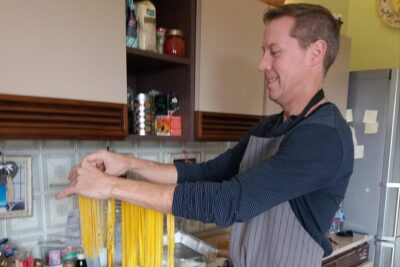
Pastamama, Home Cooking Classes at Grace’s Home
Read our review →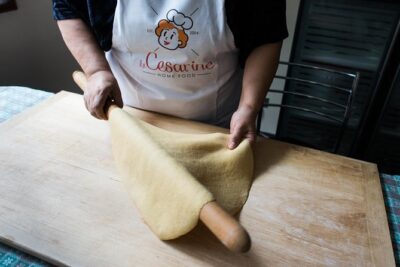
Small Group Pasta and Tiramisu Class at Local’s Home in Venice
Read our review →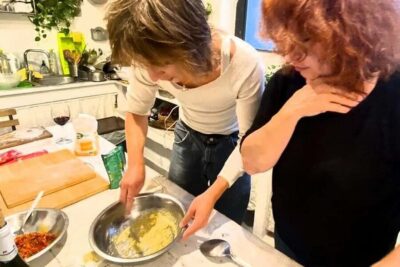
Pistachio Ravioli, Pasta Home Cooking Class w/ Wine
Read our review →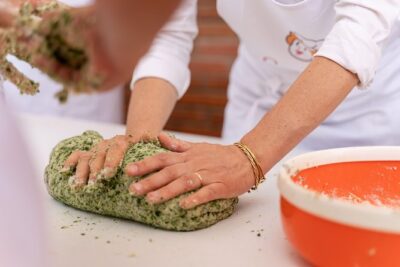
Cesarine: Small group Pasta and Tiramisu class in Varenna
Read our review →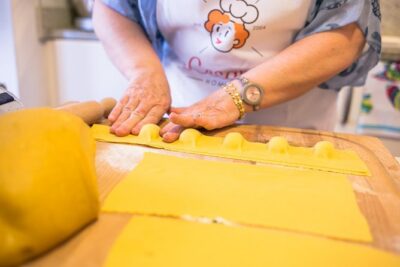
Cesarine: Small group Pasta and Tiramisu with Mamma in Lucca
Read our review →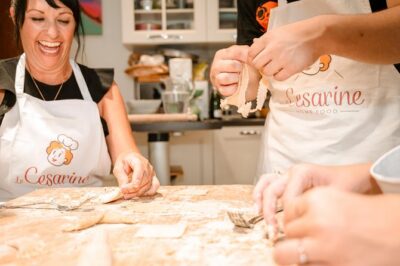
Cesarine: Small group Pasta and Tiramisu class in Bologna
Read our review →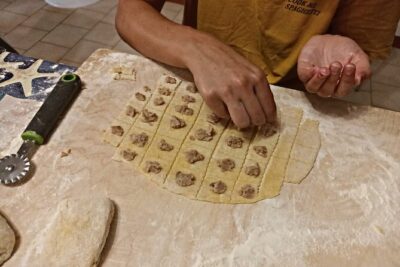
Authentic Bologna Home Cooking Class: Tagliatelle & Tortellini
Read our review →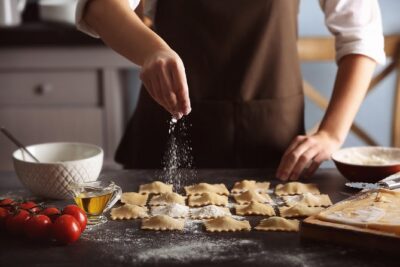
Alghero Home Cooking Pasta Class at a Farmhouse with Wine
Read our review →Browse the lists this class appears in