
REVIEW · ROME PASTA CLASSES
Rome: Five Shapes of Pasta Cooking Class in Ancient Tavern
The best part of this Rome cooking class is that you do not simply watch pasta being made. You roll the dough, cut it safely, shape ravioli, agnolotti del plin, tortellini, cappelletti, and fettuccine, then eat the results in the same old tavern where you cooked. Emanuele and Angelo keep the class lively, with music, jokes, and plenty of help at the table.
I like the hands-on range of five pasta shapes and the fact that your meal includes two sauces, prosecco with local cheese, wine, and tiramisu. The main consideration is that the class lasts three hours and requires standing, rolling, cutting, and handwork, so it is not suitable for people with mobility impairments.
Key points to know before booking
- Five classic pasta shapes: Learn several filled pastas plus fettuccine, rather than repeating one simple recipe.
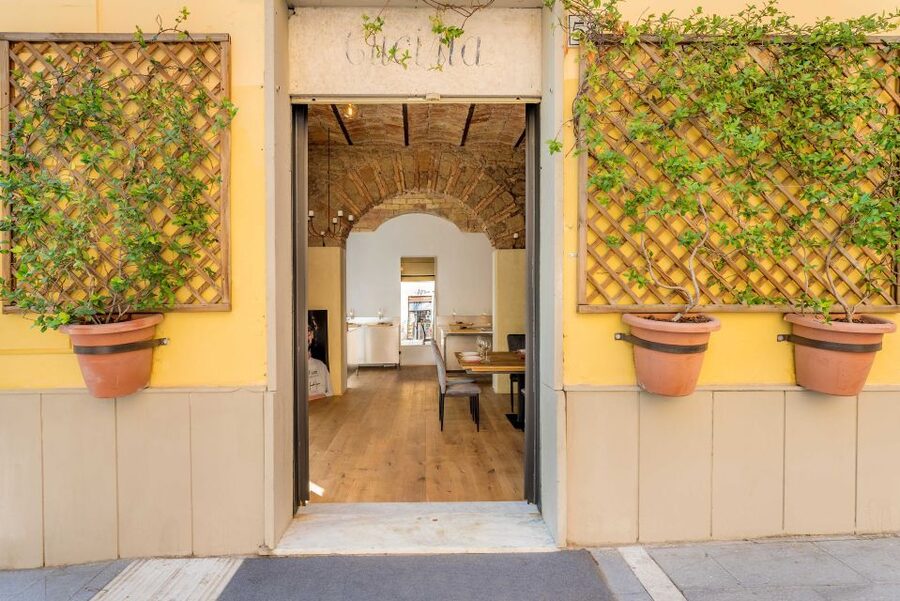
- A real old Roman setting: The class takes place in an Antica Osteria founded in the late 1800s, with the original marble osteria sign above the entrance.
- You eat what you make: Your pasta is served as two courses with Italian sauces, followed by an express tiramisu.
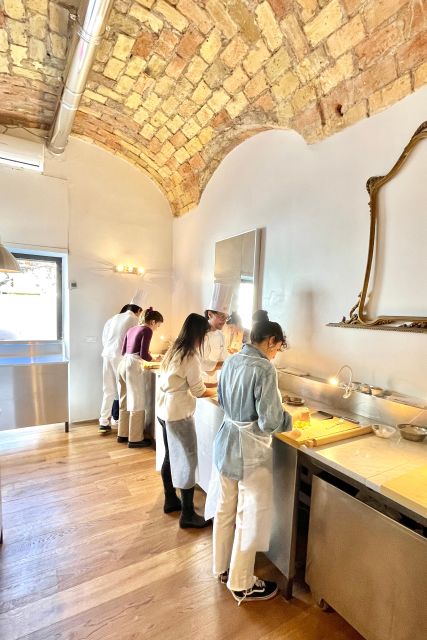
- Small, social group: Capacity is limited to 10, allowing the chefs to move around and correct your technique.
- Good for beginners: The instructors explain each step clearly and help with rolling, cutting, filling, and shaping.
- A useful souvenir: Everyone receives a complimentary Professional Chef Hat with the Pastificio Faini logo.
Cooking pasta inside Rome’s old Cucina tavern
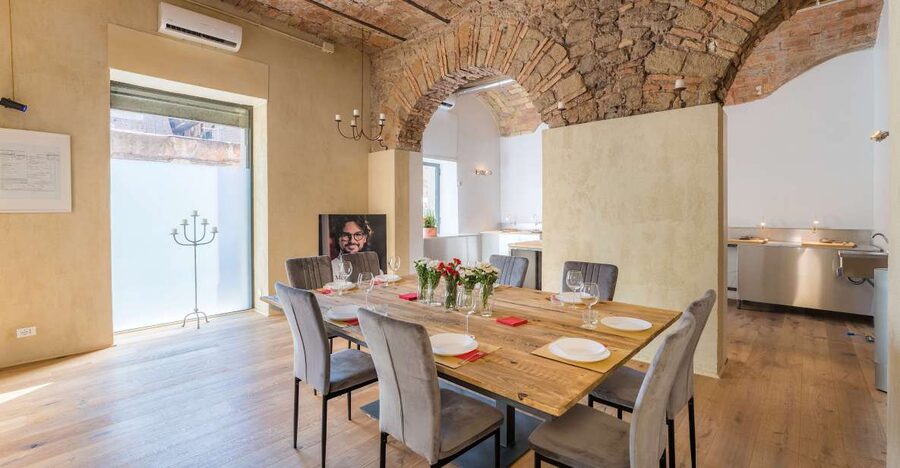
You meet at Cucina, an old Osteria with its original marble sign still displayed above the entrance. The space was founded in the late 1800s and later converted into a cooking school, so it offers something more characterful than a modern demonstration kitchen.
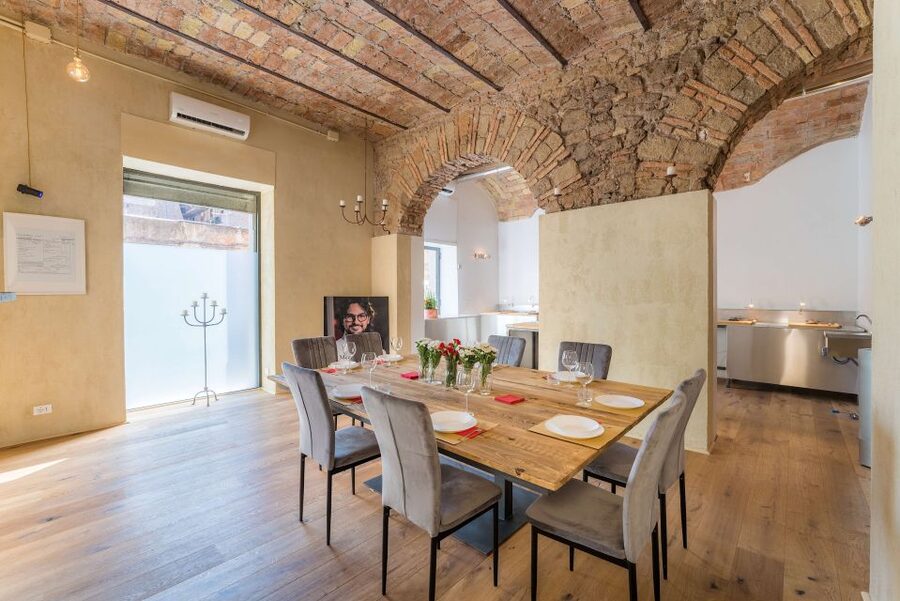
I like the setting because it fits the subject. Fresh pasta is not presented as a polished restaurant trick, but as a practical Italian skill taught around a shared table. The room has old-world decoration, a prepared dining table, and enough work space for everyone to handle the dough.
The class is limited to 10 people, although one account describes a group of 12. Group size can depend on the date, so I would check the current booking details if personal attention matters greatly to you. In the usual small-group format, the chefs can move from person to person and help with the tricky parts rather than leaving you to copy from a distance.
English and Italian are spoken. Emanuele and Angelo are the names most often associated with the class, though the team can vary. They bring plenty of energy, and the tone is informal rather than stiff. Music, dancing, and jokes are part of the evening, which makes this a cooking lesson with a social side.
Other Rome classes worth putting on the shortlist
- 3 in 1 Cooking Class near Navona: Fettuccine, Ravioli & Tiramisu
★ 5.0 · 7,376 reviews - Rome: Pasta & Tiramisu Class with Fine Wine by the Vatican
★ 4.9 · 4,852 reviews - Rome: Pasta Making Class with Wine, Limoncello, and Dessert
★ 4.9 · 3,177 reviews
The first lesson: making a thin sheet by hand
The class begins with the basic fresh-pasta dough. You learn how to work the ingredients, knead the mixture, and turn it into a thin sheet using a wooden rolling pin. The rolling technique is one of the most useful parts of the experience because it gives you a skill you can repeat at home without buying a pasta machine.
This is also where the class asks for a little patience. Rolling dough evenly takes more effort than watching a chef do it. You may need to adjust your pressure and keep the sheet from sticking or becoming too thick. The chefs step in when needed, but they still let you do the work.
The instructors also cover safe food cutting procedures. That detail matters in a busy kitchen, especially when several people are shaping pasta at once. You get practical instruction instead of only a recipe to take home.
Beginners should feel comfortable here. Several people who had made pasta before still found they had been using the wrong technique, while first-timers were surprised by how manageable the process became with clear guidance. I would still wear comfortable clothing and expect to spend a fair amount of time standing at the work surface.
Five shapes, five small lessons in Italian pasta
The class is built around five traditional shapes. Each one uses the same basic dough in a different way, so you learn how changes in cutting, folding, filling, and pinching create very different results.
Ravioli give you an early lesson in filling and sealing. You place the filling on the dough, cover it, press out excess air, and cut the parcels into neat portions. The seal has to be firm enough to keep the filling inside during cooking.
Agnolotti del plin are smaller filled parcels with a characteristic pinched edge. Their name and shape add a regional note to the class. They also demand more precision than a broad raviolo, which makes them a useful test of your fingers.
Tortellini require careful folding and shaping. The process feels less like cutting squares and more like building a small piece of pasta with a distinct form. The chefs demonstrate the movement, then give you time to repeat it.
Cappelletti offer another variation on filled pasta. The shapes can look similar at first, but the folding pattern changes the final parcel. Making several forms side by side helps you see how Italian pasta traditions use small details to create different dishes.
Fettuccine brings you back to a long, unfilled pasta. You cut the sheet into ribbons and learn how thickness and width affect the finished noodle. It is probably the easiest shape to picture making at home, but the earlier filled pastas give the class more variety.
I like this structure because you finish with a set of skills rather than one party trick. You learn to roll a sheet, cut it, fill it, seal it, fold it, and slice it into ribbons. The class does not promise that you will become a pasta expert in one evening, but it gives you a strong starting point.
Prosecco, local cheese, and a proper break
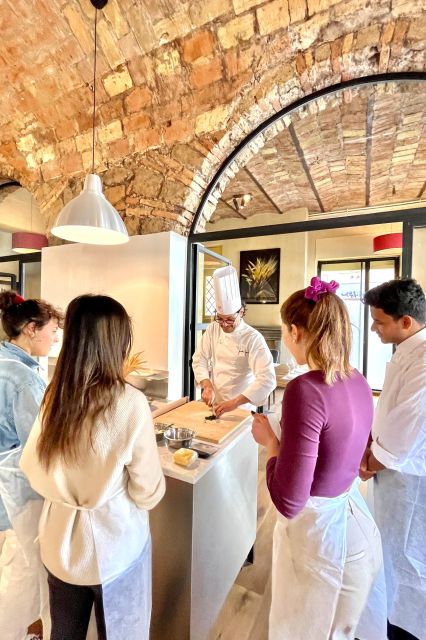
While the pasta is being prepared, the class includes an appetizer of local cheese with fresh prosecco. This is more than a small snack. It gives you a break from kneading and shaping, and it helps turn the lesson into a shared meal.
The prosecco is also a sensible match for the early part of the class. You can have a drink while you work without waiting until the end of the evening for the social side to begin. Wine is also served with the meal later.
The pace matters here. Three hours is long enough for the class to feel complete, but the food breaks keep it from becoming three straight hours of kitchen work. You will still need to focus, especially while shaping the filled pasta, but the mood remains relaxed.
If you have a food allergy, tell the instructors before you begin. One participant with a garlic allergy received adjusted ingredients for the ravioli and tortellini, along with a separate sauce. That is a useful sign of practical flexibility, though you should always confirm your own dietary needs in advance rather than relying on an accommodation being available.
Same town, a different thing to roll out:
- Rome Cooking Class: Make Pasta and 3 Spritz Cocktails
★ 5.0 · 2,937 reviews - Rome: 3-in-1 Fettuccine, Ravioli, and Tiramisu Cooking Class
★ 4.9 · 2,704 reviews - Rome: Fettuccine Pasta Cooking Class in Rome’s City Center
★ 4.8 · 2,414 reviews - Learn to Make Pasta & Tiramisu with Wine and Limoncello Included
★ 5.0 · 2,345 reviews
Two sauces and the meal you helped create
Once the pasta is made, the chefs cook and serve it with two different Italian sauces. The recipes and ingredients are explained as part of the class, so you are not simply handed a plate at the end.
This is where the experience earns much of its value. You taste the difference between pasta shapes and sauces, and you see how a filled parcel behaves differently from a long ribbon. The meal gives context to the technique. It is easier to remember how thin to roll the dough when you have just tasted the result of getting it right.
The class includes two handmade pasta courses, a full lunch or dinner, and wine. The exact sauce choices can vary, so do not book expecting a particular Roman recipe unless the current session details say so. The important point is that the pasta you make becomes the main part of the meal.
The dining table is set for the group, and the meal feels more like a communal Italian dinner than a quick sample. That makes the class a good choice for couples, families with older children, and solo visitors who want an easy way to meet people over food. Teenagers have also enjoyed the format because there is constant activity rather than a long demonstration.
Express tiramisu to finish
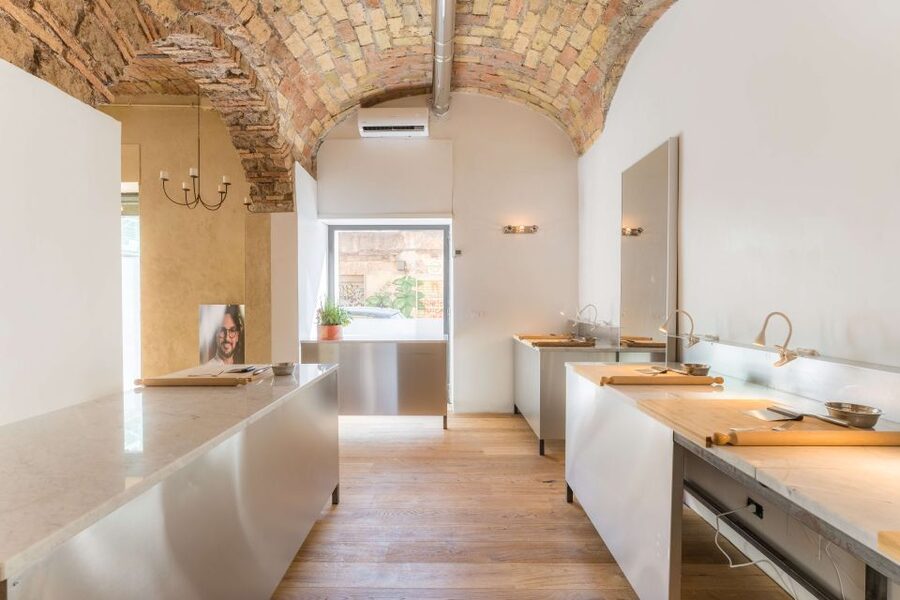
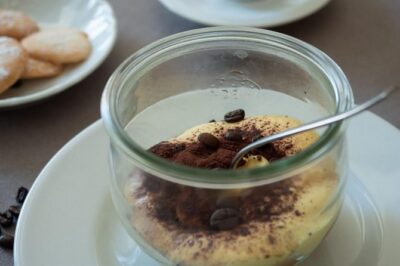
Dessert is not just served ready-made. You prepare an express tiramisu at the end, adding one more simple Italian technique to the class.
It is a shorter preparation than the pasta, but it gives the evening a clear finish. After handling dough for much of the session, you switch to assembling a familiar dessert and then sit down to eat.
The tiramisu is part of the included meal, so there are no extra charges for dessert, wine, the cheese course, or the pasta you prepare. Everyone also receives the Professional Chef Hat with the Pastificio Faini logo. It is a playful souvenir, though the more useful keepsake is the set of techniques you can try in your own kitchen.
What the $67.19 price really covers
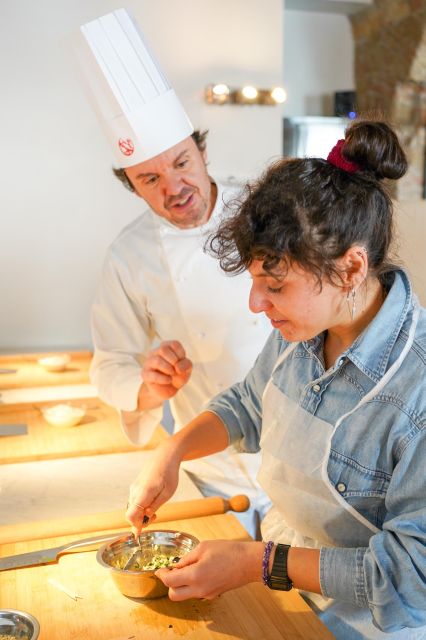
At $67.19 per person, this is good value if you want both a lesson and a full meal. The price includes the three-hour class, the appetizer with prosecco and Italian cheese, two handmade pasta courses with sauces, wine, and the express tiramisu.
Many cooking classes charge separately for drinks or offer only a small tasting at the end. Here, you are paying for a substantial evening with food built into the experience. You also receive direct help with several pasta forms, rather than spending the session watching a chef work.
The value is lower if you dislike group activities, do not want to stand at a work surface, or mainly want a quiet dinner. This is not a formal restaurant meal with a short cooking display. It is active, noisy, social, and hands-on.
There are no extra fees requested during the class. That makes budgeting easier, especially since the included wine, prosecco, cheese, meal, and dessert cover the full food program.
Who will enjoy this class most
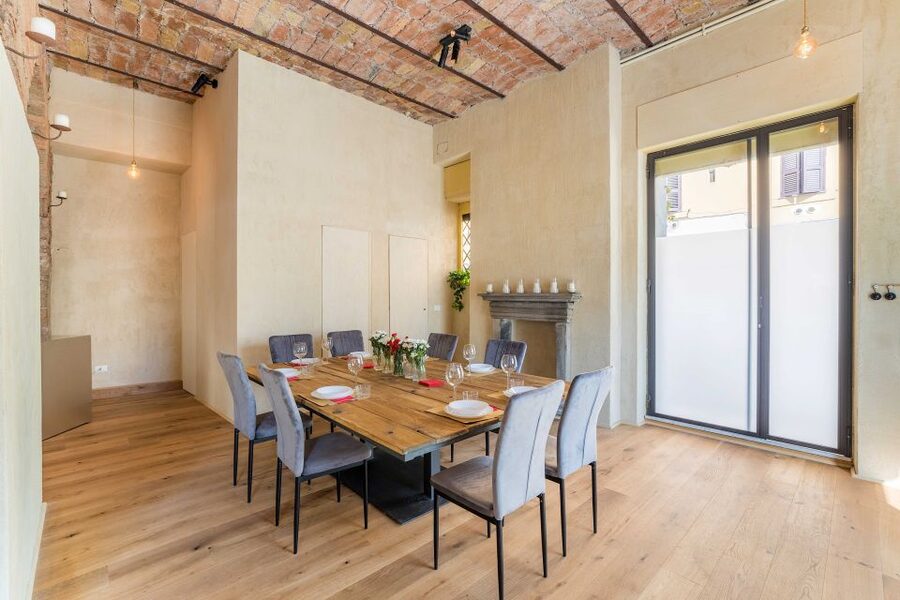
I would choose this experience for you if you want to:
- Learn a practical skill you can repeat at home
- Eat a full Italian meal rather than a small tasting
- Meet people in a friendly small group
- Add a food-focused evening to a Rome sightseeing schedule
- Try several filled pasta shapes in one session
- Enjoy a lively class led by engaging chefs
It works especially well for couples celebrating an anniversary or honeymoon, families with older children, and friends who want a shared activity. The class has enough humor and movement to keep teenagers involved, while the clear demonstrations help complete beginners.
I would think twice if you have limited mobility, dislike standing, or want a quiet, highly formal cooking school. Pets are not allowed. The experience is also not suitable for people with mobility impairments, and no specific accessibility adaptations are provided in the information available.
Practical details for planning your evening
The activity lasts three hours, with starting times shown when you check availability. It ends back at the Cucina meeting point, so you do not need to arrange a separate pickup or drop-off.
The meeting place is the old Osteria named Cucina. Look for the original marble osteria sign above the entrance. That detail should make the venue easier to identify, but I would still allow a little extra time to find the door in an unfamiliar part of Rome.
Cancellation is free up to 24 hours before the start time for a full refund. You can also reserve now and pay later, which helps if your Rome schedule is still changing.
The provider is Professional Lab Pasta Experience, and the business holds HACCP certification for food hygiene and safety from 2020. That does not replace sensible food-allergy planning, but it is a useful detail for anyone who wants reassurance about kitchen standards.
Should you book the Five Shapes of Pasta class?
Book it if you want an evening that combines instruction, dinner, wine, and a bit of Italian theater. The strongest reason to choose it is the number of techniques packed into three hours: you learn five pasta shapes, two sauces, hand-rolled dough, safe cutting, and a simple tiramisu.
I would choose this over a passive food tour if you want to return home with something you can actually practice. I would skip it only if mobility, noise, group cooking, or a long hands-on session would make the evening tiring.
For most food-loving visitors, the $67.19 price is fair because nearly everything is included and the meal is substantial. Check the starting time, confirm any allergies in advance, and arrive ready to work with your hands. You will leave with a full stomach, a chef hat, and a better sense of why fresh pasta takes patience but does not require magic.
FAQ
How long does the pasta cooking class last?
The class lasts three hours. Starting times vary, so you need to check availability for the date you want.
Which pasta shapes will I make?
You will make ravioli, agnolotti del plin, tortellini, cappelletti, and fettuccine. The class covers both filled and unfilled fresh pasta.
What food and drinks are included?
The price includes an appetizer of Italian cheese with prosecco, two handmade pasta courses with two different sauces, wine, a full lunch or dinner, and express tiramisu prepared during the class.
Which languages are spoken?
The class is offered in English and Italian.
How many people are in the group?
The activity is described as a small-group class limited to 10 participants. Group size may vary by session, so check the current booking details.
Can I cancel the booking, and is the class accessible?
You can cancel up to 24 hours in advance for a full refund, and reserve now while paying later. The class is not suitable for people with mobility impairments, and pets are not allowed.
Recently added in Rome
- Trastevere Food Tour with Pasta-Making Class★ 5.0 · 5 reviews
- Traditional Pasta Cooking Class with Tiramisu Small Group★ 5.0 · 7 reviews
- Rome: Pasta and tiramisu class with wine pairing at Come Na Vorta★ 5.0 · 30 reviews
- Spritz and Pasta! Spritz, Fettuccine & Tiramisù★ 5.0 · 2 reviews
- The Pasta Factory Class★ 4.5 · 21 reviews
- Top Class in Fettuccine, Ravioli, and Tiramisu★ 5.0 · 7 reviews
- Private 4 Roman Pastas Tasting Tour in Rome★ 5.0 · 6 reviews
- The Original Fettuccine Alfredo Experiences in Roma★ 4.5 · 38 reviews
Rome Pasta Classes, compared.
3 in 1 Cooking Class near Navona: Fettuccine, Ravioli & Tiramisu
Read our review →
Pasta & Tiramisu Class with Fine Wine by the Vatican
Read our review →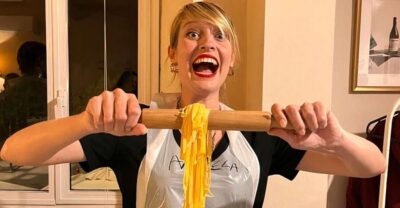
Pasta Making Class with Wine, Limoncello, and Dessert
Read our review →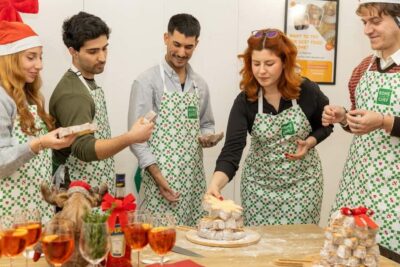
Rome Cooking Class: Make Pasta and 3 Spritz Cocktails
Read our review →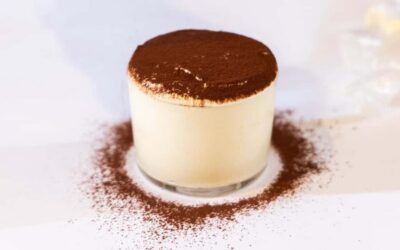
3-in-1 Fettuccine, Ravioli, and Tiramisu Cooking Class
Read our review →
Fettuccine Pasta Cooking Class in Rome’s City Center
Read our review →
Learn to Make Pasta & Tiramisu with Wine and Limoncello Included
Read our review →
Become a Masterchef in Rome: Pasta, Ravioli and Tiramisù Class
Read our review →Browse the lists this class appears in