
REVIEW · VEGAN AND VEGETARIAN COOKING CLASSES
Florence: Vegetarian Pasta & Dessert Workshop
Florence’s best cooking lessons do not need meat to feel properly Tuscan. In this 2.5-hour kitchen class, you make pappardelle, filled ravioli, and tiramisu from the beginning, then sit down to eat with unlimited Tuscan wine. I especially like the focus on seasonal produce and the chance to learn pasta skills you can repeat at home. The class is also near the Duomo, so it fits neatly into a day of sightseeing.
I like two things here. First, the food is genuinely hands-on: you mix, roll, shape, fill, and cook rather than simply watch a chef work. Second, the vegetarian menu is clear and generous, using eggs, cheese, and fresh produce instead of treating meat-free cooking as an afterthought. The main consideration is that this is vegetarian, not vegan, and meat or fish cannot be added for mixed-diet groups.
Key points to know
- Three Italian staples in one class: Make pappardelle, filled ravioli, and classic tiramisu.
- Vegetarian by design: Recipes use seasonal vegetables, fresh eggs, and high-quality cheeses, with no meat or fish.
- Unlimited Tuscan wine: Red and white wine are served with the shared meal.
- Near the Duomo: Meet at La Carbonata restaurant on Borgo Pinti, only a few minutes from Florence’s famous cathedral.
- Useful take-home recipes: You receive a printed or digital booklet so the class can continue in your own kitchen.
- Easy booking terms: English instruction, wheelchair access, and free cancellation up to 24 hours before the class.
Why this Florence cooking class is different
Many pasta classes in Italy follow a familiar pattern: make dough, shape one kind of pasta, eat, and go home. This one gives you more variety in the same sitting. You work with two pasta forms, then make a dessert that needs no meat-free adjustment at all.
The vegetarian focus also feels practical. Tuscan cooking relies heavily on vegetables, beans, grains, cheese, olive oil, and pasta, so removing meat does not remove the character of the food. You get to see how fresh produce and good dairy products carry a dish.
This is not a vegan class. The pasta dough uses farm-fresh eggs, the ravioli may include cheese, and tiramisu contains mascarpone, biscuits, eggs, and dairy. If you need vegan substitutions, you must request them in advance, and the available information does not promise that every dish can be changed.
The class is taught in English, and the provider is Sironi Alessandro. No individual chef name is given, so book this for the food and teaching format rather than for a named culinary personality.
More Vegetarian Cooking Classes in Florence:
- Small group PURO Vegan pasta and bruschette Class in Florence
★ 5.0 · 24 reviews - Florence Cooking Class: Vegetarian Pasta and Dessert Making
★ 5.0 · 7 reviews - Semi private Pasta Class Vegetarian Organic
★ 4.5 · 3 reviews
Meeting at La Carbonata near the Duomo
You meet at La Carbonata restaurant, Borgo Pinti 95R, 50121 Florence. The location is only a few minutes from the Duomo, which makes the class easy to pair with central Florence plans.
That central setting matters. You do not need to spend part of your afternoon arranging transport to a distant cooking school or countryside estate. You can visit the cathedral area, walk to the restaurant, and then continue with Florence afterward.
Allow enough time to find Borgo Pinti and arrive ready to begin. The supplied details do not give a precise starting time, so you need to check the available sessions when booking. The total class lasts 2.5 hours, a useful length for a proper meal without taking up an entire day.
The kitchen is wheelchair accessible. Hotel pickup and drop-off are not included, so you make your own way to the meeting point.
Starting with pasta dough and Tuscan ingredients
The class begins with pasta dough made from scratch. You use eggs and flour, then learn how to bring the dough together before rolling it thin enough for shaping.
This part is worth your attention. Fresh pasta is not difficult because the ingredient list is long. It is difficult because the texture has to feel right. Too dry and the dough resists rolling. Too wet and it becomes sticky and hard to handle. A local chef can show you what the dough should feel like, which is more useful than simply copying a printed recipe.
The class also introduces the produce behind the recipes. Seasonal vegetables, regional ingredients, fresh eggs, and good cheeses form the base of the meal. The exact fillings and vegetables can vary, since the menu is tied to what is available and suitable for the class.
That seasonal approach means your dish may not be identical every time. I see that as a benefit if you want to understand Tuscan cooking rather than memorize one fixed menu. The recipe booklet helps you remember the method and gives you a starting point for making substitutions at home.
Rolling and shaping handmade pappardelle
Pappardelle is a broad, ribbon-like pasta that suits hearty Tuscan sauces. Once your dough is ready, you roll it out and cut it into wide strips.
You will use cooking tools supplied by the class, and an apron is available during the lesson. The important skill here is consistency. Pasta strips need to be reasonably even so they cook at the same rate, but they do not need factory-perfect edges. Handmade pasta should look handmade.
I like pappardelle as a first pasta because the result is visible and satisfying. You can see the transformation from a ball of dough into long ribbons. It also gives you a technique you can adapt to other sauces once you return home.
The class is not just a demonstration, so expect to work with your hands. If you prefer to sit back and take notes, this may feel active. If you want to learn by doing, the format is a good match.
More Dessert Tastings in Florence:
- Florence: Handmade Pasta & Dessert Class with Unlimited Wine
★ 4.8 · 788 reviews - Florence: Pasta Class with Wine, Limoncello and Dessert
★ 4.9 · 674 reviews - Pasta, meatballs and ice cream in a villa in the hills of Florence
★ 5.0 · 32 reviews - Gluten free pasta and dessert class 6 guests max
★ 5.0 · 2 reviews
Filling and folding the ravioli
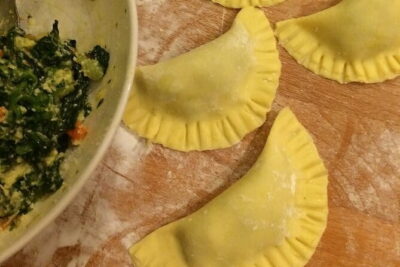
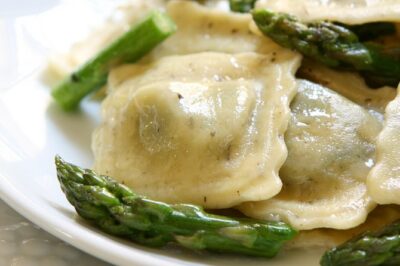
Next comes the more detailed pasta task: filled ravioli. You roll the dough, add a vegetarian filling, and shape the pieces so the filling stays inside during cooking.
Ravioli requires a little more care than pappardelle. You need to avoid trapped air, seal the edges firmly, and keep the filling from spreading onto the joining surface. These are small techniques, but they make the difference between tidy ravioli and pasta that opens in the pot.
The filling uses regional vegetarian ingredients, with fresh produce and cheese playing a central role. The exact combination is not specified, so you should expect the ingredients to reflect the class menu and the season rather than a guaranteed filling listed in advance.
This is also where the chef’s guidance has real value. A recipe can tell you how much filling to place in each piece, but an instructor can show you the right amount at a glance. You also learn how to work efficiently, which becomes important when making ravioli at home for more than one or two people.
Making a classic Tuscan tiramisu
After the pasta, you prepare tiramisu. The dessert uses mascarpone, espresso-soaked biscuits, cocoa, eggs, and dairy.
The process is simple enough to follow but still teaches useful kitchen habits. You layer the components, balance the coffee and cream, and finish with cocoa. The vegetarian label applies because the dessert contains no meat or fish, not because it removes eggs or dairy.
Tiramisu is a smart choice for this class. It is familiar, unmistakably Italian, and easy to recreate at home once you know the proportions and method. It also gives you a break from pasta shaping before the meal begins.
If you do not drink coffee, ask about the preparation before booking or at the start of class. The supplied details specifically describe espresso-soaked biscuits, and no alternative dessert is promised.
Eating your handmade meal with Tuscan wine
At the end, you sit down to eat the pappardelle, ravioli, and tiramisu you helped prepare. Red and white Tuscan wine are included without a separate limit during the meal.
That wine arrangement adds value, especially in Florence, where drinks can quickly increase the cost of a meal. You can sample both red and white styles with the food, though the available details do not specify particular grape varieties or labels.
Additional drinks are available for purchase. The class includes the listed Tuscan wine, but you should not assume that every beverage is covered. If you want a particular soft drink, coffee, or other option, budget separately.
The shared meal is an important part of the class. You are not simply handed a recipe booklet and sent away after the cooking. You get to taste the finished result while the techniques are still fresh in your mind. That makes it easier to remember what the dough felt like, how the ravioli was sealed, and how the tiramisu was layered.
What the $50 price really covers
At $50 per person, the price is reasonable for a central Florence activity that includes food, instruction, equipment, an apron, a full meal, wine, and recipes to take home.
The value depends on what you want from a cooking class. If you are comparing it with a cheap meal, the class costs more because you are paying for instruction and participation as well as lunch or dinner. If you are comparing it with a private culinary lesson, the price is modest, though the group size is not provided, so you should not assume one-on-one attention.
The inclusion of unlimited red and white Tuscan wine strengthens the value for adults who plan to drink. The digital or printed recipe booklet also matters. It turns the class into something you can use after Florence rather than a one-time meal.
There are limits. Hotel transfers are not included, vegan substitutions require advance notice, and meat or fish options are not available. For a vegetarian, these are minor issues. For a mixed group hoping to choose between meat and vegetarian dishes, they are important.
Who will enjoy this class most
I would recommend this class to vegetarians who want traditional Italian food without having to negotiate around meat or fish. The menu is built around that preference from the start.
It also suits first-time pasta makers. You learn basic dough preparation, broad pasta cutting, filled pasta shaping, and a simple Italian dessert in one session. That gives you a wider set of home-cooking skills than a class focused on one pasta shape.
Families and couples may like the format, but the supplied information does not give a minimum age or child policy. Check those details before booking if children are part of your group.
Food-focused visitors will appreciate the local produce and recipe explanations. The chefs discuss the origins of the dishes and offer vegetarian substitutions, which makes the class useful beyond the exact menu served that day.
You should think twice if you want a quiet meal, a countryside setting, or a fully vegan menu. This is an active kitchen class in central Florence, with eggs and dairy built into the food.
Practical details before you book
The class is conducted in English. The cooking tools and apron are provided, so you do not need to bring specialist equipment.
You receive either a printed or digital recipe booklet. If you have a preference, ask which format is available for your session. Since the class uses seasonal ingredients, the precise vegetables and ravioli filling may vary.
Free cancellation is available up to 24 hours before the activity for a full refund. You can also reserve now and pay later, which helps if your Florence schedule is still changing.
Check availability for the starting time. The duration is fixed at 2.5 hours, but the supplied details do not give one universal departure time.
A verified booking from Maria in Italy, dated January 13, 2026, gave the class five out of five and described it as a particularly strong cooking experience among classes taken in different places. That is a small review base, only two reviews overall, so I would treat it as encouraging rather than definitive. Still, the praise matches the strongest features of the class: hands-on work, clear vegetarian cooking, and a meal worth sitting down for.
Should you book the Florence vegetarian pasta class?
Book it if you want to make real pasta, eat a full vegetarian Italian meal, and leave with recipes you can use at home. The central location, English instruction, included wine, and $50 price make it a practical choice for a half-day Florence activity.
Skip it if you need vegan food without advance planning, want meat or fish on the menu, or prefer a sightseeing tour with no scheduled kitchen work. For everyone else, this is a focused way to spend 2.5 hours learning the food rather than just ordering it.
FAQ
Where does the cooking class meet?
You meet at La Carbonata restaurant, Borgo Pinti 95R, 50121 Florence, a few minutes from the Duomo.
How long does the class last?
The activity lasts 2.5 hours.
Is the class taught in English?
Yes. The listed instructor language is English.
What dishes will I prepare?
You will prepare handmade pappardelle, filled ravioli, and tiramisu using vegetarian ingredients.
Is the food vegan?
No. The class uses fresh eggs, mascarpone, cheese, and other dairy products. Vegan substitutions may be available if requested in advance.
Is wine included?
Yes. Unlimited red and white Tuscan wine is included with the shared meal. Additional drinks are available for purchase.
Is the class wheelchair accessible?
Yes. The activity is listed as wheelchair accessible. Hotel pickup and drop-off are not included.
More Vegan and Vegetarian Tours in Florence
- Vegan Cooking Class in Florence: Pasta Making & Wine!
★ 5.0 · 2 reviews - Vegan Pasta in Verona in a family home Kitchen
★ 5.0 · 2 reviews
Recently added in Florence
- Vegan Cooking Class in Florence: Pasta Making & Wine!★ 5.0 · 2 reviews
- Hands on Deluxe Traditional 4-course dinner with fresh pasta★ 5.0 · 15 reviews
- Tuscan Pasta Masterclass Small-Group Cooking Experience★ 5.0 · 17 reviews
- MaMa Florence: The Art of Corzetti – Hands-On Pasta Class★ 5.0 · 15 reviews
- The Art of Pasta and Wine Tasting with Local Sommelier★ 5.0 · 16 reviews
- Cooking class and home made pasta in Florence with LA VIVANDIERA!★ 5.0 · 5 reviews
- Hands-On Pasta Making Class in Central Florence with Patrizia★ 5.0 · 5 reviews
- Gluten free pasta and dessert class 6 guests max★ 5.0 · 2 reviews
Vegan and Vegetarian Cooking Classes, compared.
Small group PURO Vegan pasta and bruschette Class in Florence
Read our review →Florence Cooking Class: Vegetarian Pasta and Dessert Making
Read our review →
Vegan Cooking Class in Florence: Pasta Making & Wine!
Read our review →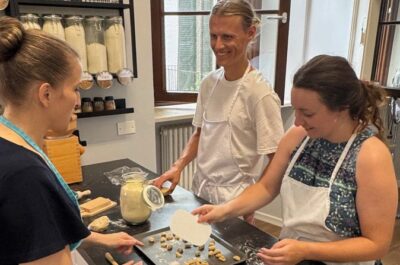
Browse the lists this class appears in