
REVIEW · TIRAMISU CLASSES
Authentic Roman Pasta & Tiramisu Experience with Italian Wine
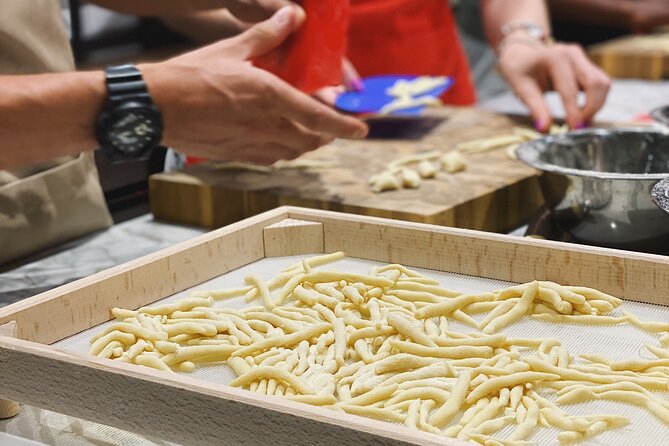
The best part of this Rome food class is that you do not just eat Italian cooking, you work through the basic steps yourself. At Piazza Mattei, a professional chef guides you through pasta dough, ravioli, sauces, and tiramisu before you sit down to eat what you made.
I like the small group of no more than 12 and the steady personal help from chefs such as Alessandro, Marco, Max, and Jacob. I also like the practical mix of dishes: handmade pasta gives you a useful skill, while tiramisu keeps the class relaxed and fun.
The main caution is dietary. This is not suitable for people with celiac disease, and gluten-free cooking is not offered. Severe nut allergies may also be a concern because traces of gluten and nuts can be present.
Key points to know before booking
- Pasta is made by hand: You mix, knead, roll, and fill dough for traditional ravioli.
- The menu is a full Italian meal: Olives and taralli come first, followed by pasta and classic tiramisu.
- Wine is included throughout: Bottomless Italian wine is part of the class, along with light snacks.
- The group stays intimate: A maximum of 12 people leaves room for questions and one-on-one help.
- The experience begins and ends at Piazza Mattei: Hotel pickup and drop-off are not included.
- The class suits beginners: You do not need previous cooking experience, but you do need to be comfortable with gluten and possible nut traces.
Starting at Piazza Mattei in central Rome
Your meeting point is Piazza Mattei, 5, in Rome’s 00186 postal area. The activity begins and ends there, so plan to arrive on your own. The location is near public transportation, but hotel pickup and drop-off are not part of the booking.
Piazza Mattei is a useful central meeting point for a food class because you can pair the experience with time in Rome’s historic center. Still, allow enough time to find the exact address. A cooking class works best when you arrive calm, not breathless after a last-minute march through unfamiliar streets.
The class lasts about three hours. That gives the chef enough time to explain the food, let you work with the dough, prepare dessert, and serve the finished meal. It is not a quick demonstration followed by a tasting. You should expect to spend much of the session standing, handling ingredients, and following instructions.
The exact chef can vary. Alessandro, Marco, Max, and Jacob have all led classes connected with this experience. The cooking style described by the feedback is friendly and involved, with special attention to questions and individual participation.
More Pasta Classes with Wine in Rome
- Rome: Pasta & Tiramisu Class with Fine Wine by the Vatican
★ 4.9 · 4,852 reviews - Rome: Pasta Making Class with Wine, Limoncello, and Dessert
★ 4.9 · 3,177 reviews - Rome Cooking Class: Make Pasta and 3 Spritz Cocktails
★ 5.0 · 2,937 reviews
From olives and taralli to the first glass of wine
The class opens with simple Italian snacks: olives and crunchy taralli. These are not the main event, but they give you something to nibble on while the kitchen gets organized. They also fit the easygoing tone of the class.
Italian cooking often depends on a few good ingredients and careful handling rather than a long list of complicated steps. That idea comes through here. The chef’s job is not only to give you a recipe, but to point out the small choices that affect texture, flavor, and timing.
Wine is included throughout the experience. The description calls it bottomless Italian wine, so this is clearly meant to be part of the social rhythm of the class, not a single ceremonial pour. You can expect a lively setting, but keep your own pace. Three hours of cooking and wine can pass quickly, especially when the group is having fun.
The food and drink combination also makes this a good choice for couples, friends, and families who want an evening activity that feels more social than a standard restaurant meal. If you are looking for a quiet, technical workshop, the wine and group conversation may make it feel less formal than you prefer.
Making ravioli from dough to filling
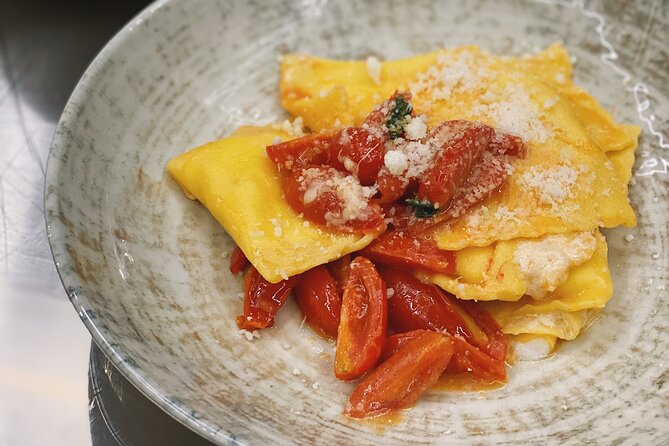
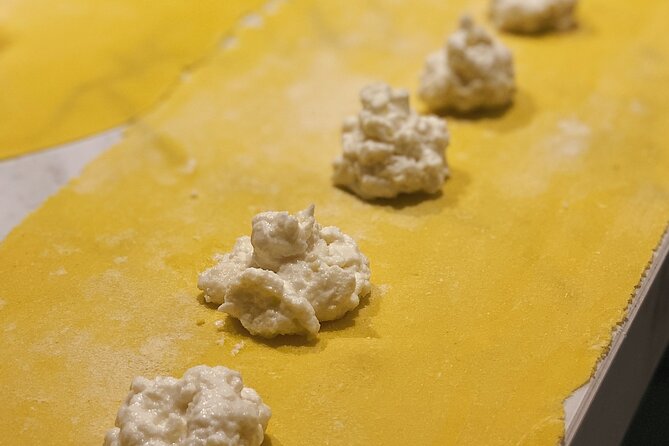
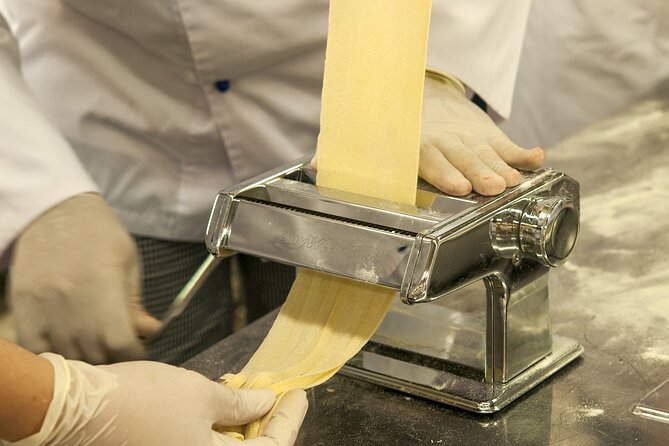
The hands-on pasta work is the heart of the experience. You mix and knead your dough, roll it out, and create ravioli with fresh, high-quality ingredients. This is the useful part to take home because the technique matters as much as the recipe.
A good chef can help you see how dough should feel as you work it. That kind of instruction is hard to get from a written recipe alone. You also learn how to handle the pasta sheet and fill ravioli without making the pockets too heavy or difficult to seal.
The class is designed for all skill levels, including complete beginners. You do not need to arrive knowing how to make pasta. The chef provides personalized guidance, and the group size gives you a fair chance to ask for help instead of watching from the back of a large room.
Some sessions have included more than one pasta style. Max’s class, for example, included both fettuccini and ravioli, while another session focused on traditional ravioli and Roman pasta. The exact menu may vary by class, but the central promise is handmade pasta prepared in the room and eaten soon afterward.
That difference matters. You are not simply told that fresh pasta tastes better. You get to feel how the dough changes, see the shapes come together, and then judge the result at the table.
Roman pasta and the value of simple food
The main course is described as Roman pasta, with traditional ravioli at its center. Some sessions have included sauces such as tomato and garlic or fresh pesto. These are familiar Italian staples, but the class uses them to show how small details shape the final dish.
This is one of the strongest parts of the experience for a home cook. You are not learning a showy restaurant trick that requires rare equipment. The emphasis is on methods you can repeat in your own kitchen, using recipes and techniques provided after the class.
The value comes from that repeatability. At $118.63 per person, this is not a cheap meal. You are paying more than you would for a plate of pasta at a neighborhood restaurant. But you are also getting instruction, ingredients, snacks, wine, a full meal, and recipes to use later.
For someone who enjoys cooking, the price can make sense because the class gives you a skill rather than only a two-hour memory. For a person who mainly wants to eat pasta and has little interest in cooking, the cost may feel high. In that case, a food tour or restaurant meal could be a better fit.
The class also offers a useful middle ground. You get enough instruction to learn something real, but the setting remains social and approachable rather than like a professional culinary school.
More Tiramisu Classes in Rome
- 3 in 1 Cooking Class near Navona: Fettuccine, Ravioli & Tiramisu
★ 5.0 · 7,376 reviews - Rome: 3-in-1 Fettuccine, Ravioli, and Tiramisu Cooking Class
★ 4.9 · 2,704 reviews - Learn to Make Pasta & Tiramisu with Wine and Limoncello Included
★ 5.0 · 2,345 reviews - Become a Masterchef in Rome: Pasta, Ravioli and Tiramisù Class
★ 5.0 · 2,156 reviews
Building classic tiramisu
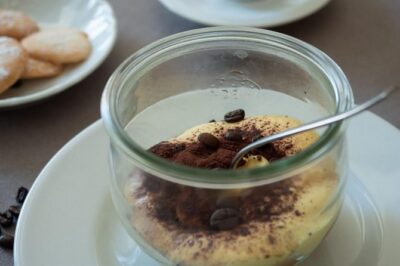
The dessert portion focuses on classic tiramisu. You layer, whip, and dip the ingredients, then let the finished dessert become part of the meal.
Tiramisu is a smart choice for a group class. It involves several clear steps, but it does not require advanced pastry skills. Beginners can take part, and the dish is familiar enough that you can judge how the finished version compares with tiramisu you have eaten in Rome.
The dessert also breaks up the pasta work. After handling dough and preparing the main course, you shift to a different set of textures and techniques. That keeps the three-hour session from feeling like one long repetition of pasta making.
You should expect to eat the tiramisu you prepare during the class. The food is not packaged as a take-home meal. What you bring home are the recipes and the confidence to make the dishes again.
A meal you prepare and eat together
At the end, you sit down in the kitchen setting to eat your handmade food. This is where the class becomes more than an instructional session. You have worked alongside the other people in the group, and the shared meal gives everyone time to relax.
The atmosphere can be especially good for families. One session included a four-year-old who could not fully join the pasta work, so the chef provided pizza dough and other items to keep the child involved. That does not mean every young child will take part in the same way, but it shows that the instructors can make room for different ages.
The class also works well for people who want a social evening without arranging a separate dinner afterward. You eat the food prepared during the session, and wine is served as you cook.
Still, do not book it only as a way to secure a full restaurant-style dinner. The amount of food and the order of service are not described in detail, and the main point is participation. You are here to cook first and eat second.
What the guide can add to the experience
The chef is the key variable in any cooking class. The feedback connected with this experience gives several names to look for, including Alessandro, Marco, Max, and Jacob.
Alessandro has been praised for explaining the small details behind basic Italian dishes. That is useful if you already cook and want more than a simple follow-the-recipe lesson. Marco has been recognized for keeping the group involved and making sure even a young child had something to do.
Max has led sessions with two pasta types, sauces, and tiramisu. Jacob has been associated with a small class where the group size and personal attention were major strengths. The exact guide may not be known when you book, but the format is built around direct instruction rather than a distant demonstration.
The best approach is to ask questions. How thin should the dough be? How much filling belongs in each ravioli? What makes the sauce cling to the pasta? The small group gives you a better chance to ask these things while the technique is happening.
Group size, timing, and the social side
The maximum group size is 12, and some sessions have had only eight people. That is large enough to create conversation but small enough for the chef to move around and help.
Group size matters more in a cooking class than in many sightseeing activities. You need work space, access to ingredients, and a clear view of what the instructor is doing. A smaller room also makes it easier to recover if your dough sticks, your ravioli needs resealing, or you miss a step.
The class takes about three hours. I would treat it as a substantial part of your day, not a quick add-on between major sights. Since the experience includes preparation, cooking, eating, and wine, rushing away immediately afterward would defeat some of the pleasure.
It is offered in English. If you want a class where the chef can explain methods, answer questions, and discuss Italian food traditions, that language option is important.
Dietary limits and who should skip it
This class does not offer gluten-free options and is not recommended for people with celiac disease. The experience may also contain traces of gluten and nuts, making it unsuitable for severe gluten or nut allergies.
Most other dietary restrictions can be accommodated, but you should make your needs clear before booking. The supplied information does not promise that every preference can be handled in every session, so do not assume a substitution will be available.
The class is a strong fit for:
- First-time pasta makers
- Couples and friends who want a social evening
- Families with children who can take part with guidance
- Home cooks who want repeatable recipes
- Visitors who prefer an active food experience to a standard meal
It is less suitable for anyone seeking a gluten-free class, a quiet tasting, or a short demonstration with little hands-on work.
Is $118.63 a fair price?
The price is $118.63 per person, and the experience is often reserved about 35 days ahead. That booking pattern suggests you should not leave it until the last moment if the class fits your plans.
To judge the cost, count what is included: professional instruction, pasta and ravioli preparation, tiramisu instruction, fresh ingredients, light snacks, bottomless Italian wine, the meal you make, and recipes to take home. You are buying a three-hour activity as well as dinner.
I think the value is strongest for someone who will use the recipes later. If you make ravioli or tiramisu for family and friends after returning home, the class keeps giving back. If you only want a plate of Roman pasta, the price is harder to justify.
Free cancellation is available when you cancel at least 24 hours before the start time. Cancellations made within 24 hours are not refunded, and last-minute changes are not accepted. That policy is standard enough, but it matters because cooking classes need food and staff prepared in advance.
Should you book this Roman cooking class?
Book it if you want to make your own pasta, learn from an Italian chef, and share a relaxed meal with a small group. The combination of ravioli, Roman pasta, tiramisu, snacks, and wine gives you a full evening rather than a single recipe lesson.
I would especially recommend it to beginners who want patient help and to confident home cooks who enjoy learning the details behind simple dishes. The most useful feature is the chance to repeat the recipes at home.
Skip it if gluten or nut traces are a serious concern, or if you want a formal culinary workshop with precise dietary control. For everyone else, this is a practical and sociable way to spend three hours in Rome, with dinner built into the lesson.
FAQ
Where does the cooking class begin?
The class begins at Piazza Mattei, 5, 00186 Roma RM, Italy.
Where does the experience end?
The activity ends back at the meeting point in Piazza Mattei.
How long does the class last?
The experience lasts approximately three hours.
Is the class offered in English?
Yes. The experience is offered in English.
How many people can join the class?
The maximum group size is 12 people.
Do I need cooking experience?
No. The class is suitable for all skill levels, including beginners.
What food will I make?
You will make traditional ravioli, Roman pasta, and classic tiramisu. The exact pasta selection may vary by session.
Is wine included?
Yes. Bottomless Italian wine is included throughout the experience, along with light Italian snacks.
Are gluten-free options available?
No. Gluten-free options are not available, and the class is not recommended for people with celiac disease.
Can I cancel for a full refund?
Yes, if you cancel at least 24 hours before the experience start time. Cancellations within 24 hours are not refunded.
Recently added in Rome
- Trastevere Food Tour with Pasta-Making Class★ 5.0 · 5 reviews
- Traditional Pasta Cooking Class with Tiramisu Small Group★ 5.0 · 7 reviews
- Rome: Pasta and tiramisu class with wine pairing at Come Na Vorta★ 5.0 · 30 reviews
- Spritz and Pasta! Spritz, Fettuccine & Tiramisù★ 5.0 · 2 reviews
- The Pasta Factory Class★ 4.5 · 21 reviews
- Top Class in Fettuccine, Ravioli, and Tiramisu★ 5.0 · 7 reviews
- Private 4 Roman Pastas Tasting Tour in Rome★ 5.0 · 6 reviews
- Authentic Pasta and Tiramisù cooking class at spanish steps★ 4.5 · 14 reviews
Tiramisu Classes, compared.
3 in 1 Cooking Class near Navona: Fettuccine, Ravioli & Tiramisu
Read our review →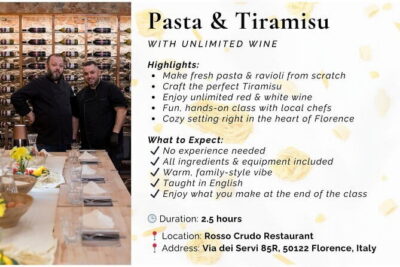
Pasta & Tiramisu Cooking Class with Unlimited Wine
Read our review →
Pasta & Tiramisu Class with Fine Wine by the Vatican
Read our review →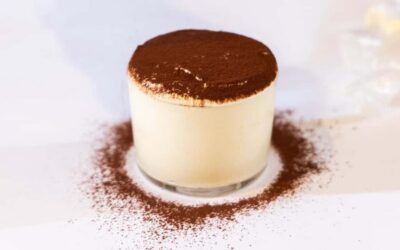
3-in-1 Fettuccine, Ravioli, and Tiramisu Cooking Class
Read our review →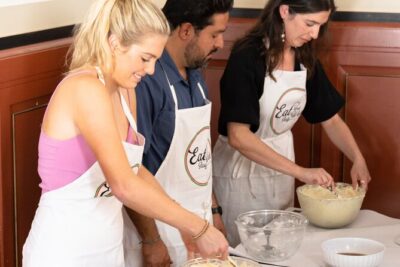
Learn to Make Pasta & Tiramisu with Wine and Limoncello Included
Read our review →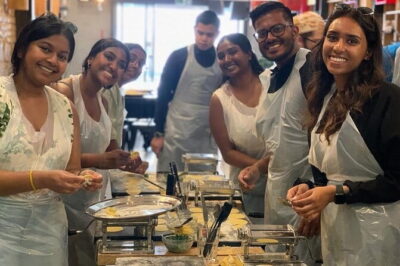
Cooking Class Pasta & Tiramisu Making Unlimited Wine
Read our review →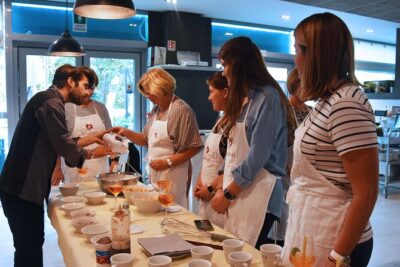
Become a Masterchef in Rome: Pasta, Ravioli and Tiramisù Class
Read our review →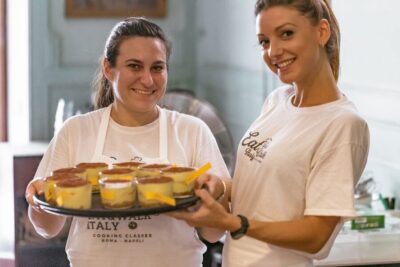
Fettuccine & Tiramisù: Cooking Class with Wine & Limoncello
Read our review →Browse the lists this class appears in