
REVIEW · SMALL GROUP PASTA CLASSES
Small-Group Pasta Making steps from the Vatican Museums
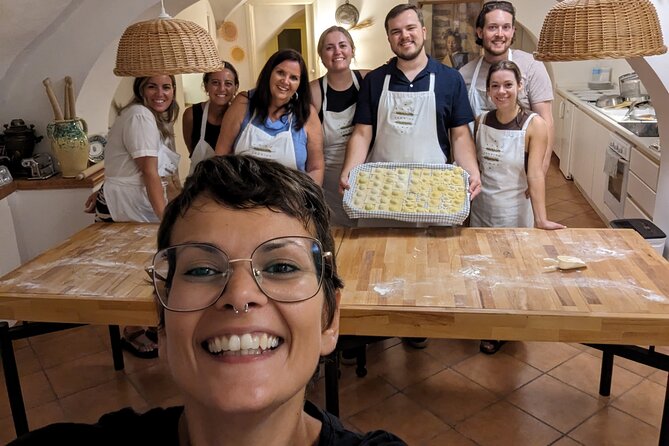
Just steps from St. Peter’s Basilica, this small-group class turns Roman food into the main event. You’ll work with pasta dough, shape green ravioli, roll fettuccine, and sit down to eat what you helped make in a kitchen that once served as a Vatican granary. Romina’s warm teaching style is a major part of the experience.
I like the easy Vatican location and the generous meal that follows: bruschetta, two pasta dishes, dessert, and wine. I also like the small group, capped at eight, since it gives you a better chance to ask questions and get help with the dough. The main caution is that this is an introduction to pasta making, not a fully hands-on chef’s course. One detailed account found only about 25 minutes of active work, with Romina preparing some sauces and cooking the pasta.
Key points to know before booking
- A short walk from St. Peter’s Basilica: The class fits neatly between Vatican sightseeing stops.
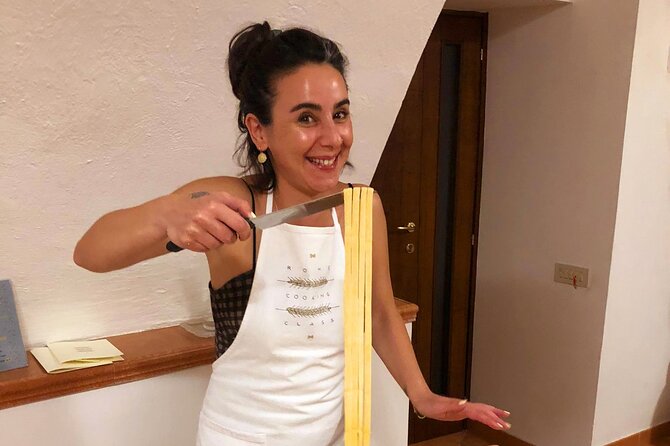
- Romina leads the session: You get personal guidance, food tips, and stories tied to Roman cooking.
- Two pasta dishes are on the table: You make green ravioli with ricotta, pecorino, and lemon zest, plus fettuccine with Amatriciana.
- The meal is part of the experience: Sparkling wine, nibbles, bruschetta, local wine, and dessert are included.
- Groups are limited to eight people: That keeps the class social without making it feel like a large demonstration.
- Hands-on time is limited: You shape pasta, but you may watch more sauce preparation and cooking than expected.
A pasta class in the shadow of St. Peter’s
Rome can feel like a city of grand monuments and quick meals eaten between sights. This class gives you a slower, more social way to understand the city. Instead of simply ordering carbonara, you learn how Roman pasta fits into everyday food culture, then enjoy a meal around the same table.
The location is one of the strongest practical points. The meeting place is on Borgo Angelico, near St. Peter’s Basilica and public transportation. One family used the class as a break between morning and afternoon Vatican visits, and that is a smart way to schedule it. You can spend the morning at the Vatican Museums, walk over for lunch, then continue your sightseeing later.
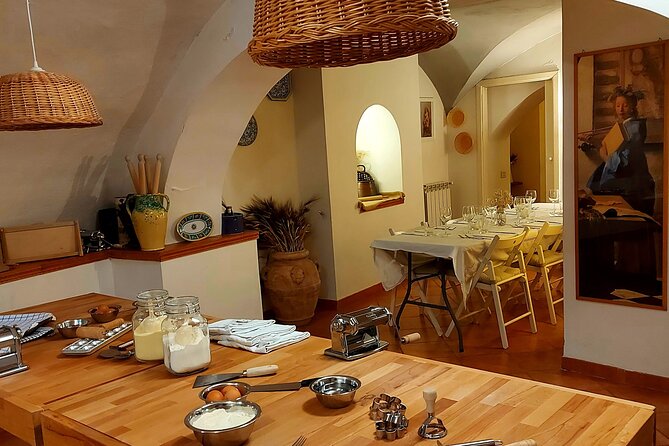
The kitchen itself adds character. It occupies a space that was once the Vatican granary, giving the class a setting with a useful connection to the neighborhood. You are not cooking in an anonymous classroom far from the sights. You are in a local kitchen in the Borgo area, close enough to the basilica that the class feels tied to Rome rather than simply placed there.
The activity lasts about three hours. You can choose a lunch or dinner session, which makes it easier to fit into a busy Rome itinerary. The English-language format also means you can follow the instructions without guessing what each step means.
More Fresh Pasta Workshops in Rome
- Rome: Pasta Making Class with Wine, Limoncello, and Dessert
★ 4.9 · 3,177 reviews - Enjoy Spritz and Pasta Making in Piazza Navona
★ 5.0 · 1,681 reviews - Pasta Making & Wine Tasting with Dinner in Frascati from Rome
★ 5.0 · 1,326 reviews
Sparkling wine, nibbles, and an easy start
The class begins with sparkling wine and small nibbles. This is more than a pleasant extra. It gives everyone time to arrive, settle in, and meet the other people at the table before the flour comes out.
That social opening matters in a small cooking class. The group can include couples, families, and people from different countries, so the first drink helps break the ice. The atmosphere is intended to be relaxed and friendly, rather than stiff or overly formal.
Romina’s role is central here. The most praised part of the class is her hosting. She is described as patient, gracious, funny, and comfortable teaching both adults and children. That combination matters because pasta dough can feel awkward at first. You need someone who will correct your technique without making you feel clumsy.
The class also includes food culture and historical context. You will hear about Italian cooking traditions while working through the recipes, with practical tips you can take home. This is not just a meal followed by a recipe card. It aims to show how familiar Roman dishes are built and why simple ingredients matter.
Making green ravioli with ricotta and pecorino
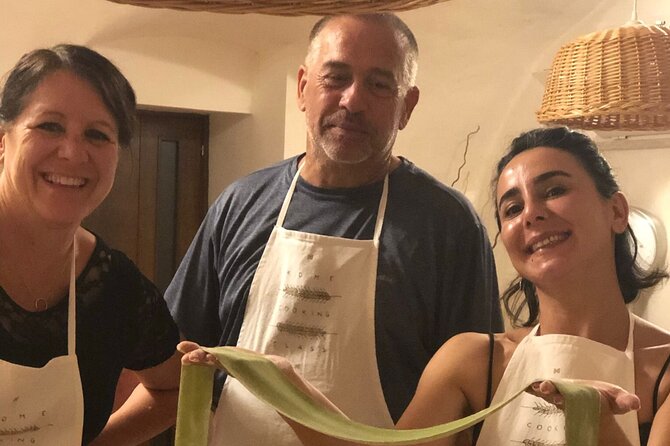
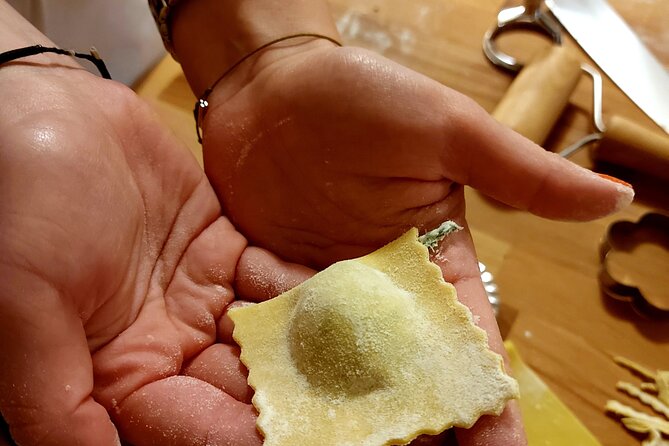
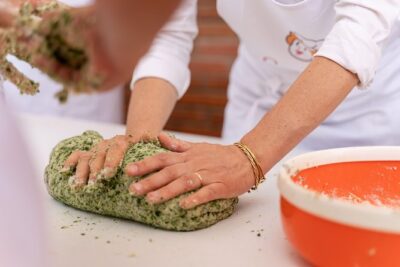
The first main dish is green ravioli filled with ricotta, pecorino, and lemon zest. The fresh pasta is served with cherry tomato sauce and basil.
This course gives you several useful pasta skills at once. You work with the dough, roll it, and shape the ravioli. The filling also shows how Roman cooking balances rich cheese with a fresh note from lemon zest. The cherry tomato sauce keeps the dish lighter and lets the pasta remain the focus.
For many people, ravioli is the most rewarding part of the class because the finished pieces look like something you can repeat at home. You get a clear sense of how thin the dough should be and how much filling is enough. Too much filling can make the pasta split, while too little leaves you with a disappointing bite.
The key point is to understand the level of participation. You should expect to make and shape the pasta, but not necessarily to prepare every part of the sauce from start to finish. Romina may handle some cooking while you watch. If you want a class where each person cooks every component, this format may feel light on hands-on work.
Rolling fettuccine and tasting Roman Amatriciana
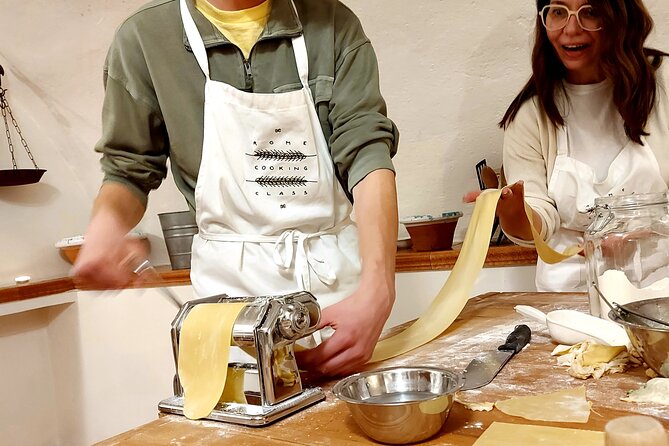
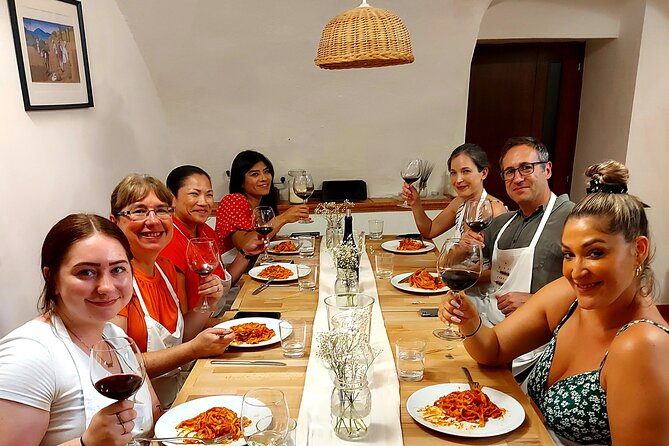
The second pasta dish is homemade fettuccine with traditional Amatriciana sauce. This brings a different texture and a more strongly Roman flavor to the meal.
Fettuccine is a good choice for teaching because the dough becomes a long, even sheet before it is cut into ribbons. You can see how the thickness changes the final bite. It is also a useful recipe to repeat at home, since the method is less fiddly than filled pasta.
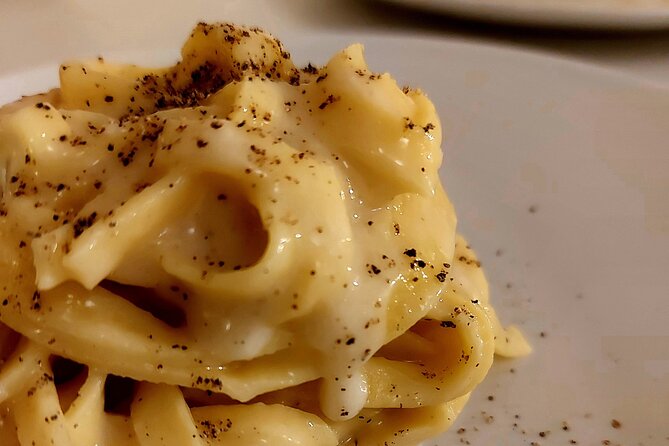
Amatriciana gives the class a direct link to Rome’s cooking traditions. The menu also refers to other classic Roman sauces, including Cacio e Pepe and Carbonara, so the instruction is not limited to one recipe. You should expect practical talk about these dishes, though the listed meal centers on Amatriciana rather than serving all three sauces.
The experience is strongest if you see it as a guided introduction. One person who has taken several cooking classes found the active portion shorter than expected, with roughly 25 minutes spent making pasta and the rest focused on watching, listening, and eating. That is an important distinction. You will not spend three straight hours cooking.
For some people, this balance is ideal. You learn the key pasta steps without having to manage a complicated meal in an unfamiliar kitchen. For others, especially experienced home cooks, the demonstration time may feel too long for the price.
Same town, a different thing to roll out:
- 3 in 1 Cooking Class near Navona: Fettuccine, Ravioli & Tiramisu
★ 5.0 · 7,376 reviews - Rome: Pasta & Tiramisu Class with Fine Wine by the Vatican
★ 4.9 · 4,852 reviews - Rome Cooking Class: Make Pasta and 3 Spritz Cocktails
★ 5.0 · 2,937 reviews - Rome: 3-in-1 Fettuccine, Ravioli, and Tiramisu Cooking Class
★ 4.9 · 2,704 reviews
Bruschetta, dessert, and the meal at the end
The meal does not stop with pasta. The sample menu includes bruschetta topped with cheese, roasted peppers, and olives, followed by tiramisù or strawberries and cream.
The starter helps turn the lesson into a full lunch or dinner rather than a pasta tasting. Seasonal ingredients are used for some of the opening dishes, so the exact details may vary. The bruschetta also gives you something to eat while the pasta is being prepared.
Dessert keeps the ending simple. Tiramisù is a classic Roman and Italian finish, while strawberries and cream offer a lighter option. You should not expect a pastry workshop or a separate dessert lesson. The focus remains on pasta and Roman savory food.
After cooking, you sit down to eat the results with carefully selected local wine. This is one of the class’s strongest features. You are not sent away with a small sample after doing the work. The food you make becomes a proper shared meal, with time for conversation and laughs.
Families may find this especially appealing. Children who might lose interest during a standard food lecture get to handle dough and then eat the result. Couples and small groups can also treat the meal as a relaxed evening activity rather than another rushed stop on the sightseeing circuit.
How hands-on is the class?
You should book this class with realistic expectations. The group is small, but small does not automatically mean every person prepares every dish.
You will put on an apron, work with the pasta dough, roll the dough, and shape the ravioli and fettuccine. Romina provides guidance as you go. The class is designed to give you useful skills, but some steps are demonstrated rather than completed by everyone.
The sauces may be prepared by Romina, and she may cook the pasta while you watch. That keeps the meal moving and helps avoid a crowded kitchen, but it also limits your time at the stove. If your priority is learning a complete menu through repeated practice, ask yourself how much instruction versus active cooking you want.
I see this as a good first pasta class. You learn the basics of fresh dough and filled pasta, hear about Roman sauces, and receive a recipe booklet at the end. The booklet is a helpful idea, though one account found that it did not include both pasta dishes made during the session. If you want to recreate everything exactly, take notes as you go rather than relying only on the booklet.
Is the $96.12 price good value?
At $96.12 per person, this is not a cheap lunch or dinner. You are paying for the setting, instruction, food, wine, and the chance to spend three hours in a small group near the Vatican.
The value is strongest when you want more than a restaurant meal. A standard meal gives you finished food. This class gives you a social activity, an introduction to pasta technique, a full menu, and a story to take home. The location can also save time if you are already planning to visit the Vatican.
The price is less convincing if you mainly want extensive kitchen practice. The limited active cooking means you may spend much of the session listening or watching. A confident home cook looking for advanced instruction could find the class expensive for the amount of direct work.
For a couple, family, or small group seeking a memorable Rome evening, I think the price can make sense. The food, wine, setting, and personal attention add up. For a solo visitor, the small group still offers a social way to meet people, though the value depends on how much you enjoy the shared meal and conversation.
The experience is recommended by 98 percent of people who have rated it, with a 4.9 rating from 44 ratings. Those numbers support the class’s strong points, especially the host, food, and setting, but they do not erase the hands-on limitation. Go in expecting a friendly pasta lesson and shared meal, not a professional kitchen practicum.
Who should book this Rome cooking class?
This class suits you best if you:
- Want a food activity close to St. Peter’s Basilica
- Prefer a small group rather than a large cooking demonstration
- Are new to making fresh pasta
- Enjoy learning through conversation and local food stories
- Are traveling with children who can take part in shaping dough
- Want a lunch or dinner activity that includes wine and dessert
It is also a good choice for couples. Two couples can share a table with a few other people and still get personal help from the instructor. The social side is a major part of the appeal.
You may want a different type of class if you have already made pasta often or want to prepare every sauce and course yourself. The class teaches the central pasta steps, but it does not promise full participation in every recipe.
Timing, meeting point, and cancellation details
The experience begins and ends on Borgo Angelico, Rome, 00193, near public transportation and close to St. Peter’s Basilica. Since the activity returns to its starting point, you do not need to arrange a separate ride home.
Confirmation is provided when you book, and the mobile ticket makes access simple. The class is offered in English, lasts about three hours, and accepts no more than eight people. It is often reserved well ahead, with an average booking lead time of about 36 days, so you should not leave it until the last moment if your Rome dates are fixed.
You can cancel for a full refund up to 24 hours before the local start time. Changes made inside that 24-hour window are not accepted, and late cancellations are not refunded. The class also requires a minimum number of participants. If that minimum is not reached and the activity is canceled, you are offered another date or experience, or a full refund.
Should you book it?
Book this class if you want a warm, social introduction to Roman pasta in a historic-feeling neighborhood near the Vatican. Romina’s patient hosting, the small group, the full meal, and the chance to make ravioli and fettuccine give the experience real appeal.
Skip it if your top priority is nonstop hands-on cooking or advanced sauce work. The class includes demonstration and conversation, and some preparation is handled for you.
For most first-time pasta makers, families, couples, and food-minded visitors building a Vatican day, I think it is a strong choice. Schedule it as a relaxed lunch between sightseeing stops or as an easy dinner activity, and you will get the most from what it offers.
FAQ
Where does the pasta class meet?
The class meets on Borgo Angelico in Rome, postal code 00193. It is near St. Peter’s Basilica and public transportation.
How long does the experience last?
The activity lasts approximately three hours and ends back at the meeting point.
How many people can join the class?
The class has a maximum of eight participants, keeping the group small enough for individual guidance.
Is the class offered in English?
Yes. The experience is offered in English.
What food and drinks are included?
The class begins with sparkling wine and nibbles. The sample meal includes bruschetta, green ravioli with ricotta, pecorino, and lemon zest, homemade fettuccine with Amatriciana sauce, local wine, and tiramisù or strawberries and cream.
Can I cancel for a full refund?
Yes. You can cancel at least 24 hours before the local start time for a full refund. Cancellations or changes made less than 24 hours before the start are not accepted for a refund.
More Small Group Pasta Classes in Rome
- Rome Small Group Pasta Making Class with Wine and Italian Chef
★ 5.0 · 295 reviews - Rome Cooking Class: Gelato and Fettuccine Small Group Experience
★ 5.0 · 128 reviews - Rome: Small Group Pasta cooking class near Piazza Navona
★ 4.9 · 8 reviews - Traditional Pasta Cooking Class with Tiramisu Small Group
★ 5.0 · 7 reviews
Recently added in Rome
- Trastevere Food Tour with Pasta-Making Class★ 5.0 · 5 reviews
- Traditional Pasta Cooking Class with Tiramisu Small Group★ 5.0 · 7 reviews
- Rome: Pasta and tiramisu class with wine pairing at Come Na Vorta★ 5.0 · 30 reviews
- Spritz and Pasta! Spritz, Fettuccine & Tiramisù★ 5.0 · 2 reviews
- The Pasta Factory Class★ 4.5 · 21 reviews
- Top Class in Fettuccine, Ravioli, and Tiramisu★ 5.0 · 7 reviews
- Private 4 Roman Pastas Tasting Tour in Rome★ 5.0 · 6 reviews
- Authentic Pasta and Tiramisù cooking class at spanish steps★ 4.5 · 14 reviews
Small Group Pasta Classes, compared.
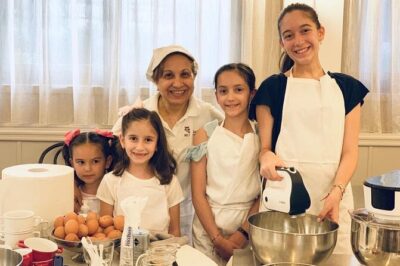
Pasta and Tiramisu Small Group Cooking Class with Wine
Read our review →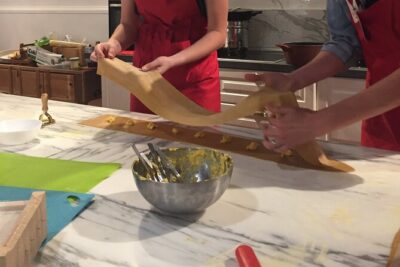
Florence Small-Group Pasta Class with Seasonal Ingredients
Read our review →
Pasta and Tiramisu Small Group Cooking Class with Wine
Read our review →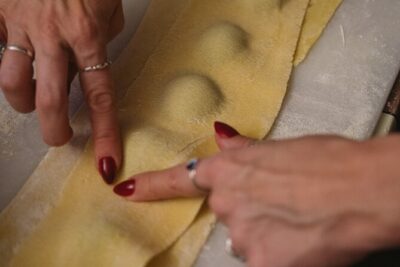
Pasta and Tiramisu Small Group Cooking Class with Wine
Read our review →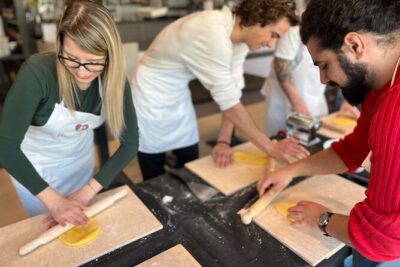
Rome Small Group Pasta Making Class with Wine and Italian Chef
Read our review →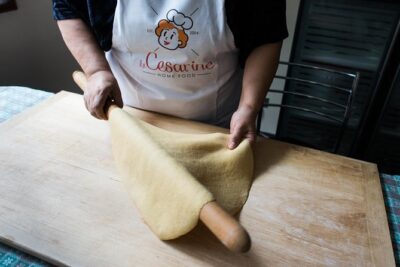
Small Group Pasta and Tiramisu Class at Local’s Home in Venice
Read our review →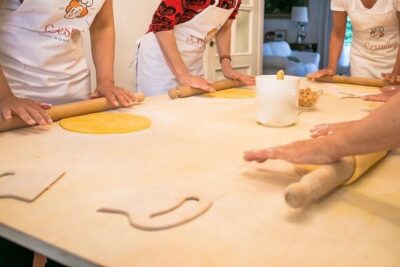
Cesarine: Small group Pasta and Tiramisu class in Varenna
Read our review →Browse the lists this class appears in