
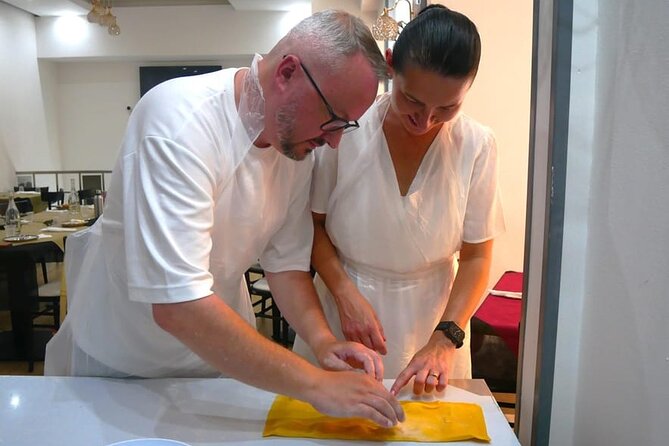
REVIEW · NAPLES PASTA CLASSES
Neapolitan pasta homemade Cooking Lesson
Fresh pasta here starts with a family recipe said to date from the 1800s. You learn to mix the egg dough, rest it, roll it with a pin, cut several shapes, fill ravioli, and eat the finished meal with wine. The hands-on work and the old-fashioned tools give this class a clear sense of place.
I like the tasting of Vesuvian tomatoes and homemade bread, since it shows why simple Neapolitan cooking depends on good ingredients. I also like that the class covers more than one shape, including fettuccine, ravioli, tagliolini, and pappardelle. The main caution is value: at $90.76, this is a short, basic class, and a group of up to 35 could limit personal attention.
Key points to know before booking
- Two hours at the table: The class is designed as a compact cooking lesson, not a full-day culinary course.
- No pasta machine: You roll the dough with a rolling pin and use traditional methods.
- More than two pasta shapes: The main dishes are ravioli and fettuccine, with tagliolini and pappardelle also demonstrated.
- A meal is included: You eat the pasta you prepare, with two sauces, wine, and a soft drink.
- Local ingredient tasting: Vesuvian tomatoes, homemade bread, and other organic products form part of the lesson.
- Large possible group: The maximum is 35 people, so the class may feel social rather than intimate.
Making 1800s-style dough in central Naples
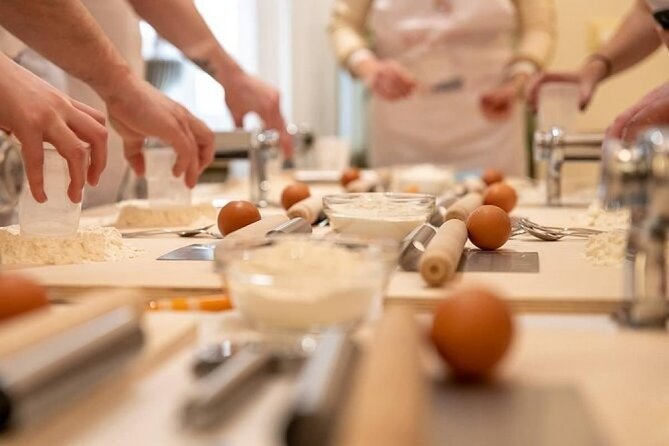
The class begins at Via delle Zite, 30, in Naples. This is the meeting point and the place where the activity ends, which keeps the arrangement simple. The location is near public transportation, useful when you are carrying a full day of sightseeing around the city.
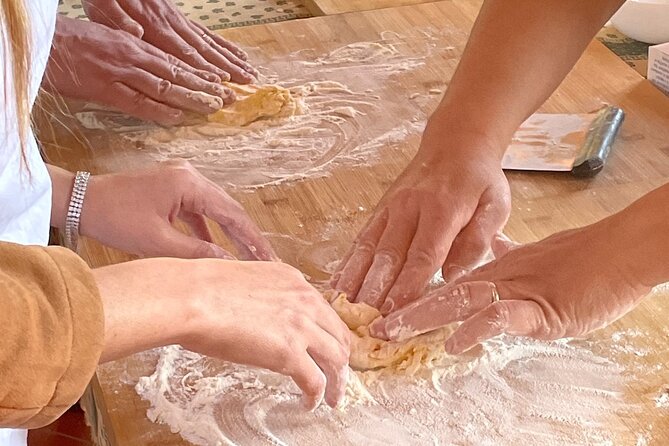
The first stage is explanation. You learn the difference between types of pasta, then hear how the egg dough is made with the instructor’s family recipe. This matters because the lesson is not only about following a list of ingredients. You are shown the basic logic behind the dough, including why it needs to rest before it can be shaped.
The description connects the recipe with pasta-making methods from the 1800s. That does not mean you are entering a museum demonstration. You will be working with the dough yourself, but the point is to use older household methods instead of a modern machine.
A class like this suits you best if you want practical kitchen skills you can repeat at home. The basic nature is part of the appeal for beginners. If you already make fresh pasta often or have taken several cooking courses, you may find the instruction too introductory for the price.
Other Naples classes worth putting on the shortlist
- Naples: Pasta Making Class with Starter and Drink
★ 4.9 · 1,060 reviews - Naples Pasta Class: Fettuccine & Ravioli with Grandma’s Recipe
★ 5.0 · 506 reviews - Naples: Pasta Cooking Class with Tiramisù and a Drink
★ 4.6 · 415 reviews
Rolling pasta by hand instead of using machinery
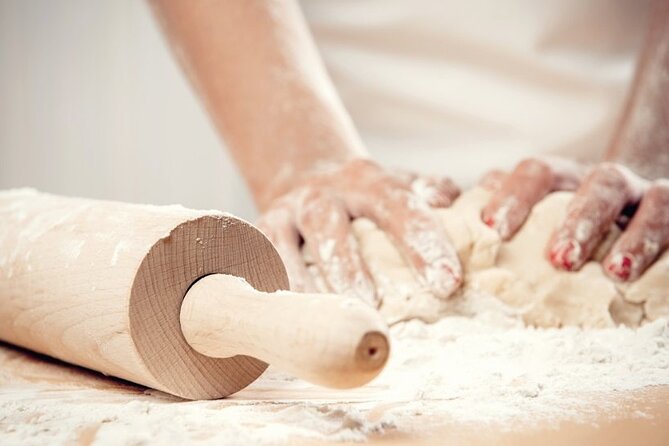
After the dough rests, the group rolls it out with a rolling pin. No pasta machine is used. That choice gives you a closer connection to the traditional process, though it also requires more effort and patience than turning a handle on a machine.
Hand-rolling teaches you to feel the dough. You see its texture change and learn how thin it should become before cutting. The class is especially useful for someone who wants to understand the process rather than simply watch an expert place prepared pasta into a pot.
The instructor then cuts the sheet into several forms. Fettuccine and ravioli are the central projects, while tagliolini and pappardelle are also shown. This gives you a useful comparison: narrow strands, wider ribbons, and filled pasta all begin with the same basic dough but need different handling.
The range of shapes is a good feature for a two-hour lesson. You do not leave knowing only one recipe. You also get a look at how pasta width changes the finished dish and how filled pasta requires a different approach from long noodles.
Still, keep your expectations sensible. Two hours is enough for an introduction and a meal, not for a detailed study of every pasta style. One account of the timing found the active course closer to an hour and a half, while the stated duration is about two hours. Plan your day around the advertised two-hour period, but do not expect a long, leisurely workshop.
Filling ravioli and preparing two sauces
Once the pasta sheets are ready, you mix the ingredients for the ravioli filling. The class then shows you how to place the filling and close the pasta. This is often the point where a beginner learns why small details matter. Too much filling can make the ravioli difficult to seal, while a poor seal can cause it to open during cooking.
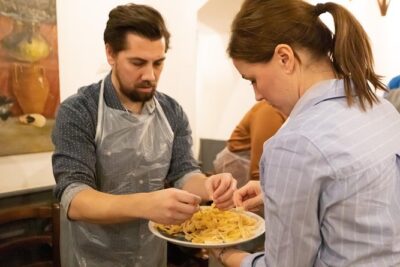
The finished ravioli and fettuccine are cooked in water and served with two different sauces. Since your lunch consists of the pasta you have made, the meal is also the final test of the work. You can see the difference between freshly made pasta and the dried kind commonly used at home.
The two sauces add variety without turning the class into a long menu. You are not simply eating a bowl of noodles after a demonstration. You are eating the result of the dough, rolling, cutting, filling, and cooking stages that came before it.
The included lunch improves the value, especially if you arrive hungry. Wine and one soda or soft drink are included as well. Other drinks after the first included beverage cost extra, so you should not assume the meal includes an open bar or several rounds of drinks.
Tasting Vesuvian tomatoes and homemade bread
While the dough rests, the instructor serves a local starter with organic products, tomato from Vesuvius, and homemade bread. This is one of the more useful parts of the class because it explains the role of ingredients before you taste the finished pasta.
Neapolitan cooking often relies on a short ingredient list. When the tomato, bread, or pasta is good, the food does not need much decoration. Tasting the products separately helps you notice that principle rather than simply hearing it described.
The Vesuvian tomato is a particularly fitting ingredient for a Naples cooking lesson. The experience gives you a chance to connect the meal with the local area, rather than treating the class as a generic Italian pasta workshop that could happen anywhere.
The starter also fills the waiting period in a sensible way. Fresh pasta dough needs time to rest, and the tasting turns that pause into part of the lesson. You get a small meal before the main pasta course, then eat the ravioli and fettuccine you helped prepare.
Same town, a different thing to roll out:
- Napolitan Secrets: Pasta & Tiramisù Class for Food Lovers
★ 4.9 · 189 reviews - Amazing Pizza and Pasta Class at Savio’s kitchen cooking school
★ 5.0 · 104 reviews - Learn To Make Fresh Pasta With Love in Naples
★ 5.0 · 77 reviews - Hands-On Pasta Making and Traditional Tiramisu Workshop
★ 4.5 · 71 reviews
A friendly class, with a possible crowd of 35
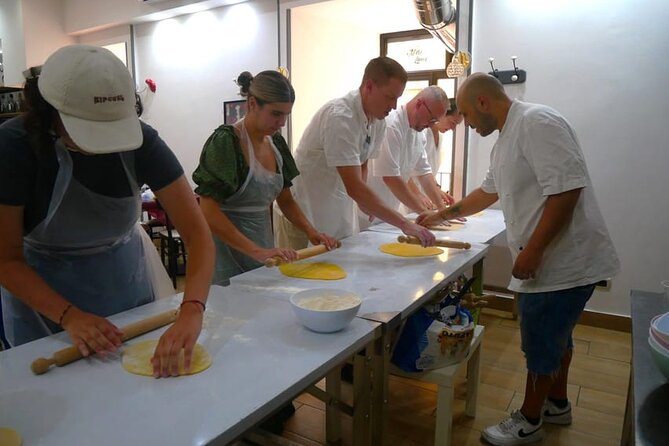
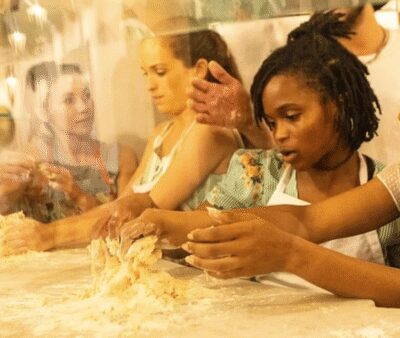
The social side of this activity is important. You work with a group and have a chance to meet people while handling the dough. One particularly positive account described the instructor, Daniel, as friendly and good at making pasta feel easy, with plenty of useful tips.
That personal style may be a major reason to choose the class. Pasta making is more enjoyable when you can ask questions, compare shapes, and laugh at a few imperfect ravioli. The activity is designed to be approachable rather than formal.
At the same time, the maximum group size is 35 people. That is a large possible class for a hands-on cooking lesson. A big group can give the room a lively feel, but it may also mean less individual correction from the instructor and more waiting for a workspace or utensil.
If personal attention matters most to you, ask about the expected group size before booking. The maximum is not the same as the usual attendance, and the actual feel of the lesson may change considerably depending on how many people are present.
The class also appears best suited to beginners. You receive an explanation of pasta types, dough ingredients, shaping, and cooking, but the lesson is not presented as advanced culinary training. If you already make pasta at home or have completed several similar courses, the $90.76 cost may feel high for the amount of new material.
What the $90.76 price really buys
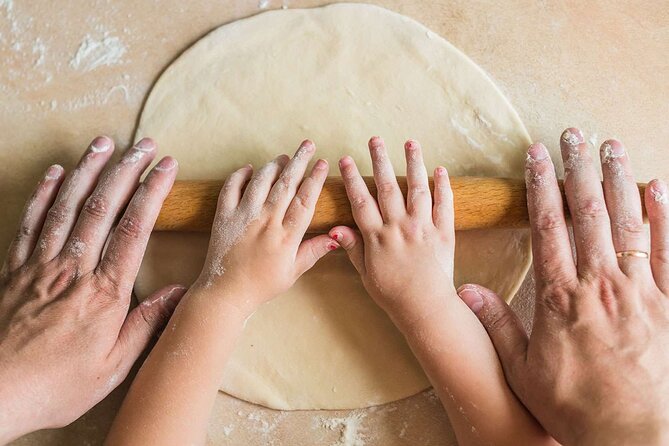
At $90.76 per person, this is not a bargain activity. The price makes more sense if you count it as a short cooking lesson plus lunch, wine, a soft drink, a local starter, and the chance to make several pasta shapes.
You are paying for more than ingredients. You receive instruction, a prepared setting, the meal, and a food-related activity that fits neatly into a Naples sightseeing schedule. For a first-time pasta maker, that combination can be worthwhile because you leave with techniques you can try again at home.
The value is weaker for experienced home cooks. You may already know how to mix dough, roll pasta, and prepare a filling. In that case, the family recipe and traditional rolling method may not offer enough new information to justify the cost.
The group size also affects the calculation. A small group could make the price feel fairer because you might receive more direct help. In a full group of 35, the class becomes more about shared enjoyment and lunch than close instruction.
I would compare this with your own goals. If you want a local food activity, a social meal, and a simple introduction to handmade pasta, the price is defensible. If you want advanced technique, a long class, or detailed chef-level coaching, save your money for a more specialized course.
Timing, meeting point, and daily planning
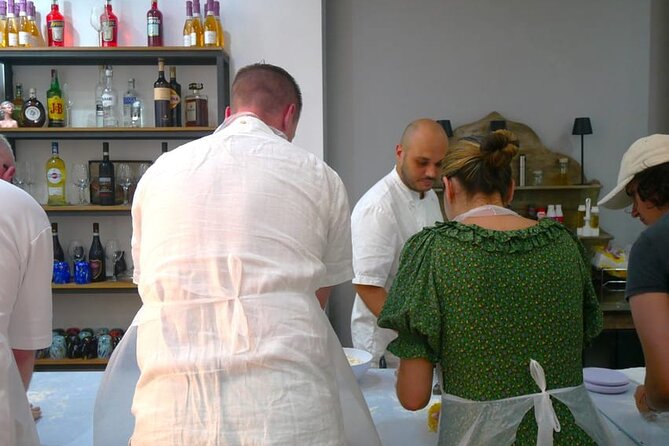
The activity lasts about two hours and begins at Via delle Zite, 30, 80139 Napoli NA, Italy. It returns to the same meeting point, so you do not need to arrange a separate pickup location at the end.
The class is near public transportation, which helps if you are staying elsewhere in Naples. The ticket is mobile, so you can keep the booking on your phone rather than print it. Confirmation is provided when you book.
Because the activity includes food preparation and lunch, arrive ready to spend the full block of time there. You should not book it between two attractions with a tight connection. The stated duration is about two hours, and a cooking activity can be awkward to leave early.
It is also sensible to avoid scheduling a large meal immediately afterward. You receive a starter, homemade pasta, wine, and a soft drink, so this is effectively a lunch experience as well as a lesson.
The activity is booked, on average, 27 days ahead. That does not guarantee every date sells out, but it suggests that you should reserve before arriving in Naples if the timing matters to you.
Who will enjoy this Naples pasta lesson
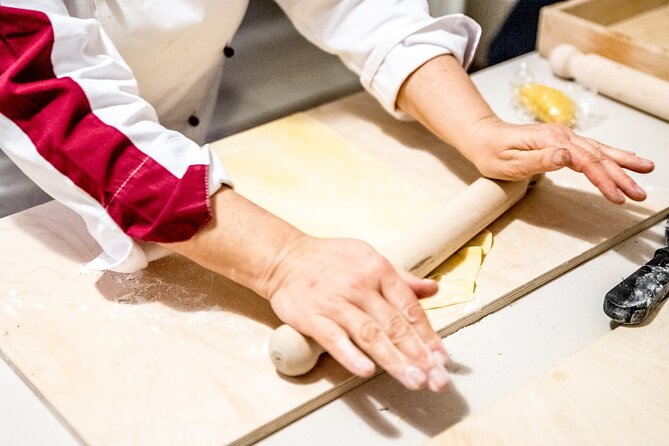
I would recommend this class most strongly to first-time pasta makers, couples, friends, and families who want an activity with a meal built in. You do not need to be an expert to take part, and the lesson covers the basic stages in a clear order.
It also works well for people who like food activities with a local angle. The Vesuvian tomatoes, homemade bread, family recipe, and hand-rolled dough give the class more character than a simple demonstration followed by a restaurant meal.
You may also like it if you want to take a practical souvenir home. The techniques are repeatable, and the lesson gives you a framework for making ravioli and fettuccine in your own kitchen.
I would hesitate if you have gluten intolerance. The activity is specifically not recommended for people who are gluten intolerant, and the central dishes are wheat-based pasta. The supplied information does not promise gluten-free substitutions.
I would also think twice if you want a quiet, private, or advanced class. With a possible group of 35 and a beginner-friendly format, this is better viewed as a shared food experience than a private cooking apprenticeship.
Booking advice and cancellation terms
Free cancellation is available if you cancel at least 24 hours before the experience start time. A cancellation made less than 24 hours in advance is not refunded, and changes inside that period are not accepted.
The cut-off follows Naples local time. That detail matters if you are arranging the activity from another time zone or changing your plans while traveling.
The experience is provided by Grand Tours Italy. You receive confirmation at booking, and the mobile ticket can be used for the activity. Keep the meeting address handy, since the start and finish are both at Via delle Zite, 30.
Should you book the class?
Book it if you want to make pasta by hand, eat what you prepare, and spend two social hours learning a traditional method. The strongest features are the rolling pin work, the range of pasta shapes, the Vesuvian tomato tasting, and the included lunch with wine.
Skip it if you are an experienced pasta maker looking for advanced instruction, or if $90.76 feels too steep for a short class. The possible 35-person group and the occasional difference between active teaching time and the advertised two hours are worth keeping in mind.
For most beginners, this is a pleasant and useful Naples food activity, provided you treat it as an introduction rather than a serious professional course. Book early if you need a particular date, and arrive hungry enough to enjoy the meal you have made.
FAQ
How long does the Neapolitan pasta cooking class last?
The activity lasts approximately two hours. The hands-on work includes making the dough, resting it, rolling it, shaping pasta, cooking it, and eating the finished meal.
Where does the class begin and end?
The class begins at Via delle Zite, 30, 80139 Napoli NA, Italy. It ends back at the same meeting point.
What types of pasta will I make?
The main pasta dishes are homemade ravioli and fettuccine. The instructor also shows you how to prepare tagliolini and pappardelle.
Is lunch included?
Yes. You eat the homemade fettuccine and ravioli prepared during the class. Wine and a soda or soft drink are included.
Are other drinks included?
Only the included wine and soda or soft drink are specified. Other drinks after the first included beverage are not included.
Is the class suitable for someone with gluten intolerance?
No. The activity is not recommended for people who are gluten intolerant.
Can I cancel for a full refund?
Yes, if you cancel at least 24 hours before the experience start time. Cancellations made less than 24 hours before the start, and changes made during that period, are not accepted for a refund.
Recently added in Naples
- Naples Hands-on Cooking Class: Gnocchi, Ravioli, Tiramisu & Wine★ 4.5 · 18 reviews
- Private Fettuccine Alfredo and Ravioli Class Grandma recipe★ 4.0 · 2 reviews
- Pasta Fresca Gnocchi and Ravioli a Napoli★ 5.0 · 2 reviews
- Private Pasta & Tiramisu Class at a Cesarina’s home with tasting in Ercolano★ 5.0 · 2 reviews
- Homemade Pasta And Seafood Cooking Class with Dinner★ 5.0 · 5 reviews
- Private Italian Pasta Masterpieces Class: Ravioli, Tortellini and Fettuccine★ 5.0 · 8 reviews
- Discovering Gragnano PGI pasta and the Valle dei Mulini★ 5.0 · 3 reviews
- Naples: Pasta, Wine & Authentic Food Tour★ 4.8 · 5 reviews
Naples Pasta Classes, compared.
Naples Pasta Class: Fettuccine & Ravioli with Grandma’s Recipe
Read our review →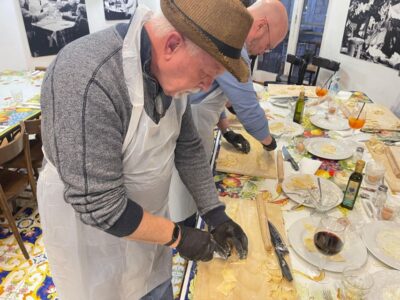
Napolitan Secrets: Pasta & Tiramisù Class for Food Lovers
Read our review →
Amazing Pizza and Pasta Class at Savio’s kitchen cooking school
Read our review →
Hands-On Pasta Making and Traditional Tiramisu Workshop
Read our review →
Fresh Pasta Cooking Class and Dinner with a Local
Read our review →Browse the lists this class appears in